5 Fabrics That Can Be Safely Bleached
Struggling to brighten your clothes without ruining them? You’re not alone. Many people find it tricky to figure out which fabrics can handle bleach safely without damage. Knowing the right fabrics to bleach can save your favorite pieces and keep them looking fresh.
You can safely bleach fabrics like cotton, linen, polyester blends, nylon, and some other synthetics if you follow the right steps. Cotton handles bleach well and stays strong, while linen needs gentle, diluted oxygen-based bleach.
Polyester blends require careful dilution and spot testing, and nylon benefits from mild alternatives to harsh bleach. Always check care labels and test on hidden spots first. Keep going, and you’ll find exactly how to treat each fabric without damage.
Key Takeaways
- Cotton fabrics can be safely bleached, especially lighter shades and pre-treated items.
- Linen requires diluted oxygen-based bleach and patch testing for safe bleaching.
- Polyester blends tolerate diluted bleach and spot treatments for safe whitening.
- Nylon and other synthetics need oxygen-based bleach and careful dilution to avoid damage.
- Always check care labels and test bleach on hidden areas before full application.
How To Tell If A Fabric Can Be Safely Bleached
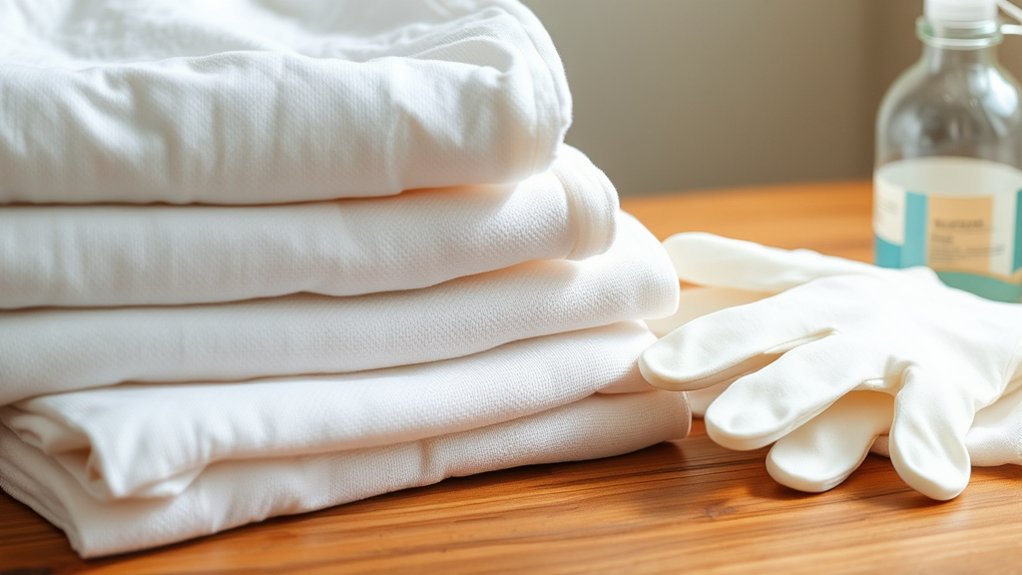
Before you reach for bleach, you need to check the fabric’s care label carefully. The label tells you whether the fabric can handle bleach or if you should avoid it to prevent damage. Look for symbols like a triangle with “Cl” inside, which means chlorine bleach is safe.
If the triangle is crossed out, skip bleach entirely. When bleach isn’t recommended, don’t worry. There are plenty of bleach alternatives and stain removal techniques you can try.
For example, oxygen-based cleaners work well on many fabrics without the harsh effects of chlorine bleach. Enzyme-based stain removers also target protein stains without weakening fibers. Always test any cleaner on a hidden area first to avoid discoloration.
Cotton: Why It’s The Most Bleach-Friendly Fabric
Because cotton fibers are strong and naturally absorbent, you can safely use bleach on most cotton fabrics without worrying about damage. This fabric’s durability means it can withstand the harshness of bleach better than many other materials, making it ideal for brightening whites or removing tough stains.
When you bleach cotton, its color retention is generally reliable, especially in lighter shades or pre-treated fabrics designed to resist fading. You’ll find that cotton holds up well, maintaining its texture and strength even after multiple bleach treatments.
However, always check the care label to ensure your cotton piece is bleach-safe, as blends or dyed items might react differently. Using bleach on cotton not only refreshes your garments but also extends their lifespan by keeping them clean and vibrant.
Linen: Bleach Compatibility And Care Tips
While cotton stands out for its bleach tolerance, linen offers a different set of qualities to evaluate when using bleach. Linen is more delicate, so you’ll want to handle it carefully to maintain fabric integrity.
When bleaching linen, always opt for a diluted, oxygen-based bleach instead of chlorine bleach to protect the fibers and support color preservation. Test a small, hidden area first to ensure the color holds up.
If you want to avoid bleach altogether, consider alternative stain removal methods like soaking in lemon juice or using baking soda paste, which are gentler on linen. After treating stains, rinse thoroughly with cold water and air dry to reduce fiber stress.
Polyester Blends: How To Bleach Without Damage
Though polyester blends are generally more resistant to bleach than natural fibers, you’ll still need to be cautious to avoid discoloration or weakening the fabric. To maintain color preservation, dilute bleach properly, usually one part bleach to ten parts water, and test on a hidden area first. Avoid soaking; a quick dip or spot treatment works best. Using cold water helps minimize damage.
If you want to brighten your polyester blend without risking harm, consider alternative whitening methods like oxygen-based bleach or color-safe bleach. These options are gentler and reduce the chance of weakening fibers or causing yellowing. Always rinse thoroughly after bleaching to remove any residue.
Bleaching Nylon And Other Synthetic Fabrics
Polyester blends handle bleach with care, but nylon and other synthetic fabrics call for even more attention. When you bleach nylon, you risk weakening fibers and losing vibrant colors. To protect your fabric’s integrity and guarantee color preservation, avoid using harsh chlorine bleach.
Instead, opt for oxygen-based bleach alternatives, which are gentler on synthetics and reduce damage. Always dilute bleach properly and test a small, hidden area first to see how the fabric reacts. Use cold water during the process to minimize fiber stress.
If you want to brighten whites or remove stains, consider non-bleach stain removers or specialized synthetic fabric cleaners. These options help maintain the fabric’s strength and color without the risks associated with traditional bleach. By treating nylon and synthetic fabrics with care, you can extend their life and keep them looking their best without compromising on safety or color vibrancy.
Frequently Asked Questions
Can Bleach Remove Stains From Colored Fabrics Safely?
Bleach can remove stains from colored fabrics safely only if you perform colorfastness testing first. You should test a small, hidden area to see if the color holds up.
Using proper stain removal techniques, like diluted bleach or oxygen-based alternatives, can help avoid damage. Always follow care labels and avoid strong bleach on delicate colors. This way, you’ll protect your clothes while effectively tackling stubborn stains.
How Does Bleach Affect Fabric Strength Over Time?
Bleach weakens fabric strength over time by breaking down fibers, reducing fabric durability. When you use bleach frequently or leave it on too long, it can cause color fading and make the fabric more prone to tears and wear.
To protect your clothes, you’ll want to limit bleach exposure and follow care instructions carefully. This way, you maintain both the color and the integrity of your fabrics longer.
Are There Eco-Friendly Alternatives to Traditional Bleach?
Right off the bat, you’ll find eco-friendly alternatives to traditional bleach that don’t scrub your conscience raw. You can turn to natural dyes and plant-based cleaners, which work wonders without harsh chemicals.
These options are gentler on fabrics and the environment, helping you keep your clothes bright and fresh sustainably. So, instead of going down the usual path, you can make a greener choice that benefits both your wardrobe and the planet.
What Protective Gear Is Recommended When Using Bleach?
You should always wear protective gloves to keep bleach from irritating or burning your skin. Eye protection, like safety goggles, is essential to prevent splashes from damaging your eyes.
It’s also a good idea to work in a well-ventilated area to avoid inhaling fumes. By using these precautions, you’ll handle bleach safely and reduce the risk of injury or discomfort during cleaning or laundry tasks.
Can Bleach Be Used on Delicate Fabrics Like Silk or Wool?
Think of bleach as a storm, too harsh for delicate flowers like silk or wool. You shouldn’t use it on these fabrics because it can damage their fibers, ruining their gentle whitening and stain prevention qualities.
Instead, opt for milder solutions designed for delicate materials. That way, you’ll protect the softness and beauty of your garments without risking harm from bleach’s aggressive nature.
Treat delicate fabrics with care to keep them vibrant and lasting.
Conclusion
Now that you know how to spot bleach-friendly fabrics, you can clean with confidence. Use bleach on cotton to brighten, on linen to refresh, on polyester blends to lift stains, and on nylon to maintain vibrancy.
Always check labels, test first, and follow care tips to avoid damage. Remember, bleaching safely means preserving your fabrics’ look, feel, and longevity so you can enjoy fresh, clean clothes every time.
Understanding 5 fabrics that can be safely bleached helps you keep your wardrobe looking its best without worry.