5 Tips on What Needle to Use for Knit Fabrics
If you’ve ever struggled with sewing knit fabrics that end up stretched out, snagged, or just not looking right, you’re not alone. Many people find it tricky to get the perfect stitch without damaging those delicate loops.
Finding the right needle can make all the difference, so let’s dive into some helpful tips on what needle to use for knit fabrics.
You’ll want to use special needles like ballpoint or stretch ones for knit fabrics to avoid damaging their loops and stretch. Always match needle size to your fabric weight—smaller sizes for lightweight knits and larger for heavier ones.
Replace needles regularly to keep stitches smooth and avoid skipped stitches or holes. Don’t use universal needles, and handle your fabric gently to prevent distortion.
Keep these tips in mind, and you’ll soon master sewing knits perfectly.
Key Takeaways
- Use ballpoint needles with rounded tips to prevent damaging knit fabric loops. This helps reduce runs or snags.
- Choose stretch needles for highly elastic knits. They minimize skipped stitches and ensure smooth stitching.
- Match needle size to fabric weight: 70/10 or 75/11 for lightweight, 80/12 for medium, and 90/14 or 100/16 for heavy knits.
- Avoid sharp or universal needles because they can pierce fibers, cause holes, and compromise fabric elasticity.
- Regularly replace needles and maintain your sewing machine to prevent skipped stitches and fabric damage.
Why Knit Fabrics Need Special Sewing Needles
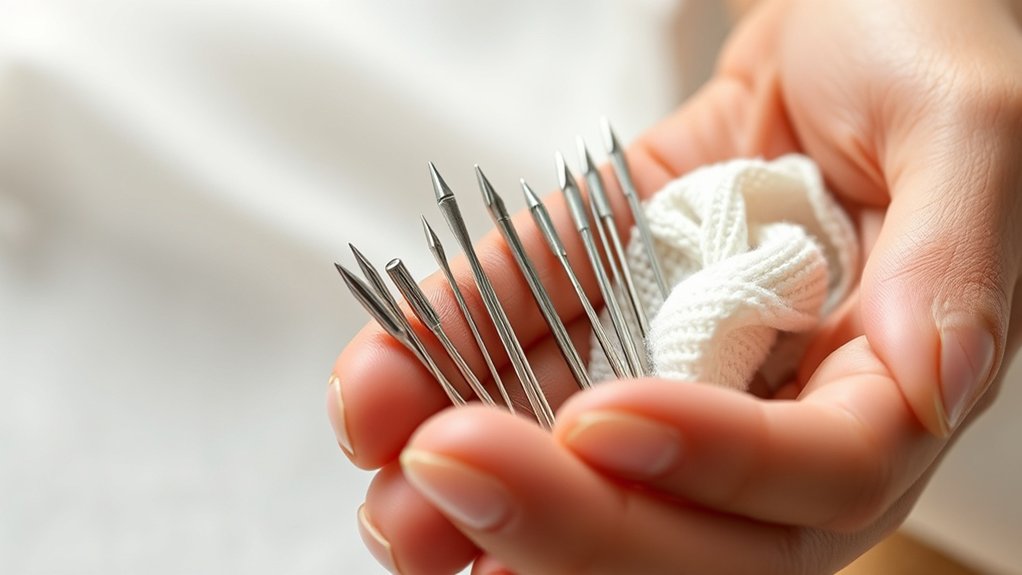
Because knit fabrics stretch and have loops rather than a tight weave, you need special sewing needles to avoid damaging the material. These fabrics rely on fiber elasticity to maintain their shape, so using the wrong needle can cause skipped stitches or holes.
When you sew with a regular needle, its sharp point might pierce through loops instead of sliding between them, compromising seam durability.
You want needles designed to work with the fabric’s stretchiness, ensuring smooth penetration without breaking fibers. This helps preserve the knit’s natural give and prevents seam puckering or weakening.
Ballpoint and Stretch Needles for Knit Fabrics
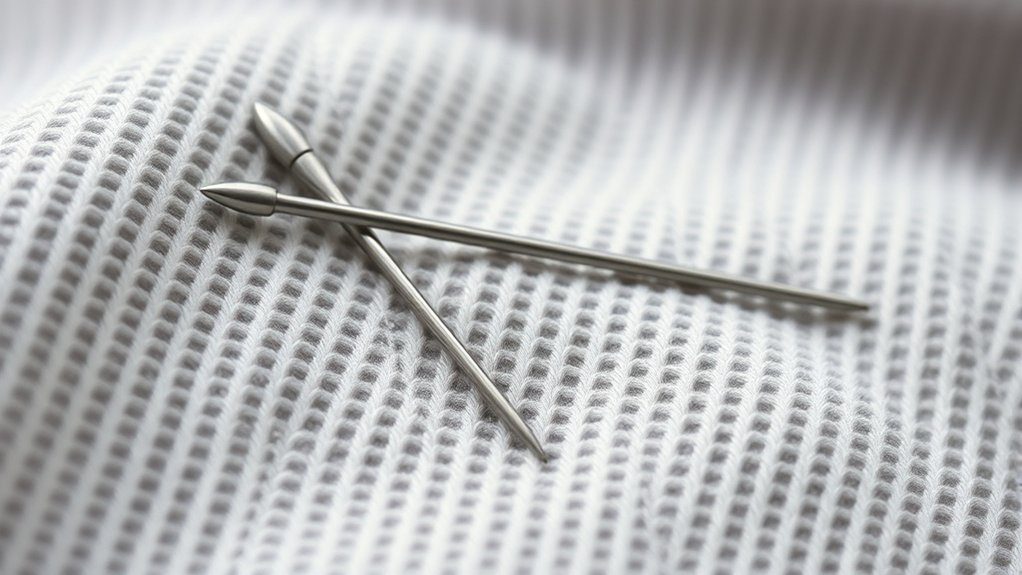
When you work with knit fabrics, choosing ballpoint or stretch needles can make a big difference in your sewing results. Ballpoint needles have a rounded tip that gently slides between the knit loops rather than piercing them, preventing runs or snags. Stretch needles, designed specifically for highly elastic fabrics, feature a special scarf and deeper groove to reduce skipped stitches during sewing.
Before you start, ensure you adjust your sewing machine settings to accommodate these needles. Typically, a slightly longer stitch length works best. Also, consider fabric pretreatment like washing and stabilizing to avoid distortion during sewing.
Using the right needle with proper machine settings and fabric preparation ensures smooth stitching and durability. If your knit fabric has a lot of stretch, opt for stretch needles. For general knits, ballpoint needles are ideal. This combination helps you maintain fabric integrity while achieving professional-quality seams every time.
Needle Sizes for Different Knit Fabric Weights
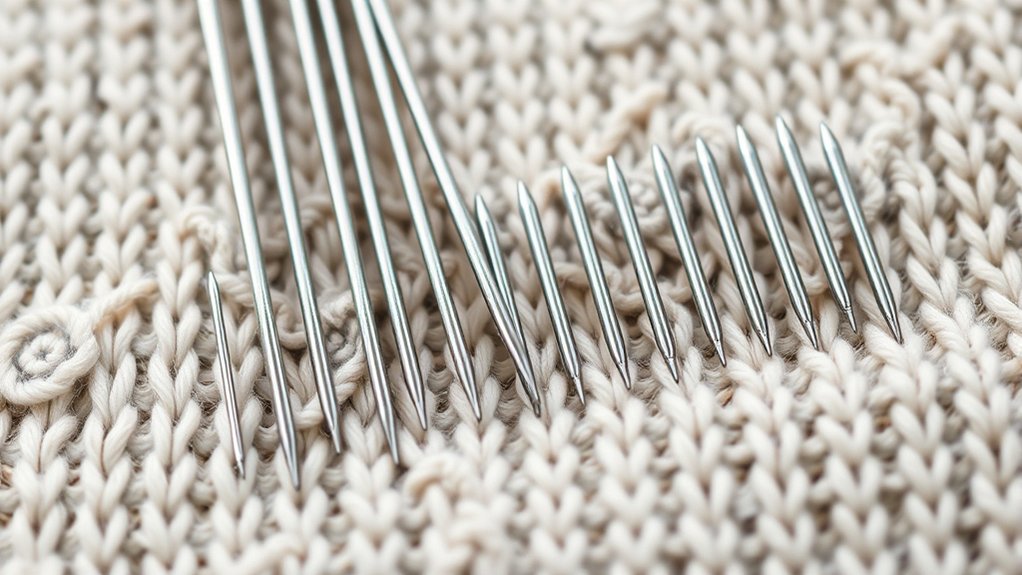
Although choosing the right needle type is essential, selecting the correct needle size for your knit fabric’s weight guarantees clean, snag-free stitches. Lightweight knits, like jersey or interlock, typically require a finer needle size, such as 70/10 or 75/11. These smaller needles prevent holes and maintain fabric stretch without damaging fibers.
For medium-weight knits, such as ponte or thicker jerseys, a size 80/12 needle strikes the right balance between strength and flexibility, providing ideal needle compatibility.
Heavier knit fabrics, like sweater knits or fleece, demand larger needles, usually 90/14 or 100/16, to penetrate the dense fibers smoothly. Using too small a needle on heavy knits can cause skipped stitches or fabric puckering, while too large a needle on light knits can create visible holes.
Always match needle size to fabric weight and stretch to guarantee your stitches remain even and your garment retains its shape throughout wear and washing.
Needle Shape and Stitch Quality on Knits
Choosing the right needle shape profoundly impacts your stitch quality on knit fabrics. Since knits stretch, you need a needle that moves smoothly through the fabric without damaging the loops. A ballpoint or stretch needle has a rounded tip that gently parts the fabric fibers rather than piercing them. This preserves fabric stretch and prevents runs.
Here’s how needle shape affects stitch quality:
- Rounded tips slide between fibers, reducing fabric damage.
- Sharp needles pierce and can cause skipped stitches or holes.
- Ballpoint needles maintain fabric elasticity by avoiding unnecessary punctures.
- Needle sharpness wears down over time, so replace needles regularly to keep stitches even and secure.
Avoid These Common Needle Mistakes on Knit Fabrics
Using the right needle shape helps protect your knit fabric, but even the best needle can cause problems if you make common mistakes. Avoid using a dull or bent needle, which can snag or damage delicate knit fibers.
Don’t forget regular sewing machine maintenance. A poorly maintained machine can misalign the needle, leading to skipped stitches or holes. Also, resist the urge to stretch your fabric excessively when sewing.
Proper fabric stretching techniques are essential to maintain the garment’s shape and prevent needle damage.
Here’s a quick guide to common needle mistakes and how to avoid them:
| Mistake | Solution |
|---|---|
| Using the wrong needle size | Match needle size to fabric weight |
| Sewing with a dull needle | Replace needles regularly |
| Ignoring machine maintenance | Clean and oil your machine often |
| Stretching fabric too much | Use gentle fabric stretching techniques |
| Using universal needles on knits | Opt for ballpoint or stretch needles |
Follow these tips to keep your knits smooth and your stitching flawless.
Frequently Asked Questions
Can I Use Universal Needles on Knit Fabrics?
You can use universal needles on knit fabrics, but they’re not the best choice. Universal needles have a slightly rounded tip, so they offer some compatibility with knit fabric needle selection.
However, ballpoint needles are designed specifically for knit fabrics, preventing snags and skipped stitches. If you want smoother sewing and better results, opting for ballpoint needles is smarter than relying solely on universal ones for your knits.
How Often Should I Change Needles When Sewing Knits?
You should change needles frequently when sewing knits to maintain needle sharpness. This helps prevent skipped stitches and fabric damage. Since knits have high fabric stretchability, a dull needle can cause runs or snags.
If you notice any pulling or uneven stitching, it’s time to swap needles. Typically, changing your needle after every 6 to 8 hours of sewing or when you switch fabric types keeps your projects looking professional.
What Type of Thread Works Best With Knit Fabrics?
You’ll want to use polyester or cotton-wrapped polyester thread for knit fabrics because they offer the right amount of stretch to match your fabric stretch. This prevents seams from breaking when the fabric moves.
Also, pair your thread choice with the right needle size, usually a ballpoint needle in size 70/10 or 80/12. This guarantees smooth stitching without damaging the knit fibers. This combo keeps your project durable and flexible.
Can Specialty Needles Damage Delicate Knit Fabrics?
Just like using a sledgehammer to crack a nut, specialty needles can damage delicate knit fabrics if you’re not careful. You need to choose the right needle size to match your fabric stretch; too large or too sharp, and you risk snags or runs.
Opt for needles designed for knits, like ballpoint types, which gently part fibers without piercing. This way, you’ll keep your fabric looking smooth and stretchy without harm.
Are There Specific Brands Recommended for Knitting Needles?
Yes, you’ll find specific brands like Schmetz and Organ highly recommended for knitting needle materials because they offer excellent sewing machine compatibility. These brands produce needles designed to handle knit fabrics without causing snags or skipped stitches.
When choosing, consider needles made from strong materials like titanium or nickel-plated steel. They’ll guarantee smooth stitching on your machine, letting you work confidently with various knit fabrics and avoid damage.
Conclusion
When sewing knits, using the right needle can make all the difference. Did you know that using a ballpoint or stretch needle reduces skipped stitches by up to 50%? That means smoother seams and less frustration for you.
Remember to match your needle size to your fabric weight and avoid common mistakes like using a sharp needle on delicate knits. With these tips, your knit projects will look professional and last longer. So get stitching with confidence, knowing you’ve chosen the best needle for knit fabrics!