What Is Jersey Fabric?
Finding the perfect fabric for your everyday clothes can be frustrating. You want something comfortable, breathable, and easy to care for, but many people struggle to find that balance. If you’ve been searching for a versatile material that feels great all day long, you’re not alone.
Jersey fabric is a soft, stretchy knit you often find in T-shirts, dresses, and loungewear. You’ll notice it feels smooth on the face, slightly textured on the back, and it moves easily with your body.
It’s made by knitting yarn into loops, which gives it comfort, drape, and shape recovery. Single jersey is lighter, while double jersey is thicker and more stable.
Keep going, and you’ll see why it’s such a popular everyday fabric.
Key Takeaways
- Jersey fabric is a soft, stretchy knit commonly used for T-shirts, dresses, loungewear, and everyday clothing. It has a smooth face, slightly textured back, and good drape that make it comfortable and adaptable.
- Jersey is made by knitting yarn into loops, giving it natural stretch and shape recovery. Single jersey is lightweight and flexible, while double jersey is thicker, more stable, and less likely to curl.
- It is easy to wear and care for, though quality and durability vary depending on fiber content and construction.
What Is Jersey Fabric?

Jersey fabric is a soft, stretchy knit that’s commonly used for T-shirts, dresses, and loungewear. You’ll notice it feels comfortable against your skin and moves with you, which makes it a favorite for everyday wear.
Because it drapes smoothly, you can use it for relaxed silhouettes or fitted styles, depending on the look you want. It also adapts well to changing fashion trends, so you’ll keep seeing it in casual basics and updated wardrobe pieces.
It drapes smoothly for relaxed or fitted looks and stays a staple in casual, trend-ready wardrobe pieces.
When you shop, pay attention to fabric durability, since some jersey options hold up better than others after repeated washing and wearing. You can find jersey in cotton, wool, silk, or synthetic blends, each offering a different level of stretch, softness, and weight.
That versatility is why you’ll often reach for jersey when you want something easy, practical, and stylish.
How Jersey Fabric Is Made
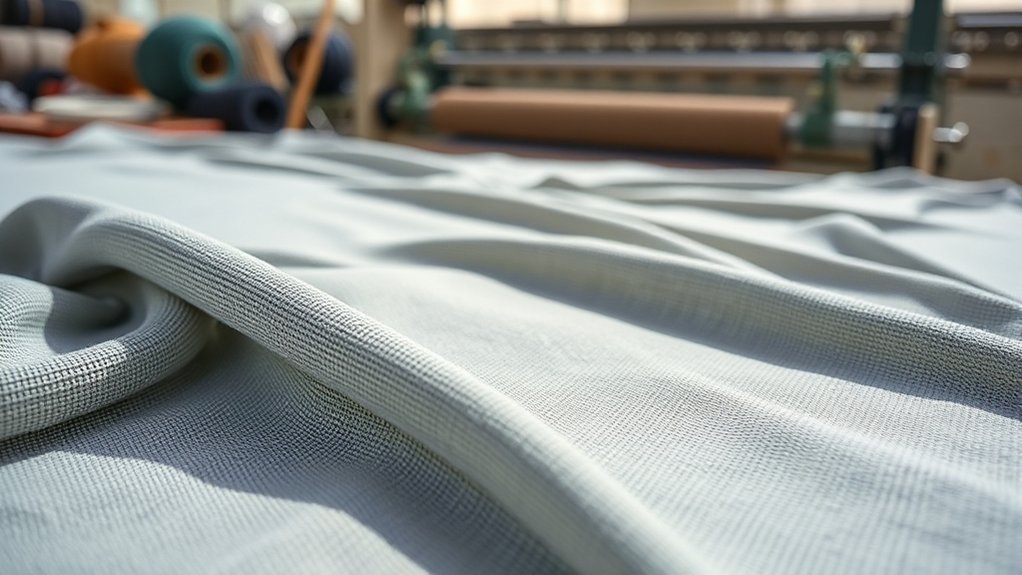
You start making jersey fabric by knitting yarn into loops, which gives it that stretchy, smooth feel. Then, the fabric goes through finishing steps like washing, setting, and treating. These processes help improve its softness, stability, and durability.
All of these steps work together to create the jersey fabric you see in clothes and textiles today. It’s pretty cool how those loops turn into something so comfy and versatile!
Knitting The Yarn
The yarn is fed into circular or flat knitting machines, where interlocking loops create jersey fabric’s smooth face and stretchy structure. You can choose different yarn types, such as cotton, wool, or synthetic blends, and each one changes how the fabric feels, drapes, and performs.
During knitting, the machine forms one dominant side with visible wales and a softer reverse side, giving you a material that’s light, flexible, and easy to wear. Skilled operators adjust tension, stitch density, and knitting techniques to control stretch and stability, so you get the texture and weight needed for the final product.
Because the loops knit in a continuous pattern, jersey can move with your body while still holding its shape.
Finishing The Fabric
Once the fabric comes off the knitting machines, it still needs finishing steps to improve its look, feel, and performance. You’ll usually see the cloth washed to remove oils, then dried and heat-set to stabilize its shape.
Next, mills may use finishing techniques like singeing, compaction, or brushing to smooth the surface and control stretch. Depending on the final use, you might also get fabric treatments that boost softness, wrinkle resistance, moisture management, or color fastness.
These steps help jersey drape better, resist pilling, and feel comfortable against your skin. If the fabric will be printed or dyed, finishing also creates a cleaner base for more even results. By the time it reaches you, the jersey is ready for cutting and sewing.
Types of Jersey Fabric

When you look into jersey fabric, you’ll usually find two main types: single jersey knits and double jersey knits. Single jersey knits tend to feel lighter and stretchier, making them great for comfortable, breathable clothing. On the other hand, double jersey knits are thicker and offer a more stable structure, which means they’re a bit sturdier.
Single Jersey Knits
Single jersey knits are the most common and versatile form of jersey fabric, and you’ll recognize them by their smooth face and slightly textured back. You’ll feel their stretch characteristics right away, since they flex easily and recover well enough for everyday wear.
This makes them a smart choice when you want comfort without bulk. You can use them for T-shirts, dresses, lightweight loungewear, and other fabric applications that need softness and drape.
Because the knit structure is simple, you’ll find single jersey breathable and easy to sew, though edges may curl when cut. If you want a fabric that moves with you and suits casual clothing, single jersey gives you reliable performance and a familiar feel.
Double Jersey Knits
Double jersey knits give you a thicker, more stable version of jersey fabric, with two layers of knit structure worked together for added body and support. You’ll notice the surface feels smoother and the fabric holds its shape better than single jersey.
Because both sides look nearly the same, you can use it for polished garments that need structure without losing stretch. Double jersey works well for dresses, skirts, blazers, and refined casualwear, especially when you want comfort and a neat finish.
It also resists rolling at the edges, which makes sewing easier for you. This added stability boosts fabric versatility, so you can rely on it for pieces that need drape, durability, and a more tailored appearance.
Key Jersey Fabric Properties
Jersey fabric stands out for its stretch, softness, and drape, making it one of the most comfortable knit textiles to wear. You’ll notice its smooth face and slightly textured back, which help it adapt to many garments. Its color variations range from bright solids to heathered tones, so you can choose a look that fits your style.
Good stretch recovery keeps the fabric from losing shape after wear, which matters in tees, dresses, and active basics.
| Property | What You’ll Notice | Why It Matters |
|---|---|---|
| Stretch | Moves easily with your body | Adds flexibility |
| Drape | Falls in soft folds | Creates a flattering silhouette |
| Color | Offers many color variations | Expands design choices |
You can also compare jersey weights before buying, since lighter versions feel airy while heavier ones hold structure better.
Why Jersey Fabric Feels So Comfortable
You’ll notice jersey fabric feels comfortable because it stretches softly with your body instead of fighting against it. Plus, it lets air move through, so you stay cooler during everyday wear. And when it’s against your skin, its smooth finish feels gentle and easy to wear all day long.
Soft Stretch Comfort
Soft, smooth, and naturally flexible, jersey fabric feels comfortable because it moves with your body instead of fighting it. You notice its soft texture the moment you slip it on, and that gentle hand feel reduces friction against your skin.
Because the knit stretches in multiple directions, you can bend, reach, and relax without feeling restricted. Jersey also offers reliable stretch recovery, so it bounces back after movement instead of sagging out of shape.
That balance of give and support makes it easy to wear for long periods, whether you’re lounging, layering, or staying active. You get comfort that feels effortless, not bulky or stiff, and that’s why jersey quickly becomes a go-to fabric in your wardrobe.
Breathable Everyday Wear
Because jersey fabric is knit with a lighter, more open structure than many woven materials, it lets air circulate and helps keep you cooler throughout the day. You’ll notice this breathability when you move from morning errands to relaxed evenings, because your clothes won’t trap heat as easily.
That makes it a smart choice for casual styles you wear often, from tees to dresses and lounge tops. It also works well in layering options, since you can slip it under jackets or cardigans without feeling weighed down.
You get comfort that stays consistent through busy days, warm rooms, and changing weather. Jersey keeps things easy, so you can stay comfortable without sacrificing a polished, everyday look.
Smooth Skin Feel
Jersey fabric feels comfortable because its knit surface has a smooth, slightly stretchy drape that sits gently against your skin. You notice the soft texture right away, and it helps the fabric glide instead of rub. That skin friendly feel makes jersey a smart choice for shirts, dresses, and loungewear you wear all day.
- It moves with you, so you don’t feel stiff or restricted.
- It reduces rough contact, which can make sensitive skin feel calmer.
- It keeps comfort consistent, even after long hours of wear.
Because the fibers and knit structure work together, jersey feels relaxed from the first touch. You get easy comfort without sacrificing a neat look.
Best Uses for Jersey Fabric
When you want fabric that moves with you, jersey is a strong choice for everyday clothing like T-shirts, dresses, skirts, and loungewear. You can also use it for activewear applications because it stretches, breathes, and lets you move freely during workouts.
In casual wear, jersey gives you easy comfort with a polished look, so it works well for weekend outfits and relaxed office pieces. Its fashion versatility makes it a smart pick for children’s clothing, since kids need soft fabric that keeps up with play.
You’ll also see jersey in home textiles, sports jerseys, layering options, and travel garments because it packs easily and feels comfortable for long days. If you like eco friendly choices, you can find jersey made from organic cotton or recycled fibers.
Designers also turn to it for costume design, where drape and movement matter.
Jersey Fabric Pros and Cons
On the plus side, jersey feels soft, stretches well, and drapes comfortably. You can wear it all day without feeling restricted. You also get easy movement, a flattering fit, and a fabric that rarely needs fussing over. That makes it a practical choice for everyday outfits.
- Comfort: You’ll appreciate the smooth feel and flexible stretch.
- Versatility: You can dress it up or down for casual or polished looks.
- Considerations: It can lose shape if poorly made, and sustainability factors vary by fiber content and dyeing techniques.
You should also think about how the knit handles wear over time. Heavier jerseys usually last longer, while lighter versions may cling or show body lines more. If you want a fabric that balances comfort, style, and ease, jersey often delivers. But you’ll get the best results when you choose quality construction.
How to Care for Jersey Fabric
To keep jersey fabric looking and feeling its best, wash it gently in cool or warm water and use a mild detergent. Turn garments inside out first, then choose a delicate cycle to reduce friction and stretching. These simple laundry tips help preserve softness, color, and shape. Avoid bleach and harsh stain removers unless the care label says they’re safe.
If you need to remove a spot, treat it quickly with a little detergent and cold water, then rinse well. After washing, reshape the item while it’s damp and lay it flat or hang it carefully to dry. High heat can shrink or damage jersey, so skip hot dryers when you can.
If you must tumble dry, use the lowest setting. For fabric care, fold jersey instead of hanging heavy pieces for long periods since that can pull them out of shape. Store them in a cool, dry place, and you’ll keep them comfortable, smooth, and ready to wear.
Jersey Fabric vs. Other Knit Fabrics
Jersey fabric stands apart from many other knit fabrics because it’s smooth, stretchy, and usually lightweight. This makes it ideal for T-shirts, dresses, and casual layers. When you compare it with rib knit, interlock, or fleece-backed knits, you’ll notice different jersey fabric characteristics right away: a softer drape, a flatter surface, and less bulk.
- Jersey feels fluid and flexible, while rib knit grips closer to the body.
- Interlock looks similar on both sides and feels thicker, so it gives you more structure.
- French terry adds loops on the back, making it warmer and more absorbent.
These differences shape jersey fabric applications, especially when you want comfort without stiffness. You’ll usually reach for jersey when you need easy movement and a relaxed look. Other knits may offer more warmth, texture, or support, but jersey wins when you want simple wearability and a clean finish.
How to Choose the Best Jersey Fabric
When you’re choosing jersey fabric, start with the project’s purpose: a lightweight cotton jersey works well for breathable tees and everyday tops, while a rayon or modal blend gives you a softer drape for dresses and layered pieces.
Check fabric weight next, since it affects comfort, opacity, and stretch recovery. Lighter jerseys feel airy but may cling or show more, while medium-weight options offer better structure for fitted garments.
You should also test stretch and recovery by pulling the fabric gently; good jersey snaps back without sagging. If you care about sustainability factors, look for organic cotton, recycled fibers, or low-impact dyes.
Match the fiber content to your care routine too: some jerseys machine-wash easily, while others need gentler handling. Finally, buy a small swatch first so you can see how the knit feels, stretches, and drapes before you commit to the full project.
Frequently Asked Questions
Is Jersey Fabric Suitable for Hot Weather?
Yes, you can wear jersey fabric in hot weather if you choose lightweight blends with good breathability factors. It often feels soft and flexible, and it can support moisture management by letting sweat move away from your skin.
You’ll stay cooler if you pick looser fits and lighter colors. Heavier jersey, though, may trap heat, so you should avoid thick versions when temperatures climb or humidity rises outside.
Does Jersey Fabric Shrink After Washing?
Yes, jersey fabric can shrink after washing, especially if you use hot water or high heat. You’ll protect it by following smart fabric care and washing tips: wash in cold water, use a gentle cycle, and air-dry or tumble-dry on low.
Soft, stretchy jersey stays safer when you avoid rough treatment. If you care for it carefully, you’ll keep its fit, feel, and shape looking better longer.
Can Jersey Fabric Be Layered in Winter?
Yes, you can layer jersey fabric in winter, and it works well when you use smart layering techniques. You can wear a jersey top under sweaters, coats, or cardigans for added warmth without bulk.
For winter styling, choose thicker jersey pieces and pair them with thermals or scarves. You’ll stay comfortable, look polished, and move easily all day.
Add fitted outer layers to keep your outfit balanced and cozy.
Is Jersey Fabric Good for Sensitive Skin?
Yes, jersey fabric can be good for your sensitive skin, like a gentle breeze slipping through an open window. You’ll often feel its soft, stretchy weave against your body without much fuss. Its breathable properties help reduce sweat buildup, which can lower skin irritation for many people.
Still, you should choose high-quality jersey and avoid rough finishes or harsh dyes, since your skin may react differently to certain materials.
Does Jersey Fabric Wrinkle Easily?
Yes, jersey fabric usually resists wrinkles better than crisp woven fabrics, so you won’t need to fuss much. You’ll see some jersey fabric types wrinkle more than others, especially lighter cotton blends, but most bounce back after hanging.
Good jersey fabric care helps too: wash gently, avoid overcrowding, and remove items promptly from the dryer. If you want a low-maintenance option, jersey can work well for everyday wear.
Conclusion
Now that you know what jersey fabric is, you can see why it’s such a wardrobe staple. It drapes like a gentle breeze, stretches with you, and feels as comforting as a favorite song.
Whether you choose it for tees, dresses, or loungewear, jersey brings softness and versatility to the table. When you pick the right type and care for it well, you’ll keep this fabric’s easygoing charm shining for years.
In the end, jersey fabric is all about comfort and style working together, making it a go-to choice in any closet.