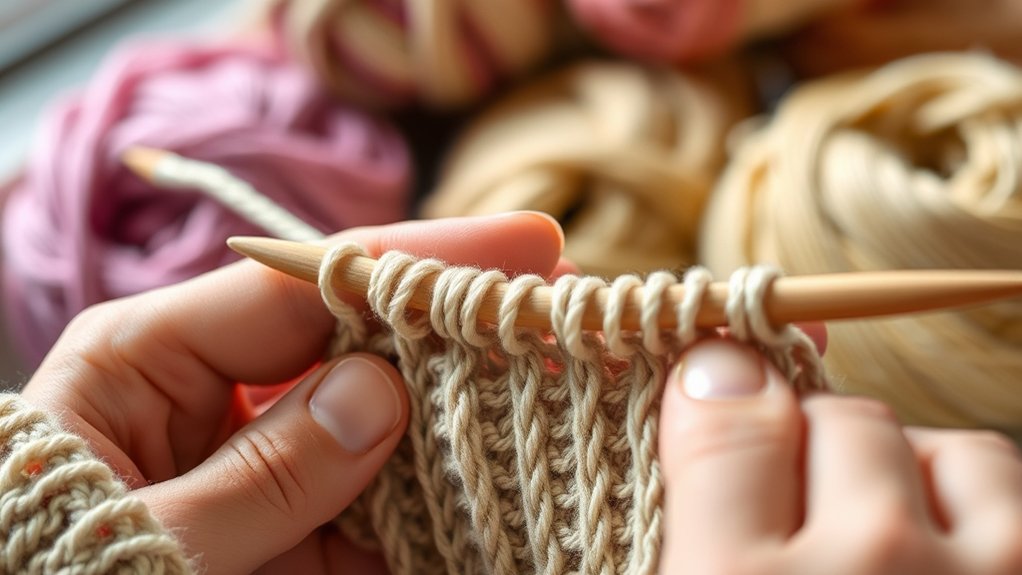
How Are Knit Fabrics Made Step by Step
If you’ve ever tried to find high-quality knit fabrics, you know how frustrating it can be to sort through so many options without knowing what really makes a difference. You’re not alone—many people struggle to understand how knit fabrics are made and what to look for when choosing them. Understanding the process can help you make better choices and appreciate the craftsmanship behind each piece.
You start making knit fabrics by selecting the right yarn based on fiber type and texture. Then, you prepare the yarn by inspecting, winding, and conditioning it.
Next, you use knitting machines, circular for stretch fabrics or flatbed for detailed patterns, to loop yarn into fabric.
After knitting, the fabric is dyed and finished with processes like heat setting or singeing to improve quality and durability.
Keep exploring to uncover how these steps create the perfect knit fabric.
Key Takeaways
- Yarn is selected, inspected, conditioned, and wound to ensure quality and consistent tension for knitting.
- Knitting machines, like circular or flatbed, interlock yarn loops to form knit fabric structures.
- Machine settings control stitch formation, fabric density, and pattern complexity during production.
- After knitting, fabrics undergo dyeing, finishing, and heat-setting to enhance color, elasticity, and stability.
- Final quality control checks fabric for defects, colorfastness, elasticity, and overall durability before shipment.
What Is Knit Fabric and How It Differs From Woven Fabric
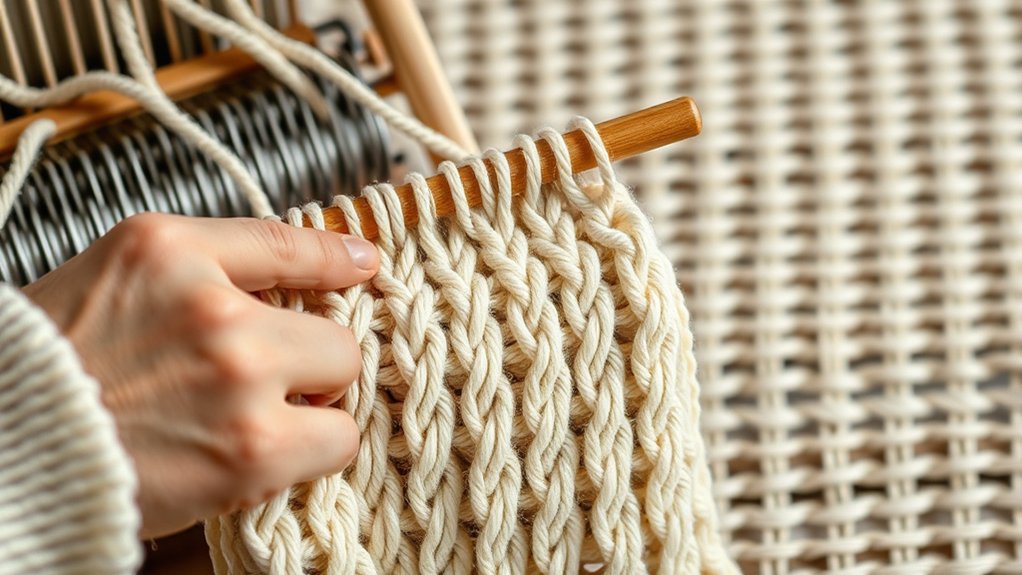
What makes knit fabric unique compared to woven fabric? When you compare knit vs woven, the main difference lies in how the fabric is constructed. Knit fabric is made by interlocking loops of yarn, which gives it more stretch and flexibility.
On the other hand, woven fabric is created by weaving yarns together at right angles, resulting in a tighter, more rigid structure.
You’ll notice that fabric elasticity is much higher in knit fabrics, making them perfect for garments that require movement, like t-shirts or activewear. This elasticity comes from the looped construction, allowing the fabric to stretch in multiple directions and then return to its original shape.
Woven fabrics, while stronger and more durable for certain uses, don’t offer the same level of stretch because their yarns are fixed in place.
Understanding this difference helps you choose the right fabric for your project, especially when comfort and flexibility matter.
Yarn Selection for Knit Fabric
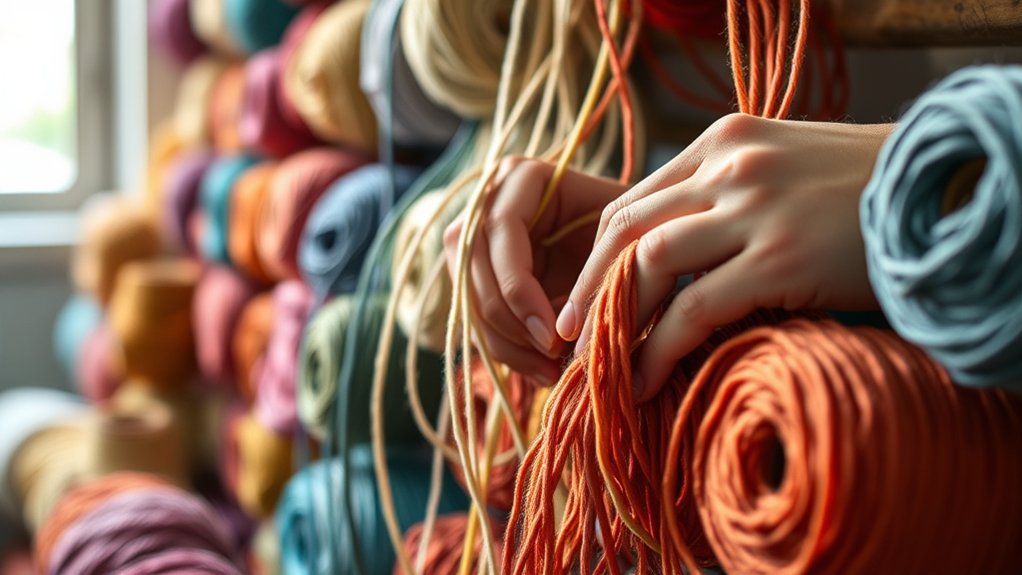
Since the yarn forms the foundation of knit fabric, choosing the right type is essential for achieving the desired texture, strength, and stretch. When selecting yarn, you’ll want to take into account fibers like cotton, wool, or synthetic blends. Each affects how your fabric feels and performs.
Choosing the right yarn fiber is key to creating knit fabric with the perfect texture, strength, and stretch.
Your choice impacts knitting techniques too. Fine yarns suit intricate patterns, while thicker yarns work well for chunky knits.
Don’t forget yarn color variations, which can add depth and visual interest to your fabric. Whether you prefer solid shades or multicolored options, the yarn’s dyeing process influences the final look.
The way yarn interacts with your knitting machine or hand technique also affects fabric elasticity and durability. By understanding the yarn’s properties and matching them to your knitting methods, you make sure your knit fabric meets your design goals efficiently and beautifully.
Preparing Yarn: Cleaning, Spinning, and Dyeing
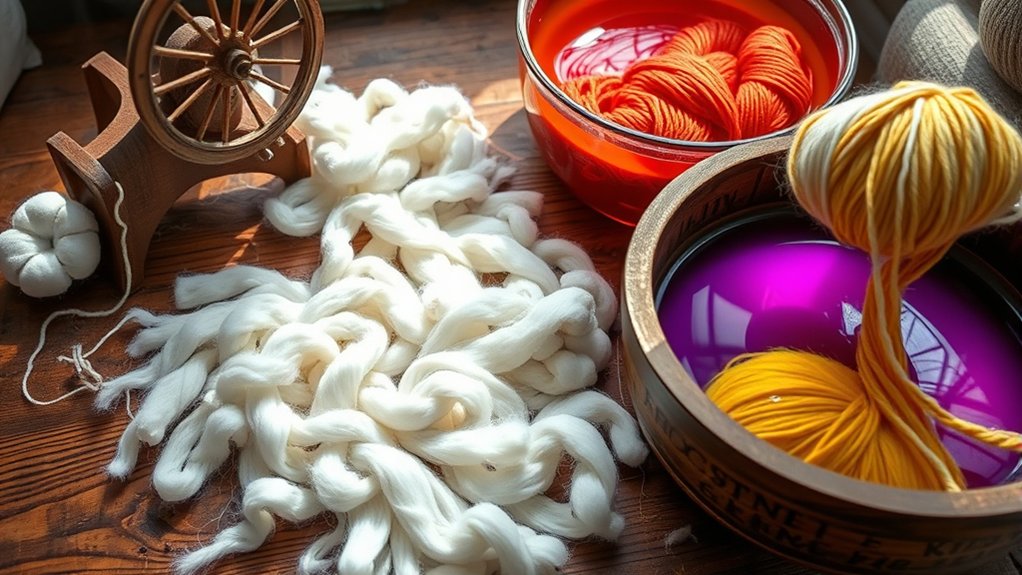
Now that you’ve picked out your yarn, it’s time to get it ready. First up, you’ll want to clean it by removing any impurities. Once that’s done, you’ll move on to shaping the fibers using different spinning techniques. And finally, you’ll add color and texture by applying various dyeing methods. It’s a straightforward process that brings your yarn to life!
Yarn Cleaning Process
How do manufacturers guarantee yarn is ready for knitting? They start with a thorough yarn cleaning process. Removing impurities like oils, dirt, and natural residues is essential to assure yarn quality and durability.
This step directly supports yarn sustainability by reducing waste and enhancing the yarn’s lifespan. Clean yarn also allows you to achieve consistent knit pattern variations without flaws caused by contaminants.
Using specialized washing and drying equipment, manufacturers carefully prepare the yarn to retain its strength and texture. By focusing on cleanliness early, you set the stage for smooth spinning and dyeing processes, which ultimately influence the final fabric’s appearance and performance.
This preparation ensures your knit fabrics meet both quality and sustainability standards.
Spinning Techniques Explained
What makes spinning such an essential step in yarn preparation? Spinning transforms cleaned fibers into continuous yarn, giving your knit fabric strength and uniformity.
You’ll find various spinning techniques, like ring spinning for fine yarns or open-end spinning for faster production. Each method affects the texture and durability of the final fabric.
While spinning itself doesn’t involve eco friendly dyes, it sets the stage for dyeing by producing a consistent yarn ready for color application.
Understanding historical knitting shows how traditional spinning methods evolved, highlighting the craftsmanship behind yarn creation. By mastering spinning techniques, you guarantee your yarn is strong and smooth, making your knit fabric both beautiful and resilient before moving on to the dyeing process.
Dyeing Methods Overview
Although spinning creates strong, uniform yarn, dyeing brings it to life with color and character. You’ll find several dyeing methods, each suited for different effects and fabric types. Whether you want vibrant solids or intricate patterns, dyeing plays a vital role.
After dyeing, you’ll perform colorfastness testing to guarantee the colors won’t fade or bleed during use or washing. This step guarantees durability and quality. Plus, dyeing influences pattern design. Deciding if the yarn is dyed before or after knitting impacts the final look.
| Dyeing Method | Application | Advantages |
|---|---|---|
| Yarn Dyeing | Before knitting | Better color penetration |
| Piece Dyeing | After knitting fabric | Uniform color on fabric |
| Print Dyeing | On finished fabric | Complex pattern design |
Types of Knitting Machines for Knit Fabric
Now that your yarn is ready, it’s time to explore the different knitting machines that bring your fabric to life. You’ll come across circular knitting machines, flatbed knitting machines, and warp knitting machines—each one designed for a specific purpose. Knowing the differences between these machines makes it easier to pick the right method for your knit fabric production.
Circular Knitting Machines
Circular knitting machines play an essential role in producing seamless knit fabrics quickly and efficiently. When you use these machines, you benefit from their ability to create continuous tubes of fabric without seams. This helps deepen yarn durability by reducing stress points.
Their circular arrangement of needles lets you achieve impressive pattern versatility, enabling complex designs and textures in a single pass. You’ll find these machines ideal for manufacturing items like t-shirts, hosiery, and sportswear, where stretch and comfort matter.
Because they operate at high speeds, you can produce large quantities without sacrificing quality. By mastering circular knitting machines, you’ll optimize fabric strength and style, meeting diverse market demands with efficient production. These machines truly streamline the knit fabric manufacturing process.
Flatbed Knitting Machines
When you choose flatbed knitting machines, you gain precise control over fabric structure and design. These machines knit yarns in a flat, horizontal bed, allowing you to create intricate patterns not easily achievable by circular machines.
Unlike fabric weaving, flatbed knitting directly forms loops, offering flexibility in texture and stretch. Yarn dyeing can be integrated before knitting, enhancing color precision. You’ll appreciate their versatility for producing fine, detailed knit fabrics ideal for garments.
| Feature | Description |
|---|---|
| Machine Type | Flatbed, horizontal knitting |
| Fabric Structure | Loop-based, precise patterns |
| Comparison | More detailed than weaving |
Warp Knitting Machines
While flatbed knitting machines offer detailed control over fabric patterns, warp knitting machines provide a different approach suited for producing strong, stable knit fabrics at high speeds. You’ll find warp knitting machines use multiple yarns simultaneously, creating fabrics with less stretch but greater dimensional stability.
This method augments fabric versatility, making it ideal for applications like sportswear, lingerie, and technical textiles. As you operate warp knitting machines, you’ll appreciate their efficiency and ability to produce large quantities quickly without compromising quality.
Unlike weft knitting, warp knitting’s interlocking loops give you fabrics that resist runs and laddering. So, when you need durable knit fabrics with varied textures and properties, warp knitting machines become essential tools in the manufacturing process.
How Knit Fabric Knitting Machines Work
Because knitting machines form the foundation of knit fabric production, understanding their operation is essential. These machines automate the process that has deep roots in knit fabric history, reflecting its cultural significance worldwide.
When you use a knitting machine, yarn feeds through multiple needles that loop and interlock threads to create fabric. Depending on the machine type, like circular or flat-bed, you’ll see variations in speed and fabric patterns.
You control stitch size and density by adjusting tension and needle settings, which impacts the final fabric’s texture and strength. The machines work continuously, replacing manual hand knitting, enabling mass production while preserving the traditional interlooping technique.
Step-by-Step Knit Fabric Production Process
First, you’ll begin by preparing the yarn using specific techniques that ensure the quality is just right. Then, you’ll move on to operating the knitting machines, which helps you create the fabric efficiently. After that, you’ll focus on the finishing touches and carry out quality control to make sure the final product is the best it can be.
Yarn Preparation Techniques
Before knitting can begin, you need to prepare the yarn properly to guarantee smooth fabric production. Start by inspecting the yarn texture to ensure it’s even and free from knots or weak spots that could disrupt knitting.
Next, focus on achieving color consistency by checking dye batches and blending yarns when necessary. You’ll also want to wind the yarn onto bobbins or cones, which helps maintain tension and prevents tangling during knitting.
Moreover, conditioning the yarn through processes like steaming or moisturizing improves flexibility and reduces breakage. By carefully managing these steps, you ensure the yarn feeds smoothly into the knitting machines, resulting in even stitches and a high-quality knit fabric.
Yarn preparation is a vital foundation before moving on to knitting machine operation.
Knitting Machine Operation
How do you transform prepared yarn into a finished knit fabric? You start by setting up the knitting machine, ensuring the yarn moisture content is essential to prevent breakage or tension issues during operation.
Feed your prepped yarn into the machine, which systematically loops the yarn to form interlocking stitches. Monitor the process closely for consistent stitch formation and fabric density.
While knitting, keep in mind that maintaining yarn moisture content affects fabric quality and durability. Although colorfastness testing happens later, being aware of the yarn’s dye stability at this stage helps anticipate any color-related issues in the fabric.
Once the machine completes knitting, you’ll have a continuous sheet of knit fabric ready for the next manufacturing phase. This step is vital for turning yarn into wearable, flexible textile.
Finishing And Quality Control
Although knitting transforms yarn into fabric, finishing and quality control are essential to guarantee the final product meets standards. Once the fabric comes off the knitting machine, you’ll treat it through processes like washing, drying, and heat-setting to improve fabric elasticity and stabilize the knit. These finishing steps boost softness, appearance, and durability.
Then, you’ll test for color fastness to assure the fabric maintains its shade after washing and exposure to light. Quality control involves checking for defects such as runs, holes, or inconsistent tension. You’ll also measure fabric elasticity to confirm it stretches and recovers as expected.
Common Knit Patterns and Their Effect on Fabric Properties
When you investigate common knit patterns, you’ll notice each one influences fabric properties like stretch, texture, and durability in unique ways. Different knitting techniques, such as jersey, rib, and interlock, play a key role in defining these characteristics.
For example, jersey knits offer moderate fabric elasticity, making them great for everyday wear, while rib knits provide higher stretch and recovery, ideal for cuffs and collars. Interlock knits create a smoother texture with less stretch but improved durability, perfect for more structured garments.
Finishing Techniques That Improve Knit Fabric Quality
Because knit fabrics often require improved performance and appearance, finishing techniques play a crucial role in elevating their quality. You’ll find that using the right finishing methods can improve softness, durability, and visual appeal. This helps keep you ahead of market trends.
Thanks to textile innovations, these techniques continually evolve, offering new ways to refine your fabrics.
Here are four key finishing techniques to consider:
- Heat Setting: Stabilizes the fabric shape, reducing shrinkage and distortion.
- Singeing: Removes surface fibers, creating a smooth, clean finish.
- Mercerizing: Boosts luster and dye affinity, improving color vibrancy.
- Coating and Laminating: Adds water repellency or stretch, enhancing functionality.
Quality Control and Testing for Knit Fabric Durability
To guarantee your knit fabrics withstand everyday wear and maintain their quality, you need to implement thorough quality control and durability testing. Start by checking thread tension during production. Inconsistent tension can cause weak spots and uneven fabric stretch, which compromises durability. Monitor this closely to ensure uniform knitting and prevent defects.
Next, test fabric stretch to assess elasticity and recovery. You want fabrics that stretch adequately without losing shape or breaking fibers. Conduct repeated stretch and relaxation cycles to simulate real-life use. Also, evaluate pilling resistance and colorfastness under stress because these affect long-term appearance.
Inspect seams and edges for strength since these areas often face the most strain. Use standardized abrasion and tensile tests to quantify durability objectively. By regularly performing these checks, you ensure your knit fabrics deliver consistent performance and longevity, satisfying both manufacturing standards and customer expectations.
Sustainable Practices in Knit Fabric Production
Ensuring your knit fabrics are durable is just one part of the production process. You also need to consider how your methods impact the environment. Incorporating sustainable practices in knit fabric production helps reduce your ecological footprint while maintaining quality.
Here are four key steps you can follow:
- Choose eco friendly yarns made from organic or recycled fibers to minimize resource use.
- Implement sustainable dyeing techniques that reduce water and chemical consumption.
- Optimize energy use throughout knitting and finishing to lower carbon emissions.
- Recycle scrap materials and minimize waste during cutting and production.
Frequently Asked Questions
How Do Knit Fabrics Differ in Comfort Compared to Woven Fabrics?
You’ll find knit fabrics more comfortable than woven ones because they offer greater fabric stretch, allowing your clothes to move with you. Knit fabrics also provide better breathability, keeping you cooler and more comfortable throughout the day.
Woven fabrics tend to be stiffer and less flexible, which can feel restrictive. So, if you want something that adapts to your body and helps regulate temperature, knit fabrics are usually the better choice.
Can Knit Fabrics Be Recycled Effectively?
Knit fabrics aren’t always the easiest guests at the recycling party, but yes, you can recycle them effectively. With fiber recycling advancements, you can turn old knits into sustainable textiles, reducing waste and environmental impact.
You’ll find that separating fibers and blending processes are key, so choosing blends wisely helps. By supporting fiber recycling, you’re playing a part in making knit fabric reuse more practical and eco-friendly.
What Are the Best Care Instructions for Knit Garments?
To care for your knit garments, always wash them gently in cold water to avoid shrinking or stretching. Use mild detergent and avoid harsh fabric softening products that can damage fibers.
For stain removal, treat spots promptly with a gentle stain remover, dabbing instead of rubbing. Lay your knits flat to dry, reshaping them to maintain their form. Avoid wringing or hanging, which can distort the fabric’s shape over time.
How Long Does It Take to Knit a Fabric by Hand?
You might be surprised, but hand knitting a fabric can take anywhere from a few hours to several days. The time estimation depends on the fabric’s size, stitch complexity, and your speed.
For a small swatch, you might finish quickly, but larger pieces demand patience. Hand knitting is a slow, rewarding process that lets you control every loop, making each fabric truly unique and worth the time you invest.
Are There Health Risks Associated With Synthetic Yarns Used in Knitting?
Yes, there are some health risks you should consider with synthetic fibers. When you work with synthetic yarns, you might face chemical exposure from dyes and treatments used during manufacturing.
These chemicals can cause skin irritation or respiratory issues, especially if you’re sensitive or work in poorly ventilated spaces. To protect yourself, always choose quality yarns, wash finished items before use, and guarantee proper ventilation while knitting.
Conclusion
Think of making knit fabric like weaving a story with yarn instead of words. Each loop connects to the next, creating strength and flexibility.
Just as a well-told story holds your attention, quality yarn, precise knitting machines, and careful finishing guarantee your fabric stands the test of time.
Remember, 90% of knit fabrics you love start with these steps. This shows how craftsmanship and care truly stitch comfort into every thread you wear, making knit fabrics special.