How to Source Fabrics Step by Step
If you’ve ever tried to find the perfect fabric for your project, you know how overwhelming it can be. You’re not alone—many people struggle with sorting through countless fabric options and suppliers. It’s tough to know where to start or how to make sure you’re getting the best quality without breaking the bank.
To source fabrics step by step, start by identifying your fabric type, quantity, and purpose. Compare different fabrics to find what fits your project best. Research reliable suppliers and request swatches to check texture and color.
Evaluate quality carefully and negotiate deals or order minimums confidently. Don’t forget to plan your shipping and consider sustainable options.
By following this approach, you’ll gain clearer insights to make smarter fabric choices and supplier selections.
Key Takeaways
- Define your fabric requirements including type, quantity, pattern, and budget before starting the sourcing process. This helps keep everything clear from the start.
- Research and evaluate suppliers with verified certifications, quality samples, and positive customer feedback. It’s important to know who you’re dealing with.
- Request fabric swatches to assess texture, colorfastness, weave, and suitability under various lighting conditions. Seeing and feeling the fabric makes a big difference.
- Negotiate pricing, minimum order quantities, and shipping terms while maintaining professional communication. Being clear here can save headaches later.
- Confirm delivery schedules, packaging quality, and return policies to ensure timely and intact fabric receipt. This keeps your project on track without surprises.
Identify Your Fabric Requirements: Type, Quantity, and Purpose

Before you begin sourcing fabrics, you need to clearly identify your requirements by considering the type, quantity, and purpose of the fabric. Knowing exactly what you need will save time and prevent costly mistakes.
Identify fabric type, quantity, and purpose upfront to save time and avoid costly errors.
Start by defining the fabric’s intended use, whether for apparel, upholstery, or crafts. This influences the durability and texture you’ll require. Next, determine the quantity needed to complete your project without excess waste.
Pay close attention to fabric patterning, as this affects the visual appeal and how the fabric should be cut or aligned. Also, consider dyeing techniques if you want custom colors or effects. Some methods work best on specific fiber types and can impact fabric performance.
Understanding these factors helps you communicate effectively with suppliers and guarantees you get materials that meet both aesthetic and functional goals. By pinpointing these details first, you streamline sourcing and set a solid foundation for your project’s success.
Compare Fabric Types and Their Best Uses

You’ll want to compare natural and synthetic fabrics to find the right balance of comfort and durability. Think about how each fabric handles wear and care, especially if you’re looking for something low-maintenance. Plus, don’t forget to consider the season—some fabrics are perfect for warm weather, while others keep you cozy when it’s cold. It’s all about finding what works best for your needs!
Natural Vs Synthetic Fabrics
Although both natural and synthetic fabrics offer unique advantages, understanding their differences helps you choose the best material for your project. Natural fabrics like cotton, linen, and silk absorb dyes beautifully, making fabric dyeing and textile printing results vibrant and lasting.
They’re breathable and comfortable, ideal for clothing and home textiles where softness matters. Synthetic fabrics such as polyester and nylon are prized for their strength and resistance to wrinkles and shrinking.
They often hold colors well but may require special dyeing techniques due to their chemical makeup. When sourcing, consider if you need easy customization with fabric dyeing or detailed textile printing. Natural fibers excel here.
For durability and ease of care, synthetics might fit better, but for rich color and comfort, natural fabrics usually win.
Fabric Durability And Care
When selecting fabrics, you’ll want to weigh how each type handles wear and care to guarantee your project lasts. Fabric weaving affects durability; tighter weaves usually hold up better. Dyeing techniques also influence colorfastness and maintenance.
For example, natural fibers like cotton soften over time but may shrink. Synthetic fibers resist wrinkles and stains but can be less breathable.
| Fabric Type | Best Uses & Care Tips |
|---|---|
| Cotton | Everyday wear; machine wash cold, low heat drying |
| Polyester | Outdoor gear; resists wrinkles, wash warm, air dry preferred |
| Linen | Lightweight garments; hand wash or gentle cycle, iron while damp |
Understanding these factors helps you pick fabrics that fit your project’s longevity and care needs.
Best Fabrics For Seasons
How do you choose the right fabric for each season? Start by considering natural fibers like cotton and linen for spring and summer; they breathe well and keep you cool.
Wool and flannel suit fall and winter, providing warmth without bulk. Don’t forget fabric patterning. Light, floral prints brighten warmer months, while darker, textured patterns fit colder seasons.
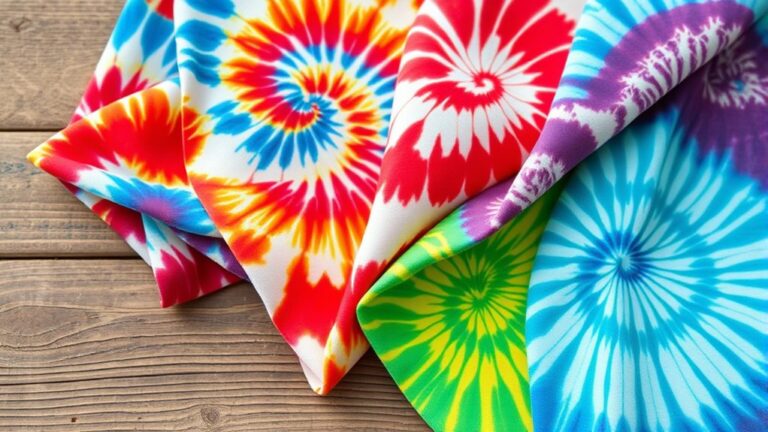
Dyeing techniques also influence seasonal appeal. Vibrant, tie-dye or batik fabrics energize summer wardrobes, whereas muted, earthy tones from traditional dyeing methods complement autumn.
Synthetic blends work year-round but check their comfort level for your climate. By matching fabric type, patterning, and dyeing techniques with seasonal needs, you’ll source textiles that look great and perform well, no matter the weather.
Research Reliable Fabric Suppliers and Marketplaces

You’ll want to find fabric suppliers who have a solid reputation for quality and reliability. It’s a good idea to check out reviews and even ask for samples—this way, you can make sure you’re dealing with trusted sources. Also, don’t forget to explore online marketplaces. They offer a huge variety of fabrics, all just a click away, making it super convenient to compare options.
Identifying Trusted Suppliers
Where can you find fabric suppliers that won’t let you down? Start by focusing on those who excel in fabric dyeing and textile weaving, since quality in these areas reflects a supplier’s expertise and reliability.
Look for suppliers with transparent processes and certifications that guarantee material standards. Don’t hesitate to ask for samples to inspect fabric texture, colorfastness, and weaving quality firsthand.
Trusted suppliers often have solid reputations, positive reviews, and long-standing industry relationships. Build connections with those who communicate clearly and meet deadlines consistently.
Exploring Online Marketplaces
When diving into online marketplaces, what should you look for to find reliable fabric suppliers? Focus on vendors who emphasize quality and transparency in fabric manufacturing. Prioritize those showcasing textile innovation to guarantee you get up-to-date, sustainable, or advanced materials. Check reviews and return policies to avoid surprises.
Look for:
- Clear product descriptions with fabric composition and sourcing details
- Certifications or proof of sustainable textile innovation
- Responsive customer service ready to answer technical questions
Exploring these aspects helps you avoid unreliable suppliers and guarantees you source fabrics that meet your standards. Online marketplaces can connect you to cutting-edge fabric manufacturing processes worldwide, making it easier to find unique textiles that enhance your designs.
Evaluate Fabric Quality for Your Project
Although selecting the right fabric might seem straightforward, evaluating its quality requires careful attention to detail. You’ll want to take into account factors like durability, weave, and finish, especially as textile innovations continue to improve fabric performance.
Also, check for fabric certification to verify you’re getting materials that meet industry standards for sustainability and safety.
Here’s a quick reference to help you assess fabric quality:
| Aspect | What to Check |
|---|---|
| Weight | Heavier fabrics usually last longer |
| Weave | Tight weave means better durability |
| Texture | Smoothness affects comfort |
| Colorfastness | Resists fading after washing |
| Certification | Look for OEKO-TEX or GOTS labels |
Request Fabric Swatches to Check Texture and Color
You’ll want to request fabric swatches so you can really get a feel for the texture and color before making a commitment. Swatches let you touch the material and see how the color changes in different lighting. It’s a good idea to take your time comparing them closely to make sure they’re just right for your project.
Benefits of Fabric Swatches
Why guess how a fabric will look or feel when you can experience it firsthand? Requesting fabric swatches lets you touch the texture and see the true color in your space, avoiding surprises later.
Swatches also help you plan efficient fabric storage by visualizing how much material you’ll need, reducing waste. Plus, you can identify scraps perfect for fabric recycling projects, making your sourcing more sustainable.
When you get swatches, you can:
- Feel the weave and weight to ensure comfort and durability
- Compare colors under your lighting to match your design perfectly
- Test how fabrics respond to handling and care before committing
Using swatches is a smart step that conserves time, money, and helps you create with confidence.
How to Evaluate Swatches
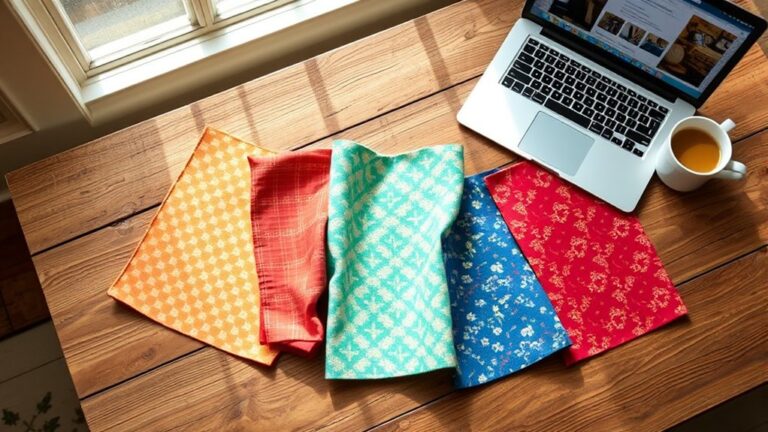
When you receive fabric swatches, start by closely examining the texture and color in different lighting conditions to verify they meet your needs. Feel the fabric to assess its weight and weave, ensuring the texture aligns with your project.
Check the fabric pattern carefully, noting scale and repeat to confirm it suits your design. Compare swatches side by side for accurate color matching, especially if you’re mixing fabrics or matching existing items.
Remember, colors can shift under natural light versus artificial light, so review swatches in both environments. Don’t hesitate to test drape by holding the swatch up or pinning it to see how it behaves.
This hands-on evaluation helps you avoid costly mistakes and ensures your final fabric choice perfectly fits your vision.
Understand Pricing and Set Your Budget
Although fabric quality varies widely, understanding pricing early on helps you set a realistic budget that aligns with your project needs. Prices depend on several factors, including the complexity of fabric dyeing processes and whether the fabric holds recognized textile certifications. These certifications often raise costs but guarantee quality and sustainability.
When planning your budget, keep these points in mind:
- The type of fabric and fiber content, which directly affects cost.
- Additional treatments like dyeing, printing, or finishing that add to the price.
- Certification fees for textiles meeting organic, fair-trade, or eco-friendly standards.
Negotiate Fabric Deals and Minimum Orders
Setting a clear budget based on fabric quality and certifications gives you a strong foundation to negotiate better deals. When discussing prices, emphasize your understanding of fabric dyeing and textile printing processes to show suppliers you know the value of their work.
Ask for discounts on larger orders or inquire about flexibility in minimum order quantities to find a balance that suits your needs. Don’t hesitate to request samples before committing, especially if you’re dealing with specialized fabric dyeing or custom textile printing.
Highlight your potential for repeat business as a bargaining chip. Remember, suppliers often prefer steady clients over one-time buyers. Be clear about your quality expectations and delivery timelines, but keep negotiations professional and respectful.
Plan Shipping, Delivery, and Returns
How will you guarantee your fabrics arrive on time and in perfect condition? Planning shipping, delivery, and returns is essential to protect your investment, especially when dealing with delicate fabric dyeing and textile printing processes. Start by confirming shipping timelines with your supplier, ensuring they align with your production schedule.
Ensuring timely, flawless fabric delivery starts with clear shipping plans aligned to your production needs.
Consider these key steps:
- Choose reliable carriers experienced in handling delicate textiles to prevent damage.
- Insist on proper packaging that safeguards colors and prints from moisture and abrasion.
- Set clear return policies for issues like color fading or printing defects.
Choose Sustainable and Ethical Fabric Sources
Ensuring your fabrics arrive safely is just one part of the sourcing process; selecting suppliers who prioritize sustainability and ethical practices makes a lasting impact on your brand and the environment. Look for fabric suppliers that use eco-friendly fabric dyeing methods to minimize harmful chemical runoff and reduce water consumption.
These processes not only protect ecosystems but also reflect well on your commitment to responsible production. Always check for credible textile certification such as GOTS (Global Organic Textile Standard) or OEKO-TEX, which verify that the fabric meets strict environmental and social criteria.
These certifications guarantee that the materials you source are free from toxic substances and produced under fair labor conditions. By choosing sustainable and ethically sourced fabrics, you contribute to reducing fashion’s environmental footprint and support fair treatment of workers, making your brand stand out to eco-conscious customers.
Keep these factors top of mind as you evaluate your fabric options.
Build Strong Relationships With Fabric Suppliers
When you build strong relationships with fabric suppliers, you gain more than just reliable materials. You create a partnership that can lead to better prices, priority access to new fabrics, and smoother communication throughout your production process.
To nurture these connections, make an effort to understand their capabilities, such as fabric dyeing techniques and textile weaving specialties. This knowledge helps you request exactly what you need and appreciate the craftsmanship involved.
Maintain open, honest communication and show respect for their expertise. Timely payments and clear feedback also build trust.
When you collaborate closely, suppliers often go the extra mile to accommodate your requests or alert you to new trends.
Imagine working with suppliers who offer:
- Custom fabric dyeing tailored to your color needs
- Innovative textile weaving methods for unique textures
- Priority notifications about limited-edition fabric runs
Investing in these relationships ensures you get quality materials and a reliable supply chain every time.
Frequently Asked Questions
How Do I Store Fabrics Properly to Maintain Quality?
To store fabrics properly and maintain fabric quality, you should keep them in a cool, dry place away from direct sunlight. Use breathable fabric bags or acid-free tissue paper to prevent moisture buildup and yellowing.
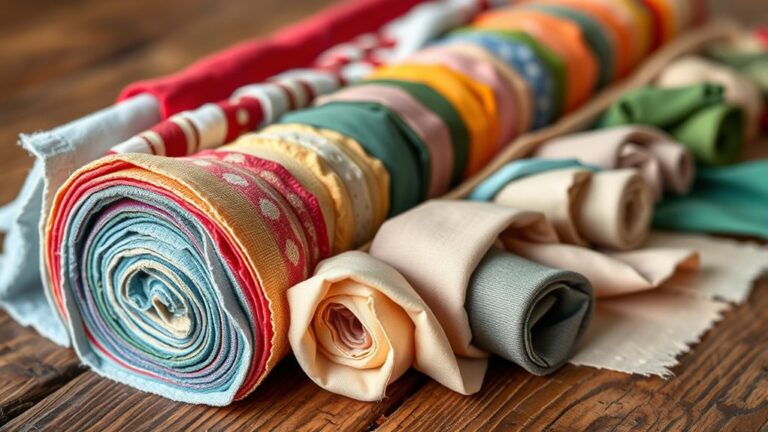
Avoid plastic bags since they trap humidity. Roll delicate fabrics instead of folding to prevent creases. Regularly check your fabric stash for signs of damage or pests.
Following these fabric storage tips will keep your materials fresh and ready to use.
What Tools Are Essential for Cutting Different Fabric Types?
Cutting fabric is like slicing through clouds; you need the right tools to make smooth, precise cuts. Essential cutting tools include sharp fabric scissors for clean edges, rotary cutters for straight lines on woven fabrics, and pinking shears to prevent fraying on delicate textiles.
You’ll also want a cutting mat and clear rulers to guide your fabric cutting techniques. Having these tools guarantees you handle different fabric types with ease and accuracy every time.
Can I Wash Fabrics Before Starting My Project?
Yes, you should definitely wash fabrics before starting your project. Pre washing techniques help remove any chemicals, dirt, or sizing from the fabric, ensuring it’s clean and ready to work with.
It also plays a vital role in fabric shrinkage prevention, so your finished piece won’t distort after the first wash. Just follow the care instructions for each fabric type to avoid damage and get the best results.
How to Handle Fabric Defects After Purchase?
You spot a small snag right after unrolling your fabric. Fabric defect identification is essential. When you find flaws, don’t panic.
You can repair fabric flaws by carefully stitching tears or using fabric glue for minor holes. If defects are large, cut around them or repurpose the fabric for smaller projects.
Always inspect fabric thoroughly before starting to save time and frustration later on.
What Are Common Fabric Care Symbols and Their Meanings?
You’ll find common fabric care symbols like a tub for washing, a triangle for bleaching, a square for drying, an iron for ironing, and a circle for dry cleaning. Each symbol guides your fabric treatment. Dots inside show temperature, while lines suggest gentle cycles.
Mastering symbol interpretation helps you avoid damage and keep fabrics looking great. Always check these icons before cleaning so your materials stay in top condition.
Conclusion
Sourcing fabric is like planting a garden. You start by choosing the right seeds—your fabric needs—and then nurture them carefully by researching suppliers and checking quality.
Just as a gardener waters and tends each plant, you’ll request swatches and negotiate deals to guarantee the best harvest. When you build strong, ethical relationships, your fabric garden flourishes.
This gives you the vibrant materials you need to bring your creative vision to life. Keep tending with care to succeed in sourcing fabric!