What Is Jacquard Fabric?
Finding fabrics that combine beauty, durability, and unique texture can be a real challenge. You’re not alone if you’ve struggled to find textiles that stand out without sacrificing quality.
Many people want something elegant and versatile for clothing or home decor but don’t know where to start. What Is Jacquard Fabric.
Jacquard fabric is a woven textile with patterns built into the weave, so you can see and feel the design instead of having it printed on top. You’ll notice rich texture, raised motifs, and often floral, geometric, or ornamental details.
Because the pattern is woven in on a jacquard loom, the fabric can be durable, elegant, and versatile for clothing, upholstery, and drapery.
Keep going and you’ll uncover what makes it stand out even more.
Key Takeaways
- Jacquard fabric is a woven textile with intricate patterns built into the weave, not printed on the surface. It’s made on a jacquard loom that lifts individual warp threads to create complex designs.
- The fabric is known for its raised texture, depth, and refined appearance. Jacquard comes in many types, including cotton, silk, polyester, and wool, for different uses.
- It is durable and widely used in clothing, upholstery, drapery, and accessories.
What Is Jacquard Fabric?

Jacquard fabric is a woven textile with intricate patterns built directly into the cloth rather than printed on top. You can spot its raised, detailed motifs in clothing, upholstery, drapery, and accessories.
Because the pattern becomes part of the weave, you get depth, texture, and a refined look that plain fabrics can’t match. Designers use it to create floral, geometric, or ornamental effects, and you’ll often see it in formal or decorative pieces.
Because the pattern is woven in, jacquard adds depth, texture, and a refined look to any design.
Its appeal comes from both style and structure, so it works well when you want visual interest without extra embellishment. In fabric history, jacquard stands out because it expanded what textile makers could achieve through design techniques.
Today, you can choose jacquard when you want a fabric that feels rich, elegant, and carefully crafted.
How Jacquard Fabric Is Woven
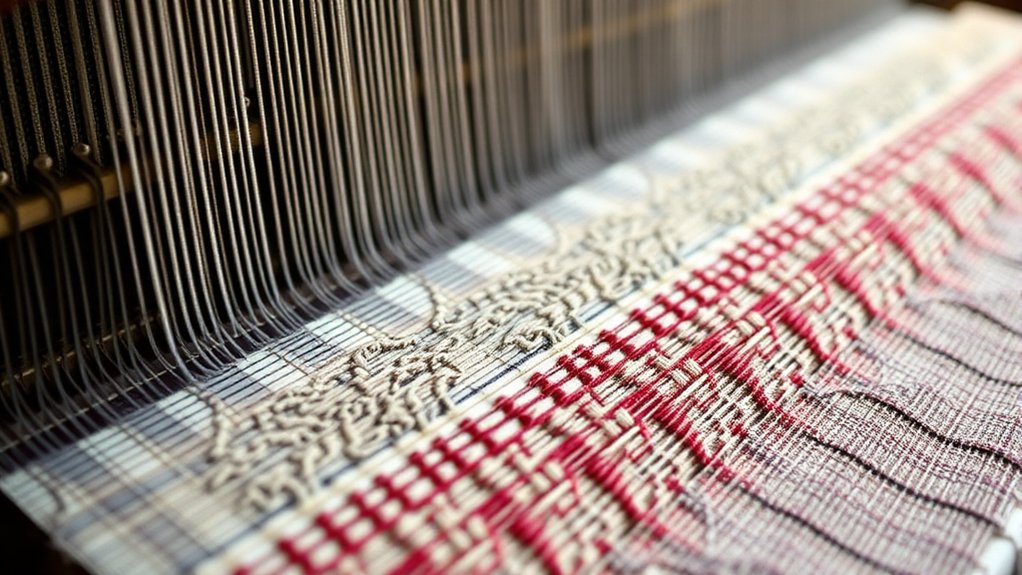
Rather than being printed or embroidered later, jacquard patterns are woven in as the fabric is made, with the loom lifting specific warp threads to create the design. You’ll see that this process relies on a jacquard mechanism, which controls each thread separately or in small groups.
That control lets you build complex motifs without changing the basic cloth structure. Compared with simpler weaving techniques, this method gives you far more freedom to place detailed images, repeats, and curves directly into the weave.
As you learn jacquard history, you’ll find that the system transformed textile production by making intricate designs faster and more consistent. Today, you can still recognize the method in mills and workshops that use programmed looms or traditional setups.
The weft passes through while the selected warp threads rise and sink, and that sequence creates the finished pattern as you weave.
Jacquard Fabric’s Texture, Durability, and Pattern
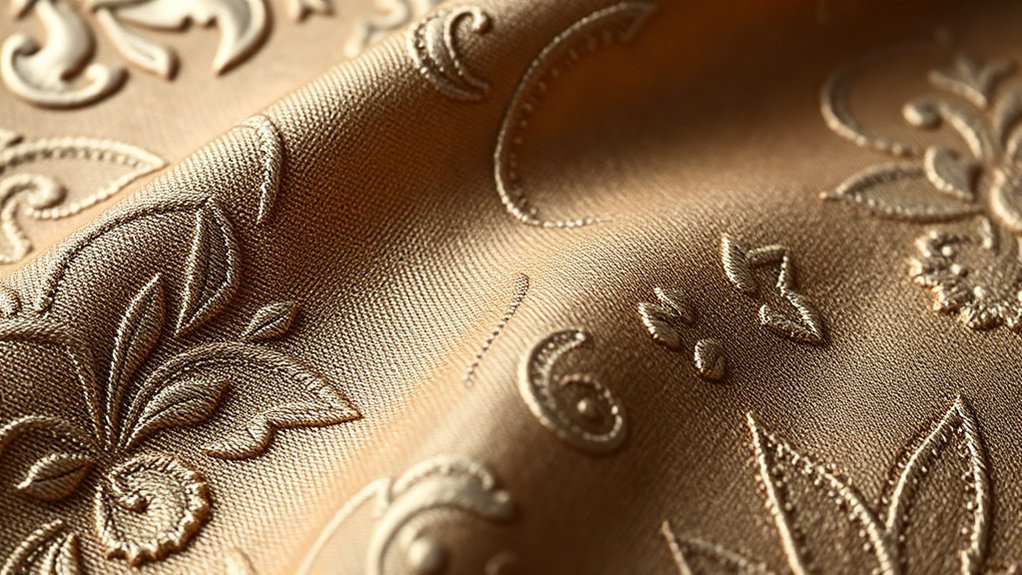
When you touch jacquard fabric, you immediately notice its textured weave. It has this rich, raised surface that feels quite special. Plus, you can count on it to last a long time because its woven structure is really durable. And the patterns? They’re intricate and stand out clearly, making each piece look detailed and unique.
Textured Weave Structure
At its core, this fabric’s woven structure creates a raised, tactile surface that you can both see and feel. It gives the pattern real depth instead of a printed-on look. You notice textured patterns because the design grows from woven techniques, not surface ink.
The threads shift in and out to shape leaves, scrolls, or geometrics with a crisp outline.
| Feature | What You Feel | What You See |
|---|---|---|
| Raised weave | Slight dimension | Clear motif |
| Thread variation | Subtle texture | Light and shadow |
| Pattern build | Rich detail | Woven imagery |
That layered weave gives you a fabric that looks ornate and feels interesting under your hand. So, the design stays visually engaging from every angle.
Long-Lasting Fabric Strength
Jacquard fabric’s textured weave does more than add visual interest. It also helps the material hold up well over time. You’ll notice that its interlaced structure supports everyday use better than many thinner textiles, especially when you want dependable performance in upholstery, drapery, or clothing.
Because the surface isn’t just printed on, the design stays part of the fabric. This often improves fabric longevity. When you make durability comparisons, you’ll see that jacquard can resist wear while keeping its shape and feel.
It doesn’t easily flatten or look tired after repeated use. So, you get a strong, stable material that keeps looking polished without demanding much extra care.
Intricate Pattern Design
The woven pattern is what gives jacquard fabric its signature appeal, blending texture and design directly into the material itself. You can feel raised details that add depth without relying on printed decoration, so each surface looks refined and substantial.
Jacquard weaving lets you showcase intricate motifs that stay crisp because the design forms during production, not afterward. That construction also supports design versatility, so you’ll find floral, geometric, and damask styles in everything from upholstery to clothing.
Because the pattern is built into the fibers, it resists fading and keeps its visual impact through regular use. You get a fabric that feels elegant, holds its shape well, and delivers lasting beauty with every thread.
Common Types of Jacquard
When you investigate jacquard fabric, you’ll find several common types, each with its own texture, weight, and best use. You might see cotton jacquard, which feels breathable and works well for everyday upholstery, shirts, and light drapery.
Silk jacquard gives you a smoother sheen and a more luxurious hand, making it popular for formal wear and elegant home accents. Polyester jacquard offers durability and easy care, so you can use it for busy interiors and budget-friendly fashion.
Wool jacquard brings warmth and structure, which suits blankets, coats, and heavier decor. You’ll also notice that common jacquard patterns often include florals, geometrics, and damasks, all woven directly into the cloth.
These variations shape jacquard fabric applications by helping you match the fabric to comfort, appearance, and function without sacrificing style.
Jacquard Fabric vs. Brocade
Though jacquard and brocade often get compared, they’re not exactly the same. You can think of jacquard as a weaving method and brocade as a decorative fabric style. With jacquard, the pattern gets woven directly into the cloth on a jacquard loom, so the design can be simple, subtle, or bold.
Brocade usually shows raised, ornate motifs that often look more elaborate and sometimes use extra threads for a richer effect.
When you compare jacquard characteristics with brocade differences, you’ll notice that jacquard describes how the fabric is made, while brocade describes how it looks and feels. That means brocade can be a type of jacquard, but not every jacquard fabric counts as brocade.
If you want structure and pattern flexibility, jacquard gives you that. If you want a more luxurious, textured finish, brocade stands out more clearly.
Jacquard Fabric in Fashion
When you spot jacquard on the runway, its rich texture and bold pattern immediately catch your eye. It adds a polished, statement-making vibe that designers adore for dresses, jackets, and separates. But here’s the thing—you don’t have to save jacquard just for special occasions.
You can totally wear it every day by pairing it with simple basics. That way, the fabric stands out without coming off as too formal. It’s all about balancing the look so your outfit feels stylish but still easygoing.
Jacquard Runway Appeal
On the runway, jacquard turns fabric into a statement, giving designers a way to build texture, depth, and pattern directly into the garment itself. You’ll notice how it catches light differently from smooth textiles, so every movement adds dimension.
In runway trends, jacquard often signals luxury and precision, especially when bold motifs or metallic threads frame a silhouette. During designer showcases, it helps you see craftsmanship up close because the pattern isn’t printed on; it’s woven in.
That built-in complexity lets a look feel rich without extra embellishment. You can read it as both classic and modern, since it adapts easily to structured coats, sleek dresses, and dramatic evening pieces. Onstage, jacquard gives fashion a polished, memorable presence.
Everyday Styling Uses
Beyond the runway, jacquard works well in everyday fashion because it gives your outfit texture and interest without needing much else. You can wear it in casual outfits with jeans, loafers, or clean sneakers for an easy polished look.
For evening wear, choose a jacquard skirt, blazer, or dress that brings depth under soft lighting. Use texture contrast by pairing it with denim, leather, or smooth cotton.
Smart layering techniques let you adapt it to seasonal trends, from light jackets in spring to structured coats in fall. Pay attention to fabric pairing and color combinations so the pattern feels balanced, not busy.
Finish with simple accessorizing tips: let one statement piece lead, and keep the rest understated.
Jacquard Fabric for Upholstery
Jacquard fabric brings texture, pattern, and durability together, making it a strong choice for upholstery. You can use it to enhance sofas, chairs, ottomans, and headboards without relying on extra decoration. Its woven design helps you add visual interest while keeping surfaces feeling refined and substantial.
In many upholstery applications, you’ll appreciate how jacquard balances style with everyday function. It handles frequent use well, so you can choose it for rooms that need both beauty and resilience.
You also get fabric versatility, since jacquard comes in many weights, colors, and motifs that suit classic or modern interiors. When you want furniture that feels polished, this fabric can help you create that effect. It also works well when you want pattern to stand out without looking printed.
For a tailored, long-lasting finish, jacquard gives your upholstered pieces a confident, upscale look.
How to Identify Jacquard Fabric
When you’re choosing jacquard fabric, you can spot it by its woven pattern, which is built into the cloth rather than printed on top. Run your hand across the surface and notice the raised texture and clear design shifts.
Spot jacquard by its woven pattern—raised, textured, and built into the fabric, not printed on top.
You’ll often see intricate florals, damasks, or geometrics that seem to change with the light. Check the back of the fabric too: a true jacquard usually shows the pattern reversed or muted on the underside, not a flat printed image.
Look for tight, detailed weaving and subtle color variations created by different yarns, which give the fabric depth. You can also compare it with simpler textiles; jacquard stands out because of its pattern versatility and rich visual complexity.
If the design feels integrated into the weave, you’re likely holding jacquard.
How to Care for Jacquard Fabric
To care for jacquard fabric, you’ll want to wash it gently using a mild detergent and cool water. Avoid harsh scrubbing or using high heat because both can damage the weave and finish.
Once you’ve washed it, lay the fabric flat or hang it up carefully to dry. After it’s dry, make sure to store it in a cool, dry place to keep it looking great.
Washing Jacquard Gently
Because jacquard fabric can be delicate, you should wash it gently to protect its woven pattern and extend its life. Check the label first, then choose cool water and a mild detergent for the safest fabric care.
Turn the piece inside out, zip or button any closures, and place it in a mesh bag if you’re using a machine. Select the gentle cycle and avoid crowding the drum so the fabric moves freely. These washing tips help reduce friction and preserve texture.
If the item is especially ornate or lightly soiled, hand wash it instead by swishing it softly and rinsing well. Don’t scrub, twist, or use bleach, since harsh treatment can weaken fibers and dull the design over time.
Proper Drying And Storage
After washing, reshape jacquard while it’s still damp and lay it flat on a clean towel or drying rack so the weave keeps its form. For proper drying, keep it away from direct sunlight and heat. These can fade colors and distort texture. Never wring or tumble dry it; you’ll protect the raised pattern by letting air do the work.
| Care step | What you do |
|---|---|
| Drying | Lay flat, smooth gently |
| Heat | Avoid radiators and dryers |
| Storage | Fold loosely or hang carefully |
| Protection | Use breathable covers |
For ideal storage, place the fabric in a cool, dry space. Add acid-free tissue between folds to prevent creases and avoid plastic bags that trap moisture. Check stored pieces occasionally so you can catch mildew or pests early.
What Makes Jacquard Fabric Unique
What makes jacquard fabric unique is the way its pattern is woven directly into the cloth instead of being printed or embroidered on top. You can feel the design’s depth, see its shifting sheen, and appreciate how each thread works together.
Rooted in textile history, jacquard changed how people think about luxury and structure. Its woven imagery gives you durability, detail, and a rich surface that often feels elegant and timeless.
You notice craftsmanship that feels almost alive. You enjoy a fabric that can make a room or outfit feel special. You value patterns that stay clear through years of use. And you connect with weaving techniques that turn yarn into art.
Because the pattern lives inside the fabric, you get beauty that lasts. That’s why jacquard still stands out when you want texture, character, and a touch of drama.
Frequently Asked Questions
Is Jacquard Fabric Suitable for Summer Clothing?
Yes, you can wear jacquard fabric in summer, but you’ll want to choose lighter versions. Its suitability depends on breathability factors like fiber type, weave, and weight.
If you pick cotton or silk blends, you’ll stay cooler and more comfortable. You can also use jacquard for summer styles such as dresses, skirts, or lightweight tops. Avoid heavy, thick jacquard since it can trap heat and feel too warm.
Can Jacquard Fabric Be Machine Washed?
Yes, you can machine wash jacquard fabric if the care label allows it. Picture the woven pattern holding its shape like a garden trellis in rain. Use gentle washing techniques, cold water, and a mild detergent to protect the texture.
Turn the item inside out, skip bleach, and choose a low spin cycle. For better fabric care, air-dry it flat or hang it away from direct heat to prevent stretching.
Does Jacquard Fabric Wrinkle Easily?
Jacquard fabric doesn’t usually wrinkle easily, so you’ll often enjoy decent wrinkle resistance. You can help preserve that with smart fabric care: hang it promptly, avoid overloading the washer, and use low heat when drying or ironing.
If your piece has blends or a looser weave, it may crease more, but it’ll still hold its shape better than many everyday fabrics.
Is Jacquard Fabric Expensive to Produce?
Yes, you’ll usually find jacquard fabric costs more to produce. Like a tapestry woven by a patient artisan, it demands intricate machinery, slower weaving, and more skilled control than simpler textiles.
Those production costs rise because the pattern builds into the cloth itself, not just on top of it. When you compare quality, you’ll often see richer detail and durability, which helps explain the higher price you pay.
Can Jacquard Fabric Be Dyed After Weaving?
Yes, you can dye jacquard fabric after weaving, but you’ll get the best results when the fibers accept dye evenly. You’ll often see dyed patterns that highlight the woven design, especially on natural fibers like cotton, silk, or wool.
That adds to fabric versatility since you can refresh the color or create a new look. Just test a small area first because blends and finishes can affect the final shade.
Conclusion
In short, jacquard fabric gives you gorgeous, woven-in designs that bring texture, strength, and style together. You’ll love how its intricate patterns add a polished, patterned presence to clothing, curtains, and upholstery alike.
When you choose jacquard, you’re choosing a fabric that blends beauty with durability in a distinctly decorative way. Whether you spot it by its raised design or rich feel, jacquard always makes a memorable, modern, and masterful impression.
In the end, jacquard fabric stands out as a perfect choice for anyone looking to combine elegance with lasting quality.