How to Wash a Quilt in 3 Steps
Washing a quilt can feel tricky, especially when you want to keep it looking fresh without causing any damage. You’re not alone—many people struggle with knowing the right way to clean their quilts without ruining the fabric or filling.
Whether your quilt is a cherished vintage piece or a durable everyday blanket, getting it clean the right way is important.
Check the quilt’s care label first so you know the fabric, fill, and washing limits. If it’s delicate or vintage, you should hand-wash it in cool or lukewarm water with mild detergent, then rinse well.
For durable quilts, you can machine-wash them alone on a gentle cycle with cold water, no bleach, and no agitator.
Finally, dry it flat or on low heat, reshape it gently, and you’ll pick up a few extra tips too.
Key Takeaways
- Check the quilt’s care label and fiber type before washing to choose the safest method.
- Wash delicate or vintage quilts by hand in cool water with mild detergent.
- Use a gentle machine cycle for durable quilts, washing the quilt alone in cold or lukewarm water.
- Rinse thoroughly, then remove excess water by rolling the quilt in towels without wringing.
- Dry flat or on low heat away from direct sunlight, and reshape the quilt while damp.
Check the Quilt Care Label First

Before you wash a quilt, check the care label first so you know exactly what it can handle. You’ll usually find care symbols, fiber details, and any limits on water temperature or machine use. This matters because quilt material affects how the fabric reacts to detergent, heat, and agitation.
Cotton, polyester, wool, and blends all need different treatment, so don’t assume one method fits every quilt. The label can also tell you whether the quilt’s batting or backing needs special care. If the label is missing, inspect the stitching and fabric content before you decide.
You should also consider washing frequency; a quilt you use daily may need cleaning more often than one that stays folded in storage. Still, follow the manufacturer’s guidance first, since overwashing can fade colors and wear the fabric faster than you expect.
Hand-Wash Delicate or Vintage Quilts

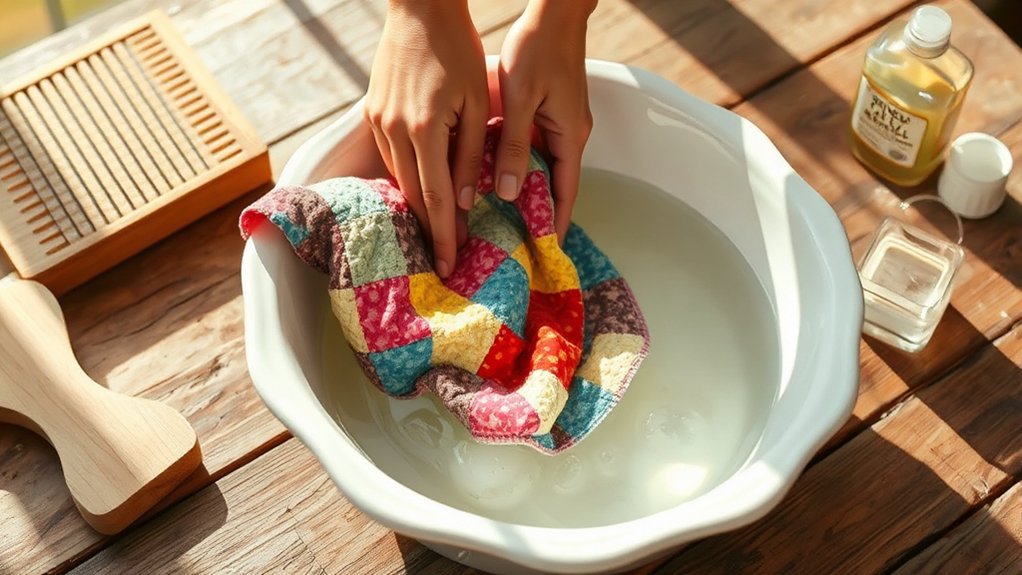
If your quilt is delicate, antique, or heavily embellished, hand-washing is the safest choice. Fill a clean tub with cool or lukewarm water and a small amount of mild detergent. Support the quilt fully as you lower it in so you don’t stress the quilt fabric. Let it soak briefly, then gently press the water through with your hands. Avoid twisting, scrubbing, or wringing because those washing techniques can distort stitching and seams.
- Test a hidden area for colorfastness first.
- Wash one quilt at a time to prevent crowding.
- Rinse with fresh water until no suds remain.
- Lift the quilt carefully and roll it in towels to remove excess moisture.
Afterward, lay the quilt flat on clean towels or a drying rack away from direct sun. Reshape it while damp and give it time to dry fully before storing or using again.
Machine-Wash Durable Quilts Safely
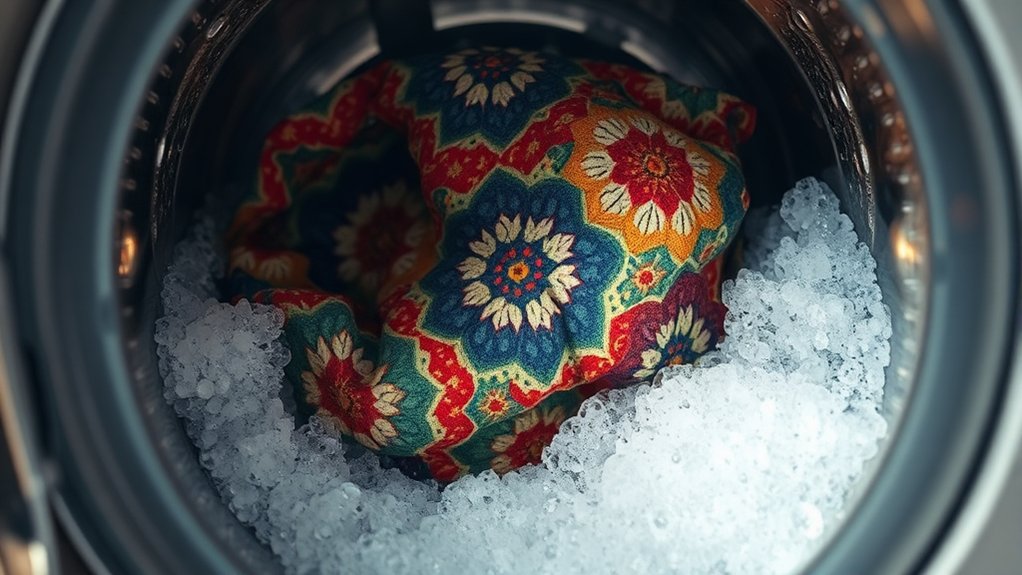
For quilts made from sturdy cotton and backed with secure stitching, you can usually use a washing machine instead of hand-washing. Choose a front-loading or top-loading machine without a center agitator, then wash the quilt alone so it can move freely.
Use cold or lukewarm water, a gentle cycle, and mild detergent to protect fibers and colors during quilt washing. When comparing detergent choices, skip bleach, fabric softener, and heavy-scented products because they can leave residue or weaken threads.
Before you start, check seams, mend loose spots, and confirm the quilt’s colors won’t bleed. If needed, place it in a large mesh bag for extra protection.
After the cycle ends, remove the quilt promptly and support its weight as you lift it. Dry it on low heat or air-dry flat, rotating if needed, until it’s fully dry and evenly refreshed.
Frequently Asked Questions
How Often Should I Wash a Quilt?
You should wash your quilt every 3 to 6 months, unless you spill something or use it daily. Your washing frequency depends on quilt care, allergies, pets, and how often you sleep under it.
If you air it out regularly and use a duvet cover, you can wash it less often. Always check the care label first since some quilts need gentler cleaning or spot treatment instead.
Can I Dry a Quilt in the Sun?
Yes, you can dry a quilt in the sun, but you should do it carefully. Think of it like a garden that bakes too long: I once left a throw out for 20 minutes, and it faded by noon.
For gentle sun drying, spread it flat, turn it occasionally, and bring it in once it’s almost dry. Good fabric care means avoiding harsh heat and direct all-day exposure.
What Detergent Is Best for Quilts?
A mild, liquid, fragrance-free detergent is best for your quilt because it cleans gently and protects fibers. You’ll want to avoid bleach, brighteners, and heavy enzymes since they can damage fabric care over time.
If your quilt is delicate, choose a detergent made for wool, silk, or baby clothes. Test a small area first, and use less detergent than usual. Different detergent types suit different fabrics and fillings.
How Do I Remove Stains From a Quilt?
You can tackle stains fast, but don’t rush. First, blot the spot with a clean white cloth, then mix cool water with a tiny amount of mild detergent. Gently dab, never rub, to lift the stain.
For tougher marks, try a paste of baking soda and water before rinsing. These stain removal and cleaning techniques help protect your quilt’s fibers while keeping colors bright and fabric soft.
How Should I Store a Quilt After Washing?
Store your quilt only after it’s completely dry, then fold it loosely and place it in a breathable cotton bag or acid-free box. You should keep it in a cool, dark spot with good moisture control to prevent mildew and fading.
Avoid plastic containers since they can trap humidity. If you can, refold it occasionally so creases don’t set. Proper quilt storage helps protect the fabric and stitching for years.
Conclusion
Now that you know how to wash a quilt in three simple steps, you can keep it fresh without stripping away its soul. By checking the label, hand-washing delicate treasures, or using the machine with care, you’re giving your quilt the gentle love it deserves.
Treat it like a cherished memory, and it’ll stay warm, soft, and beautiful for years to come. Following these tips on how to wash a quilt means it’ll always be ready to wrap you in comfort like a favorite story.