How to Wash Different Fabrics in 3 Easy Steps
Washing different fabrics can be tricky, and if you’re like many people, you’ve probably felt frustrated when your favorite clothes shrink, fade, or lose their shape. You’re not alone—figuring out the right way to care for everything from delicate silk to sturdy cotton is a common struggle.
Thankfully, with the right steps, you can keep your wardrobe looking fresh and lasting longer.
To wash different fabrics safely, first sort your laundry by color and fabric weight to prevent damage. Next, check each item’s care label for water temperature, detergent type, and drying instructions.
Use cold water for delicates like silk and wool, and warmer water for cotton.
Finally, avoid common mistakes like overloading the machine or using fabric softener on towels and athletic wear.
Following these steps preserves your clothes, and a closer look reveals even more tips to keep your fabrics fresh and lasting.
Key Takeaways
- Sort laundry by fabric type and color to prevent damage and color bleeding.
- Choose water temperature: cold for delicate fabrics, warm for cotton and durable fabrics.
- Use mild detergent for delicate fabrics like silk and wool; regular detergent for cotton and synthetics.
- Avoid overloading the washer to ensure proper cleaning and reduce fabric stress.
- Select drying method based on fabric label: air-dry or low heat for delicate fabrics. Avoid high heat drying.
3 Simple Steps to Wash Every Fabric Safely
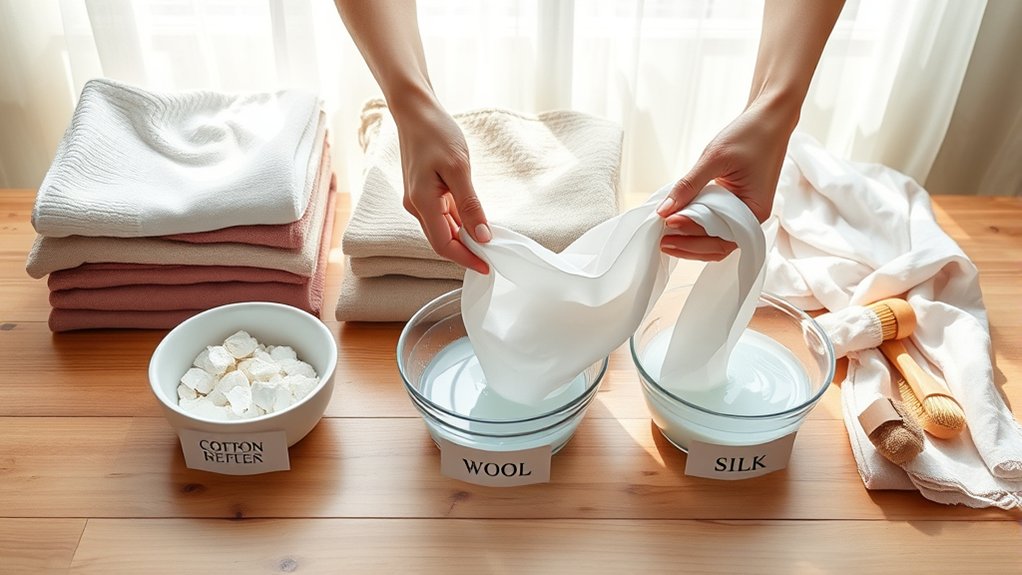
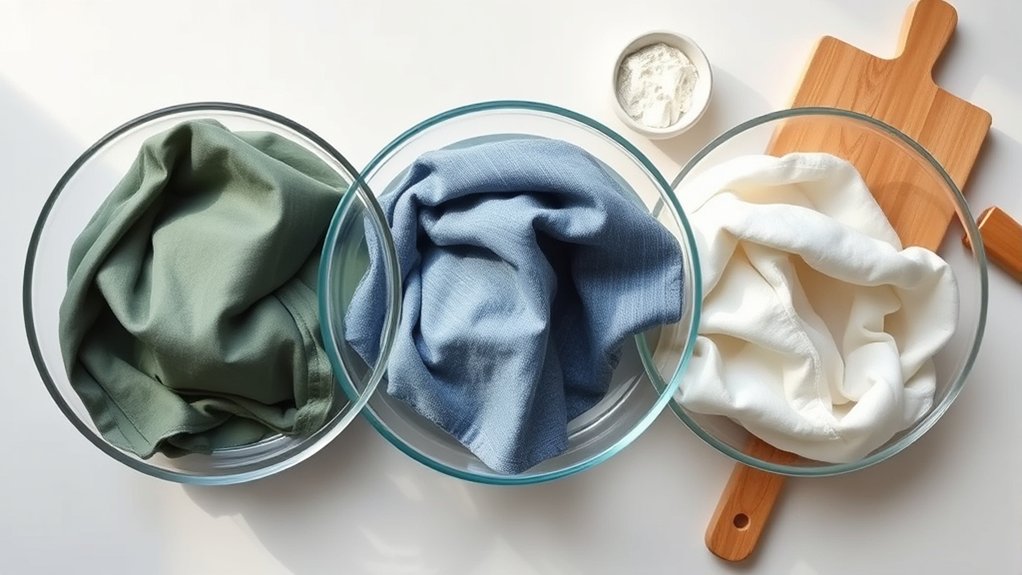
Although fabrics vary widely, you can wash them safely by following three simple steps. First, sort your laundry by color and fabric weight to avoid damage and color bleeding.
Next, choose the right water temperature and detergent. Cold water works well for most fabrics and helps preserve colors. Don’t overuse fabric softeners. While they keep clothes soft, too much can build up residue and affect fabric breathability.
Finally, pick the appropriate drying methods. Some fabrics do better air-dried, while others can handle low heat in the dryer. Avoid high heat because it can shrink or weaken fibers.
Identify Fabric Types and Laundry Care Labels
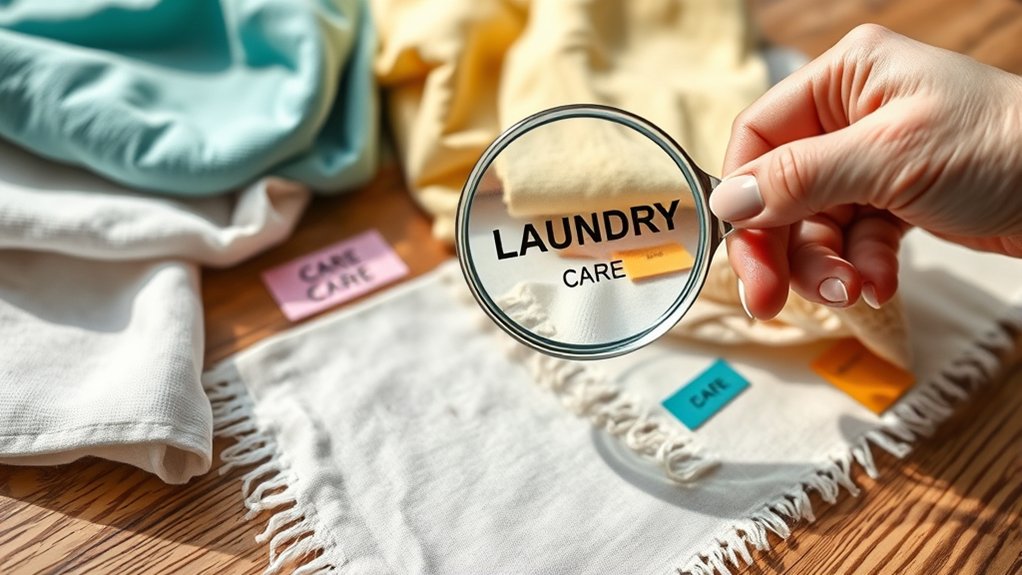
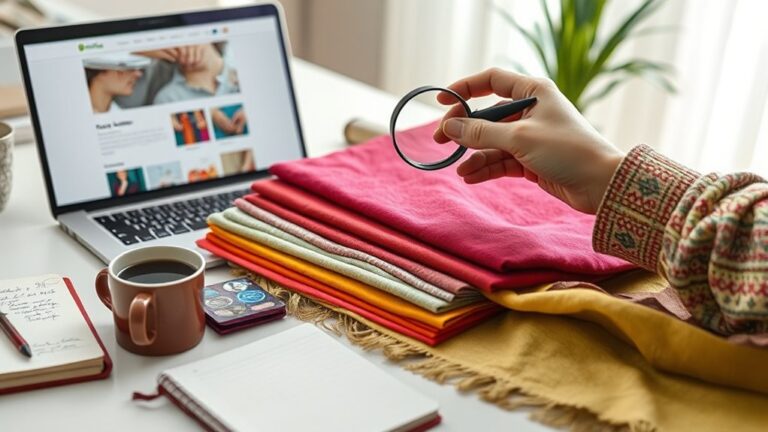
Understanding at least five common fabric types and their care labels can make laundry easier and prevent costly mistakes. You’ll often find cotton, polyester, wool, silk, and linen in your wardrobe, each with unique fabric durability. Checking care labels helps you spot important instructions like water temperature, drying methods, and ironing guidelines, so you don’t accidentally damage your clothes.
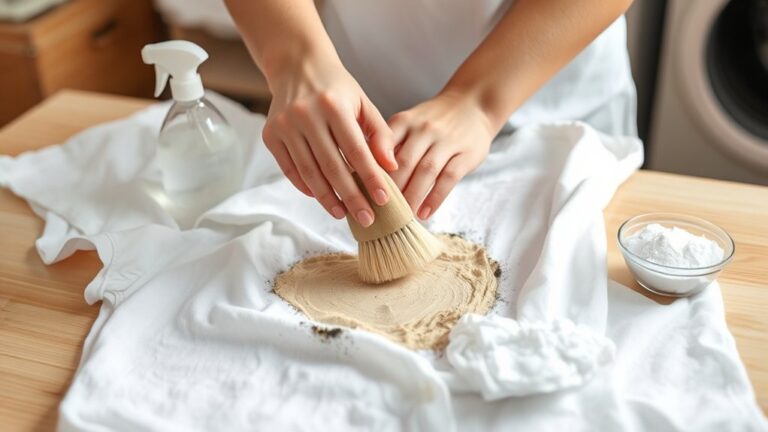
When you identify the fabric, you can choose the right stain removal techniques too. For example, cotton can handle stronger detergents and warmer water, while delicate silk needs gentle cleaning and cold water. Wool requires special care to avoid shrinking, so you’ll want to use mild detergents and avoid high heat.
Polyester, being durable and synthetic, can tolerate more aggressive stain removal methods but still benefits from following label advice. By learning to read these labels and understanding fabric types, you’ll protect your clothes’ look and longevity while tackling stains effectively.
Avoid Common Laundry Mistakes by Fabric Type
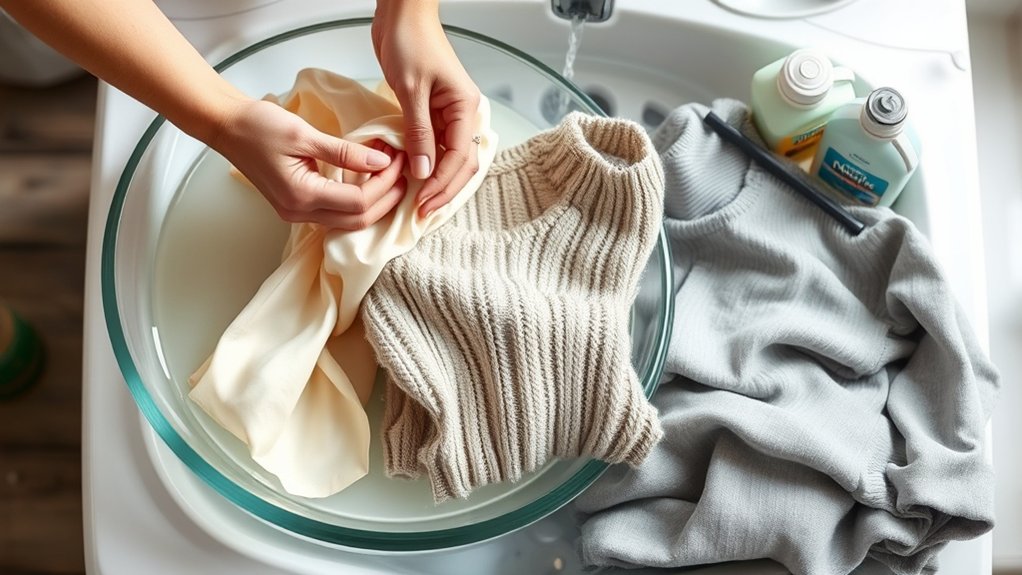
If you want your clothes to last, you need to avoid common laundry mistakes specific to each fabric type. Different fabrics require different care, so knowing what to avoid can save you time and money. For example, using fabric softening on towels reduces their absorbency, while skipping it on cotton can leave clothes stiff. Also, improper stain removal can set stains, making them impossible to get out later.
Keep these tips in mind:
- Don’t use hot water for delicate fabrics like silk or wool; it can cause shrinking or damage.
- Avoid heavy agitation on knitwear to prevent stretching and pilling.
- Don’t overload the washer; fabrics need room to move for effective cleaning.
- Skip fabric softening on moisture-wicking or athletic fabrics, as it reduces their performance.
Frequently Asked Questions
Can I Use Vinegar to Soften Fabrics Naturally?
Yes, you can use vinegar to soften fabrics naturally. Vinegar acts as a natural remedy that works as a fabric softener without harsh chemicals.
Just add half a cup of white vinegar to your washing machine’s rinse cycle, and it’ll help break down detergent residues, leaving your clothes soft and fresh. Plus, it helps reduce static cling and brighten colors.
You’ll save money and avoid synthetic fabric softeners this way!
How Do I Remove Odors From Sportswear Effectively?
Picture your sportswear fresh and crisp, like a cool breeze after a workout. To remove odors effectively, soak your gear in a mixture of white vinegar and water before washing. This natural fabric softening trick breaks down stink-causing bacteria.
Use a detergent designed for odor elimination and avoid fabric softeners that can trap smells. Air-dry your clothes in sunlight to boost freshness and keep that clean feeling long after your exercise session ends.
What Is the Best Way to Dry Delicate Fabrics?
The best way to dry delicate fabrics is to avoid high heat and harsh drying techniques. After washing, gently squeeze out excess water without wringing.
Lay your garment flat on a clean towel and reshape it to prevent stretching. Fabric softening can help keep fibers smooth, but avoid using too much.
Air drying in a shaded area is ideal since direct sunlight can damage delicate fabrics. This approach preserves their texture and longevity.
Can Washing Machines Damage Certain Fabric Fibers?
When you put all your eggs in one basket by tossing delicate fabrics in a regular wash, you risk fabric shrinkage and color fading. Washing machines can damage certain fibers if you don’t use the right cycle or water temperature.
To protect your clothes, always check care labels, choose gentle settings, and avoid harsh detergents. Taking these steps helps keep your fabrics looking fresh and lasting longer.
How Often Should I Clean My Washing Machine?
You should clean your washing machine about once a month to keep it running efficiently. Regular cleaning helps maintain energy efficiency by preventing buildup that forces the machine to work harder.
Also, choose detergents that are suitable for your machine type to avoid residue. Running an empty cycle with hot water and a washing machine cleaner or white vinegar can help remove odors and buildup. This ensures your laundry stays fresh and your machine lasts longer.
Conclusion
Washing different fabrics is like tending a garden; each type needs careful attention to thrive. By identifying fabric types and reading care labels, you’re nurturing your clothes with the respect they deserve.
Avoiding common laundry mistakes is like protecting delicate blooms from harsh weather. When you follow these simple steps, your wardrobe will flourish, staying vibrant and strong.
Just like a well-cared-for garden that grows through every season, washing different fabrics properly helps your clothes last longer and look their best.