How to Remove Mold From Fabrics in 5 Easy Steps
Dealing with mold on your fabrics can be really frustrating, and if you’ve ever found those stubborn fuzzy patches or noticed a musty smell lingering, you’re not alone. Many people struggle with keeping their clothes, upholstery, and linens mold-free, especially in damp or humid environments.
The good news is, with the right approach, you can tackle mold effectively and restore your fabrics to fresh, clean condition.
To remove mold from fabrics, first spot mold by looking for fuzzy patches or musty smells. Brush off loose spores outside, then treat stains with a vinegar-water mix for 10-15 minutes.
Wash in the hottest safe water using mold-fighting detergent, adding vinegar or baking soda if you can. Dry thoroughly in sunlight or a well-ventilated area to prevent mold’s return.
For delicate or upholstered items, use gentle cleaning or consider pros. You’ll find simple tips to handle every step effectively.
Key Takeaways
- Brush off loose mold spores outside to prevent indoor spread before treating the fabric.
- Pre-treat mold stains with a vinegar-water solution for 10-15 minutes to break down mold and odors.
- Wash fabrics separately using the hottest safe water, mold-fighting detergent, and add vinegar or baking soda.
- Dry fabrics thoroughly in sunlight or a well-ventilated area to kill mold and remove odors.
- For delicate or upholstered fabrics, use mild cleaners cautiously and consider professional cleaning if needed.
How to Identify Mold on Fabrics and Prepare for Removal
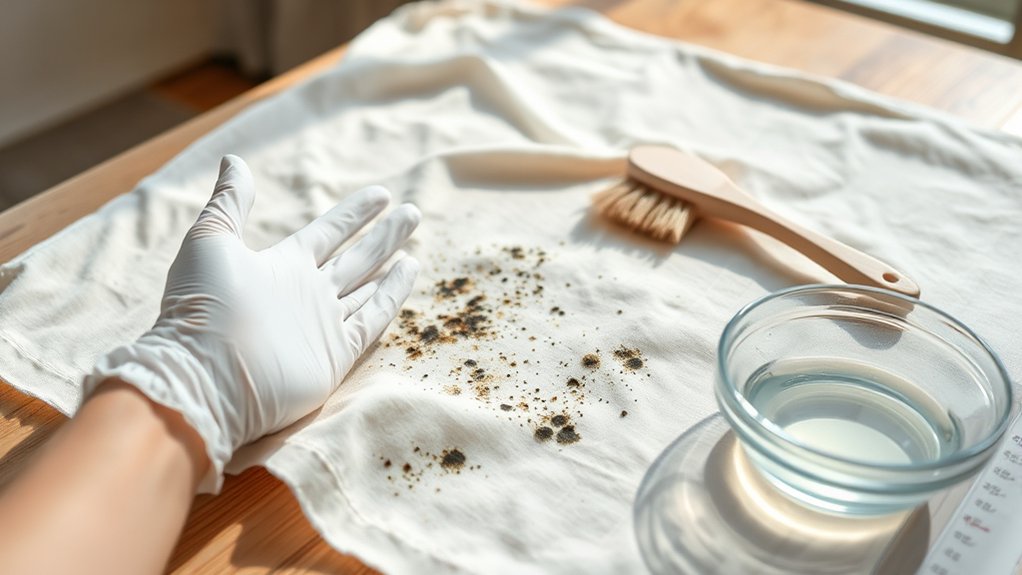
Before you can remove mold from fabrics, you need to recognize the signs of mold growth. Mold often appears as fuzzy or slimy patches in colors like green, black, white, or gray. You might notice these spots on areas that stay damp or aren’t exposed to much sunlight.
Fabric discoloration is a common clue. Mold can cause your clothes or upholstery to look stained or faded unevenly. Sometimes, you’ll also detect a musty odor, which signals mold’s presence even if you don’t see it yet.
To prepare for removal, isolate the affected items to prevent mold spores from spreading to other fabrics. Avoid shaking or brushing the moldy fabric, as this can release spores into the air. Instead, handle the fabric gently and wear gloves if possible.
How to Pre-Treat Mold Stains and Odors
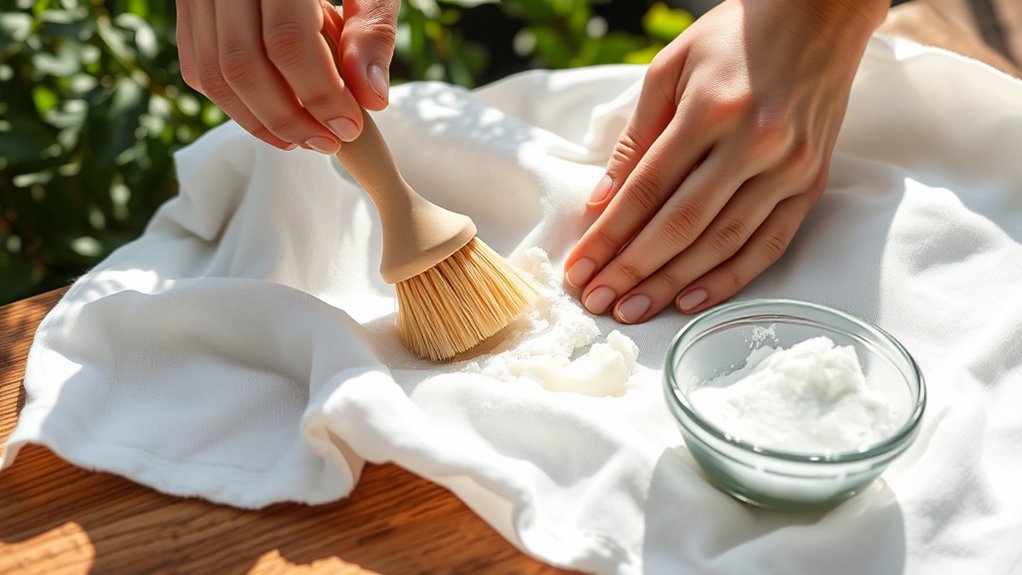
When you’ve identified mold on your fabrics, treating the stains and odors promptly helps prevent permanent damage. Mold growth can quickly penetrate fibers, leading to fabric contamination that’s harder to reverse if ignored.
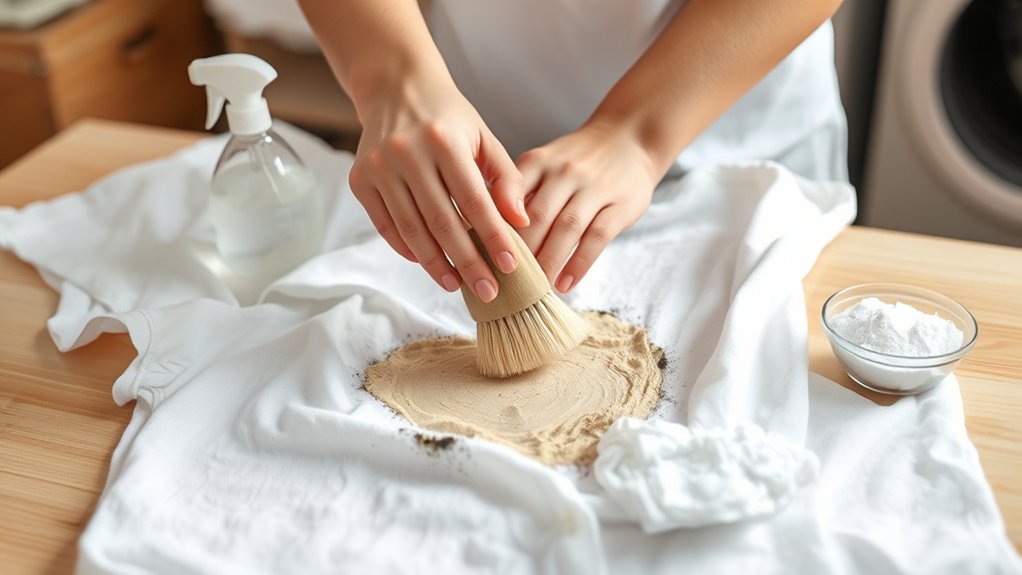
Start by taking your fabric outside to brush off loose mold spores gently. This keeps spores from spreading indoors. Next, apply a pre-treatment solution directly to the affected areas. You can use a mixture of equal parts white vinegar and water or a specialized mold remover safe for fabrics.
Let it sit for 10 to 15 minutes to break down mold stains and neutralize odors. Avoid soaking the fabric too much, as excess moisture encourages further mold growth. After pre-treating, blot the area with a clean cloth to lift the mold residues.
Taking these steps before washing ensures you tackle the contamination at its source, improving your chances of restoring your fabric to its original condition.
Wash Fabrics to Remove Mold Effectively
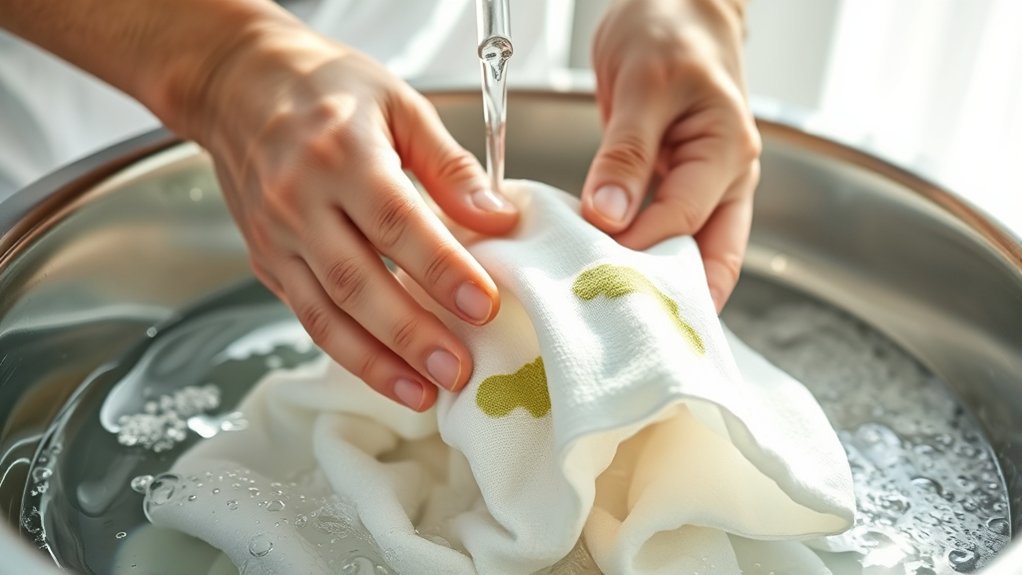
After pre-treating mold stains and odors, washing your fabrics properly is key to removing any remaining mold and preventing it from returning. Start by selecting the hottest water safe for your fabric. Hot water kills mold spores more effectively. Use a detergent designed for tough stains or one with added mold-fighting ingredients.
Adding a cup of white vinegar or baking soda to the wash helps with mold prevention and odor removal. Avoid mixing moldy fabrics with clean laundry to stop cross-contamination. If possible, wash moldy items separately and repeat the cycle if mold odors persist.
Be cautious with delicate fabrics; opt for gentle wash cycles to ensure fabric preservation while still tackling mold. By washing thoroughly and correctly, you not only eliminate mold but also protect your fabrics from damage. This extends their lifespan and helps maintain a mold-free environment in your home.
Dry and Air Out Fabrics to Stop Mold From Returning
Since moisture encourages mold growth, you’ll want to dry your fabrics thoroughly and air them out completely to prevent mold from coming back. After washing, hang your fabrics in a well-ventilated area or outside in direct sunlight if possible.
Sunlight is a natural mold deterrent and helps with mold prevention while also aiding fabric preservation by reducing lingering odors. Avoid folding or storing fabrics until they’re completely dry to prevent trapped moisture, which creates a perfect environment for mold spores to thrive.
Using a fan or dehumidifier indoors can speed up drying and maintain low humidity levels, further supporting mold prevention. Remember, the quicker and more thoroughly your fabrics dry, the less chance mold has to re-establish itself.
Clean Delicate and Upholstered Fabrics Safely
Although delicate and upholstered fabrics require extra care, you can still remove mold safely by using gentle cleaning methods tailored to their materials. First, identify the fabric types like silk, wool, velvet, or synthetic blends since each demands a specific approach. Test any cleaning solutions on a hidden area to avoid damage or discoloration.
For most delicate fabrics, a mixture of mild detergent and water works well. Upholstered items often benefit from specialized upholstery cleaners designed to tackle mold without harming the fabric or padding underneath.
Use a soft brush or cloth to apply the cleaning solution gently, avoiding excessive moisture that could worsen mold growth. After cleaning, blot the fabric with a dry towel and allow it to air dry completely in a well-ventilated area.
If mold persists, consider professional cleaning services for sensitive or valuable fabrics. By selecting appropriate cleaning solutions and respecting fabric types, you’ll safely remove mold while preserving your delicate and upholstered items.
Frequently Asked Questions
Can Mold on Fabrics Cause Health Issues?
Yes, mold on fabrics can cause health issues, especially if you’re sensitive or have allergies. Mold toxicity can lead to respiratory problems, skin irritation, and headaches.
When you spot fabric discoloration caused by mold, it’s a sign the spores are thriving and could affect your health. You should address it quickly to avoid worsening symptoms and prevent the mold from spreading to other items or areas in your home.
How Long Does Mold Take to Develop on Fabrics?
You’ll notice mold growth on fabrics can begin within 24 to 48 hours when conditions are right. Imagine tiny spores landing on damp, warm fabric like seeds on fertile soil.
Fabric contamination happens swiftly if moisture lingers and air circulation is poor. Once those spores settle, they multiply quietly, turning your fabric into a breeding ground.
What Household Items Naturally Prevent Mold Growth?
You can use several DIY remedies as natural preventatives to keep mold at bay. Vinegar, with its antifungal properties, works wonders when sprayed on fabrics.
Baking soda helps absorb moisture and odors, reducing mold growth. Tea tree oil is another powerful natural preventative. You’ll just mix a few drops with water and spray.
These household items are affordable, easy to use, and safe, making them perfect for tackling mold before it starts.
Is Professional Cleaning Necessary for Severe Mold Infestations?
When mold takes over like a wildfire, professional cleaning is often necessary for severe infestations. You’ll need industrial equipment and specialized chemical treatments that aren’t available at home. These tools can thoroughly eliminate mold deep within fabrics, preventing it from coming back.
While DIY methods work for light mold, severe cases demand experts who can protect your health and save your belongings effectively. Don’t risk it; call professionals when mold’s out of control.
Can Mold Spores Spread to Other Areas From Fabrics?
Yes, mold spores can definitely spread to other areas from fabrics if you don’t handle them carefully. When you perform fabric treatment, it’s important to contain the spores so they don’t become airborne and settle elsewhere.
Always isolate the affected fabric, use protective gear, and clean the surrounding area afterward. This way, you’ll minimize the risk of mold spores spreading and causing further contamination or health issues in your home.
Conclusion
Now that you’ve tackled mold on your fabrics step by step, you’re armed to send those stubborn stains packing. Remember, treating mold quickly and thoroughly is like nipping a weed in the bud. It keeps the problem from spreading.
With the right pre-treatment, washing, and drying, your fabrics can breathe fresh and clean again. Stay vigilant, and mold on fabrics won’t stand a chance in your home’s cozy corners!