What Is Velvet Fabric?
Finding the perfect fabric that feels luxurious but also looks stunning can be a real challenge. You’re not alone if you’ve struggled to choose materials that bring both comfort and style to your wardrobe or home. Many people want something soft, elegant, and versatile, but knowing which fabric fits the bill isn’t always easy. What Is Velvet Fabric.
Velvet fabric is a soft, luxurious textile with a dense pile that gives you a smooth feel and a rich, elegant look. Its upright fibers catch light differently as you move, so the color can seem to shift from angle to angle.
You’ll find it made from silk, cotton, rayon, polyester, or blends, and it’s popular in clothing, drapery, and upholstery.
There’s more to know about how it’s made and chosen.
Key Takeaways
- Velvet is a soft, luxurious fabric with a dense, upright pile that feels rich and looks elegant. Its surface catches light differently from each angle, creating depth, sheen, and subtle color shifts.
- Velvet is made by weaving two layers together and cutting them apart to form the signature pile.
- It can be made from silk, cotton, rayon, polyester, or blends, which affects its feel, cost, and care.
- You’ll find velvet used in fashion and home decor for formal clothing, upholstery, curtains, pillows, and other rich-looking designs.
What Is Velvet Fabric?
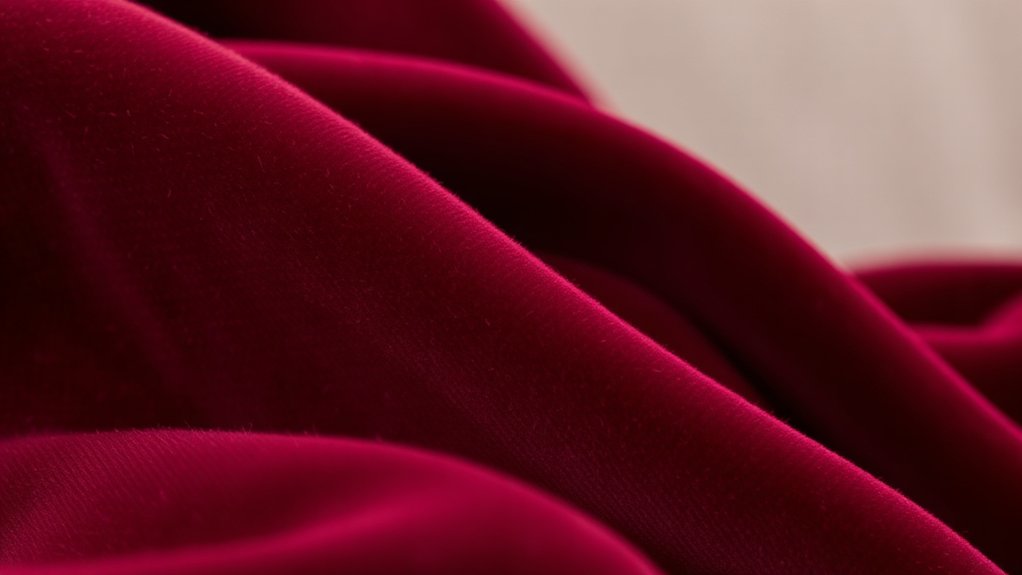
Velvet is a soft, luxurious fabric known for its dense pile and smooth, rich texture. You’ll recognize it by the way it catches light and feels refined in your hands.
Velvet’s dense pile and luminous sheen create a soft, luxurious texture that feels instantly refined.
When you choose velvet, you’re choosing a textile with strong luxury appeal. It’s often linked to elegant clothing, drapery, upholstery, and special-occasion details. Its fabric history stretches back centuries, and that long legacy helps explain why it still feels timeless today.
You can use velvet to add depth, warmth, and visual drama without needing loud patterns or bright colors. Because it looks rich on its own, velvet often works best when you let its texture stand out.
Whether you’re styling a room or picking an outfit, you’ll find that velvet offers a balance of comfort, sophistication, and presence that few other fabrics match.
How Velvet Fabric Gets Its Pile
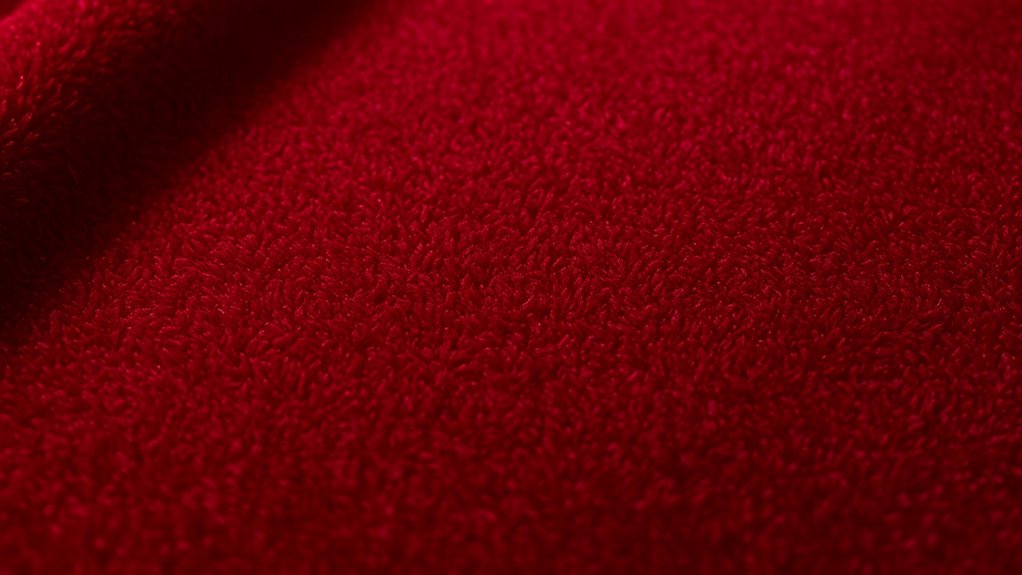
To create velvet’s signature pile, manufacturers weave two layers of fabric at once and then carefully cut them apart. This leaves thousands of tiny upright fibers on the surface. You can think of this as clever pile construction: the base cloth holds the structure, while the cut threads form the soft nap you feel.
Skilled makers use different velvet techniques to control height, density, and sheen, so the fabric can look plush or more subtle.
- They interlace pile yarns through a ground weave.
- They slice the joined layers, creating two mirrored surfaces.
- They finish the cloth by brushing, steaming, or shearing the pile.
When you run your hand across velvet, those fibers shift direction and catch light differently. That’s why the surface seems to glow and darken as it moves.
Common Velvet Fabric Fiber Types

The fibers inside velvet shape its feel, drape, and shine just as much as its weave does. When you shop for velvet, you’ll usually meet silk, cotton, rayon, polyester, and blends. Each changes how the fabric performs and costs.
Silk velvet feels luxurious and carries clear historical significance, but it’s pricey and delicate. Cotton velvet gives you a matte, sturdy option for upholstery and jackets. Rayon can mimic silk’s softness at a lower price, though it wrinkles more.
Polyester adds durability, easier care, and better resistance to wear, but it may raise sustainability concerns. Blends balance comfort, strength, and affordability.
| Fiber | Main trait |
|---|---|
| Silk | Luxurious, delicate |
| Cotton | Matte, sturdy |
| Rayon | Soft, affordable |
| Polyester | Durable, easy care |
You can choose the fiber that matches your project, budget, and ethical priorities without sacrificing velvet’s classic appeal.
Why Velvet Looks Different in Light
Velvet can look different in light because the direction of its pile changes how the fibers stand and catch your eye. So, when you move the fabric or the light shifts, it reflects light in a new way. This can make the surface seem brighter or darker depending on the angle.
And it’s not just about light and dark — this effect can even create a subtle color shift. That’s what gives velvet its rich, changing look that people love.
Pile Direction
One of velvet’s most distinctive traits is its pile direction, the way its tiny raised fibers lie and catch light. When you brush the fabric one way, it darkens; brush it the other, and it brightens. That shift gives you velvet’s rich, moody appearance and can make two panels seem slightly different even when they’re cut from the same bolt.
- Check the nap before you sew or upholster.
- Keep pile maintenance gentle, using a soft brush or light vacuuming.
- Match pile patterns carefully so seams and cushions look consistent.
If you ignore direction, the surface can look uneven or patchy. By paying attention to the pile, you control the fabric’s appearance and preserve its smooth, elegant finish.
Light Reflection
Because velvet’s pile changes direction, it also reflects light in uneven ways. That’s why the same fabric can look deeper, softer, or brighter depending on the angle. You notice this effect most when you move or tilt the cloth.
The short fibers catch and release light, so some areas appear shaded while others glow. That contrast shapes your texture perception and gives velvet its rich, tactile look.
| Angle | What you notice |
|---|---|
| Front view | Even, subdued sheen |
| Side view | Brighter highlights |
| Moving light | Shifting shadows |
| Dense pile | More light absorption |
| Brushed pile | Softer reflection |
When you understand this, you can spot why velvet never looks flat.
Color Shift
Ever notice how velvet can seem to change color as you move around it? That color shift comes from the fabric’s dense pile and how it handles light interaction. When you tilt it, the fibers catch light at different angles, so you see color variations instead of one flat tone.
- Nap direction changes the way the surface reflects light.
- Viewing angle alters how deep or bright the shade appears.
- Lighting type can make velvet look richer, softer, or darker.
You’ll notice this most on silk velvet, where the pile responds dramatically to motion. That’s why velvet feels so dynamic: it isn’t truly changing color, but your eye’s reading of it keeps shifting.
Common Types of Velvet Fabric
Velvet comes in several common types, and each one has its own look, feel, and best use. You’ll often see silk velvet, which feels luxurious and drapes beautifully for eveningwear and décor.
Cotton velvet gives you a softer, more casual touch, while rayon or viscose velvet offers rich sheen at a lower cost. If you want extra durability, you can choose polyester velvet for upholstery and everyday use.
Crushed velvet creates a textured, reflective surface, and panne velvet lies flat with a smooth, glossy finish. Embossed velvet adds patterns pressed into the pile, giving you visual interest without extra layers.
When you shop, consider sustainable velvet options made with recycled fibers or lower-impact production methods. Velvet’s historical significance also shows in these varieties, since each type reflects changing tastes, trade, and textile technology.
Velvet Fabric vs. Other Plush Fabrics
When you compare velvet with velour, you’ll notice that velvet usually looks more lustrous and feels denser. On the other hand, velour has a softer, stretchier knit, which gives it a different kind of comfort.
You might also see that velvet and velveteen can look quite similar at first glance. However, velveteen has a cotton base, making it less shiny and less fluid compared to velvet.
Knowing these differences can really help you pick the plush fabric that best fits your style and how you plan to use it.
Velvet Vs. Velour
At a glance, velvet and velour can look similar, but they differ in construction, sheen, and feel. You’ll notice velvet’s dense pile reflects light with a richer luster, while velour feels stretchier and more casual.
If you care about texture and drape, choose based on use: velvet suits formal apparel and decor when you want depth. Velour works well for loungewear, thanks to its flexibility.
Velvet’s history and craftsmanship give it a refined reputation. You should also expect velvet to hold a more structured silhouette, while velour moves easier and feels softer against the skin.
Both fabrics offer comfort, but velvet brings a more luxurious finish and a stronger visual impact.
Velvet Vs. Velveteen
Velveteen is often confused with velvet, but you’ll notice the difference in both construction and finish. Velvet usually comes from richer fabric origins and uses a woven pile that feels denser, smoother, and more luminous.
Velveteen, by contrast, often uses cotton and a shorter pile, so its surface looks flatter and feels less silky. In a texture comparison, velvet glides under your hand, while velveteen feels firmer and more casual.
You’ll also see velvet reflect light more dramatically, giving it depth and sheen, whereas velveteen absorbs light for a softer matte look. If you want formal drape and luxury, choose velvet. If you prefer durability and a more everyday plush feel, velveteen may suit your project better.
Velvet Fabric Uses in Fashion and Home Decor
Velvet adds instant richness wherever you use it, which is why it shows up so often in both fashion and home decor. In fashion trends, you can wear velvet to signal elegance without looking stiff. Designers use it for dresses, blazers, trousers, shoes, and bags because it catches light beautifully and gives simple silhouettes more depth.
In home textiles, velvet brings softness and drama to sofas, throw pillows, curtains, and upholstered chairs. It can make a room feel warmer, fuller, and more polished.
- You can choose velvet evening wear for standout texture.
- You can use velvet accessories to enhance everyday outfits.
- You can add velvet accents at home for a luxe focal point.
Because it comes in many colors and weights, you can match velvet to bold, modern spaces or classic, formal settings with ease.
How to Care for Velvet Fabric
Caring for velvet starts with gentle handling because its soft pile can flatten or mark easily. You should vacuum it with a soft brush attachment to lift dust without crushing the fibers.
Care for velvet gently: use a soft brush vacuum attachment to lift dust without flattening the fibers.
If you spill something, blot it right away with a clean, dry cloth; don’t rub, or you may spread the stain and damage the nap. For deeper spots, use mild velvet cleaning techniques, such as dabbing with a barely damp cloth and a small amount of gentle soap, then letting the fabric air-dry naturally.
Keep velvet away from direct sunlight and heat, which can fade color and dry out fibers. When you store it, use breathable covers and avoid tight folding since pressure can leave permanent creases.
These velvet storage tips help preserve the fabric’s rich texture and appearance. If the item needs major cleaning, trust a professional cleaner who understands delicate textiles and can protect the pile.
What to Look for When Buying Velvet Fabric
When you’re buying velvet fabric, start by checking the pile density. A fuller pile usually feels richer and tends to wear better over time. Next, take a look at the fiber content because it plays a big role in the fabric’s sheen, durability, and how you’ll need to care for it. And don’t forget to test the stretch and drape—this way, you’ll get a good sense of how the velvet will move, fit, and hold its shape in your project.
Pile Density
Dense, closely packed piles usually signal better quality in velvet, giving the fabric a richer look, softer hand, and more even surface. When you examine pile density, you’ll notice how much light the velvet absorbs and reflects, which affects its luxury appeal.
A fuller pile also helps reduce texture variation, so the surface feels consistent when you run your hand across it.
Check these points:
- Hold the velvet at different angles to see whether the pile stays uniform.
- Press it gently; dense pile should spring back without looking thin.
- Compare samples side by side to spot sparse areas or uneven sheen.
If the pile looks thin or patchy, the fabric may wear faster and appear less refined in your finished piece.
Fiber Content
Fiber content plays a major role in how velvet looks, feels, and holds up, so you’ll want to check the fiber label before you buy. Cotton velvet feels plush and breathable, while silk velvet gives you a richer sheen and a more luxurious hand.
Polyester and nylon often boost fabric durability, making the fabric more resistant to wear and easier to care for. If you want a softer price point, blended velvets can work well, but read the percentages carefully so you know what you’re getting.
Also consider sustainability concerns: natural fibers may appeal more if you’re prioritizing lower-impact materials, while synthetics can last longer in heavy-use spaces. Choose the fiber mix that fits your budget, care needs, and intended use.
Stretch And Drape
Stretch and drape tell you a lot about how velvet will behave once it’s cut and sewn. You want enough flexibility for comfort, but not so much that the fabric loses shape. Check the stretch properties by pulling the material gently across the grain. It should recover cleanly without bagging.
Study the drape characteristics by letting a sample hang from your hand or a table edge. Smooth, fluid velvet works well for dresses and curtains, while firmer velvet suits structured jackets and upholstery.
- Test recovery after a gentle pull.
- Watch how the fabric falls and pools.
- Match the drape to your project’s shape and movement.
How to Tell Good Velvet Fabric From Cheap Velvet
Good velvet feels rich, smooth, and substantial in your hand, while cheap velvet often looks flat, thin, or uneven. You can judge quality by running your fingers across the pile. Premium velvet recovers quickly and shows a deep, even sheen, while low-grade fabric may crush easily and reflect light in patches.
Check the backing, too. Better velvet has tighter weaving and better fabric durability, so it won’t fray or shed as fast. A simple texture comparison can also help. Good velvet feels dense and soft, not scratchy or plasticky.
Look at the nap from different angles. High-quality velvet changes color subtly, but cheap velvet may appear blotchy. If possible, stretch a small section and let it go. Quality velvet snaps back neatly, while inferior fabric stays wrinkled.
Finally, examine the edges and seams for loose fibers because clean construction usually signals better material and longer-lasting wear.
Frequently Asked Questions
Is Velvet Fabric Eco-Friendly?
Yes, velvet fabric can be eco-friendly, but you’ll need to check the fiber and process. You’ll find better options when manufacturers use recycled or organic fibers and cleaner production methods.
Strong sustainability practices like low-impact dyes, water-saving finishing, and responsible sourcing make a big difference. Conventional velvet often relies on synthetic fibers and energy-heavy production, so it isn’t always the greenest choice.
Choose carefully, and you’ll reduce environmental impact.
Does Velvet Fabric Wrinkle Easily?
Not usually, but you can still get some creasing if you fold or crush it. You’ll notice velvet looks best when you hang it properly and avoid tight storage.
Good velvet care helps reduce wrinkles, and stronger velvet durability can keep the fabric looking smooth longer. If wrinkles do appear, you can steam them gently from the reverse side and let the pile relax naturally before wearing or using it again.
Can Velvet Fabric Be Dyed at Home?
Yes, you can dye velvet fabric at home if you choose the right dyeing techniques and test first. You’ll get better results with natural fibers like cotton velvet than with polyester blends.
Prewash gently, use lukewarm water, and stir carefully to protect the pile. After dyeing, follow proper fabric care by air-drying and brushing the nap.
Always spot-test a hidden area before you start to avoid uneven color.
Is Velvet Fabric Safe for Pets?
Yes, velvet fabric can be safe for pets, but you’ve got to choose wisely. Like a soft harbor, it can offer pet comfort if your animal doesn’t scratch or chew it.
You should watch for loose fibers, snags, and hidden dust. For cleaning tips, vacuum regularly and blot spills fast.
If your pet sheds a lot or claws furniture, you may want a tougher, easier-care fabric instead.
How Much Does Velvet Fabric Typically Cost?
Velvet fabric typically costs you anywhere from $10 to $100 per yard, depending on fiber, quality, and weave. You’ll usually pay less for synthetic velvet and more for silk or high-end cotton options.
Different velvet types affect price, durability, and feel, so compare carefully before buying. Factor in velvet maintenance too, since easier-care fabrics can save you money over time, especially for upholstery or custom projects.
Conclusion
Velvet brings a quiet luxury you can almost feel before you touch it. When you run your hand across its soft pile, it shifts like moonlight over water, changing shade with every turn.
You can wear it to enhance an outfit or use it to make a room feel warm and inviting. If you choose quality velvet and care for it well, you’ll keep that rich, glowing beauty alive for years.
That’s the timeless charm of velvet fabric.