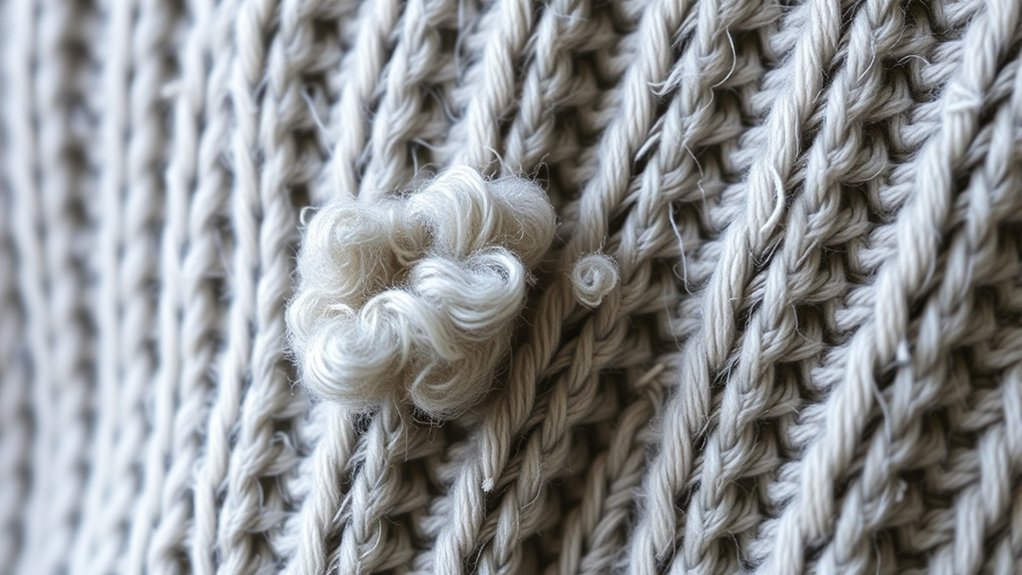
Why Do Fabrics Pill Over Time?
If you’ve ever pulled your favorite sweater out of the closet only to find it covered in annoying little fuzz balls, you’re not alone. Many people struggle with fabric pilling, which can make clothes look worn out and old before their time. Understanding why do fabrics pill over time can help you choose better clothes and care for them properly.
Fabrics pill over time because friction from wearing, washing, and contact loosens fibers, causing them to tangle into little fuzz balls called pills. Natural fibers like cotton and wool pill more due to shorter fibers, while tighter weaves, longer fibers, and synthetic blends resist pilling better.
Harsh washing and rough surfaces speed up the process. If you want to understand which fabrics last longer and how to care for your clothes to prevent pilling, there’s more to investigate.
Key Takeaways
- Fabrics pill over time because loose fibers tangle from wear and washing friction.
- Repetitive friction on high-contact areas causes fibers to loosen and form pills.
- Short or weak fibers, especially in natural fabrics, shed and tangle more easily.
- Harsh washing conditions and improper care weaken fibers, which increases the risk of pilling.
- Looser weaves and low thread count expose fibers, making pills more likely to form.
What Is Fabric Pilling and Why Does It Happen?
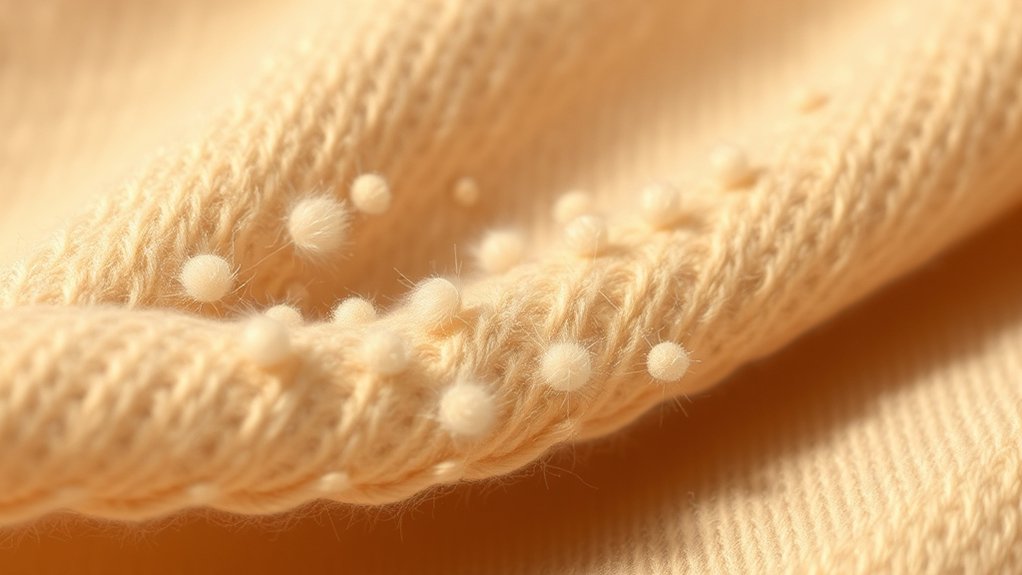
Although fabric pilling might seem like a minor annoyance, it can quickly affect the look and feel of your clothes. Pilling happens when loose fibers on the fabric’s surface tangle together during wear or washing, forming small balls or pills. These pills are most noticeable on areas that experience friction, like sleeves or underarms. Understanding why pilling occurs helps you care for your garments better.
Fabric dyeing processes can influence how prone a fabric is to pilling. Some dyeing methods weaken fibers or leave the surface rough, making pills more likely to form. Opting for textiles created with sustainable practices often means using gentler dyeing techniques that preserve fiber strength and reduce pilling risk.
Which Fibers Are Most Likely to Pill?
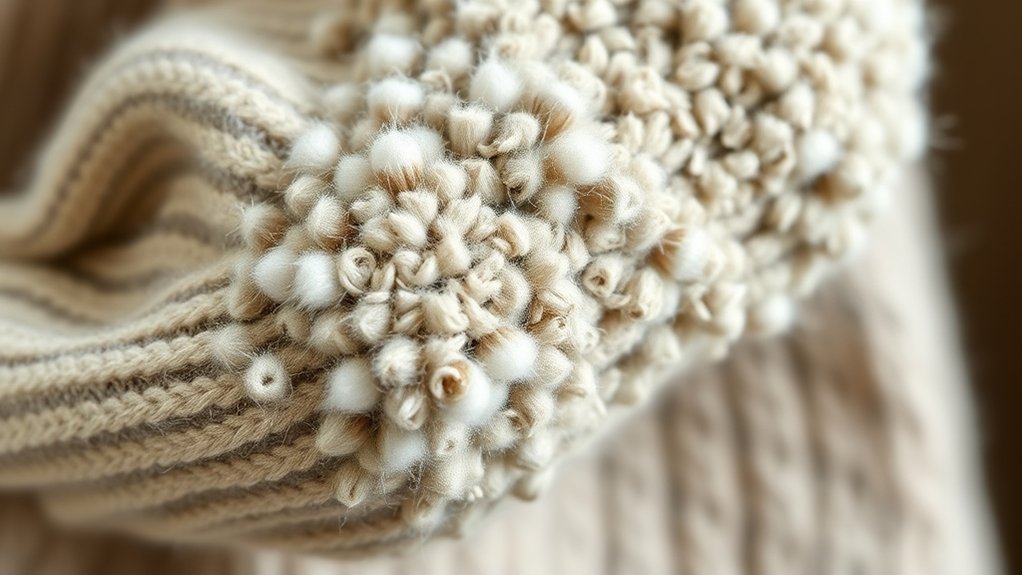
You’ll notice that some fibers pill more than others, especially when you compare natural and synthetic materials. Short fibers tend to break and tangle, which causes more pills. On the other hand, longer fibers usually hold up better over time. Blended fabrics can act a bit differently, depending on the mix and how the fibers interact with each other.
Natural Versus Synthetic Fibers
When comparing natural and synthetic fibers, you’ll notice that each behaves differently regarding pilling. Natural fibers like cotton and wool tend to pill more because their shorter fibers break and tangle easily.
Synthetic fibers, such as polyester and nylon, usually resist pilling better due to longer, stronger fibers. However, fabric branding and fiber dyeing processes can affect this behavior by altering fiber surface texture and strength.
Here’s a quick overview:
| Fiber Type | Pilling Likelihood | Impact of Fiber Dyeing & Branding |
|---|---|---|
| Natural Fibers | High | Dyeing may weaken fibers, increasing pills |
| Synthetic Fibers | Low to Moderate | Branding can improve fiber strength, reducing pills |
Understanding these differences helps you choose fabrics that maintain appearance longer.
Fiber Length Impact
The length of fibers plays a major role in how much a fabric pills over time. When fibers are short, they tend to shed and tangle on the fabric’s surface, creating those tiny balls you recognize as pills.
Fabrics made from short staple fibers like cotton or wool usually show more noticeable pilling patterns because the fibers break free easily. On the other hand, long fibers hold together better, reducing the chance of pills forming.
For example, silk and long-staple cotton fabrics generally resist pilling more effectively. So when choosing fabrics, keep fiber length in mind. Longer fibers mean fewer pills and a smoother look over time.
Understanding fiber length helps you predict and manage pilling patterns before they become a problem.
Blended Fabric Behavior
Although blending fibers can improve a fabric’s durability and appearance, it often affects how much it pills. When you choose a blended fabric, you need to understand the pilling behavior of each fiber type involved.
Some fibers are more prone to pilling, and when combined, they influence the overall fabric performance. Here’s a quick guide to help you:
- Synthetic fibers like polyester pill more due to their strength and resistance to breaking.
- Natural fibers such as cotton pill less but can still pill when blended with synthetics.
- Blends with wool tend to pill moderately because wool fibers are shorter and weaker.
- Fabrics with nylon mixes pill less, as nylon is smoother and resists fuzz formation better.
Knowing this helps you pick fabrics that balance durability and pilling behavior.
How Fabric Weave and Construction Affect Pilling

You’ll notice that the weave density plays a big role in how much your fabric pills over time. And it’s not just that—how tightly the fibers are twisted and the kind of yarn used also make a difference in how easily the fabric pills. When you understand these factors, it becomes easier to pick fabrics that stay smooth for longer.
Weave Density Impact
When fabric threads are woven tightly together, they’re less likely to rub against each other and form pills. You can control pilling by paying attention to weave density, thread tension, and fabric elasticity. Here’s how these factors impact pilling:
- Higher weave density means fewer loose fibers on the surface, reducing pill formation.
- Proper thread tension keeps threads snug, preventing friction that causes pills.
- Fabric elasticity helps the material return to shape, minimizing fiber abrasion during movement.
- Looser weaves allow more fiber movement, increasing pilling risk.
Fiber Twist Influence
Fabric construction goes beyond just weave density. It also involves how fibers are twisted before weaving or knitting. The fiber twist affects fabric durability and its tendency to pill.
When fibers are spun with a tight twist, they hold together better, making the fabric stronger and less prone to loose fibers that form pills. On the other hand, a looser fiber twist allows fibers to loosen more easily, increasing pilling risk.
Yarn Type Differences
Although yarn type might seem like a small detail, it plays a crucial role in how your fabric handles wear and pilling. The way yarns are woven and constructed directly impacts yarn durability and the effectiveness of fiber coating.
Here’s how different yarn types affect pilling:
- Staple yarns have shorter fibers, making them prone to pills as fibers easily loosen.
- Filament yarns use long continuous fibers, reducing fiber ends that cause pilling.
- Compact yarns tightly twist fibers, enhancing yarn durability and minimizing loose fibers.
- Blended yarns combine fibers with varying durability and coatings to balance softness and pill resistance.
How Friction and Wear Cause Fabric Pilling
Since you wear and wash your clothes regularly, the fibers experience constant friction and wear that lead to pilling. As you move, rub against surfaces, or toss garments in the washer, tiny fiber ends loosen and tangle into small balls called pills.
This process gradually reduces fabric softness, making your clothes feel rougher over time. You might also notice color fading because the friction breaks down dye molecules along with the fibers.
The pills themselves often look duller, further diminishing the garment’s vibrant appearance. While pills don’t always affect the fabric’s structural integrity, they do change how your clothes look and feel.
Factors That Make Clothes Pill Faster
You’ll notice some fabrics start pilling faster than others, and that’s mainly because of the type of material they’re made from. Also, how you wash and dry your clothes can really speed up the pilling process. On top of that, the more wear and friction your clothes go through, the quicker those annoying little pills pop up. It all adds up!
Fabric Type Influence
When you choose fabrics for your wardrobe, keep in mind that certain materials tend to pill faster than others. Fabric durability plays a vital role in how long your clothes stay smooth. Lower durability fabrics often show more prominent pilling patterns, which can be frustrating. Here’s what you should consider:
- Synthetic fibers like polyester pill more because shorter fibers break off easily.
- Natural fibers such as wool or cotton vary; loosely spun yarns pill more.
- Blended fabrics may combine strengths but can still pill depending on the fiber mix.
- Tight weaves generally resist pilling better than loose, fluffy textures.
Washing And Drying Methods
Fabric choice sets the stage for how your clothes handle wear, but the way you wash and dry them can speed up pilling even more. When you use harsh detergents or wash on high agitation, fibers loosen, encouraging pills to form.
Fabric dyeing processes can weaken the fibers, so delicate handling is vital to maintain strength. Clothes with a low thread count are more prone to pilling because their weave is less dense, making fibers more exposed during washing.
Avoid hot water and high heat drying, as these can break down fibers faster. Instead, opt for gentle cycles and air drying when possible.
Wear And Friction Effects
Although proper washing and drying help, the way your clothes endure daily wear plays a huge role in pilling. Fabric durability and thread tension directly affect how fast pills form when fibers break and tangle.
When you wear garments, friction from movement and contact causes fibers to loosen. To minimize pilling, consider these factors:
- Choose fabrics with higher durability. They resist fiber breakage better.
- Avoid tight thread tension during manufacturing because it weakens fibers and encourages pills.
- Limit repetitive friction areas like underarms or seat regions where fabric rubs constantly.
- Reduce rough surface contact such as backpacks or abrasive materials. These accelerate fiber wear.
How Washing and Care Habits Impact Pilling
Since your washing and care habits directly affect how quickly your clothes start to pill, understanding the best practices can help you improve their lifespan. Frequent washing, harsh detergents, and high temperatures can weaken fabric durability, speeding up pilling. Using gentle cycles and mild detergents helps preserve the fabric’s integrity and stain resistance.
Turning clothes inside out reduces abrasion, which minimizes fuzz formation and keeps your garments looking better longer.
Here’s a quick guide on washing habits and their impact:
| Care Habit | Effect on Pilling | Fabric Durability Impact |
|---|---|---|
| Gentle cycle | Reduces friction | Preserves fibers |
| Cold water wash | Minimizes fiber stress | Maintains strength |
| Mild detergent | Protects fabric | Boosts stain resistance |
| Avoid overloading | Prevents excess rubbing | Reduces fiber damage |
Fabrics That Resist Pilling Best
When you want clothes that stay smooth and look new longer, choosing materials that naturally resist pilling is key. Certain fabrics hold up better because of their fiber length, fabric dyeing methods, and thread count. Here are four fabrics that resist pilling best:
- Silk Its long fibers and smooth surface reduce friction, helping prevent pills even after repeated washes. Fabric dyeing often enhances its durability and sheen.
- Linen Strong fibers and a high thread count make linen less prone to pilling. Its natural texture also masks any minor fuzz.
- Wool (especially merino) Fine, long fibers combined with quality fabric dyeing minimize pilling, especially when the thread count is high.
- Cotton (high thread count) Look for tightly woven cotton with a high thread count, which resists fiber loosening and pilling over time.
How Treatments and Finishes Help Prevent Pilling
If you want your clothes to resist pilling longer, understanding how treatments and finishes work can make a big difference. Textile chemical treatments and fabric dyeing processes often include special finishes that strengthen fibers and reduce friction. This helps prevent pills from forming.
These finishes can create a smoother surface or bind loose fibers, making your fabric more durable and less prone to fuzz balls.
Here’s a quick look at common treatments and their effects:
| Treatment Type | Purpose | Effect on Pilling |
|---|---|---|
| Enzyme Wash | Removes surface fuzz | Reduces fiber loose ends |
| Resin Finish | Binds fibers together | Minimizes fiber breakage |
| Fabric Dyeing with Finish | Adds color & protective layer | Improves fiber strength |
| Silicone Finish | Creates smooth fabric surface | Lowers friction, prevents pills |
Simple Ways to Prevent Fabric Pilling at Home
Although commercial treatments can help, you can also take simple steps at home to keep your fabrics looking fresh and pill-free. Taking care of your clothes properly reduces friction and fiber damage, which cause pilling and color fading.
- Wash inside out: Turn garments inside out before washing to protect the fabric’s surface and maintain color vibrancy.
- Use gentle cycles: Opt for gentle or delicate wash cycles to minimize agitation, which leads to pilling.
- Avoid harsh detergents: Choose mild detergents to prevent fabric weakening and fading. This also helps with effective stain removal without damaging fibers.
- Air dry or low heat: Avoid high heat in dryers. Instead, air dry or use low heat to reduce fiber stress and pill formation.
How to Remove Pills and Restore Your Clothes
Since pills can make your favorite clothes look worn out, learning how to remove them quickly restores their fresh appearance. Start by gently using a fabric shaver or a pill remover comb to lift off those tiny balls without damaging the fabric. Be careful around seams and printed areas, especially if your garment has undergone fabric dyeing, as the color might be more delicate.
After removing pills, consider refreshing your clothes by reapplying garment sizing or a light starch spray. This helps maintain the fabric’s structure and reduces future pilling. Always wash your clothes inside out and with a gentle cycle to minimize friction.
If you want to keep your clothes looking vibrant after fabric dyeing, avoid harsh chemicals when treating pills. Instead, opt for gentle hand washing or spot cleaning. By taking these steps, you’ll extend your clothes’ life and keep them looking like new, even after repeated wear.
Frequently Asked Questions
Can Fabric Pilling Affect the Durability of My Clothes?
Yes, fabric pilling can affect your clothes’ durability because pills weaken the fabric’s surface. This makes it more prone to wear and tear.
If you choose higher fabric quality, you’ll likely experience less pilling, which helps your clothes last longer. To protect your garments, focus on pilling prevention by washing them gently and avoiding rough friction. Taking these steps guarantees your clothes stay in better shape over time.
Does Fabric Pilling Cause Skin Irritation or Allergies?
Fabric pilling itself usually doesn’t cause skin irritation or allergic reactions, but if you have skin sensitivity, those tiny fiber balls might feel itchy or uncomfortable. Sometimes, pills can trap dirt, sweat, or detergent residues, which could lead to irritation or worsen allergic reactions.
Are There Specific Brands Known for Anti-Pilling Fabrics?
Oh sure, just pick the magic brand that never pills. Easy, right? In reality, you’ll want to look for brands with a solid reputation that focus on fabric composition, like polyester blends or tightly woven cottons, which fight pilling better.
Companies like Patagonia or Everlane often prioritize quality to keep your clothes looking fresh. So, trust brand reputation and fabric composition more than marketing hype when hunting for anti-pilling fabrics.
How Does Fabric Pilling Impact Clothing Resale Value?
Fabric pilling can seriously lower your clothing resale value because it damages fabric texture, making items look worn and less appealing. Buyers often avoid clothes with visible pills, associating them with poor quality or heavy use.
To keep your pieces attractive for resale, focus on pilling prevention by choosing fabrics known for durability and caring for them gently. Maintaining smooth fabric texture helps you get better offers when reselling your clothes.
Can Fabric Pilling Be Completely Eliminated With New Technology?
You can’t put the genie back in the bottle regarding fabric pilling causes, but new technology has made big strides. While you can’t completely eliminate pilling, advanced pilling prevention methods like improved fiber blends and fabric treatments greatly reduce it.
Conclusion
Now you know why fabrics pill over time, mainly due to friction and fiber type. Did you know that up to 90% of synthetic fibers are prone to pilling? But don’t worry. You can extend your clothes’ life by choosing fabrics wisely, using proper care, and removing pills promptly.
With simple steps and the right knowledge, you’ll keep your favorite garments looking fresh and smooth much longer. Understanding why fabrics pill is key to maintaining your wardrobe and making the best fabric choices.