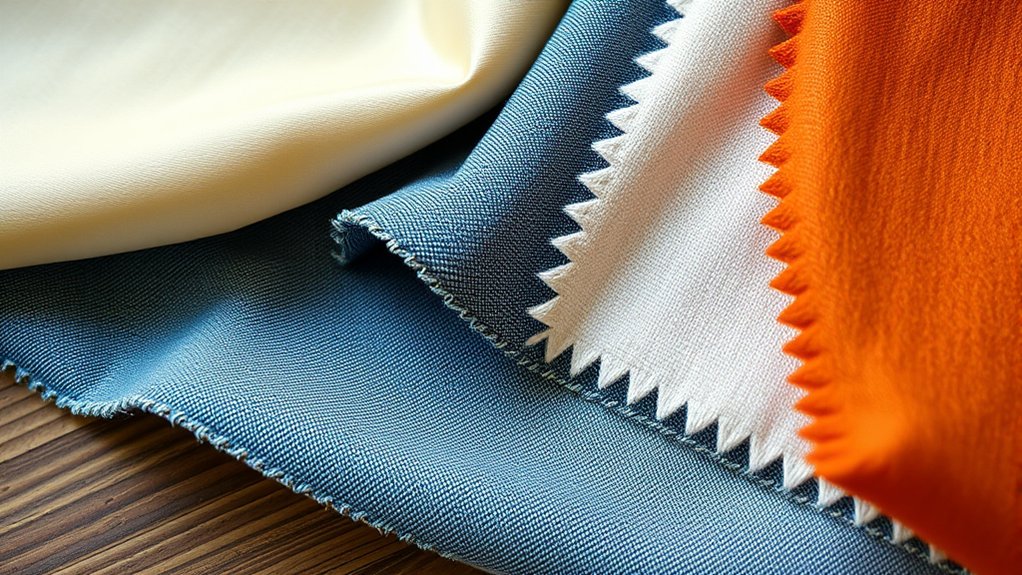
5 Fabrics That Don’t Fray You Should Know
If you’ve ever struggled with fabric edges unraveling and ruining your sewing projects, you’re not alone. Many people find it frustrating when their hard work gets undone by fraying fabric. Finding materials that don’t fray can make all the difference in keeping your creations looking sharp and lasting longer.
You’ll want fabrics that don’t fray to keep your projects neat and durable. Try natural options like linen, heavyweight canvas, denim, wool, or tightly woven silk. They hold up well and need less hemming.
For synthetics, polyester, nylon, acrylic, spandex, and olefin resist unraveling while staying strong. Choosing tight weaves and proper finishes also helps.
By starting with these smart fabric picks, you’ll save time and enjoy cleaner edges. There’s more to investigate on how weaving and finishes work to protect your fabric.
Key Takeaways
- Linen resists fraying due to its tight weave and maintains vibrant color after washing.
- Heavyweight cottons like canvas and denim have dense weaves that prevent fraying.
- Tightly woven wool fabrics are durable and less prone to fraying.
- Silk in charmeuse or satin weave resists fraying while retaining color.
- Synthetic fabrics like polyester and nylon are strong, durable, and rarely fray.
What Makes Fabrics Resist Fraying
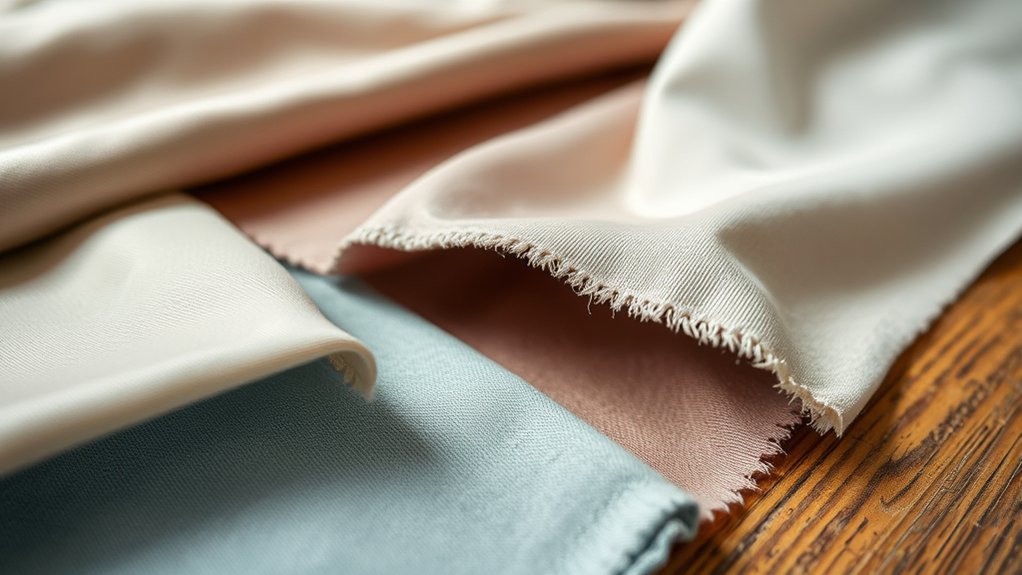
Although many fabrics tend to unravel at the edges, some resist fraying because of their weave, fiber type, and finishing treatments. When you’re choosing materials, understanding fabric durability factors helps you pick options that naturally hold together.
Tight weaves like twill or satin reduce loose threads, making the fabric less prone to fraying. The fiber type matters too. Synthetic fibers like polyester often resist fraying better than loosely spun natural fibers.
You can also apply fraying prevention techniques to boost durability. Treatments like heat sealing, coating, or using special adhesives strengthen edges so threads don’t come undone.
Sewing methods such as serging or binding edges also play a role. By combining the right fabric with effective fraying prevention techniques, you guarantee your project lasts longer and looks neater.
Top Natural Fabrics That Don’t Fray

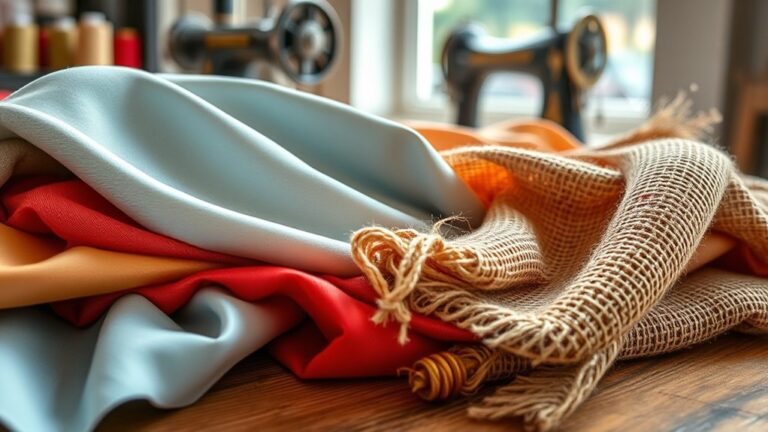
When selecting natural fabrics that hold up well without fraying, you’ll find some fibers and weaves stand out. Linen, for example, offers excellent fabric durability thanks to its tight weave, which naturally resists fraying. It also boasts impressive color retention, keeping hues vibrant after multiple washes.
Likewise, heavyweight cottons like canvas and denim are your go-to choices for durability. They resist fraying due to their dense weave and maintain color intensity over time. Wool is another natural option that’s less prone to fraying, especially when tightly woven, and it holds dye well, ensuring good color retention.
Silk, while delicate, can also resist fraying if woven tightly, like in charmeuse or satin. When you pick these natural fabrics, you get the benefit of long-lasting wear without worrying about edges unraveling. Choosing the right fabric means less hemming and more confident, clean finishes in your projects.
Best Synthetic Fabrics That Stay Neat
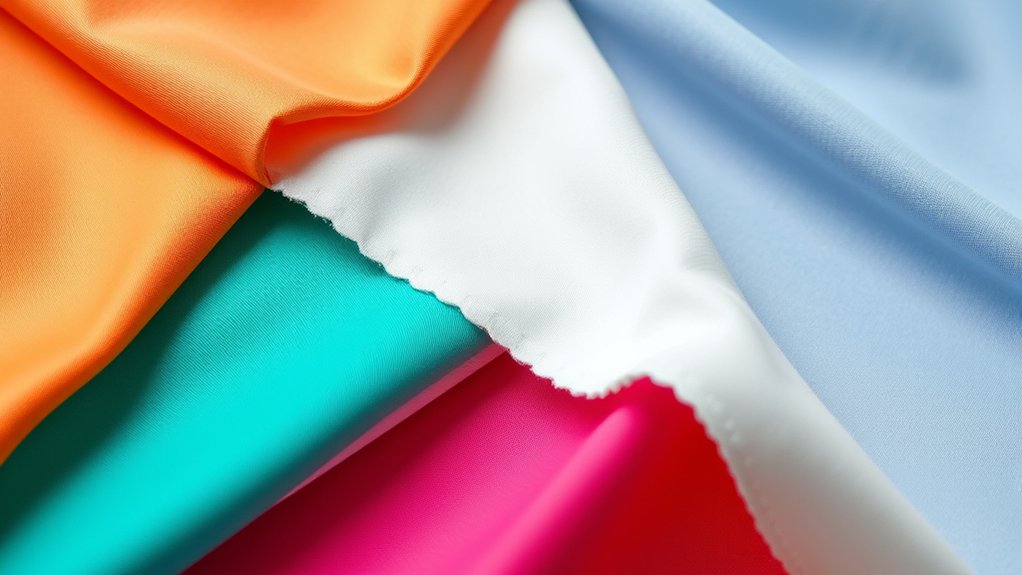
How do synthetic fabrics manage to stay neat and resist fraying so well? Their tightly woven construction and durable fibers play a big role. When you work with these materials, seam reinforcement and edge binding become easier and more effective. This ensures your projects hold up over time.
Tightly woven synthetic fibers make seam reinforcement and edge binding easier, keeping projects neat and durable.
Here are some of the best synthetic fabrics that stay neat:
- Polyester: Strong and durable, it rarely frays and holds seams firmly.
- Nylon: Its smooth texture resists unraveling, making it perfect for activewear.
- Acrylic: Mimics wool but with less risk of fraying.
- Spandex: Stretchy yet stable, which makes edge binding simpler.
- Olefin: Lightweight, moisture-resistant, and fray-resistant.
How Weaves and Finishes Prevent Fraying
Because the way fabric is woven directly affects its durability, choosing the right weave can help you prevent fraying before it starts. Tight weaves like twill and satin create strong interlacing that resists unraveling, enhancing fabric durability. When threads are packed closely, the edges hold together better, reducing the chances of frays appearing over time.
You’ll notice that fabrics with plain or loose weaves are more prone to fraying, so selecting denser patterns is key.
Beyond weaving, finishes play an essential role in seam reinforcement. Treatments such as heat-setting, resin coatings, or enzyme washes bond fibers at the edges, locking them in place. These finishes add an extra layer of protection without compromising flexibility.
When you combine smart weaving choices with proper finishing techniques, you guarantee your fabric stays neat and sturdy throughout its use, saving you time and effort on repairs.
Time-Saving Tips for Working With Non-Fraying Fabrics
Although non-fraying fabrics reduce the need for extensive edge finishing, you can still speed up your sewing projects by using specific techniques designed for these materials. By optimizing your approach, you’ll save time and maintain clean, professional results without unnecessary steps.
Non-fraying fabrics simplify sewing, letting you save time while achieving clean, professional results effortlessly.
Here are some time-saving tips for working with non-fraying fabrics:
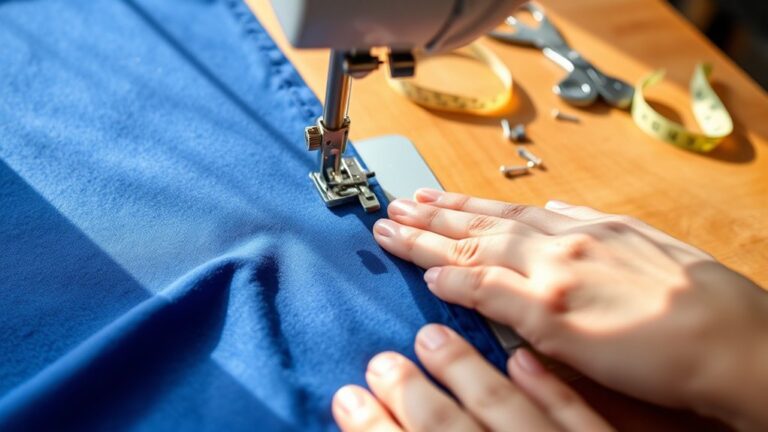
- Use straight stitch sewing machine techniques to quickly secure seams without worrying about raw edges.
- Skip complex edge finishing methods like serging or binding since these fabrics don’t unravel.
- Cut fabric pieces precisely to avoid trimming later, minimizing handling time.
- Press seams open right after sewing to flatten edges and reduce bulk.
- Use clips instead of pins for faster fabric alignment without shifting.
With these strategies, you’ll make the most of non-fraying fabrics, streamlining your sewing process while producing neat, durable garments or projects.
Frequently Asked Questions
Can Non-Fraying Fabrics Be Dyed Easily?
Yes, non-fraying fabrics can be dyed easily, but you’ll want to watch out for colorfastness issues. Some of these fabrics, like polyester blends, might not absorb dye as well, leading to uneven colors.
You should consider the dye absorption rates because synthetic fibers often require special dyes or treatments. If you choose the right dye and process, you’ll get vibrant, lasting colors without compromising the fabric’s integrity.
Are Non-Fraying Fabrics More Expensive Than Regular Fabrics?
Non-fraying fabrics can be more expensive than regular fabrics, but it varies depending on the type and brand. When you do a cost comparison, consider fabric durability; non-fraying fabrics often last longer and save you money over time by reducing wear and tear.
How Do Non-Fraying Fabrics Perform in Hot Weather?
Non-fraying fabrics vary in breathability, so your comfort in hot weather depends on the material. Some, like polyester blends, might trap heat and offer lower breathability compared to natural fibers.
However, many modern non-fraying fabrics include moisture-wicking properties that help you stay dry by pulling sweat away from your skin. When choosing, compare breathability and moisture-wicking features to make sure you stay cool and comfortable in the heat.
Can Non-Fraying Fabrics Be Machine Washed Safely?
You can think of non-fraying fabrics as a fortress, standing strong against wear and tear. Yes, you can machine wash them safely, especially if you follow care instructions.
Their fabric durability comes from smart stitching techniques that keep edges intact without unraveling. Just use gentle cycles and mild detergent to maintain their structure.
This way, your garments stay fresh and long-lasting, saving you from frequent repairs or replacements.
Do Non-Fraying Fabrics Have Environmental Benefits?
Yes, non-fraying fabrics can offer environmental benefits, especially when produced through sustainable production methods. When you choose these fabrics made with eco-friendly dyes, you reduce harmful chemical runoff and waste.
Plus, since they don’t fray, you use less fabric and create less waste during sewing. By opting for non-fraying materials crafted sustainably, you support a greener textile industry and make your projects more eco-conscious without sacrificing quality or durability.
Conclusion
Now that you know these five fabrics that don’t fray, you can sew with confidence and ease, like a painter with a steady brush. Choosing the right material means less worry about unraveling edges and more time creating beautiful pieces.
Remember, your fabric is your canvas. Pick one that stays neat, and your projects will hold together perfectly, stitch after stitch. Adopt these fabrics that don’t fray, and let your creativity flow without a hitch!