What Does Satin Mean and How Can You Identify It?
If you’ve ever shopped for fabrics or clothing, you know how tricky it can be to figure out what satin really is. You’re not alone—many people struggle to identify satin and understand what makes it different from other shiny materials. Whether you want to buy the perfect satin dress or care for your satin sheets, knowing how to spot genuine satin can save you time and frustration.
Satin means a smooth, glossy fabric made through a special weave that creates a shiny surface and elegant drape. You can identify satin by its lustrous sheen and soft, silky feel. Silk satin feels cool and luxurious, while synthetic satin is slicker. Check the edges for fraying; silk frays easily, polyester resists.
A burn test also helps spot real satin. Keep exploring to learn how satin’s weave and fiber affect its look, feel, and care.
Key Takeaways
- Satin is a smooth, glossy fabric defined by a weaving technique that produces long floating threads for a lustrous surface and elegant drape.
- Traditionally made from silk, satin symbolizes luxury and sophistication. But modern versions use synthetic fibers like polyester to keep it affordable.
- Satin’s signature shine comes from its unique weave reflecting light evenly. This creates a smooth, soft texture with a subtle, glowing sheen.
- To identify satin, feel for smoothness. Silk satin is cool and soft, while polyester satin feels slick and less natural.
- Authenticity checks include examining fraying since silk frays easily and polyester resists. You can also perform a burn test and consider fabric price and weave quality.
What Is Satin Fabric?

What exactly is satin fabric? Satin is a smooth, glossy textile known for its lustrous surface and elegant drape. When you touch satin, you’ll notice its silky feel, a result of its unique weaving technique that creates a shiny front and a dull back.
Satin’s historical significance is rich; it was once a luxury reserved for royalty and nobility in various cultures due to its costly production. This fabric often symbolized wealth, prestige, and high social status.
Beyond its opulence, satin holds cultural symbolism in many traditions, representing purity, sophistication, and celebration. For example, satin gowns frequently appear in weddings and formal ceremonies, highlighting their importance in cultural rituals.
When you identify satin, keep in mind its smooth texture and reflective sheen, which set it apart from other fabrics. Understanding satin’s history and symbolism helps you appreciate why it remains a favorite in fashion and decor today.
Common Fibers Used in Satin
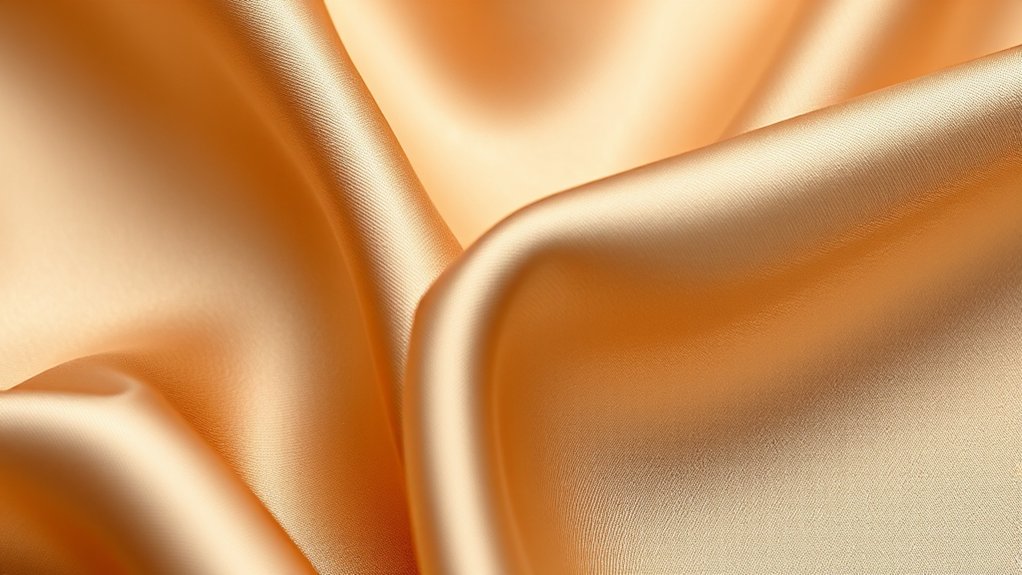
Satin’s distinctive shine and smoothness come from the fibers used to make it. Traditionally, silk has been the fiber of choice, prized for its natural luster and softness. Silk satin carries a historical significance, often linked to luxury and nobility in various cultures.
If you’ve ever touched silk satin, you’ll notice its cool, smooth texture, which has long symbolized elegance and wealth. Today, satin also includes fibers like polyester, nylon, and acetate, which offer affordability and durability while mimicking silk’s glossy appearance.
These synthetic fibers have expanded satin’s accessibility, shifting its cultural symbolism toward everyday fashion and décor. When you identify satin, knowing the fiber content helps you appreciate its role in history and culture. Whether silk or synthetic, the fibers shape satin’s identity, weaving together centuries of craftsmanship and meaning into every smooth thread.
How Satin’s Weave Creates Its Shine

You’ll notice that satin’s shine comes from its unique weave structure. It’s all about those long floating threads that glide over the fabric’s surface. These floating threads give satin a smooth texture that reflects light beautifully. Once you understand this, it’s easier to spot that subtle glow that really sets satin apart.
Structure Of Satin Weave
Although it may seem simple, the weave structure plays a crucial role in creating satin’s signature shine. When you examine satin, you’ll notice its smooth surface results from a unique weaving pattern that sets it apart.
Understanding this structure reveals why satin held such historical uses and cultural significance, often symbolizing luxury and elegance. Here’s what you should know:
- Satin weave involves floating warp or weft threads over multiple threads beneath, minimizing interruptions.
- This smooth surface reflects light evenly, giving satin its glossy appearance.
- The weave’s complexity allowed it to be prized in royal garments and ceremonial textiles across cultures.
Role Of Floating Threads
The smooth surface and glossy shine of satin come directly from the floating threads in its weave. These threads skip over several yarns before interlacing again, creating long floats that form a sleek surface.
When you look at satin, the unique satin aesthetics owe much to this weaving technique, giving it that distinctive, lustrous finish. Understanding satin history reveals that this method was developed to improve fabric elegance and luxury, making satin a symbol of sophistication.
As you identify satin, focus on these floating threads. They’re the key to its softness and sheen. Without these floats, satin wouldn’t have its signature look or feel, so appreciating their role helps you truly grasp what makes satin stand out among other fabrics.
Light Reflection And Shine
Because satin’s weave creates long, smooth floats on its surface, it reflects light in a way that gives the fabric its characteristic shine. When you look closely, the fabric’s light reflection depends on several factors you can easily notice:
- Color blending Satin’s smooth surface allows colors to blend seamlessly, enhancing the shine by reflecting light uniformly.
- Fabric weight Lighter satin fabrics reflect light more vividly, while heavier ones offer a subtler, richer sheen.
- Surface smoothness The fewer interruptions on the fabric’s surface, the more it acts like a mirror, intensifying the shine.
Understanding these elements helps you identify satin by its distinct luster and appreciate how its weave manipulates light for that elegant glow.
What Makes Satin Feel Luxurious to the Touch
You’ll notice satin feels incredibly smooth and soft against your skin because of its unique surface texture. It’s that special feel that makes it stand out. On top of that, the fabric has a reflective sheen that catches the light just right, adding to that luxurious sensation. And it’s not just about how it looks or feels—its flexibility lets the fabric drape gracefully, which really boosts the overall comfort and elegance you get from it.
Smooth Surface Texture
How does satin achieve its signature smoothness that feels so luxurious against your skin? The secret lies in its unique weave and fiber choice, deeply rooted in textile history and cultural significance. Satin’s smooth surface comes from a weaving technique that allows more threads to float over the fabric, creating fewer interruptions on the surface.
Here’s what makes satin’s texture stand out:
- Weave Structure: The satin weave creates long floats of yarn, minimizing texture roughness.
- Fiber Quality: Often made from silk or synthetic fibers, satin uses smooth, fine threads.
- Finish Process: Post-weaving treatments boost softness and reduce friction.
Understanding these factors helps you appreciate satin’s luxurious feel, a result of centuries-old craftsmanship and cultural appreciation.
Reflective Sheen Quality
The smooth surface of satin doesn’t just feel luxurious. It also plays a key role in creating its distinctive reflective sheen. This sheen comes from the fabric’s unique weave, which lets light glide across its surface instead of absorbing it.
When you touch satin, you’re experiencing centuries of history where this shimmer symbolized wealth and status, especially in royal garments and ceremonial attire. Its cultural significance goes beyond fashion. In many societies, satin’s shine stands for elegance and refinement.
You can spot satin by how its glossy finish catches light at different angles, giving it that unmistakable glow. This reflective quality makes satin not only visually stunning but also irresistibly luxurious to the touch.
Softness And Flexibility
Because satin’s weave creates a dense, smooth surface, it feels incredibly soft and flexible against your skin. This luxurious touch isn’t accidental; it comes from centuries of textile history and careful manufacturing processes. Satin’s unique weave lets light glide over its surface, which boosts its softness.
Here’s what contributes to satin’s softness and flexibility:
- Weaving Technique: The satin weave floats warp threads over weft threads, minimizing interlacings and creating a silky texture.
- Fiber Choice: High-quality fibers like silk or polyester amplify softness and drape.
- Finishing Processes: Post-weaving treatments smooth the fabric further, improving flexibility and comfort.
Knowing these factors helps you appreciate why satin feels so luxurious and why it stands out in textiles.
How to Tell Satin Apart From Silk and Polyester
Wondering how to distinguish satin from silk and polyester? Start by understanding satin history and manufacturing. Satin refers to a weave, not a fiber, giving it that smooth, glossy surface. Silk satin uses natural silk fibers, making it soft and breathable. Polyester satin, however, uses synthetic fibers, which feel less breathable and slightly stiffer.
To tell them apart, first feel the fabric. Silk satin feels luxurious, cool, and smooth, while polyester satin often feels slick but less soft. Look at the shine. Silk satin has a subtle, natural sheen, whereas polyester shines more artificially. Also, check the edges. Silk frays easily, but polyester resists fraying.
If you’re still unsure, do a burn test very carefully. Silk smells like burnt hair, polyester smells like plastic, and satin’s reaction depends on its fiber content. Knowing satin manufacturing helps you see why these fabrics behave differently, letting you identify them confidently.
Where You’ll Find Satin in Clothing and Home Goods
You’ll find satin woven into a variety of clothing and home goods, thanks to its smooth texture and elegant shine. Its historical significance stretches back centuries, often linked to luxury and status, while cultural symbolism highlights beauty and refinement. When you encounter satin, it’s usually in pieces that aim to convey elegance and comfort.
Here are three common places you’ll find satin:
- Evening Wear and Bridal Gowns Satin’s glossy finish makes it a favorite for formal occasions, symbolizing sophistication and celebration.
- Lingerie and Sleepwear You’ll notice satin’s soft feel elevates comfort, often representing intimacy and allure.
- Bedding and Drapes Satin adds a touch of luxury to your home, reflecting cultural values of warmth and elegance.
How Satin’s Shine Affects Light Reflection
Satin’s smooth texture and lustrous appearance don’t just look elegant. They interact with light in a unique way that sets satin apart from other fabrics. When light hits satin, its tightly woven surface reflects it evenly, creating a glowing shine that changes with your movement.
This dynamic shine isn’t just about aesthetics. It carries historical significance, as satin was once reserved for royalty, symbolizing wealth and status. Even today, satin’s reflective quality holds cultural symbolism, often linked to luxury and celebration.
Here’s how satin’s shine affects light reflection:
| Aspect | Effect on Light Reflection |
|---|---|
| Smooth Surface | Reflects light evenly, creating a glow |
| Tight Weave | Enhances smoothness, intensifies shine |
| Angle of Light | Changes shine intensity dynamically |
| Historical & Cultural | Symbolizes luxury through its glow |
You’ll notice satin’s shine brings a unique vibrancy, making it stand out wherever it’s used.
How Durable Is Satin and How to Care for It
You might be wondering just how durable satin really is and what kind of wear it can handle. Well, satin can be a bit delicate—it tends to show signs of wear like snags or fading if it’s not treated with care. But don’t worry, knowing the right way to clean and store satin can make a big difference. Taking those simple steps will help you keep your satin looking its best for a lot longer.
Satin Fabric Durability
Although satin is prized for its smooth texture and lustrous finish, it requires careful handling to maintain its beauty over time. Its historical significance and cultural symbolism make it a treasured fabric, often used in ceremonial and luxury garments.
To preserve satin’s durability, you should:
- Handle with care: Satin can snag easily due to its delicate weave, so avoid rough surfaces.
- Gentle washing: Use cold water and mild detergent, preferably hand wash or delicate cycle.
- Proper storage: Store satin garments away from direct sunlight to prevent fading and fabric weakening.
Common Wear And Tear
Maintaining satin’s appearance means being aware of how everyday use can affect it. Satin, though luxurious and tied to fashion trends and historical significance, isn’t the most durable fabric. It can snag easily, especially when brushed against rough surfaces, causing pulls or runs.
Over time, the sheen may dull from frequent friction or improper handling. You’ll notice delicate seams may fray if stressed too much. Satin’s smooth texture also attracts oils and stains more readily, so you should be cautious when wearing it daily.
While it’s a fabric that boosts style, its vulnerability to wear and tear means you’ll want to handle it gently to preserve its elegance. Understanding these common issues helps you appreciate satin’s beauty without compromising its lifespan.
Proper Satin Maintenance
Since satin is delicate and prone to damage, caring for it properly is essential to keep its sheen and texture intact. Satin’s historical significance and cultural symbolism make it a treasured fabric, so preserving its beauty honors its rich past. You can extend satin’s life by following these tips:
- Gentle washing: Use cold water and mild detergent, hand-washing when possible to avoid weakening fibers.
- Proper drying: Air dry satin flat or hang it. Avoid wringing or direct sunlight to prevent fading and distortion.
- Careful storage: Store satin away from sharp objects and in breathable fabric bags to maintain its smooth surface.
How to Spot Real Satin When Shopping
When you’re shopping for satin, knowing how to spot genuine fabric can save you from disappointment. Satin’s history and cultural significance mean it’s often replicated with cheaper materials.
To identify real satin, first check the texture. It should feel smooth and silky on the front, with a duller back. Run your fingers over the fabric; genuine satin has a fluid drape and a subtle sheen that synthetic versions usually lack.
Look closely at the weave. Authentic satin features a tight weave with minimal gaps. Also, be wary of price. While not always a guarantee, very low costs often signal imitation.
If possible, perform a burn test on a small, hidden edge. Real satin made from silk smells like burnt hair, while synthetics smell like burnt plastic. Understanding satin’s rich history and cultural importance can guide you in appreciating and choosing genuine pieces that reflect true quality.
Choosing Satin That Fits Your Style and Needs
How do you choose satin that truly matches your style and needs? Understanding satin history and manufacturing helps. Satin originated centuries ago as a luxurious fabric, traditionally made from silk.
Today, manufacturing methods vary, creating satin from silk, polyester, or nylon, each offering different textures and durability.
To pick satin that fits you, consider these:
- Fabric Type: Silk satin feels smooth and breathable, ideal for special occasions. Polyester satin is more affordable and wrinkle-resistant, great for everyday wear.
- Finish and Weight: Lighter satin suits flowing dresses, while heavier satin works well for structured garments like jackets.
- Care Requirements: Check if the satin is machine washable or requires dry cleaning, aligning with your lifestyle.
Frequently Asked Questions
Can Satin Be Used for Outdoor Furniture?
You shouldn’t use satin for outdoor furniture because it lacks outdoor durability and weather resistance. Satin is delicate and prone to damage from sun, rain, and humidity.
If you want furniture that lasts outside, choose fabrics specifically designed for outdoor use, like solution-dyed acrylic or polyester. These materials withstand harsh weather and maintain their look over time. Unlike satin, which fades and deteriorates quickly when exposed to outdoor elements.
Is Satin Hypoallergenic?
Imagine satin as a smooth river flowing gently through your skin, rarely causing ripples of irritation. Satin itself isn’t inherently hypoallergenic, so if you have satin allergy concerns, you should check the fiber content. Silk satin is more natural, while polyester satin might trap allergens.
To avoid reactions, you might want to consider hypoallergenic fabric options like organic cotton or bamboo, which soothe your skin without triggering allergies.
How Environmentally Friendly Is Satin Production?
Satin production’s environmental friendliness depends on the fibers used and the manufacturing process. If you choose satin made from eco friendly fibers like organic cotton or recycled polyester, you support sustainable manufacturing practices.
However, traditional satin often uses synthetic fibers, which can involve chemicals and energy-intensive processes. To be eco conscious, look for certifications and brands prioritizing sustainable methods, so you can enjoy satin without harming the planet.
Can Satin Be Dyed at Home?
Yes, you can dye satin at home, but you need to choose the right dyeing techniques to get vibrant fabric color options. Since satin’s smooth surface resists dye absorption, using a dye designed for synthetic fibers or a fabric-specific dye helps.
You’ll want to prepare the fabric properly, soak it evenly, and follow the instructions carefully. Experimenting with small swatches first gives you a visual idea of how the color will turn out on your satin.
Does Satin Shrink After Washing?
Yes, satin can shrink after washing if you don’t follow proper care instructions. To maintain fabric durability, you should wash satin in cold water and avoid high heat when drying.
Always check the care label and opt for gentle cycles or hand washing. By handling satin carefully, you’ll prevent shrinkage and keep your fabric looking smooth and lustrous longer.
Conclusion
So, next time you spot satin, don’t just see shiny fabric. Imagine a disco ball disguised as a pillowcase, effortlessly dazzling your life. You’ll know it’s not just silk or polyester playing dress-up because satin’s weave is the real VIP, reflecting light like it’s auditioning for a Broadway show.
Care for it right, and this slippery charmer will stick around longer than your last online date. Satin isn’t just fabric, it’s a glamorous, smooth-talking showstopper. That’s what satin means—luxury you can feel and see every time you touch it.