How to Wash Velvet in 10 Steps
If you’ve ever tried cleaning velvet at home, you know it can be tricky. Many people struggle with keeping this delicate fabric looking fresh without damaging its soft texture. You’re not alone—velvet requires special care to maintain its luxurious feel and appearance.
Check the care label first, since dry-clean-only velvet shouldn’t be washed at home. Gather a mild detergent, a soft cloth, and a mesh bag, then spot-test a hidden area.
Brush off dust gently, hand wash in cool water, and rinse without twisting.
Next, blot the fabric with a clean towel and let it air dry flat, away from heat and sun. Finish by lightly brushing the pile, and there’s more to know if you keep going.
Key Takeaways
- Check the care label first; if it says dry clean only, do not wash velvet at home.
- Use cool water, mild detergent, and gentle handling to protect velvet’s pile and sheen.
- Hand wash gently or machine wash only if allowed, using a mesh bag and delicate cycle.
- Never wring, scrub, bleach, or use heat. Instead, rinse softly and blot excess water.
- Dry flat or hang in the shade, then brush lightly to restore the velvet nap.
Check the Velvet Care Label First
Before you wash velvet, check the care label first. You can save the garment by reading every symbol and fiber note before you do anything else. Some velvet types, like cotton velvet, handle more moisture than silk velvet, while crushed or stretch versions may need different care.
If the label says dry clean only, don’t gamble with home washing. Look for warnings about heat, bleach, or machine agitation, because velvet can lose its pile fast. You should also inspect fabric blends, since polyester velvet, rayon velvet, and mixed fibers often need different treatment than pure fabric.
When the label includes hand wash or gentle cycle instructions, follow them exactly and test a hidden area first. If the tag is missing, assume the fabric needs extra caution and choose the mildest method available. This quick check helps you protect color, texture, and shape before you move on.
Gather Gentle Supplies for Velvet
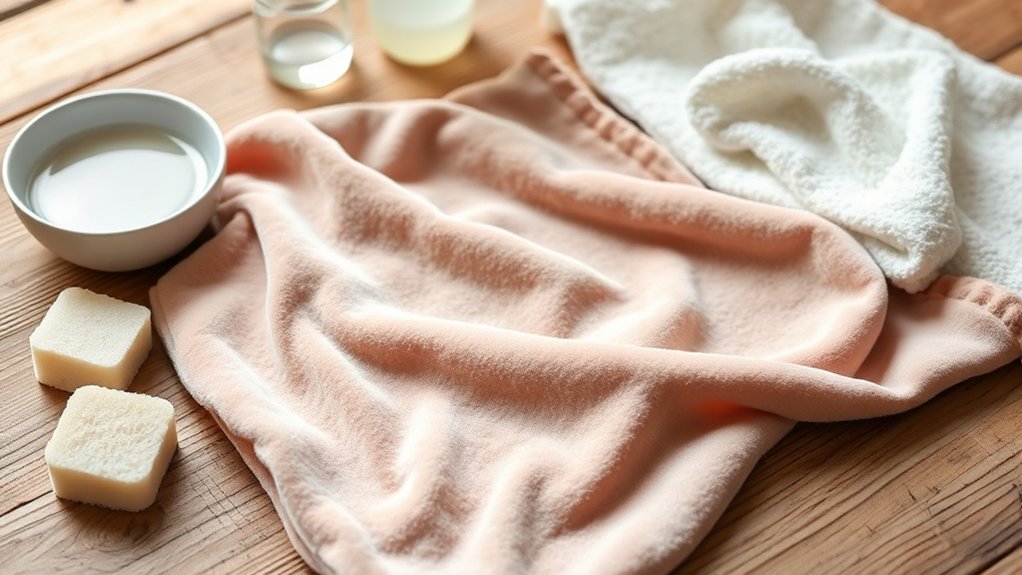
You’ll want to gather a mild detergent that’s safe for delicate fabrics. It’s also a good idea to have soft tools on hand, like a clean cloth or a gentle brush. If you’re planning to wash the velvet by hand or in the machine, a mesh wash bag can come in handy. Keeping your supplies gentle really helps prevent crushing the pile and keeps the fabric looking smooth.
Mild Detergent Options
Choose a mild detergent that protects velvet’s soft pile and rich finish. You should pick formulas made for delicate fabrics, because harsh cleaners can dull sheen and crush nap. Look for eco friendly detergents with simple ingredients, and consider liquid detergent alternatives when you need gentler control.
| Option | Why it works |
|---|---|
| Plant-based liquid | Cleans softly |
| Unscented baby wash | Limits residue |
| Wool-safe cleaner | Respects fibers |
Check the label for bleach, brighteners, and enzymes, then choose the weakest effective mix. If you test a new product, dilute it first and watch for color changes. Keep your choice neutral, gentle, and easy to rinse so velvet stays smooth, plush, and vibrant after washing.
Soft Cleaning Tools
Use soft, lint-free tools so you don’t snag velvet’s delicate pile while you clean. Choose soft bristle brushes for lifting dust and rejuvenating the nap without scratching the fabric.
Keep microfiber cloths nearby because they trap lint, absorb moisture, and glide gently across velvet’s surface. Before you start, test each tool on a hidden spot to make sure it won’t distort the pile or leave marks.
You can also use a clean, dry sponge for light surface touch-ups, but press lightly and move in one direction. Skip rough pads, stiff brushes, and textured towels, since they can flatten fibers.
With the right supplies ready, you’ll handle velvet carefully and reduce the risk of wear while you clean.
Mesh Wash Bag
A mesh wash bag gives your velvet an extra layer of protection when you gather gentle supplies for cleaning. You slip delicate items inside, and the bag helps prevent snagging, crushing, and excess friction during washing.
The mesh bag benefits are simple: it keeps fabric contained, reduces rubbing against hardware, and lets water and mild detergent move through safely. Follow these washing tips to protect the pile and shape:
- Choose a fine mesh bag with a secure zipper.
- Place one velvet item in each bag.
- Use cool water and a gentle cycle.
- Remove the item promptly and air-dry it flat.
With this small step, you handle velvet more carefully and keep it looking soft, smooth, and rich.
Spot Test a Hidden Area First

Before you wash velvet, it’s a good idea to check a hidden area first. This way, you can see how the fabric reacts. Just dab a small spot with your cleaning solution to test for colorfastness. Keep an eye out for any fading or changes in texture. If the patch stays stable, then you’re good to go and can move ahead with more confidence.
Hidden Fabric Check
If your velvet piece has any care label at all, check it first, then test a hidden spot before you wash the whole item. Choose an inside seam, hem, or lining where a mistake won’t show, and dab on a little water or cleaner.
Watch how the velvet reacts, because hidden stains can appear when moisture lifts old residue. You’re also checking the fabric structure for crushing, puckering, or roughening. Wait a few minutes, then feel the spot gently with dry fingers.
- Pick a concealed area.
- Apply a small amount.
- Blot, don’t rub.
- Inspect the nap and seam.
If the test area stays smooth and clean, you can move ahead with more confidence.
Colorfastness Test Patch
To make sure the velvet won’t bleed or fade, test a hidden spot with a white cloth and a little water or your chosen cleaner. Dab gently, then wait a few minutes and check the cloth for color transfer or the velvet for dulling.
If the patch stays true, you can move ahead with confidence. If you see dye on the cloth, stop and switch to a gentler care method or professional cleaning.
When testing fabrics, use small, controlled touches and avoid soaking the pile. Good colorfastness methods help you spot trouble before it spreads across the garment or upholstery.
Always try the side seam, hem, or inside edge first, since those areas stay out of sight and give you the clearest reading of how the fabric will react.
Remove Dust and Surface Dirt From Velvet
Gently sweep away loose dust and surface dirt with a soft brush, lint roller, or microfiber cloth. You’ll lift debris before it settles into the pile, keeping the velvet looking rich and smooth. Use light strokes in the direction of the nap so you don’t crush the fibers.
These dust removal techniques work best when you move slowly and check each section as you go. For stubborn specks, dab, don’t rub, with a clean cloth.
Move slowly, check each section, and dab stubborn specks gently with a clean cloth.
- Brush the fabric from top to bottom.
- Roll a lint roller across seams and edges.
- Wipe with a dry microfiber cloth for quick refreshes.
- Inspect the surface under good light for missed spots.
These surface cleaning methods help you maintain the texture without stressing the material. Finish by letting the fabric rest briefly, then fluff the nap with your hand if needed.
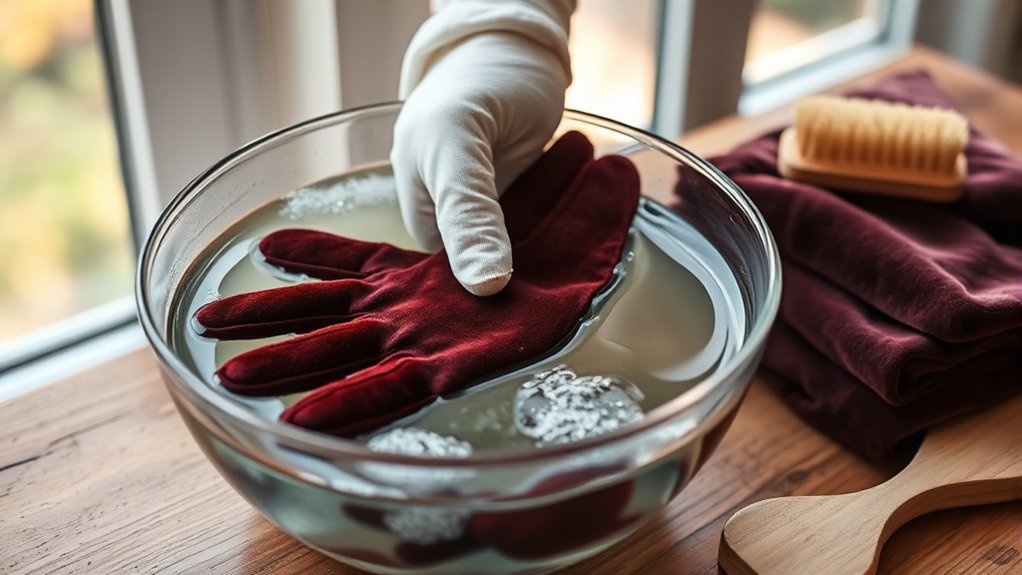
Hand Wash Velvet in Cool Water
Fill a basin with cool water to protect the velvet’s texture and color. Then, gently swish the fabric by hand—using light pressure instead of scrubbing. Make sure to keep the washing brief so the velvet stays soft and smooth.
Choose Cool Water
Cool water is the safest choice for hand-washing velvet because it helps protect the fabric’s fibers and keeps the pile from matting or shrinking. You should check the care label first, since velvet types can react differently to temperature. Keep the water lukewarm at most, and match your washing frequency to how often you wear the piece, not to habit.
- Fill a basin with cool water, not hot.
- Add a small amount of mild detergent.
- Watch the velvet stay rich and smooth.
- Keep the rinse water just as cool.
This simple temperature choice helps preserve color, texture, and shape. If the water feels warm on your wrist, it’s too hot for velvet.
Gentle Hand Washing
Once the basin is ready, submerge the velvet and move it through the water with your hands, pressing lightly to loosen dirt without twisting or scrubbing. Keep your motions slow and deliberate so the pile stays smooth and the fibers don’t stretch.
If you see stubborn spots, dab them with your fingertips instead of rubbing. This approach supports velvet fabric care and protects the fabric’s sheen. Let the piece soak briefly, then lift it and repeat the gentle cleaning techniques until the water looks clear.
Don’t wring the velvet; squeeze out excess water softly between your palms. You’ll reduce damage by handling it with patience and keeping the wash time short.
Machine Wash Velvet Only If Safe
Machine wash velvet only if the care label says it’s safe, since some velvet fabrics can lose their pile, shape, or sheen in the washer. Choose machine settings that use cold water and the gentlest wash cycles. Then, turn the garment inside out and place it in a mesh laundry bag.
Keep the load small so the fabric isn’t crushed by heavier pieces. Use a mild detergent and skip bleach or fabric softener, which can dull the surface.
- A dark velvet dress resting in a mesh bag
- Cool water filling the drum slowly
- A delicate cycle spinning softly
- A separate load with lightweight items only
After the cycle ends, remove the piece right away and reshape it while it’s still damp. Don’t wring, twist, or overcrowd the drum.
When you handle it carefully, you’ll protect the plush texture and keep the velvet looking smooth, rich, and refined.
Rinse Velvet Gently
If the velvet needs rinsing after washing, let cool water flow through it gently rather than soaking or scrubbing it. Hold the fabric under a soft stream and let the water pass through the fibers, helping lift away any leftover soap without pressing on the pile.
Turn the piece slowly so each section gets an even rinse, and keep your hands light to protect the texture. These gentle rinsing techniques help preserve the velvet’s smooth surface and reduce the risk of matting or distortion.
Turn the piece slowly for an even rinse, keeping your hands light to protect velvet’s soft texture.
As part of your velvet maintenance tips, stop rinsing as soon as the water runs clear, since extra handling can stress the fabric. If the item is large, rinse one area at a time to stay in control.
Always support the fabric fully while you work, and avoid twisting or wringing it, because that can change the nap and leave the velvet looking uneven.
Blot Velvet Dry With a Clean Towel
Lay the velvet flat on a clean, dry towel and gently press another towel on top to blot out excess water. Use a light blot technique instead of rubbing, so you don’t crush the pile or leave shiny spots. Keep your hands flat and move slowly across the fabric, lifting moisture from one section at a time.
- Choose a thick, lint-free towel for better towel selection.
- Press, hold, and lift; don’t twist or scrub the velvet.
- Replace the damp towel with a dry one as needed.
- Continue until the fabric feels only slightly damp, not wet.
Patience helps you protect the velvet’s soft texture and rich look. If you see water pooling, switch to a fresh towel right away and work on a dry surface. By blotting carefully, you help the fabric keep its smooth finish and reduce marks after washing.
Air Dry Velvet Away From Heat and Sun
Once the velvet is only slightly damp, hang or lay it flat to air dry in a cool, shaded spot away from direct sunlight, radiators, and vents. Give the fabric room so air can move around it, and keep it away from anything warm that could distort the fibers.
If you hang it, use a padded hanger to help support the shape. If you lay it flat, smooth it gently so it dries evenly. Check it occasionally, but don’t twist, wring, or speed up the process with heat.
Slow drying is one of the safest drying techniques for velvet because it helps protect the nap and keeps the fabric from shrinking or marking. Good fabric care means letting moisture leave naturally, not forcing it out.
When the velvet feels dry to the touch, leave it a little longer to guarantee the inner layers are fully dry before you store or use it again.
Restore the Velvet Pile With Light Brushing
When the velvet is completely dry, gently brush the nap with a soft clothes brush or a clean, dry hand to lift the fibers back into place. Use short, light strokes in one direction, then check the surface for flattened spots. These velvet brushing techniques help you revive the sheen without crushing the pile.
Work slowly, especially on seams, hems, and areas that rub during wear. If the fabric still looks matted, repeat the motion with barely any pressure and let the fibers settle naturally. You’re restoring fabric texture, not scrubbing it, so keep your touch delicate.
- Hold the garment on a flat, clean surface.
- Brush from top to bottom in smooth passes.
- Pause to fluff any dull patches by hand.
- Step back and inspect the nap in bright light.
Finish by hanging the piece briefly so the pile can relax evenly.
Frequently Asked Questions
Can You Wash Crushed Velvet the Same Way as Regular Velvet?
No, you shouldn’t wash crushed velvet exactly the same way as regular velvet. You need to check the care label because crushed velvet often handles moisture and pressure differently.
For good crushed velvet care, wash it gently by hand or use a delicate cycle if allowed. Pay attention to fabric differences, since the pile and finish can change how the material reacts.
Always avoid wringing, heat, and harsh detergents to protect its texture.
How Often Should Velvet Items Be Washed?
You shouldn’t wash velvet often; you’ll preserve its texture, color, and shape. For most velvet care, clean it only when it’s visibly dirty, stained, or smells off.
You’ll wash it less often for delicate fabric types and more carefully for durable ones. Between washes, you can spot-clean, steam lightly, and brush gently to keep it fresh. That routine protects the pile and helps your velvet stay rich and smooth.
Can Steam Remove Wrinkles From Velvet Safely?
Yes, you can often use steam for safe wrinkle removal on velvet if you do it gently. You’ll want to use low steam settings, keep the nozzle a few inches away, and never press the fabric directly.
Hold the velvet taut with your hand or hang it first. Test a hidden spot, too. If the pile looks crushed or damp, stop and let it dry naturally before smoothing it again.
What Should You Do if Velvet Shrinks After Washing?
If your velvet shrinks after washing, you should stop further heat and reshape it while it’s slightly damp. You can gently stretch the fabric, then let it air-dry flat.
If the fit still feels tight, take it to a professional cleaner for help. Next time, focus on shrink prevention and careful fabric care: use cold water, mild detergent, and minimal agitation so you don’t repeat the damage.
How Can You Remove Makeup Stains From Velvet?
You can remove makeup stains from velvet by blotting the spot with a clean, dry cloth. Then, dab gently with a little mild soap and water.
Use makeup removal techniques like micellar water on a cotton swab for stubborn residue, but don’t rub. Always test first, and follow fabric care tips by letting the area air-dry.
Finally, brush the pile softly to restore its texture without damaging the velvet.
Conclusion
By now, you know how to wash velvet without crushing its soft glow. Treat it like a moonlit garden: handle it gently, keep the water cool, and let patience do the heavy lifting.
When you blot, air dry, and lightly brush the pile, the fabric wakes up looking plush again. Follow these steps, and your velvet will keep its rich shine and velvety whisper for years to come.
Knowing how to wash velvet properly ensures it stays beautiful and lasts longer. Just remember to treat it with care, and your velvet will always look its best.