How to Wash Velvet Curtains in 10 Steps
Washing velvet curtains can feel like a daunting task, and you’re not alone if you’ve ever wondered how to clean them without ruining that luxurious texture. Many people struggle with maintaining velvet because it’s delicate and easy to damage.
But with the right approach, you can keep your velvet curtains looking fresh and beautiful.
Check the care label first, then vacuum your velvet curtains gently with a soft upholstery attachment. Gather mild detergent, towels, and a basin or bathtub, and test a hidden spot for color bleeding.
If washing is allowed, use cold water and the gentlest cycle or hand wash carefully.
Never wring the fabric; instead, press out excess water with towels. Hang the curtains to air-dry, then lightly steam to lift the pile, and there’s more to know.
Key Takeaways
- Check the care label first, and vacuum velvet curtains gently with a low-suction upholstery attachment before washing.
- Test a hidden spot for color bleeding using cool water and mild detergent before cleaning the entire curtain.
- Wash by hand or on a delicate cold cycle with mild detergent, avoiding bleach, heat, and harsh agitation.
- Press out excess water between clean towels. Never twist or wring heavy velvet fabric.
- Air-dry curtains away from direct sunlight, then lightly steam and brush the pile to restore velvet texture.
Check the Velvet Care Label First
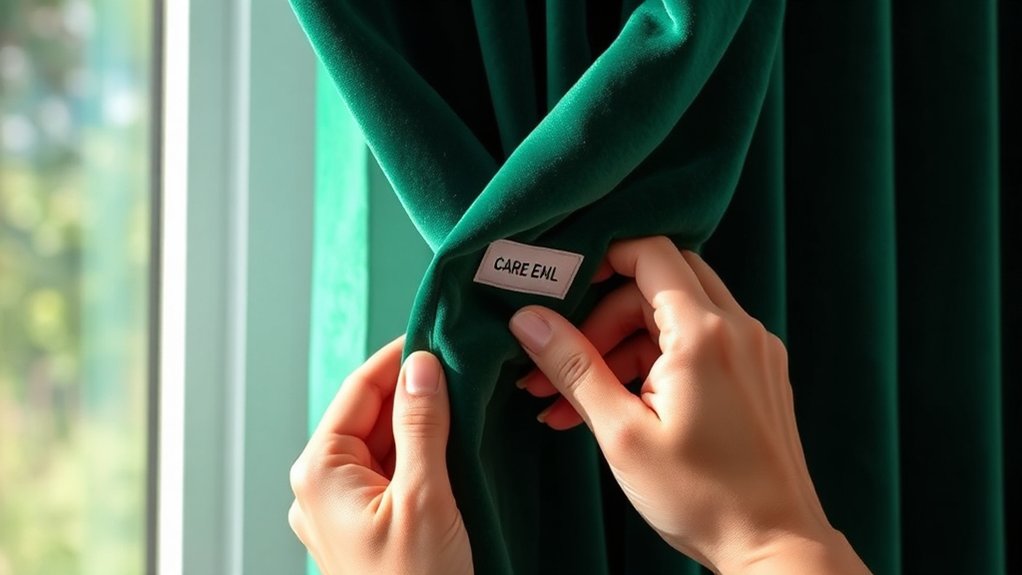
Before you do anything else, check the care label on your velvet curtains. You’ll find the safest cleaning method there, and it often depends on the fiber blend, backing, and finish. Some velvet fabric types can handle gentle machine washing, while others need professional care or careful spot cleaning only.
Read every symbol and note any warnings about heat, bleach, or agitation. If the label says dry clean only, don’t risk shrinking, crushing, or dulling the pile. If it allows hand washing, follow the stated water temperature and detergent guidance exactly.
The label also helps you judge washing frequency, since frequent washing can wear down delicate velvet faster than occasional cleaning. When the label is missing, test a hidden area first and choose the most conservative method.
Gather Your Velvet Curtain Supplies
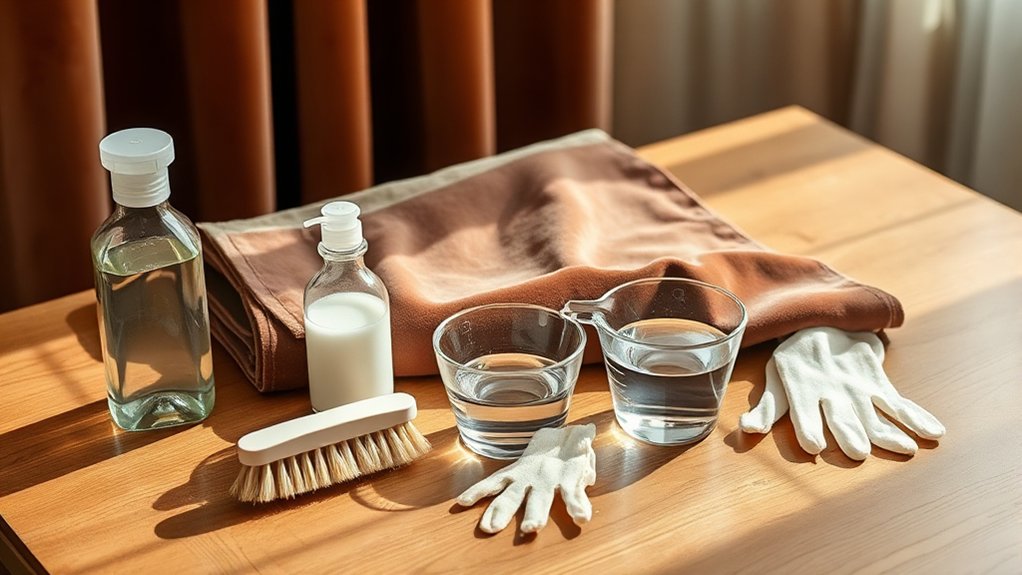
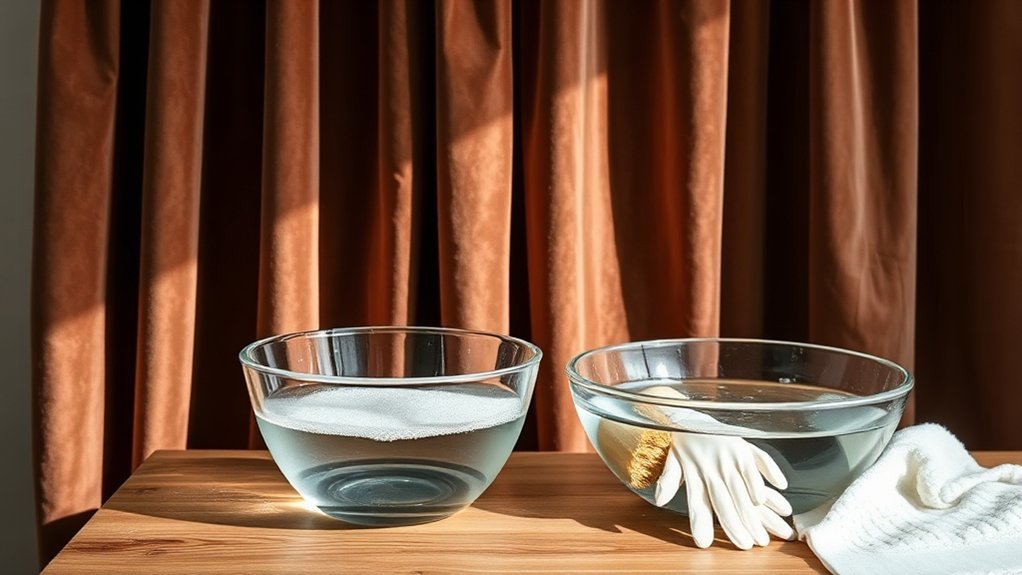
Gather the right supplies now so washing your velvet curtains goes smoothly and safely. You’ll want a mild detergent made for delicate fabrics, a clean basin or bathtub, soft white towels, and a mesh laundry bag if your curtain types can fit in a machine.
Keep a soft cloth or sponge handy for spot treatment, plus a microfiber cloth for gentle drying. If your fabric care label allows hand washing, prepare lukewarm water and measure detergent carefully so you don’t overload the fibers.
Keep a soft cloth or sponge nearby for spot cleaning, and use a microfiber cloth for gentle drying.
Avoid bleach, harsh stain removers, and stiff brushes, since they can crush the pile or dull the sheen. You should also have a flat drying area ready, such as a clean surface or drying rack, to support the velvet evenly.
Having everything within reach helps you work quickly, minimize handling, and protect the fabric’s texture from start to finish.
Vacuum Velvet Curtains Before Washing
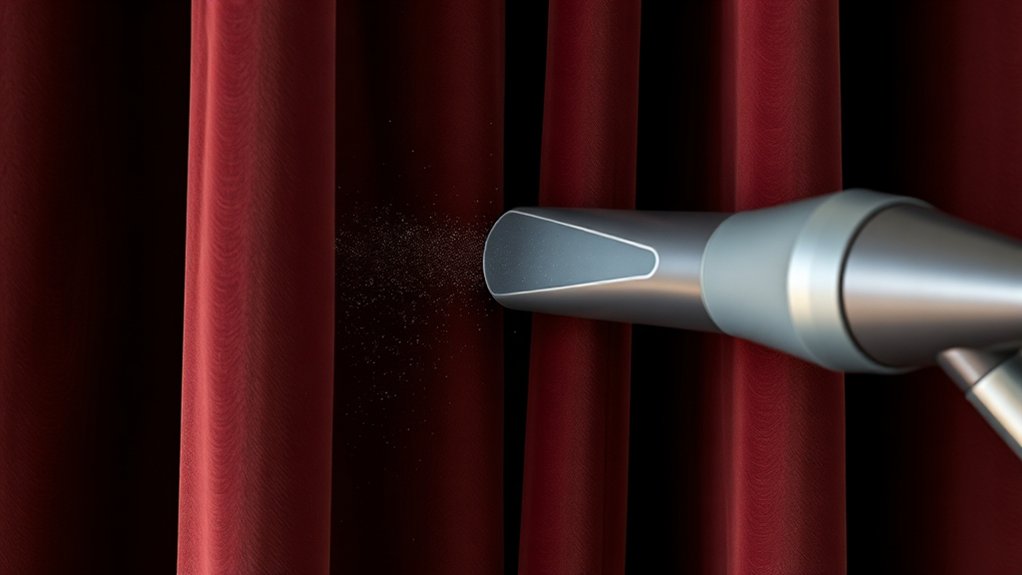
Give your velvet curtains a gentle vacuuming first to remove loose dust and debris before any washing. Use the upholstery attachment and set the suction to low, so you don’t crush the pile. Hold a clean, soft brush over the fabric and move in straight, downward strokes that follow the nap.
This protects the sheen and keeps the fibers from matting. Work from top to bottom, and support the fabric with your free hand if the panels feel heavy. Pay extra attention to hems, pleats, and folds, where dust settles fast.
These vacuum techniques are a simple part of curtain maintenance because they help you wash less grime into the velvet later. If you spot loose crumbs or pet hair, pass over the area again instead of pressing harder. A careful vacuum now makes the next cleaning steps easier and helps your curtains stay plush and smooth.
Test for Color Bleeding
Now, test a hidden spot for color bleeding before you wash the whole curtain. Dampen a white cotton swab or cloth with cool water and press it against an inner seam, hem, or fold. Blot gently for a few seconds, then check the white cloth for any tint.
If you see dye transfer, your curtain may need extra care. This simple color fastness test helps you spot problems before moisture reaches the visible pile. Because velvet can come from different fiber blends, fabric dyeing differences can affect how stable the color stays when wet.
Repeat the check once more with a tiny amount of mild detergent if you want added confidence. If the cloth stays clean, you can feel safer moving ahead. If color appears, stop and avoid soaking the fabric.
Testing first protects the curtain’s appearance and helps you prevent permanent streaks, dull patches, or uneven shading later.
Choose a Washing Method
Once you know the fabric can handle moisture, choose the gentlest washing method that fits the care label. If the label allows only dry cleaning, stop there and protect the pile.
If it permits water, decide between hand washing and machine washing based on the curtain’s weight, construction, and trim. Hand washing usually gives you more control and less friction, which helps preserve the velvet’s nap.
Machine washing can work for some synthetic velvets, but only if the label approves it and you can use a delicate cycle with cold water. Skip harsh detergents, bleach, and aggressive agitation because they can crush fibers and dull the sheen.
Also consider the curtain’s lining and any embellishments. Heavy linings or delicate trims often make a gentler approach the safer choice.
When in doubt, choose the method that limits movement, heat, and stress on the fabric.
Hand Wash Velvet Curtains
First, set up a clean wash basin with some cool water. Then, add a small amount of mild detergent.
Next, gently swish your velvet curtains in the solution. Try not to rub or wring them, as that can damage the fabric.
Once they’re clean, rinse them well with cool water. Finally, hang them up to air dry, but make sure it’s away from direct heat or sunlight to keep them looking their best.
Prepare Gentle Wash Basin
Fill a clean basin or tub with lukewarm water and a small amount of mild detergent, then swish it gently to create a light, even mix. You’ll want a wash basin large enough for the velvet to move freely without crowding.
Keep the water calm, not foamy, so the fabric stays soft and protected. A gentle detergent helps you avoid harsh residue and keeps the setup simple.
| Item | What to check |
|---|---|
| Basin size | Spacious, clean |
| Water | Lukewarm, not hot |
| Mix | Light, even |
Before you place the curtains in, look for any grit or leftover suds around the rim. That quick check helps you start with a clean, controlled wash environment and reduces the chance of snagging delicate fibers.
Use Mild Detergent Solution
Now that your basin is ready, add only a small amount of mild detergent and stir it lightly so it blends without making heavy suds. Choose detergent types that are labeled gentle, fragrance-free, and safe for delicate fabrics, since harsh formulas can flatten velvet’s pile.
You don’t need much; a diluted solution cleans better and helps you control the wash. Test the mixture with your fingers to make sure it feels soft, not slippery or sticky.
Follow smart washing tips by keeping the water cool and mixing the soap evenly before you touch the curtains. As you wash, move the fabric through the solution with slow, careful motions. Don’t scrub, twist, or overload the basin, because that can crush the fibers and leave the velvet looking dull.
Rinse And Air Dry
Lift the curtains from the detergent bath and rinse them in cool, clean water until no soap remains. Use gentle rinse techniques, moving the fabric through the water instead of twisting or scrubbing it.
If suds linger, repeat the rinse with fresh water until it runs clear. Support the velvet fully so the pile stays smooth and the seams don’t stretch.
When the rinse is done, press out excess water without wringing. Roll each curtain in a clean towel, then unroll and reshape it.
Hang them straight on a padded rod or drying rack for air drying. Keep them out of direct sun and away from heat, which can crush the pile or fade the color. Smooth any wrinkles with your hands while they’re still damp.
Machine Wash Velvet Curtains on Delicate Cycle
If your velvet curtains are labeled machine-washable, place them in the washer on a delicate cycle with cold water and a mild detergent. Before you load them, close hooks, zippers, or ties, and turn the panels inside out to protect the pile.
Wash only one or two panels at a time so they can move freely without rubbing too hard. If the fabric seems especially fragile, slip each curtain into a mesh laundry bag for extra support.
Wash one or two panels at a time, and use a mesh laundry bag for delicate velvet.
Choose a short, gentle cycle and avoid bleach or fabric softener, which can dull the finish. These care tips help preserve the texture and color, while smart maintenance advice keeps your curtains looking polished longer.
Once the cycle ends, remove the curtains promptly and inspect them for any remaining soil or detergent residue. Then you’ll be ready for the next drying step without stressing the fabric.
Remove Excess Water Without Wringing
Gently press the curtains between clean towels to blot out excess water, then roll the towel bundle lightly to absorb more moisture. You’ll protect the pile by avoiding twisting, squeezing, or hanging heavy fabric while it’s saturated. Instead, use smart water absorption techniques that lift moisture without crushing the velvet nap.
Lay one towel under the curtain panel. Fold another towel over the damp surface. Press with even, gentle pressure for a few seconds. Replace wet towels with dry ones as needed.
These curtain drying methods help you reduce dripping fast and keep the fabric’s shape intact. If the curtains still feel heavy, repeat the blotting process rather than forcing water out by hand. Work section by section, especially along hems and seams where moisture collects.
When you finish, the velvet should feel damp, not dripping, and ready for the next step in care.
Air-Dry Velvet Curtains Safely
When you hang your velvet curtains to dry, make sure to spread them out evenly so their weight doesn’t pull them out of shape. Try to keep them smooth and free of folds—that way, you’ll avoid any crushing or marks. It’s a good idea to check on them as they dry and adjust their position if you notice any areas starting to bunch up. This way, your curtains will stay looking great!
Hang to Dry Evenly
To keep velvet curtains looking smooth and prevent water spots, you’ll want to air-dry them evenly right after washing. Choose a sturdy rod or line, then adjust curtain placement so the fabric hangs straight without crowding. Use gentle drying techniques that let air move across both sides. If needed, smooth the hem and pleats with your hands, but don’t wring or twist the pile.
Space panels apart for better airflow. Support the full weight evenly. Keep them away from direct sunlight. Check for damp areas and reposition.
Let the curtains dry slowly until they’re completely dry to the touch. Even hanging helps preserve the velvet’s texture and keeps the fabric looking polished, soft, and ready to rehang without extra handling.
Prevent Crushing and Marks
After washing, protect velvet from crushing by handling it as little as possible and letting it dry in a way that keeps the pile lifted. Hang the curtains on a padded rod or wide clips, and smooth them with clean hands only if needed.
Keep them away from direct sun, heaters, and tight folds, since heat and pressure can flatten the nap. If you spot water streaks or pressure lines, dab gently with a damp microfiber cloth for mark removal, then lift the fibers with a soft brush once the fabric’s dry.
For better crushing prevention, support the full weight evenly and don’t stack or bunch the panels. Let air circulate around both sides until the velvet feels completely dry, soft, and restored.
Steam Velvet Curtains to Restore the Pile
A light steam pass can bring velvet curtains back to life by lifting the crushed fibers and restoring their soft, plush pile. Hold the steamer several inches away, then move it in slow, downward strokes so you don’t soak the fabric. Test a hidden spot first, and adjust your steam settings to the gentlest option that still releases wrinkles. Good fabric care means treating the surface lightly, never pressing the nozzle against the nap.
Keep the curtain hanging straight. Work from top to bottom. Brush the pile with your hand as it cools. Let the velvet dry completely before closing the panels.
If you see lingering dents, repeat one brief pass instead of lingering in one place. After steaming, give the curtains time to air out, then fluff the pile with a soft brush or clean hand. This simple step keeps velvet looking rich, smooth, and tailored.
Frequently Asked Questions
Can Velvet Curtains Be Dry Cleaned Instead?
Yes, you can dry clean velvet curtains, and it’s often a smart choice. You’ll protect the pile, preserve the drape, and avoid shrinkage or water marks.
Dry cleaning benefits include gentler handling and deeper stain removal, while proper fabric care helps your curtains keep their rich look longer. Check the care label first, and choose a cleaner who knows velvet well so you don’t damage the fabric.
How Often Should Velvet Curtains Be Washed?
You should wash velvet curtains only when they look dirty or smell stale, usually every 6 to 12 months. For regular curtain care, you can vacuum them gently and spot clean spills right away. That fabric maintenance helps you stretch time between washes and protect the pile.
If you live in a dusty or smoky home, you may need to clean them more often to keep them fresh and plush.
Will Washing Remove Wrinkles From Velvet Curtains?
Yes, washing can help remove wrinkles from velvet curtains, but it won’t always fix them completely. For example, if you’ve just unpacked a wrinkled pair, a gentle wash and proper drying might let the pile relax.
You should focus on velvet care and careful fabric maintenance because heat and rough handling can make wrinkles worse. If creases stay, use steam or hang them so gravity can do the work.
Can Velvet Curtains Be Shortened After Washing?
Yes, you can shorten velvet curtains after washing, but you’ll want to handle them carefully. You should let them dry fully first, then measure and pin the new length before cutting.
Use proper sewing techniques to keep the hem neat and avoid crushing the pile. Good fabric care matters here, since velvet can shift or mark easily.
If you’re unsure, you can ask a tailor to do it.
How Do I Store Velvet Curtains Between Seasons?
Store your velvet curtains in breathable cotton bags, not plastic, so they don’t trap moisture. You’ll want to fold them loosely and place acid-free tissue between creases. Keep them in a cool, dry spot.
Think of curtain storage as tucking away a sleeping cat—gentle and careful. For seasonal care, clean them first. Then add cedar blocks or lavender sachets to help deter moths and odors between uses.
Conclusion
With a little care, you can keep your velvet curtains looking lush and elegant. Check the label, choose the right wash, and treat the fabric gently to protect that soft pile from damage.
Let them air-dry, then steam away any wrinkles so they fall beautifully again. Follow these steps, and your curtains will stay as rich as velvet should be, smooth, graceful, and ready to frame your room like a stage curtain.
By taking these simple steps, your velvet curtains will remain stunning and vibrant, enhancing your space with their timeless charm.