What Are Bearpaw Boots Made Of?
Finding the perfect pair of boots that combine style, warmth, and durability can be a real challenge. If you’ve ever struggled to find footwear that keeps your feet cozy without sacrificing look or comfort, you’re not alone. Many people face this dilemma, especially when it comes to choosing boots for colder months.
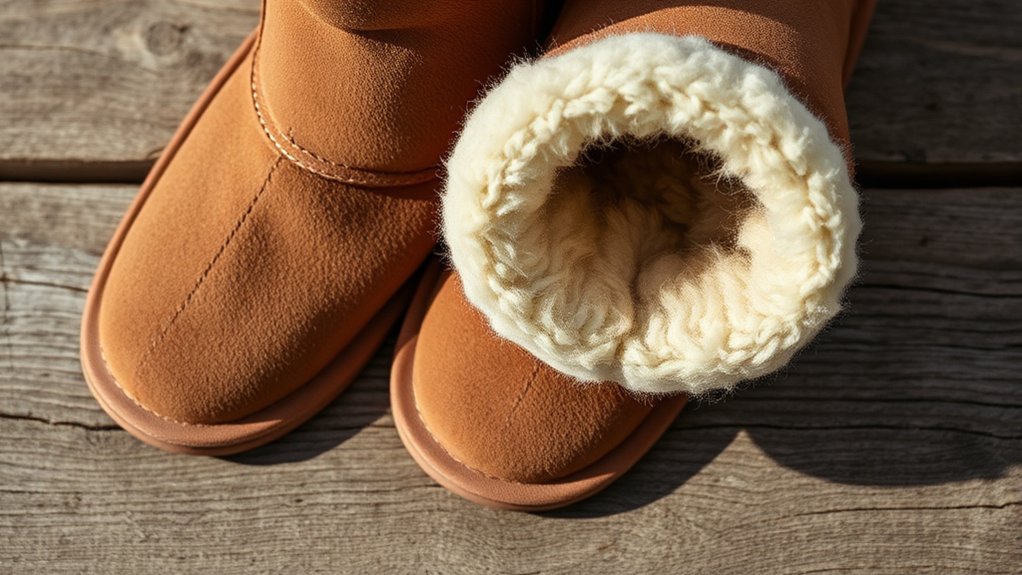
Bearpaw boots are usually made with suede or leather uppers, soft wool or sheepskin linings, and rubber or EVA soles. You get a warm, cozy feel from the lining, while the outer materials balance style, durability, and weather resistance.
Many pairs also include cushioned insoles and flexible tread for extra comfort and grip. Some styles use synthetic details too, and the differences between materials can tell you a lot about how they wear over time.
Key Takeaways
- Bearpaw boots are commonly made with suede or leather uppers for durability, style, and flexibility.
- Many styles use wool or sheepskin lining to provide warmth, breathability, and comfort.
- The soles are usually rubber or EVA-based for grip, cushioning, and lightweight flexibility.
- Some boots include synthetic materials to improve weather resistance and reduce animal-derived content.
- Removable insoles and padded interiors add extra comfort, support, and make cleaning easier.
What Are Bearpaw Boots Made Of?
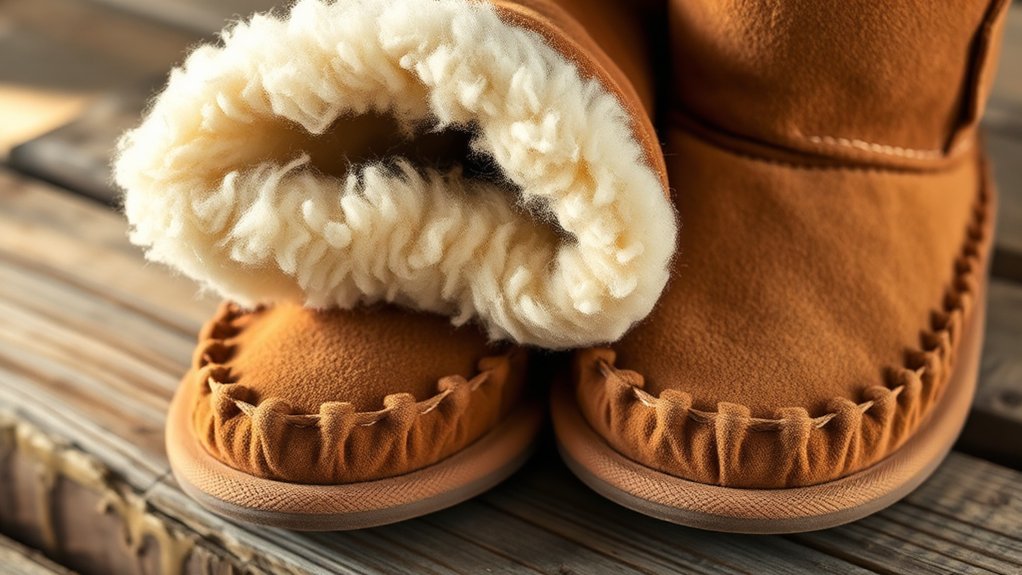
Bearpaw boots are typically made with a mix of suede, wool or sheepskin lining, and rubber soles, giving them a soft feel, cozy warmth, and solid traction. You get a boot that balances comfort and durability for cold-weather wear.
The lining helps trap heat, while the sole gives you grip on slick surfaces. When you choose them, you’re choosing materials that feel cozy without adding unnecessary bulk.
Warm lining traps heat, while the durable sole adds grip without extra bulk.
If you want them to last, good boot care matters: brush off dirt, let them dry naturally, and store them away from direct heat. You can also support sustainability practices by caring for your boots properly, since longer wear means less waste.
These materials work together to create a practical everyday boot that feels soft on your feet and performs well in winter.
Bearpaw Boot Uppers: Suede and Leather
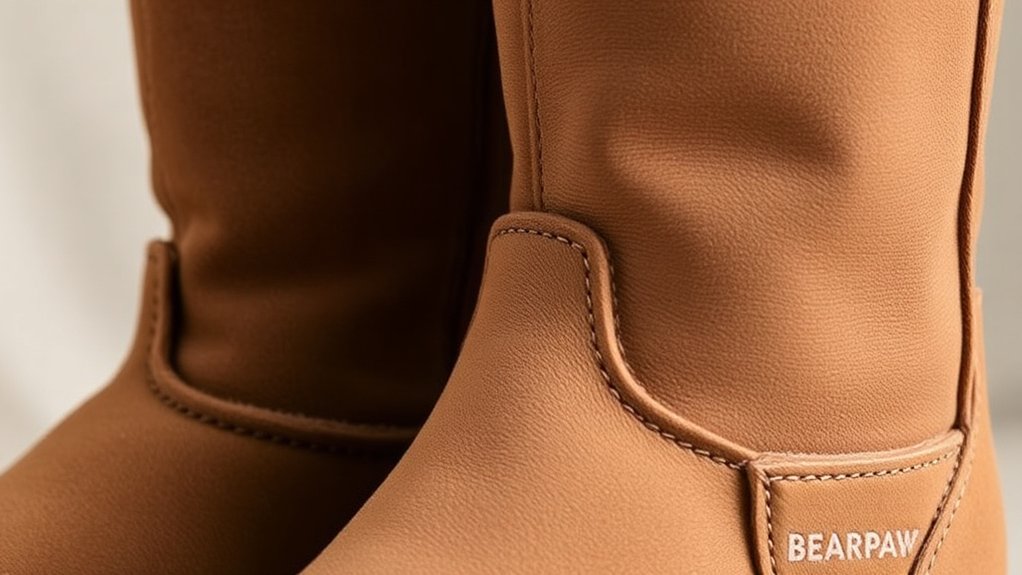
At the top of the boot, you’ll usually find suede, though some Bearpaw styles use leather for a tougher look and added durability. Suede gives you a soft, flexible finish that feels comfortable and looks casual, while leather offers a smoother surface and extra protection against scuffs and daily wear.
When you’re comparing options, focus on suede durability, since treated suede can hold up well if you brush off dirt and avoid soaking it. Leather versions ask for different leather care: wipe them clean, condition them when needed, and keep them away from harsh heat.
Both materials shape the boot’s style, fit, and performance, so your choice depends on how you plan to wear them. If you want a relaxed look, suede works well; if you prefer a sturdier shell, leather may suit you better.
Bearpaw Boot Lining: Sheepskin and Wool
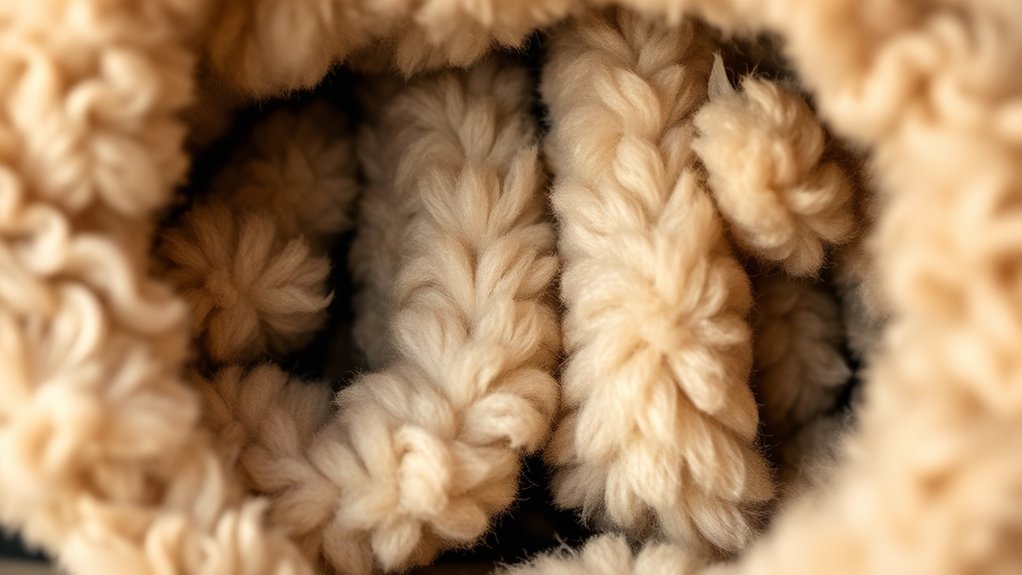
Inside the boot, you’ll usually find a soft sheepskin or wool lining that helps keep your feet warm and comfortable. When you slip them on, you feel the plush interior hug your feet and trap heat without feeling bulky.
Sheepskin benefits include natural breathability, moisture control, and a cozy texture that reduces irritation during long wear. Wool insulation adds another layer of warmth, so your feet stay comfortable in chilly weather while still getting airflow.
Sheepskin breathes, manages moisture, and adds cozy warmth, keeping feet comfortable and irritation-free all day.
- Soft fibers cushion each step
- Natural materials help manage moisture
- Warmth stays balanced, not sweaty
- The lining feels gentle against skin
- You get comfort for everyday wear
Because the lining works with your body, you can wear Bearpaw boots for errands, lounging, or cold outings. You’ll notice the difference when temperatures drop, since the interior stays snug and inviting all day long.
Bearpaw Boot Soles and Traction
When you check out Bearpaw boot soles, you’ll see they usually use durable rubber or similar materials made for everyday wear. Their grip design really helps you keep better footing on slick or uneven surfaces. That traction performance can make a big difference when you’re walking in wet or cold conditions.
Sole Materials
Bearpaw boot soles typically use lightweight rubber or EVA-based materials that balance grip, flexibility, and everyday comfort. You’ll notice these soles feel cushioned underfoot, which helps during daily wear and short walks. Rubber usually offers better wear resistance, while EVA keeps the boot lighter and softer.
If you’re weighing durability concerns, rubber can give you more confidence over time. You may also want eco friendly options, since some brands use recycled or lower-impact components in the sole.
- Lightweight feel
- Flexible movement
- Cushioning support
- Wear resistance
- Everyday comfort
These materials work well for casual use, especially when you want warmth without heavy footwear.
Grip Design
Beyond the sole material itself, the grip pattern plays a big role in how Bearpaw boots handle slick or uneven ground. You’ll notice that the outsole uses grip technology to help your steps stay controlled, with traction patterns that channel contact across the surface.
These ridges and grooves give your boots a planted feel when you walk, so you can move with more confidence on sidewalks, packed paths, or lightly textured terrain. The design also helps you avoid that flat, slippery sensation common in smoother soles.
Because the pattern isn’t overly aggressive, it keeps the boot comfortable for everyday wear while still adding useful footing. If you care about balanced support underfoot, this grip-focused design makes the boots feel practical without looking bulky.
Traction Performance
If you’re looking at Bearpaw boot soles for day-to-day wear, traction performance is a key part of how they feel on the ground. You’ll notice the tread pattern helps you stay steady on sidewalks, light trails, and wet surfaces without feeling bulky.
Bearpaw uses traction technology that balances flexibility with grip, so you can move naturally while still getting dependable footing. During performance testing, the soles show solid results for casual winter use, especially on dry snow and packed slush.
- Tread depth supports everyday stability
- Rubber compounds improve surface contact
- Flex grooves help your stride
- Flat soles keep weight low
- Grip works best in mild conditions
Bearpaw Boot Insoles and Cushioning
You’ll notice Bearpaw boots often come with a removable insole, which means you can easily swap it out or let it air dry whenever you need to. Plus, this design pairs perfectly with plush cushioning layers that give you a softer, more supportive feel underfoot. So, all together, they help keep you comfortable even when you’re wearing your boots for longer stretches.
Removable Insole Design
Bearpaw boots often use a removable insole that adds both cushioning and flexibility to the fit, so you can adjust comfort without changing the whole boot. You can swap or lift out the insert when you need more room, faster drying, or a different feel underfoot.
This design helps you personalize support while keeping the boot easy to wear day after day.
- Removable insoles let you fine-tune fit
- Comfort features support everyday wear
- You can clean them more easily
- They help with moisture management
- They make sizing adjustments simpler
Plush Cushioning Layers
Beyond the removable insert, Bearpaw boots often include plush cushioning layers that soften each step and help the boot feel supportive throughout the day. You notice these layers most when you’re walking longer distances or spending hours on your feet, because they reduce pressure and add a gentler feel underfoot.
These comfort features work with the insole to create a more cushioned fit without making the boot feel stiff. You also get cushioning benefits that help absorb impact, which can make daily wear feel easier and more relaxed.
When you slip them on, the padded interior surrounds your foot in a way that feels warm, steady, and practical. That combination lets you enjoy comfort without sacrificing the boot’s simple, durable structure.
Why Bearpaw Mixes Natural and Synthetic Materials
Because Bearpaw designs boots for everyday wear, it blends natural and synthetic materials to balance comfort, durability, and cost. You get the softness of wool or suede-inspired fibers with synthetic support that helps the boot keep its shape and resist wear.
This mix can also align with sustainability practices by reducing reliance on scarce materials while still giving you reliable performance. When you choose Bearpaw, you’re getting a boot that feels cozy, handles daily use, and stays more affordable than all-natural alternatives.
The blend also lets the brand improve material durability without making the boot feel stiff or heavy.
- Natural fibers add warmth
- Synthetics improve weather resistance
- Mixed materials help control price
- The combo supports longer wear
- You enjoy comfort without excess bulk
How Bearpaw Boots Are Constructed
When you check out Bearpaw boots, you’ll see that the upper materials really shape the overall look and style. Inside the boots, the lining is all about keeping your feet warm and cozy. Then, the sole is designed to give you good traction and handle everyday wear. So, when you put it all together, these parts create a simple, practical design that helps the boots last.
Upper Materials
Bearpaw boots typically use a mix of materials in the upper, with suede, leather, or synthetic options depending on the style. You’ll notice each choice shapes the boot’s look, flexibility, and everyday wear. Suede gives you a soft, casual finish, while leather can offer a sturdier feel.
Synthetic uppers can help support sustainability practices by reducing reliance on animal-based materials in some designs.
- Suede brings a plush, classic texture
- Leather adds structure and rugged appeal
- Synthetics can simplify cleaning and care
- Stitching affects fit and appearance
- Material durability influences long-term use
When you pick a pair, check the upper’s finish, seams, and thickness. Those details tell you how well the boot may hold up through regular wear and weather.
Inner Lining
Inside the boot, the lining plays a big role in how Bearpaw boots feel day to day. You notice it right away when soft fibers surround your foot and hold in inner warmth without feeling heavy. The lining helps cushion each step, while also supporting material durability through regular wear. It works quietly, but it shapes comfort from the inside out.
| Feature | Effect |
|---|---|
| Soft interior | Feels gentle against skin |
| Warm fibers | Trap inner warmth |
| Close fit | Reduces empty space |
| Smooth finish | Adds comfort |
| Durable weave | Supports material durability |
When you pull them on, the lining makes the boot feel cozy, balanced, and ready for long use.
Sole Construction
The comfort you feel on the inside depends on a sturdy base below, and Bearpaw boots use a well-built sole to support that softness. You get a construction that blends grip, cushioning, and everyday wearability.
The outsole usually uses rubber or a rubber-like compound, which helps with sole durability on sidewalks and light outdoor use. A flexible midsole lets your foot move naturally, so you won’t feel stiff with each step.
Traction helps you stay steady
Cushioning softens impact
Flexible materials improve movement
Durable edges resist wear
Layered design boosts support
This structure keeps the boot balanced, so you can walk comfortably while the sole handles daily stress.
Which Bearpaw Boot Materials Keep Feet Warm?
When you want Bearpaw boots that really hold in heat, look for materials like sheepskin lining, wool blends, and plush faux fur. These trap warmth while still letting your feet breathe. Sheepskin gives you strong insulation because its fibers hold air close to your skin, helping your feet stay cozy in cold weather.
Sheepskin lining, wool blends, and plush faux fur trap warmth while keeping feet breathable and cozy.
Wool blends add another layer of warmth and also support moisture management by moving sweat away so your feet don’t feel clammy. Plush faux fur boosts softness and helps create a snug interior that reduces heat loss around your toes and ankles.
If your boots include a quilted or padded lining, that extra layer can also improve warmth without making the boot feel bulky. You’ll feel the biggest difference when these materials work together, especially on chilly, damp days.
Choose pairs with a full interior lining, and you’ll get better comfort, warmth, and all-day wear.
How to Spot Real Bearpaw Materials
To spot real Bearpaw materials, check the product details first and look for specific terms like sheepskin, wool blend, suede, and genuine leather. You should also read the care tag and product description carefully for genuine materials.
Real pairs usually feel soft, dense, and well-finished, not thin or overly shiny. Watch for counterfeit signs such as misspelled labels, sloppy stitching, or vague material claims. If the listing avoids clear fabric details, that’s another warning.
Feel the lining for natural softness. Inspect the suede for a matte, even surface. Check seams for tight, consistent stitching. Look for clear material percentages on tags. Compare the logo and packaging for errors.
When you buy from a trusted seller, you reduce the risk of getting fake boots. Trust your hands, your eyes, and the label before you decide.
How Bearpaw Materials Compare To UGG
Bearpaw and UGG both use soft sheepskin, wool, and suede in many of their boots, so you’ll notice a lot of overlap in comfort and warmth. When you compare them, you’ll usually find Bearpaw leans into practical value, while UGG often emphasizes premium branding and a slightly more refined finish.
You can expect both to keep your feet cozy, but UGG may feel a bit lighter or more structured depending on the style. Bearpaw often wins the cost comparison because it typically sells at a lower price without giving up the basics you want for everyday wear.
If you care about sustainability practices, check each brand’s material sourcing and manufacturing claims, since they can vary by collection and change over time. In short, you should judge them by fit, warmth, durability, and how much you’re willing to spend.
Frequently Asked Questions
Are Bearpaw Boots Water Resistant?
Yes, Bearpaw boots are water resistant, but you shouldn’t count on them as fully waterproof. You’ll get better protection if you choose styles with waterproof technology, which helps block moisture and boosts material durability.
Still, you should avoid deep puddles and heavy rain, since prolonged exposure can soak through. If you treat them regularly and dry them properly, you’ll keep your boots looking good and lasting longer.
Do Bearpaw Boots Run True to Size?
Bearpaw boots often run true to size, but you should check your fit preferences before buying. Some pairs feel snug at first and may loosen with wear, while size variations can happen between styles and materials.
If you’re between sizes, you’ll usually want to size up for a roomier fit, especially with thicker socks. Reading customer reviews can help you choose the right size more confidently for your needs.
Can Bearpaw Boots Be Worn in Snow?
Yes, you can wear Bearpaw boots in snow, but you probably shouldn’t expect them to behave like alpine superheroes. You’ll get some warmth from the insulation materials, yet they’re best for light snow and short outings, not deep slush or icy trails.
Their traction performance can help, but you should still watch your step. If you need serious winter protection, you’d want sturdier waterproof boots instead.
How Should I Clean Bearpaw Suede Boots?
You should brush off loose dirt first, then use a suede cleaning brush or suede eraser to gently lift stains. Avoid soaking the boots. Instead, dab spills with a slightly damp cloth and let them air-dry away from heat.
After drying, restore the nap with brushing and apply a suede protector. Regular boot maintenance keeps your Bearpaw suede boots looking good and helps them last longer through daily wear.
Are Bearpaw Boots Suitable for Wide Feet?
Yes, Bearpaw boots can suit wide feet, but you’ll want to check the fit first. Like a glove that’s slightly forgiving, they often feel roomy thanks to soft linings and cozy comfort features.
You can also look for specific width options, since some styles run wider than others. Try them on with your usual socks, and you’ll know quickly whether they give your feet enough space without pinching or rubbing.
Conclusion
So, what are Bearpaw boots made of? You’ll usually find suede or leather uppers, plus soft sheepskin or wool lining for warmth and comfort. Their soles are built for grip, and cushioned insoles add support.
If you’ve wondered whether they’re as cozy as they seem, the materials suggest they are. Still, you should check labels and stitching to make sure you’re getting the real thing, since not every “Bearpaw-style” boot uses the same materials.
When it comes down to it, the quality of materials really makes Bearpaw boots stand out for comfort and durability.