Acrylic Vs Polyester: 5 Key Differences
Choosing the right fabric for your clothing or home textiles can be confusing, especially when you want something that feels good, lasts long, and fits your lifestyle. You’re not alone if you’ve struggled to decide between acrylic and polyester. Many people face this dilemma when shopping for cozy sweaters, durable activewear, or easy-care blankets.
Acrylic and polyester differ in five main ways: acrylic feels softer, fuzzier, and warmer, while polyester feels smoother and lighter.
You’ll also find polyester is more durable, resists pilling better, and keeps its shape after washing. Acrylic traps more heat, making it cozier for cold weather, but polyester dries faster and handles moisture better.
For care, polyester is easier to maintain, while acrylic works best for sweaters and blankets, and there’s more to compare ahead.
Key Takeaways
- Acrylic feels softer, fuzzier, and more wool-like. Polyester, on the other hand, feels smoother and sleeker.
- Polyester is more durable and resists stretching and shrinking better. It also keeps its shape longer compared to acrylic.
- Acrylic is warmer and more insulating. Polyester is lighter and doesn’t retain heat as much.
- Polyester dries faster and handles moisture better. Acrylic tends to stay damp longer and can feel clingy.
- Polyester is easier to care for. Acrylic needs gentler washing and is better suited for cozy knits.
Acrylic vs Polyester: Softness and Feel

When you compare acrylic vs. polyester for softness and feel, acrylic often comes across as the cozier option because it has a fuzzier, wool-like texture. You’ll usually notice that it feels warmer and more plush against your skin, which can make it appealing for sweaters, blankets, and scarves.
Polyester, by contrast, often feels smoother, sleeker, and slightly less fuzzy, so it can seem cooler and more synthetic to the touch. In a texture comparison, acrylic tends to mimic natural wool better, while polyester leans toward a crisp, uniform finish.
Your user preferences matter here: if you want a soft, fluffy handfeel, acrylic may suit you better. If you prefer a smooth surface with a lighter, more polished feel, polyester might be the better match. Ultimately, you should choose based on how you want the fabric to feel in daily use.
Acrylic vs Polyester: Durability and Pilling
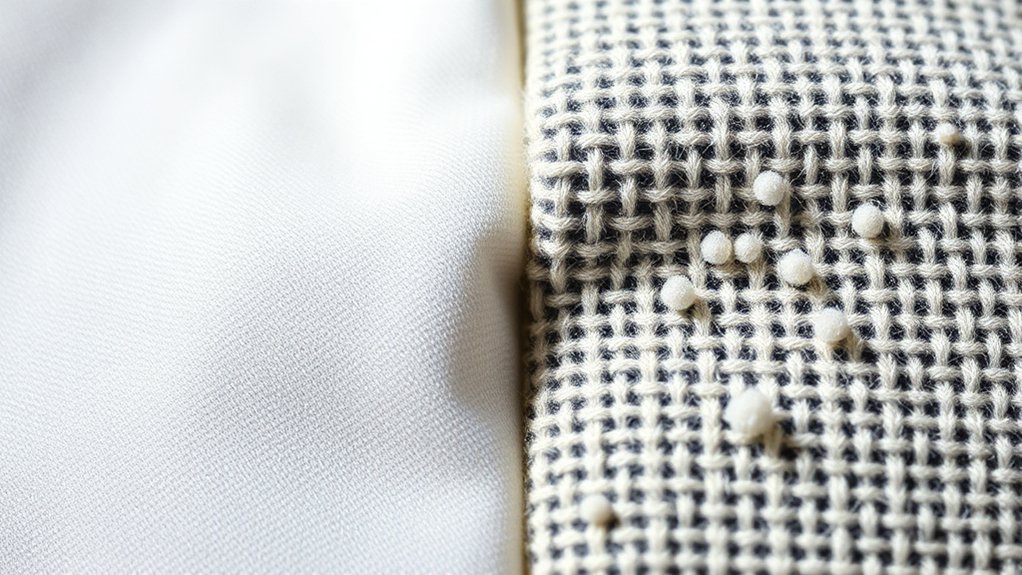
Regarding durability, polyester usually has the edge because it resists stretching, shrinking, and everyday wear better than acrylic. You’ll notice it keeps its shape longer in items you use often, especially when you wash and dry them repeatedly.
Acrylic can still perform well, but it’s more likely to show fuzzing and pilling on high-friction areas like sleeves, cuffs, and seat cushions. If you want fabric that looks smoother for longer, polyester often delivers better color retention too, so patterns and dyes stay vivid after more cycles.
Acrylic may pill more readily, but you can reduce it by washing gently and avoiding rough surfaces. You should also consider environmental impact: polyester comes from petroleum, while acrylic does too, and both raise sustainability concerns.
In practice, your choice depends on how much wear you expect and how much maintenance you’re willing to do.
Acrylic vs Polyester: Warmth and Breathability

Acrylic usually feels warmer than polyester because its fibers trap more air, which helps retain heat in cooler weather. If you want cozy layers, acrylic’s insulation properties often give you a snugger feel. Polyester, by contrast, can feel lighter and less insulating, so it’s better when you want a fabric that doesn’t overheat you as quickly.
- You’ll notice acrylic holds warmth well in sweaters and scarves.
- You can wear polyester for active days when you want less bulk.
- Acrylic supports better thermal regulation in chilly, still conditions.
- Polyester suits layering when you need a cooler feel under outerwear.
Your choice depends on how warm you want to feel and how much airflow you prefer. If you prioritize comfort in cold weather, acrylic often wins. But if you’d rather stay cooler while still wearing a synthetic fabric, polyester usually fits your needs better.
Acrylic vs Polyester: Moisture Resistance
Polyester resists moisture better than acrylic, so it tends to dry faster and handle sweat or light rain more effectively. You’ll notice this because its fabric composition includes hydrophobic fibers that limit water absorption, helping moisture move across the surface instead of soaking in.
Acrylic can repel some water too, but it usually holds onto dampness longer, especially when you wear it in humid conditions. That means polyester often feels lighter after exposure, while acrylic may stay clingy or cool.
If you compare the two in everyday use, polyester gives you better resistance to brief wetness and repeated perspiration. Acrylic’s structure can trap more moisture inside the yarn, which reduces comfort when conditions stay damp.
You should also consider environmental impact since fiber choice affects how each material performs over time and how often you replace it.
Acrylic vs Polyester: Care and Best Uses
Regarding care, polyester is usually the easier fabric to maintain because it resists wrinkles, dries quickly, and can handle regular machine washing without much fuss. You can usually toss it in the washer, then tumble dry on low. For acrylic, use gentler care tips: wash cold, skip high heat, and lay it flat so it keeps its shape. Both fabrics benefit from mild detergent and avoiding bleach.
Polyester is easier to care for, while acrylic needs gentler washing to preserve its shape.
- Polyester works well for activewear and travel gear.
- Acrylic suits sweaters, blankets, and other cozy knits.
- Choose polyester for daily wear when you want low-maintenance durability.
- Pick acrylic for soft warmth when appearance matters more than heavy-duty use.
When you compare best applications, think about how much care you’re willing to give. If you want easy upkeep, polyester usually wins. If you want a wool-like feel without the price, acrylic can still be a smart choice.
Frequently Asked Questions
Which Fabric Is More Eco-Friendly, Acrylic or Polyester?
Polyester is usually the more eco-friendly choice, but you’ll still want to contemplate the full sustainability impact. Both fabrics rely on fossil fuels, yet polyester production processes are often more efficient and can use recycled content.
Acrylic typically sheds more microplastics and can be harder to recycle. If you want the greener option, you should look for recycled polyester and check how the item’s made, used, and disposed of.
Are Acrylic and Polyester Safe for Sensitive Skin?
Not always; if your skin’s a campfire, both can feel like kindling. You should know acrylic often traps heat and can irritate you more, while polyester may cause less trouble for some but still isn’t the most breathable choice.
In a breathability comparison, natural fibers usually win. If you get allergy reactions, try a patch test, wear a soft layer underneath, and choose labeled sensitive-skin fabrics whenever you can.
How Do Acrylic and Polyester Compare in Cost?
Acrylic usually costs less than polyester, so you’ll often save money upfront with acrylic items. Polyester can cost a bit more, but you may get better fabric durability and lower long-term maintenance requirements.
If you’re shopping on a budget, acrylic looks attractive now. If you want something that lasts longer and handles wear better, polyester may justify the extra cost. You’ll want to compare price, use, and care needs before buying.
Which Fabric Holds Color Better Over Time?
Polyester usually keeps its color better over time. You’ll notice less color fading because polyester’s fibers resist sunlight and washing well, so dye retention stays strong.
Acrylic can also hold color, but it often loses brightness a bit faster. Think of polyester like a locked chest, keeping hues tucked safely inside.
If you want long-lasting, vivid fabric, you’ll usually get better results from polyester in everyday use.
Can Acrylic and Polyester Be Recycled Easily?
No, you can’t recycle acrylic and polyester easily in most curbside systems. You’ll usually need special recycling processes because both are synthetic fibers, and mixed blends make sorting harder.
When you choose garments made from one material, you help improve recycling chances and lower environmental impact. You should check local textile drop-off programs, since some facilities accept these fabrics, but access and quality vary a lot by region and technology.
Conclusion
When you compare acrylic and polyester, you’ll see each fabric brings something different to the table. Acrylic often feels softer and warmer, while polyester usually wins on durability and easy care.
In fact, polyester makes up about 52% of global fiber production, which shows how widely it’s used. If you want cozy comfort, acrylic may suit you best.
But if you need strength and low maintenance, polyester is often the smarter pick. Choosing between acrylic and polyester really depends on what matters most to you.