How to Wash a New Quilt in 3 Steps
Washing a new quilt can feel tricky, especially if you want to keep it looking fresh and cozy without damaging the fabric. You’re not alone—many people struggle with knowing the right way to clean their quilts without shrinking or ruining them.
If you’ve been wondering how to wash a new quilt safely and effectively, you’re in the right place.
Start by checking the quilt’s care label so you know whether it can be machine washed, hand washed, or needs dry cleaning.
Next, wash it alone or with similar items on a gentle cycle using cold water and a mild detergent, and skip bleach or harsh stain removers unless the maker approves them.
Then dry it on the lowest heat or air-dry it, checking often so it stays soft, safe, and ready for more care tips.
Key Takeaways
- Check the quilt’s care label first to confirm whether it should be machine washed, hand washed, or dry cleaned.
- Wash the quilt alone on a gentle cycle with cold water and a small amount of mild detergent. Use low spin and avoid bleach or harsh stain removers unless the maker specifically approves them.
- Dry on the lowest heat or air-dry, checking often and using dryer balls to prevent clumping. Let the quilt cool and fully dry before folding or storing it to prevent damage and moisture buildup.
Check the Quilt’s Care Label
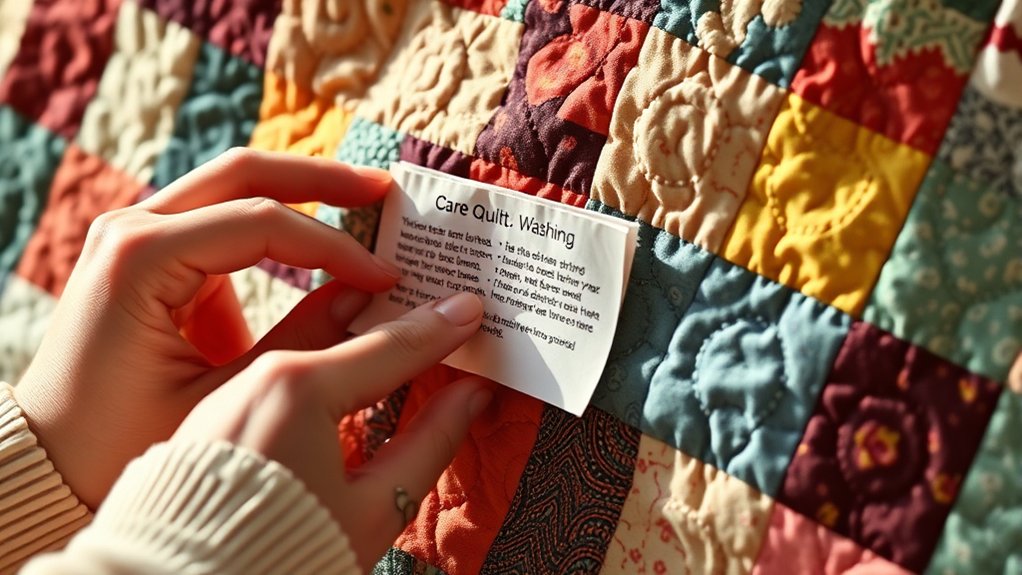
Before you do anything else, check the quilt’s care label, because it tells you whether the fabric can handle machine washing, hand washing, or only dry cleaning. You should read every symbol and note any special instructions for batting, dyes, or trim.
Some fabric types need cooler water, gentler handling, or extra protection from agitation, so the label helps you avoid damage before you begin. If the quilt has delicate stitching or mixed materials, follow the most restrictive instruction, not the easiest one.
Look for guidance on stain removal too, since certain spot treatments can bleach colors or weaken fibers. If the label’s faded or missing, identify the quilt’s materials and test any cleaner on a hidden area first.
Treat the label as your first defense against shrinking, bleeding, and fraying. When you understand it, you can choose the safest cleaning method and keep the quilt looking its best.
Wash the Quilt on a Gentle Cycle
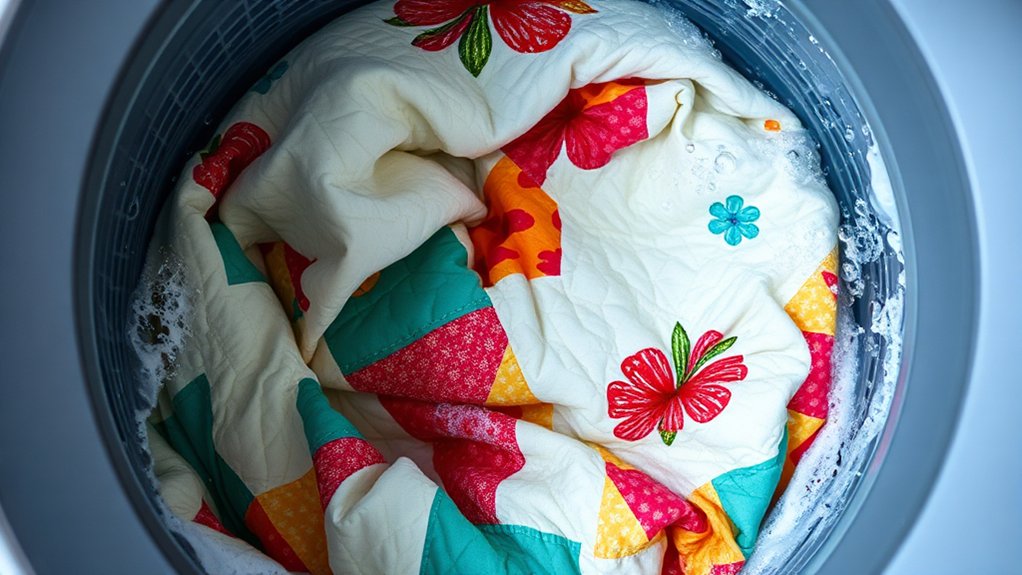
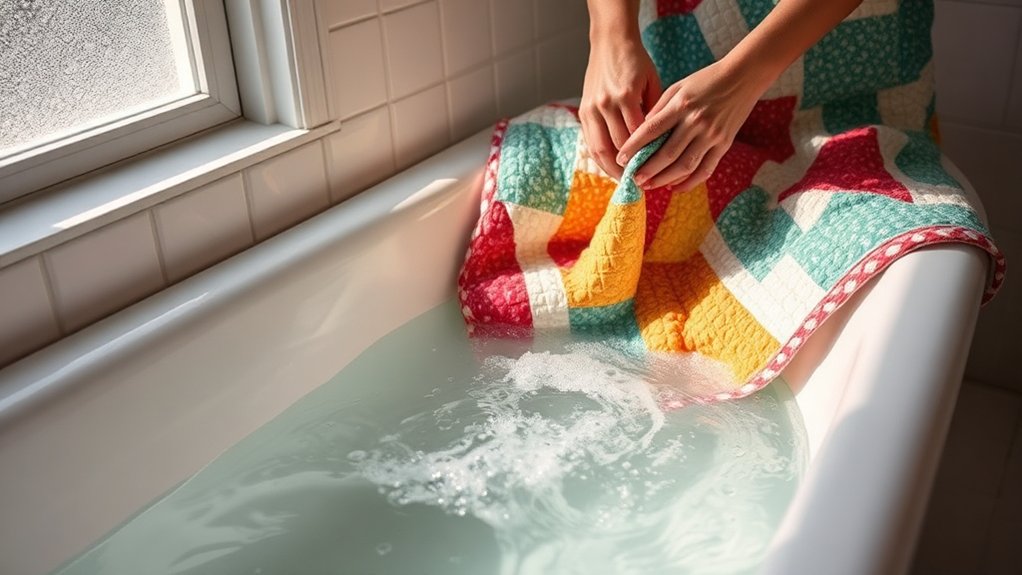
If the care label says machine washing is safe, place the quilt in the washer on a gentle or delicate cycle with cold water and a mild detergent. Use a small amount of detergent so you don’t leave residue in the fibers. Choose a low-spin setting if your machine lets you, because that helps protect seams and stitching.
Wash the quilt alone or with similar items so it can move freely without twisting. If it’s especially dirty, you can try a pre soak method before the cycle starts, but keep it brief and follow the label.
Pay attention to fabric types, since cotton, linen, and blends may tolerate machine washing differently. Skip bleach and harsh stain removers unless the maker approves them.
As the cycle runs, check that the quilt isn’t bunching up or pulling against the drum. This gentle approach helps clean the quilt while reducing wear, fading, and distortion.
Dry the Quilt on Low Heat
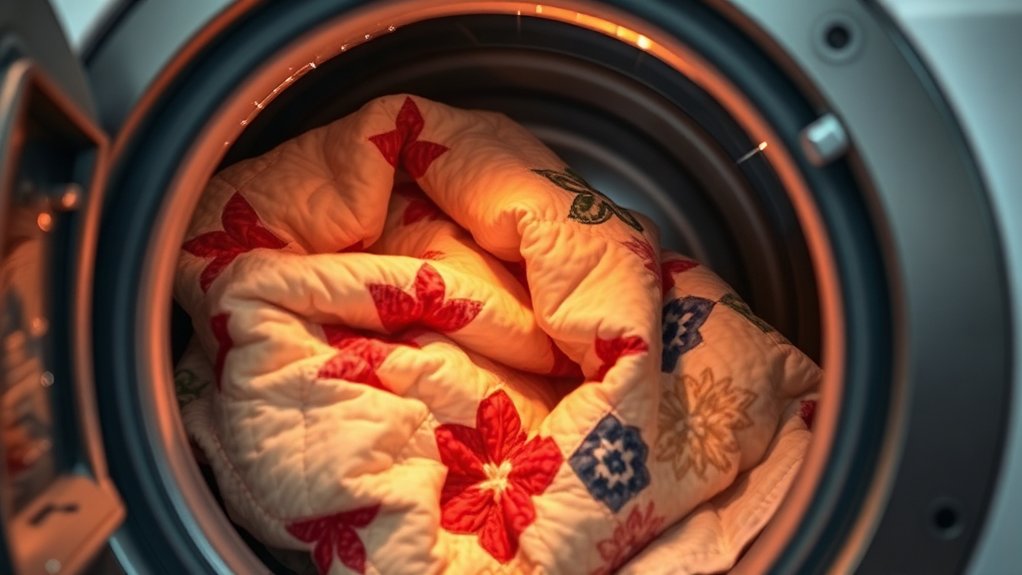
Tumble the quilt on the lowest heat setting, or air-dry it if your dryer runs hot, to help prevent shrinkage and damage to the stitching. Add a few clean dryer balls or tennis balls wrapped in socks to keep the filling from clumping and to speed up quilt drying.
Tumble on low heat or air-dry to protect stitching, prevent shrinkage, and keep the quilt filling evenly fluffed.
Check the quilt every 20 to 30 minutes, then rotate it so the heat reaches all sides evenly. If you see damp spots, return it for another short cycle instead of running one long, harsh session.
Remove the quilt while it’s still slightly cool and finish drying it flat if needed. This gentler method protects the fibers, preserves loft, and supports good fabric care after washing.
Avoid high heat, which can weaken seams, fade colors, and distort the shape. When the quilt feels fully dry, let it rest a bit before folding or making the bed, so hidden moisture can escape.
Frequently Asked Questions
Should I Pre-Soak a New Quilt Before Washing?
Usually, you don’t need to pre-soak a new quilt before washing. Pre-soak benefits can help loosen excess dye or residue, but only if the label suggests it or you spot heavy staining.
For most quilts, gentle washing protects fabric care better than soaking. Use cold water, mild detergent, and a short cycle. If you’re unsure, test a hidden corner first and avoid long soaks that can weaken batting or stitching.
Can I Wash a Quilt With Other Laundry Items?
Yes, you can, but don’t rush it. What you wash with your quilt matters. You should separate it from heavy towels, jeans, and anything with zippers since they can snag or stretch the stitching.
For good quilt care, check fabric types first, then match it with soft, similar colors and a gentle cycle. If your quilt’s delicate or new, wash it alone for the safest, cleanest results.
How Often Should a New Quilt Be Washed?
You should wash a new quilt only when it’s dirty, has spills, or needs freshening. Usually, that means every few months if you use it regularly. For good quilt care, check the label first and follow the maker’s washing tips.
If you sleep with it every night, wash it more often. But if it’s decorative, wash it less often. Spot-clean small messes so you don’t have to wash it too soon.
What Detergent Is Best for Delicate Quilt Fabrics?
You’ll usually get the best results with a mild, dye-free liquid detergent made for delicate fabrics. About 70% of quilt damage comes from harsh washing, so choose gentle detergents that rinse clean and protect fibers.
Skip fabric softeners, since they can coat batting and reduce softness over time. Use only a small amount, wash on cool, and let your quilt air dry whenever you can.
Is Hand Washing Safer Than Machine Washing for Quilts?
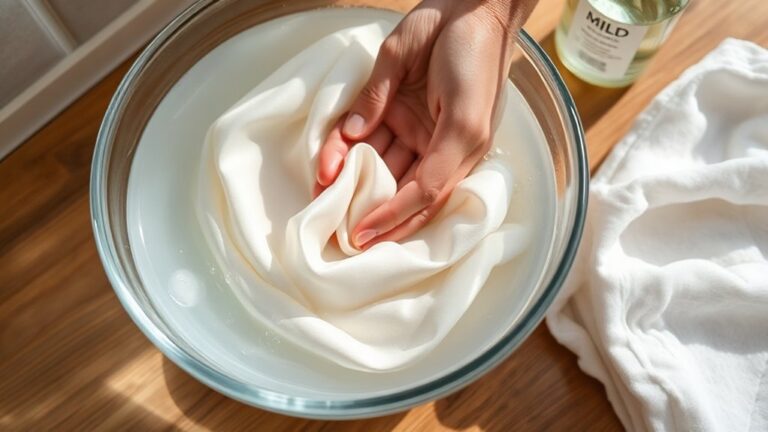
Yes, you’ll usually find hand washing safer than machine washing for quilts, especially if you want gentle quilt care. You control the water, pressure, and movement, which lowers stress on seams and stitching.
Still, some sturdy quilts handle machine washing on a delicate cycle with cool water and mild detergent. Choose the washing techniques that match your quilt’s fabric, batting, and age, and always test for colorfastness first.
Conclusion
Now that you’ve checked the care label, washed your quilt gently, and dried it on low heat, your new quilt is ready to wrap your bed in soft comfort. It should feel fresh and cozy, like a cloud settling around you after a long day.
With just a little care, you’ll keep those colors bright and the fabric smooth. Tuck it in, breathe in the clean warmth, and enjoy that just-washed comfort every night.
By following these simple steps on how to wash a new quilt, you ensure it stays beautiful and comfortable for years to come.