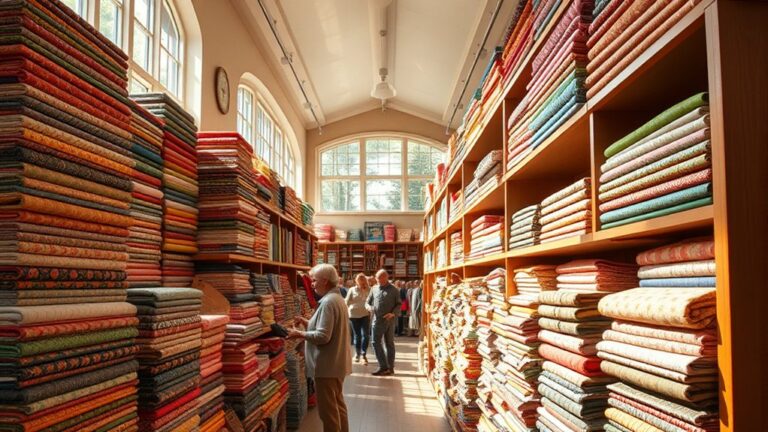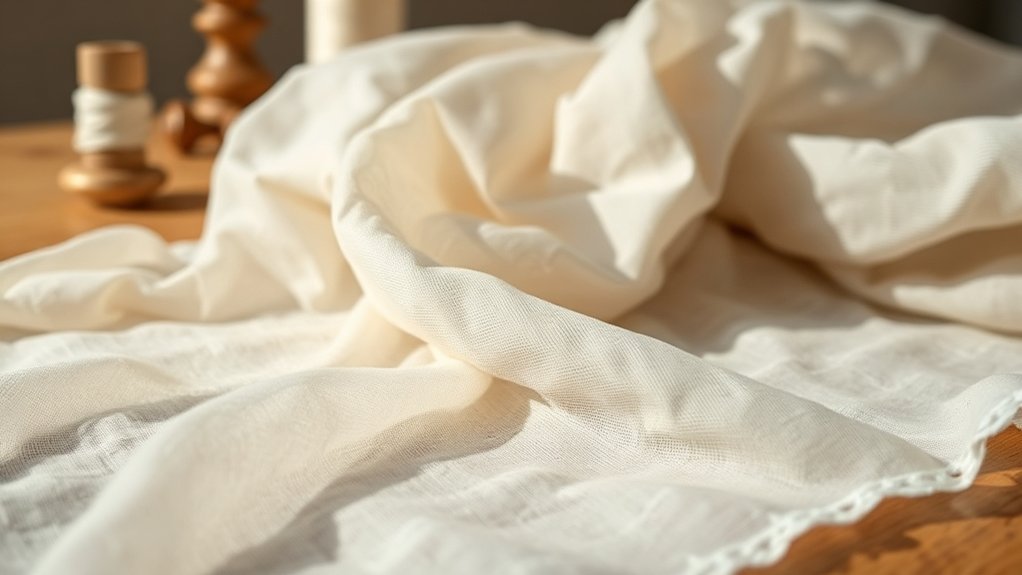
What Is Muslin?
Finding the perfect fabric for your sewing or home projects can be frustrating. You want something versatile, easy to handle, and comfortable, but it’s not always easy to find. If you’ve struggled with this, you’re not alone—many people face the same challenge when choosing materials.
Muslin is a lightweight, plain-woven cotton fabric that you can use for sewing, draping, and everyday household tasks. You’ll find it soft, breathable, and easy to work with, which makes it popular for garment mockups, curtains, towels, and table linens. What Is Muslin?
It comes in several weights and finishes, from sheer to sturdier versions, so you can choose what fits your project best.
If you keep going, you’ll see how it’s made and why it’s so useful.
Key Takeaways
- Muslin is a lightweight, plain-woven cotton fabric known for its softness, breathability, and versatility.
- It is made by spinning cotton fibers into yarn, weaving them plainly, then washing, pressing, and sometimes bleaching.
- Muslin comes in different weights and types, including unbleached, bleached, bantam, and sheer varieties.
- It is commonly used for sewing mockups, clothing, curtains, kitchen cloths, and other home projects.
- Muslin is easy to cut, sew, dye, and care for, making it popular for practical and creative use.
What Is Muslin Fabric?
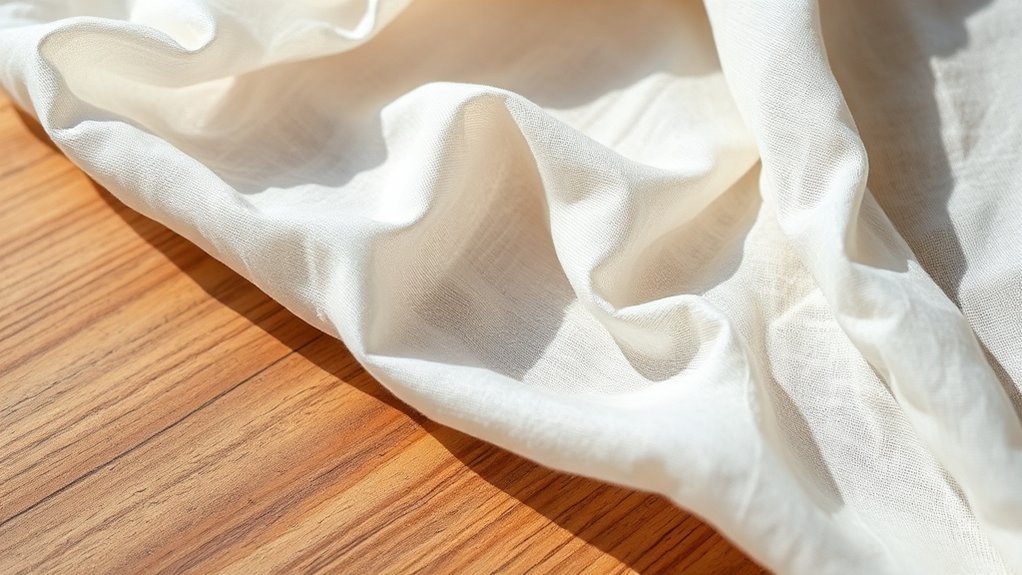
Muslin is a lightweight, plain-woven cotton fabric that’s known for its simple weave, soft hand, and breathable feel. You’ll often see it used when you need a versatile cloth that drapes easily and feels comfortable against skin.
In muslin history, this fabric has long served as a practical textile for clothing, household use, and creative projects, which helps explain its lasting popularity. Its muslin characteristics include a smooth surface, modest structure, and a natural look that works well in both casual and functional settings.
You can use it for patterns, linings, displays, and rough drafts because it’s easy to handle and adapt. Muslin also comes in different weights and finishes, so you can choose the version that best fits your project.
Because it’s so adaptable, you’ll find muslin valued in sewing, design, and everyday textile work.
How Muslin Fabric Is Made

You start by preparing the cotton fibers, cleaning and carding them to get them ready for spinning. Once that’s done, you weave the yarn into a simple plain cloth, which gives muslin its lightweight feel. After weaving, the fabric is finished and bleached to brighten it up and make it smoother.
Cotton Fiber Preparation
Before weaving begins, cotton fibers need careful preparation to create the smooth, even yarn that gives muslin its lightweight feel. You start with thoughtful fiber sourcing, choosing cotton types that spin cleanly and feel soft.
First, the raw cotton gets cleaned to remove leaves, dirt, and seeds. Then you open and blend the fibers so they spread evenly. Carding aligns them into a thin web, helping you turn loose fluff into a consistent sliver.
Next, you draw and twist that sliver into yarn with steady thickness.
- Clean the raw cotton
- Blend selected cotton types
- Card fibers into alignment
- Draw slivers evenly
- Spin yarn for softness
Weaving The Plain Cloth
With the yarn prepared, the loom takes over, crossing warp and weft in a simple plain weave that gives muslin its hallmark structure. You’ll see how this balanced pattern locks each thread in place, creating a lightweight, breathable cloth with a smooth hand.
Weavers keep the tension even and the spacing close, so the fabric stays fine yet durable. In muslin history, this straightforward method made the cloth easy to produce and widely valued across regions.
Its cultural significance grew because you could use it for clothing, draping, and household items without sacrificing comfort. As you watch the fabric build row by row, you can appreciate how plain weaving turns humble cotton yarn into a versatile textile that has stayed important for generations.
Finishing And Bleaching
Once the cloth comes off the loom, finishing begins to refine muslin’s look and feel. You might wash it, singe stray fibers, and press it to smooth the surface. Makers often use finishing techniques to control softness, strength, and drape.
If the fabric needs a brighter shade, they apply bleaching agents to remove natural color and create a clean white base.
You remove surface lint.
You soften the fibers.
You brighten the cloth.
You improve absorbency.
You ready muslin for dyeing or printing.
After these steps, you get a versatile fabric that feels lighter and looks more uniform. Careful finishing also helps muslin perform better in garments, samples, and household uses.
Muslin Fabric Weave, Weight, and Texture
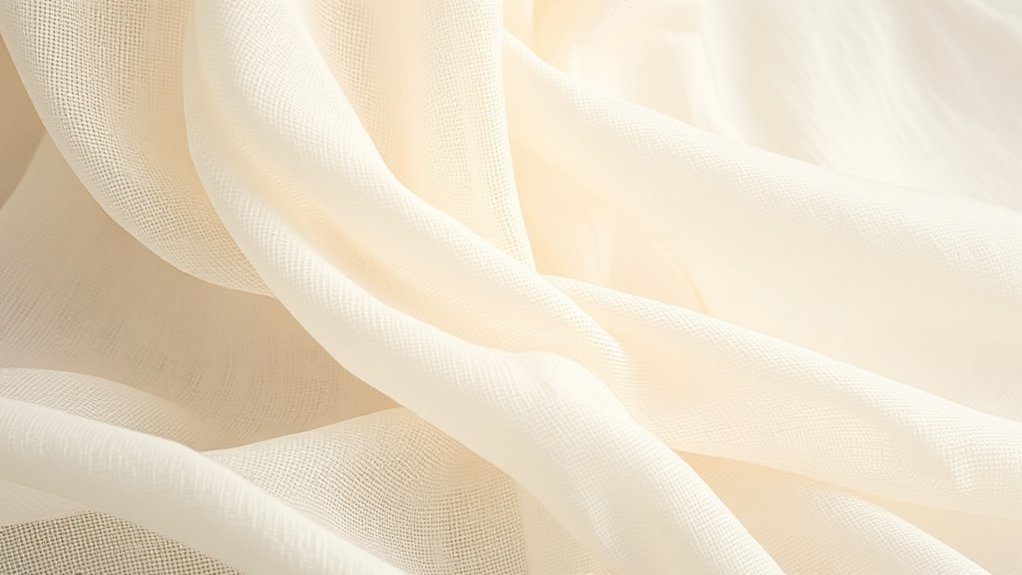
Muslin’s plain weave gives it a simple, balanced structure that feels light and breathable. You’ll notice the over-under pattern lets air move easily, so the fabric drapes softly without feeling heavy.
Depending on yarn thickness and density, you get a range of weights, from gauzy yardage to sturdier cloth that still stays flexible. That versatility has shaped muslin history and many muslin applications, from garment mockups to curtains and upholstery liners.
Muslin ranges from airy to substantial, offering versatile weight that has long shaped its many practical uses.
Its texture usually feels smooth but slightly crisp at first, then softens with use and washing. Because the weave is even, you can cut, sew, and press it with ease, which makes it practical when you need a dependable base fabric.
You’ll also find it absorbs dye well, so it can stay natural or take color cleanly.
Common Types of Muslin Fabric
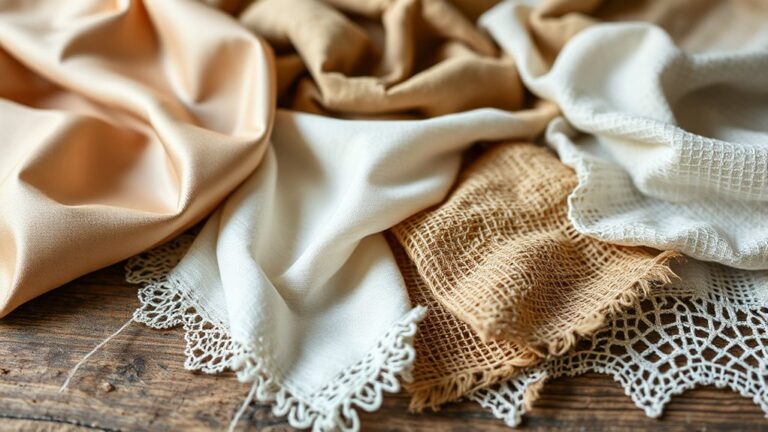
These different weights and textures show up in several common muslin types, each suited to a different use. When you compare muslin variations, you’ll notice that each one balances softness, strength, and drape a bit differently. You can choose based on how much structure or breathability you need.
- Plain muslin: You’ll find this basic, tightly woven option in many everyday applications.
- Unbleached muslin: It keeps a natural beige tone and feels a little more rustic.
- Bleached muslin: You get a brighter, cleaner look from this processed version.
- Bantam muslin: This lighter type feels thin and airy, with a delicate hand.
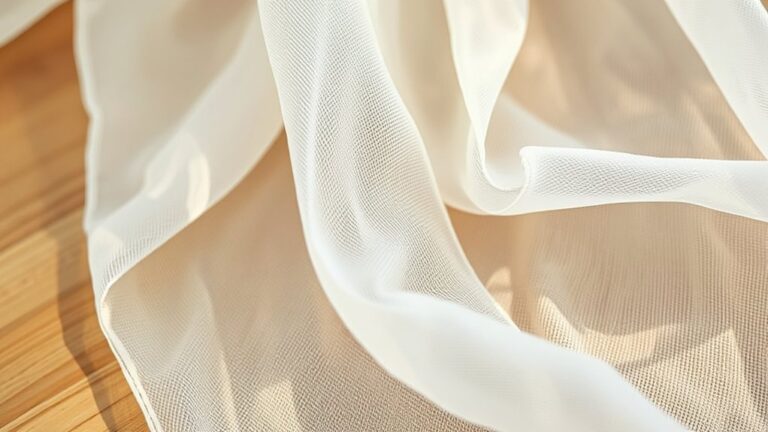
- Sheer muslin: You’ll notice extra transparency and a softer visual texture.
As you investigate common muslin types, you’ll see that the fiber finish and weave density shape how each cloth behaves. That makes it easier for you to match the fabric to your project goals.
Muslin Fabric Uses in Sewing and Fashion
In the sewing room, muslin often serves as a practice fabric, letting you test fit, shape, and seam placement before cutting into your final material. You can use it to mock up bodices, sleeves, and skirts, then adjust patterns with confidence. Muslin helps you refine sewing techniques since it shows where darts, hems, and easing need work.
| Use | Benefit | Best For |
|---|---|---|
| Mockups | Check fit | Dresses |
| Draping | Test flow | Gowns |
| Pattern tests | Spot errors | Tops |
Because it’s affordable and easy to mark, you can compare versions quickly and follow changing fashion trends without wasting costly fabric. Designers often choose it for prototypes, sample garments, and fit sessions, so you can make smarter choices before you sew the real piece. It’s also useful for learning construction basics and improving your eye for proportion.
Muslin Fabric Uses for Home and Kitchen
You can use muslin in the kitchen for lightweight towels and cloths that wipe up spills, cover dough, and strain ingredients. It’s super handy for those everyday tasks.
Around the home, muslin works great for curtains, slipcovers, and other simple decorative coverings. Because of its soft, breathable weave, it’s a practical choice that feels comfortable and looks nice too.
Kitchen Towels And Cloths
Soft and highly absorbent, muslin makes excellent kitchen towels and cleaning cloths for everyday use. You can rely on its kitchen uses for drying dishes, wiping counters, and handling spills with ease.
Its fabric benefits include quick drying, gentle texture, and strong cleaning efficiency. The absorption qualities help you soak up water fast, while durability factors let you wash and reuse it often.
Choose eco friendly options when you want less waste and better value.
- Wipe surfaces
- Dry produce
- Polish glass
- Catch crumbs
- Clean hands
You’ll also appreciate design versatility and color preferences, since muslin comes in simple styles that suit your routine without added fuss.
Home Décor And Coverings
Light and breezy, muslin brings an easy, relaxed feel to home décor and coverings, from sheer curtains and slipcovers to table drapes and throw blankets. You can use muslin curtains to soften sunlight while keeping rooms bright and airy.
Its natural drape works well for pillow covers, bed skirts, and lightweight furniture wraps that hide wear without feeling heavy. In the kitchen, you might choose muslin for simple table runners, fabric liners, or protective food covers when you want a clean, breathable option.
Decorative throws made from muslin add texture without cluttering your space, and they’re easy to wash and reuse. Because muslin is affordable and versatile, you can refresh your rooms quickly, seasonally, and with very little effort.
How to Care for Muslin Fabric
Keep muslin in good shape by washing it gently in cool or lukewarm water with a mild detergent. These muslin maintenance tips help preserve its soft texture and airy feel. Follow washing recommendations carefully: avoid bleach, skip harsh scrubbers, and wash similar colors together to reduce fading.
You can hand wash delicate pieces or use a gentle machine cycle with low spin. After washing, press out excess water without twisting, then air-dry flat or hang it away from direct sun. If you need to iron it, use a low setting while the fabric is still slightly damp.
- Use mild detergent only
- Rinse thoroughly to remove residue
- Air-dry to prevent shrinkage
- Store clean muslin in a dry place
- Test heat on a small area first
Muslin Fabric vs. Cotton and Calico
Compared with cotton and calico, muslin stands out for its looser weave and lighter drape, which can make it feel airier and more delicate in use. When you compare it with cotton, you’ll notice cotton often feels denser, smoother, and more structured, while muslin keeps a softer, more open texture.
Calico usually feels sturdier and more opaque, so you may reach for it when you want extra body. Muslin’s origins trace back to South Asia, and its history reflects trade, craftsmanship, and practical home use.
You can use its versatility for sewing mockups, curtains, baby items, and food covering, while cotton serves a broader range of everyday garments. If you’re thinking about muslin sustainability, you’ll appreciate that its simple weave can support low-impact uses and reuse, especially when you choose natural fibers and avoid waste.
How to Choose the Right Muslin Fabric
When you’re picking out muslin, start by checking the weave and weight. These factors really influence how the fabric drapes, breathes, and holds up over time. Next, take a look at the fiber and finish because they determine the feel, softness, and overall performance of the fabric. If you match these features to what your project needs, you’ll end up with the perfect muslin every time.
Weave And Weight
Muslin’s weave and weight determine how it handles, drapes, and wears, so choosing the right type starts with what you want the fabric to do. You should match the weave patterns and weight variations to your project before you buy.
Use light muslin for airy mockups. Choose medium muslin for everyday sewing tests. Pick heavier muslin when you need more structure. Compare drape by holding samples at the fold. Check opacity by placing fabric over a printed page.
Looser weaves feel softer and move more, while tighter ones hold shape better. If you need easy pinning and quick fitting, select a lighter option. If you want sturdier support, go denser. Trust the sample in your hand, because the right muslin makes your pattern work smoothly from first cut to final stitch.
Fiber And Finish
Fiber choices shape how muslin feels, breathes, and behaves, so you’ll want to match the fabric’s content and finish to your project. Cotton muslin gives you the classic choice: it’s breathable, easy to sew, and works well for draping, quilting, and mockups.
If you need more strength or a smoother hand, look for blended muslins that balance fiber properties with added durability or wrinkle resistance. You should also check finish techniques, because a bleached, unbleached, or mercerized surface can change color, absorbency, and drape.
For painting, dyeing, or embroidery, pick a finish that accepts treatments cleanly. For garments, choose softer muslin with a comfortable touch. When you compare bolts, feel the fabric, inspect the weave, and test how it folds before you buy.
Why Muslin Fabric Is Still Popular
Even today, muslin stays popular because it gives you a rare mix of comfort, versatility, and affordability. You can use it for clothing, quilting, draping, and household basics without stretching your budget.
Its breathable weave helps you stay cool, while its soft texture feels gentle against skin. In muslin history, makers valued it for everyday use, and muslin trends still favor its simple, natural look. You’ll also appreciate how easily it takes dye, prints, and stitches, which makes it useful for beginners and pros alike.
- Lightweight and breathable
- Easy to cut and sew
- Budget-friendly for large projects
- Great for mockups and pattern testing
- Adaptable for fashion and decor
Because muslin works in so many settings, you can rely on it for practical tasks and creative ideas. That lasting usefulness keeps it relevant, even as materials change.
Frequently Asked Questions
Is Muslin Fabric Eco-Friendly and Biodegradable?
Yes, muslin can be eco-friendly and biodegradable if you choose natural cotton muslin and avoid harsh dyes or synthetic blends. You’ll support muslin sustainability when you buy organic options, reuse it often, and wash it gently.
Muslin production matters too, because lower-impact farming and efficient manufacturing reduce waste and pollution. Since it’s a breathable, reusable natural fabric, muslin often breaks down more easily than petroleum-based textiles when disposed of responsibly.
Can Muslin Be Dyed or Printed Easily?
Yes, you can dye muslin easily, and you can print on it well, too. When you choose the right dyeing techniques, the fabric takes color evenly and shows soft, bright results.
With the right printing methods, you’ll get clear patterns and a smooth finish. It’s no coincidence that makers love muslin: its light weave welcomes both color and design, so you can experiment without much trouble or fuss.
Does Muslin Shrink After the First Wash?
Yes, muslin can shrink after the first wash, especially if you wash it in hot water or tumble-dry it on high. You’ll get better results if you prewash it in cool water and air-dry it.
That’s part of smart muslin care and helps preserve muslin characteristics like softness and drape. If you’re sewing with it, always test-wash a swatch first so you won’t end up with surprises later.
Is Muslin Suitable for Hot Weather Clothing?
Yes, you can wear muslin in hot weather because it’s a breathable material. It’s a lightweight option, and it lets air move freely. You’ll stay cooler, feel less weighed down, and won’t trap as much heat against your skin.
If you choose loose-fitting clothing, you’ll get even better comfort. Just remember to prewash it since you may notice some shrinkage after the first wash.
What Is the History of Muslin Fabric?
You’ll find muslin’s history stretches back centuries, with roots in ancient India, where weavers made it from finely spun cotton. Traders carried it across Asia, the Middle East, and Europe, and it became prized for its softness and versatility.
Over time, different muslin types emerged, from lightweight gauze to sturdier weave. This shaped muslin uses in clothing, curtains, patterns, and household goods. Its lasting appeal comes from practicality and comfort.
Conclusion
When you work with muslin, you get a fabric that feels like a blank sketchbook—simple, useful, and full of possibility. I once saw a tailor test a dress in muslin first, saving hours of costly changes later.
That’s why this fabric still matters: it helps you plan, practice, and create with confidence. Soft, breathable, and affordable, muslin isn’t just practical. It’s the quiet foundation behind polished results, making muslin essential for every creative project.