7 Ways You Can Mix Batiks With Other Fabrics
Mixing batiks with other fabrics can feel tricky if you want your designs to look cohesive and stylish. You’re not alone—many people struggle to find the right balance without overwhelming those beautiful batik patterns.
Luckily, there are simple ways to combine batiks with different materials that bring out their unique charm and elevate your creative projects.
You can mix batiks with solids to create bold contrasts, or pair them with neutrals for balanced, subtle designs. Try small-scale prints to add texture and depth without overpowering the batik’s patterns. Layering textured fabrics brings dimension, while sheer metallics add a subtle sparkle.
Combining batiks with vintage or rustic textiles introduces rich character and warmth. Each of these approaches highlights batiks’ versatility and craftsmanship, opening up exciting possibilities to improve your creative projects.
Key Takeaways
- Pair batiks with solid colors or neutrals to highlight patterns and create visual balance without overwhelming the design.
- Combine batiks with small-scale prints and contrasting textures for added depth and tactile interest.
- Layer sheer metallic fabrics over batiks to introduce subtle sparkle and enhance hand-dyed artistry.
- Mix vibrant batiks with vintage or rustic fabrics like worn linens or burlap to add character and a cozy, lived-in feel.
- Use contrasting scales, colors, and finishes to create harmonious yet dynamic fabric combinations that emphasize batik craftsmanship.
Understand Why Batiks Work Well With Other Fabrics

Although batiks boast vibrant patterns and rich colors, they also blend seamlessly with other fabrics because of their unique texture and versatility. When you understand the traditional techniques behind batik-making, wax-resist dyeing applied by hand, you’ll appreciate the craftsmanship that gives batiks a distinctive feel.
This texture allows batiks to complement a variety of materials, from smooth silks to rugged cottons, without overwhelming them. You’ll find that batiks’ cultural significance, rooted in centuries of artistry and storytelling, adds depth to any fabric combination.
This heritage makes batiks more than just decorative; they carry meaning that enriches your style. By recognizing these qualities, you can confidently mix batiks with other fabrics, knowing they’ll augment your outfit with both visual interest and cultural richness.
Pair Batiks With Solid Colors for Bold Contrast

You can really make your batik fabrics pop by pairing them with solid colors that complement their tones. It’s all about choosing the right solid shade to balance those bold patterns without overwhelming your design. Just keep your mix simple, so the batik shines and creates a striking contrast.
Choosing Complementary Solid Shades
When pairing batiks with other fabrics, choosing complementary solid shades creates a striking and balanced look. You can highlight the vibrant patterns of batiks by selecting solids that echo their dominant hues, enhancing visual appeal without overwhelming your design.
Keep fabric durability in mind. Opt for solid fabrics that match the strength and longevity of your batik to guarantee your project lasts. Also, consider care and maintenance. Pairing fabrics with similar washing and handling requirements prevents damage and keeps your creation looking fresh.
Balancing Patterns With Solids
To create a visually striking design, pair batiks with solid colors that offer bold contrast. This balance allows the intricate patterns and vibrant hues of batik fabric to stand out without overwhelming the eye.
When you choose solids, pick shades that complement the batik’s palette while emphasizing its cultural significance. Not only does this approach highlight the artistry behind batik, but it also boosts fabric durability by reducing wear in high-friction areas through the use of sturdier solids.
Mixing these fabrics thoughtfully ensures your piece remains both beautiful and functional. By balancing bold patterns with simple solids, you create harmony that respects tradition and amplifies your design with a modern edge.
Use Batiks With Neutrals for Balanced Designs
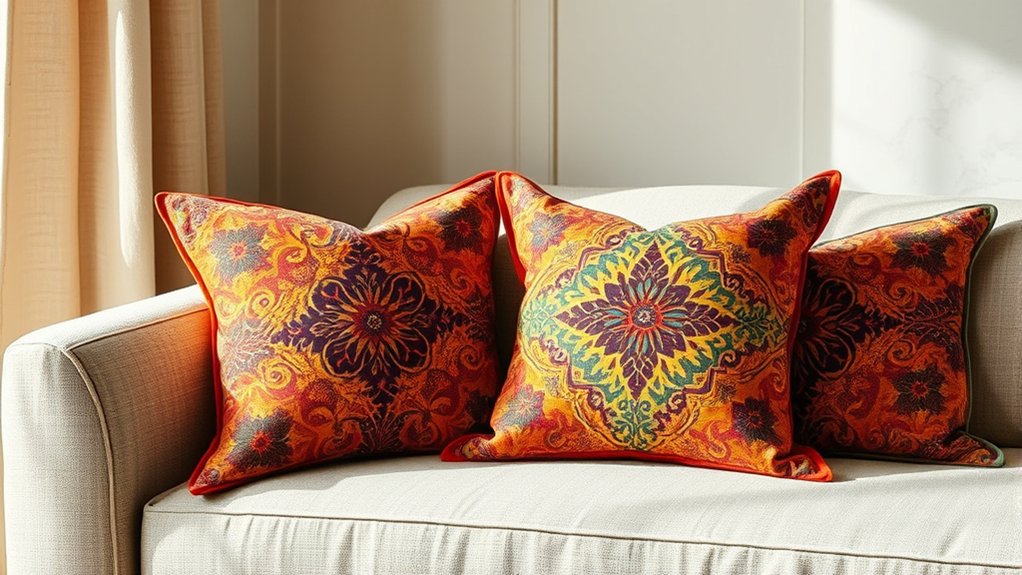
Although batiks boast vibrant patterns and rich colors, pairing them with neutral fabrics helps create a balanced and cohesive design. Using neutral palettes alongside batiks lets the bold designs shine without overwhelming your project. You’ll find the contrast brings a sense of calm and refinement.
Pairing vibrant batiks with neutral fabrics creates balance, allowing bold designs to shine with calm and elegance.
Here’s how to mix batiks with neutrals effectively:
- Choose neutral palettes like beige, gray, or white to complement batik’s intense hues and intricate patterns.
- Incorporate minimalist accents such as simple stitching or solid borders to frame the batik fabric cleanly.
- Use neutrals in larger areas and reserve batiks for focal points, keeping the overall look grounded and stylish.
Combine Batiks With Small-Scale Prints to Add Depth
You can create more visual interest by pairing batiks with small-scale prints that share complementary colors. Just be sure to balance the size and pattern so they don’t compete with each other. Instead, they should work together to enhance one another.
This mix will also boost texture and contrast, making your design feel richer and more dynamic. It’s a simple way to add depth without overwhelming your space.
Choosing Complementary Color Palettes
How can you make your batik projects truly stand out? Choosing complementary color palettes is key. When mixing batiks with small-scale prints, consider these tips:
- Match Undertones: Select colors with similar undertones to create harmony and highlight the batik’s historical significance.
- Use Contrast Wisely: Incorporate contrasting colors in small-scale prints to add visual interest without overwhelming your design.
- Prioritize Fabric Care: Remember, different fabrics require different care. Choose complementary colors that maintain vibrancy after washing, preserving your project’s beauty.
Balancing Scale And Pattern
Choosing the right color palette sets a strong foundation, but balancing scale and pattern brings your batik projects to life. When you combine batiks with small-scale prints, you add visual depth without overwhelming the eye.
Small-scale prints complement batiks’ bold, intricate designs, highlighting their cultural significance while maintaining textile durability in your finished piece. You’ll want to select prints that don’t compete with batik’s detailed motifs but rather boost them subtly.
This balance prevents your project from looking chaotic and ensures each fabric’s unique qualities shine. By thoughtfully mixing scales, you honor batik’s heritage and create a harmonious, dynamic fabric blend that’s visually appealing and long-lasting.
Enhancing Texture And Contrast
Although batiks boast rich patterns and vibrant colors, combining them with small-scale prints can markedly improve texture and contrast in your projects. This approach creates a dynamic textural interplay that draws the eye and adds depth.
To master this, focus on maintaining color harmony to guarantee your fabrics complement rather than clash. Here are three tips to elevate texture and contrast effectively:
- Choose small-scale prints with colors that echo the batik’s palette, reinforcing color harmony.
- Use contrasting textures, like smooth cotton prints against batik’s wax-resist finish, to amplify textural interplay.
- Mix geometric small prints with organic batik motifs to create visual interest without overwhelming the design.
Layer Batiks With Textured Fabrics for Dimension
When you layer batiks with textured fabrics, you create a rich visual depth that brings your design to life. Batiks, known for their intricate textile dyeing techniques and deep cultural symbolism, offer vibrant patterns that stand out beautifully against materials like velvet, linen, or boucle.
By combining these tactile fabrics, you add dimension that invites touch and enhances the visual story. Don’t shy away from mixing smooth batik prints with rougher or nubby textures. This contrast highlights both elements without overwhelming your piece.
Whether you’re crafting clothing or home décor, layering batiks with textured fabrics gives your work complexity and a unique character. You’ll find that these layers not only celebrate the heritage embedded in batik designs but also modernize your creations with a fresh, dynamic feel.
Pair Batiks With Metallic Fabrics for a Touch of Flair
Building on the depth you achieve by layering batiks with textured fabrics, adding metallic fabrics introduces an exciting new element to your designs. Metallic accents bring a bold contrast that amplifies the rich patterns of batiks. At the same time, shimmering textiles add a dynamic glow that catches the eye. Here’s how you can pair these fabrics effectively:
- Use metallic accents sparingly to highlight specific areas of your batik piece, like borders or focal points. This creates balance without overwhelming the design.
- Combine shimmering textiles with batiks in complementary colors to create a cohesive look that plays with light and texture seamlessly.
- Experiment with layering sheer metallic fabrics over batiks for a subtle sparkle effect that adds sophistication and depth.
Match Batiks With Vintage or Rustic Fabrics for Character
If you want to add warmth and history to your batik creations, pairing them with vintage or rustic fabrics brings a unique charm. You’ll find that the vintage charm of worn linens or distressed cotton blends complements the vibrant, intricate patterns of batiks beautifully. This contrast highlights the hand-dyed artistry while grounding your piece in a cozy, lived-in feel.
When mixing fabrics, choose rustic textures like burlap, homespun, or faded denim to enhance the rustic appeal. These fabrics add depth and character, making your project stand out with an authentic, timeless look. You can create quilts, cushions, or apparel that tell a story by blending batiks with fabrics that carry a sense of history.
Don’t hesitate to experiment with muted tones and soft, aged finishes. This balance ensures your design feels both fresh and nostalgic, capturing the best of both worlds with vintage charm and rustic appeal.
Frequently Asked Questions
How Do I Care for Mixed Batik and Fabric Garments?
You should always hand wash mixed batik and fabric garments in cold water to protect the fabric dyeing. Use a mild detergent to avoid fading and preserve the vibrant colors.
Avoid wringing or twisting; instead, gently squeeze out excess water. Air dry your garment away from direct sunlight to prevent damage. This careful care routine helps with garment preservation, keeping your mixed fabrics looking fresh and beautiful for a long time.
Can Batiks Be Used in Upholstery Projects?
Absolutely, you can use batiks in upholstery projects! Despite being reminiscent of a medieval tapestry, batiks bring vibrant traditional dyeing techniques and rich cultural significance to your furniture.
Just remember to seal and protect the fabric properly to preserve those intricate designs. Mixing batiks with sturdier fabrics can add both durability and stunning visual appeal, transforming your space with a unique, timeless flair that honors heritage while staying stylish and functional.
What Sewing Techniques Work Best With Batiks?
You’ll find that straight stitch and applique techniques work best with batiks because they hold the fabric’s vibrant colors and patterns well. When sewing, focus on color coordination to balance bold batik hues with solid or subtle fabrics.
For pattern mixing, use contrasting scales. Pair large batik motifs with smaller prints to avoid overwhelming your project. This approach improves your design, making each piece stand out beautifully while maintaining harmony.
Are Batiks Suitable for Outdoor Fabric Use?
You know what they say, “Don’t judge a book by its cover.” Batiks, with their traditional dyeing and rich cultural significance, aren’t typically made for outdoor fabric use.
Their dyes may fade quickly under harsh sunlight, and the fabric might not hold up well against moisture or rough wear. So, while you can admire their beauty, it’s better to reserve batiks for indoor projects to keep their colors vibrant and their meaning intact.
Where Can I Buy Authentic Batik Fabrics?
You can buy authentic batik fabrics from specialty stores that honor batik history and cultural significance, especially those focusing on Indonesian or Malaysian textiles. Online marketplaces like Etsy or dedicated batik retailers often offer genuine pieces.
When you shop, look for vendors who explain the fabric’s origin and traditional dyeing methods to guarantee authenticity. This way, you’ll appreciate the rich cultural significance woven into each unique batik design.
Conclusion
Now that you know how to mix batiks with other fabrics, you’re ready to let your creativity run wild like a river carving its own path. Don’t be afraid to pair bold batiks with solids, neutrals, or even metallics to make your designs pop.
Layering textures or adding vintage touches can bring depth and character to your projects. So go ahead, experiment and watch your fabric combinations come alive with vibrant energy. Mixing batiks with other fabrics opens up endless possibilities for unique and eye-catching creations!