How Are Batik Fabrics Made?
Struggling to find fabrics that combine artistry with unique cultural flair? You’re not alone. Many people crave textiles that tell a story and add character to their wardrobe or home decor. That’s why batik fabrics have become so popular—they offer vibrant, handcrafted designs that stand out from the usual patterns.
You make how are batik fabrics by applying hot wax to specific parts of cotton or silk cloth, creating patterns that resist dye. Then, you dye the fabric in layers, letting colors build up gradually.
After dyeing, you remove the wax by heating and absorbing it, revealing vibrant, detailed designs underneath.
Different regions add unique motifs and techniques, blending tradition with innovation. Keep exploring to uncover the fascinating tools, fabrics, and cultural meanings behind each batik creation.
Key Takeaways
- Batik fabrics are made by applying hot wax to fabric, creating patterns that resist dye during the coloring process.
- Traditional tools like canting (wax pen) and cap (stamp) are used to apply wax precisely on cotton or silk fabric.
- The fabric is dyed multiple times, with wax layers protecting certain areas to build complex, multi-colored designs.
- Wax is removed by heating and absorbing it with paper, revealing the vibrant dyed patterns underneath.
- Finished batik fabric requires careful hand washing and low-temperature ironing to preserve colors and fabric quality.
What Is Batik and Where Did It Come From
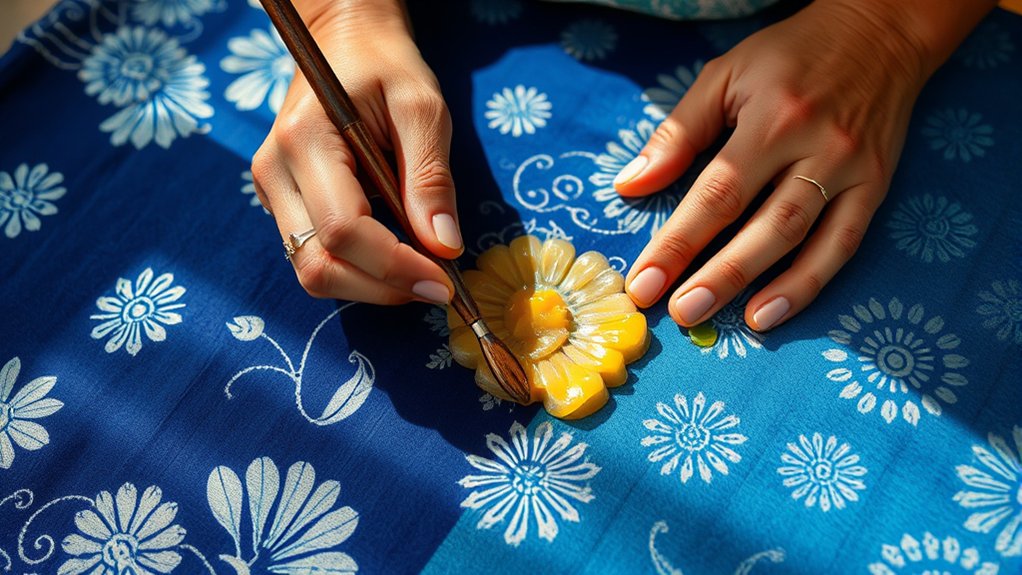
Although you might have seen batik fabrics before, you may not know that batik is a traditional technique of wax-resist dyeing applied to cloth. Its batik history dates back centuries, originating in Indonesia, particularly on the island of Java.
This method involves applying hot wax to fabric in intricate patterns before dyeing, so the waxed areas resist color, creating stunning designs. Understanding batik history helps you appreciate how this craft evolved as both an art form and a cultural practice.
Batik holds deep cultural significance, symbolizing social status, regional identity, and even spiritual beliefs in Indonesian communities. When you wear or see batik, you’re witnessing a piece of living heritage that tells stories through its patterns and colors.
This technique has spread worldwide, but its roots remain an essential part of Indonesian culture, making batik more than just fabric. It’s a meaningful expression of history and tradition.
Picking the Best Fabric for Batik
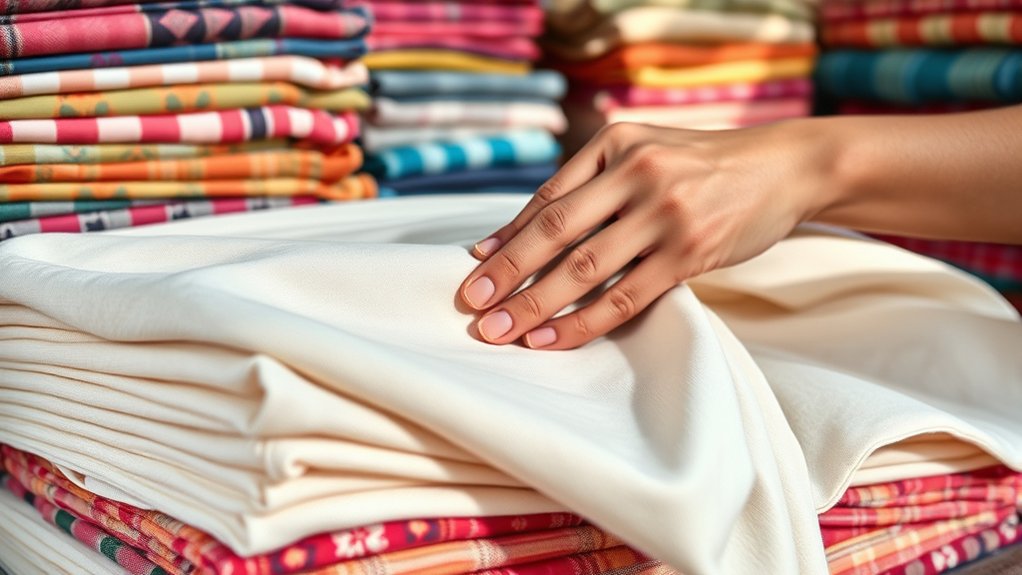
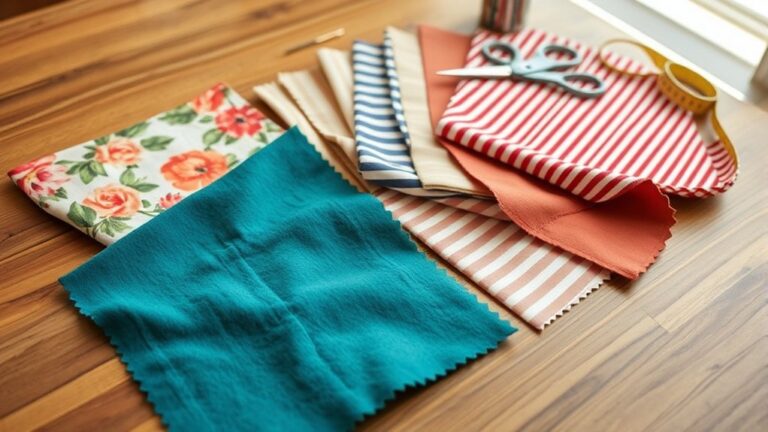
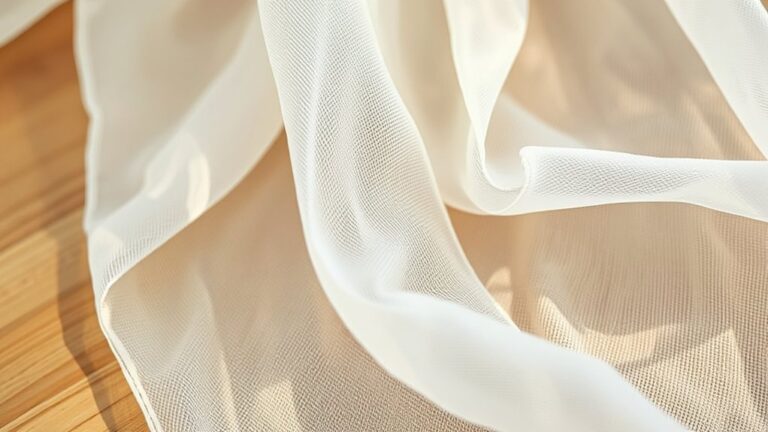
Since the quality of your batik design depends heavily on the fabric, choosing the right material is essential. You want a fabric with a smooth texture that allows the wax to adhere evenly, ensuring crisp lines and vibrant patterns. Cotton and silk are popular choices because they absorb dyes well and offer excellent color fastness, meaning your design won’t fade quickly after washing.
When selecting fabric, consider how the texture interacts with the wax and dye. Rough or heavily textured materials can cause uneven color absorption and blurry details. Also, lighter-colored fabrics work best as they show off your batik patterns more vividly. Keep in mind that natural fibers like cotton and silk not only improve color fastness but also provide durability, so your batik piece lasts longer. By focusing on fabric texture and color fastness, you’ll set a strong foundation for creating stunning batik fabrics.
Preparing Batik Fabric: Washing and Stretching
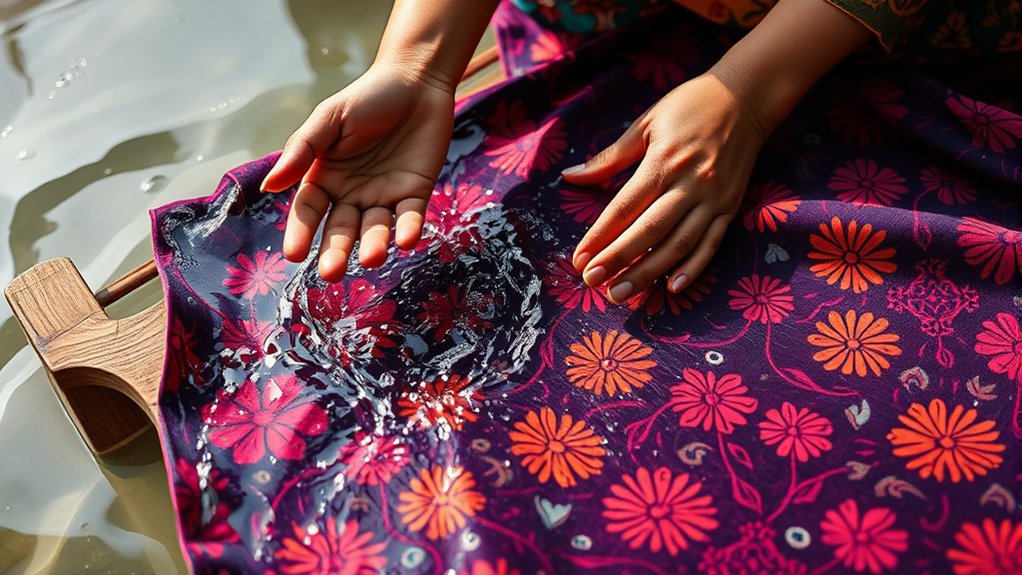
Before you start applying wax and dye, you need to prepare your fabric properly by washing and stretching it. Washing removes any sizing, dirt, or oils that might prevent the wax from adhering evenly, which is vital for clear fabric patterning. Use mild detergent and avoid fabric softeners that leave residues. After washing, let the fabric dry completely.
Next, stretching the fabric tightly on a frame ensures a smooth, flat surface, making it easier to apply wax and achieve precise designs. This step also prevents wrinkles that could distort the fabric patterning during dyeing. When your fabric is taut, you’ll notice better control over the dye application, which is necessary for vibrant dye color blending.
Proper preparation at this stage sets the foundation for your batik work, allowing the wax to resist the dye effectively and the colors to blend beautifully without bleeding or smudging.
Essential Tools for Batik Fabric Making
To create beautiful batik fabrics, you need the right tools at hand. You’ll be using traditional instruments like the canting for applying wax, which is key to shaping your design. Then, there’s the tjanting, perfect for adding those detailed touches that make your patterns stand out.
Along with these tools, essential dyes play a big role in bringing your batik to life with vibrant colors. Once you get familiar with how everything works together, you’ll find it much easier—and more enjoyable—to create precise and stunning batik patterns.
Traditional Batik Tools
Although batik fabric making involves various steps, mastering the traditional tools is key to creating authentic designs. These tools not only help you apply wax accurately but also support textile preservation by guaranteeing patterns last through repeated dye processes. Understanding dye chemistry allows you to choose tools that work best with natural dyes, enhancing color vibrancy and fabric durability.
Here are four essential traditional batik tools:
- Canting A small copper tool for applying hot wax precisely.
- Cap (Stamp) A copper stamp that creates repeated patterns quickly.
- Tjanting Needle Used for detailed, fine lines in wax application.
- Molang (Brush) Helps spread wax over larger fabric areas.
Using these tools effectively ensures your batik reflects both traditional artistry and chemical knowledge essential for quality fabric.
Wax Application Instruments
When you apply wax during batik making, choosing the right instruments shapes the design’s detail and durability. Tools like the canting, a small copper spout, let you draw fine lines with hot wax, perfect for intricate patterns.
For broader areas, a brush or a cap stamp helps you cover fabric quickly and evenly. These instruments control wax flow during fabric stretching, guaranteeing the cloth stays taut and the wax penetrates evenly.
Proper wax application shields areas from natural dyeing, creating sharp contrasts in your design. By mastering these tools, you protect specific fabric sections, allowing dyes to color only the exposed parts.
Using the correct wax application instruments ensures your batik fabric holds its pattern beautifully through each dyeing and stretching stage.
Essential Dye Materials
Since vibrant colors bring batik fabrics to life, you’ll need essential dye materials that deliver rich, lasting hues. Choosing the right dyes is vital, especially when working with natural fibers like cotton or silk. Their absorbency affects color vibrancy.
You’ll want colorfast dyes that resist fading and maintain brilliance after washing. Here are four key dye materials for successful batik fabric making:
- Reactive Dyes – Perfect for natural fibers, they form strong bonds ensuring colorfastness.
- Natural Dyes – Derived from plants or minerals, they offer authentic, earthy tones.
- Fixatives – Help set the dye to improve durability.
- Mordants – Improve color absorption and fix dyes on fibers.
With these materials, your batik fabrics will showcase vibrant, lasting designs.
Wax Application in Batik Fabric
Now that you know the essential tools, let’s dive into the types of wax used in batik fabric and how to apply them. Different waxes create unique effects, so picking the right one really makes a difference. You’ll also get to learn some key techniques to apply wax precisely and bring your designs to life.
Types Of Wax
How does the type of wax you choose influence the final look of your batik fabric? The wax you pick affects how natural dyes interact with the fabric textures, shaping your design’s detail and vibrancy. Different waxes offer unique qualities that can improve or limit your creative expression.
- Beeswax Soft and pliable, it seeps deep into fabric textures, producing rich, layered dye effects.
- Paraffin Wax Harder and brittle, it creates crisp, fine lines but may crack during dyeing.
- Microcrystalline Wax Offers flexibility and durability, helping preserve intricate patterns.
- Blended Waxes Combine qualities for balanced resistance and texture penetration, ideal for complex designs.
Choosing the right wax ensures your batik’s patterns complement the natural dyes beautifully.
Wax Application Techniques
Your choice of wax sets the foundation, but applying it skillfully brings your batik design to life. When you apply wax, you create a wax resist that blocks dye from coloring specific fabric areas during fabric dyeing.
You can use tools like a canting, a small copper spout, to draw fine lines or a brush for broader strokes. The wax must be hot enough to penetrate the fabric but cool enough to avoid bleeding.
As you apply wax, precision is key since it determines your final pattern. After waxing, you submerge the fabric in dye; the waxed parts resist the dye, preserving the original fabric color.
Dyeing Techniques in Batik Fabric
Where do the vibrant patterns on batik fabrics come from? They emerge during the dyeing process, where natural dyes play a key role. These dyes, derived from plants and minerals, give batik its rich, earthy tones. You’ll notice that using natural dyes requires care, as they are more prone to color fading if not handled properly.
Here’s how you’ll approach dyeing batik fabric:
- Prepare the dye bath with natural dyes, ensuring the fabric soaks evenly.
- Submerge the fabric carefully, avoiding disturbing the waxed areas that resist dye.
- Monitor the fabric’s color depth, repeating dips for stronger hues.
- Dry the fabric slowly to prevent uneven color fading.
Removing Wax to Reveal Batik Designs
Once the dye has fully set, you’ll need to carefully remove the wax to reveal the intricate batik patterns beneath. This step involves gently heating the fabric, often by placing it between layers of absorbent paper and ironing or steaming it. As the wax melts, the paper soaks it up, exposing the vibrant design created by the dye-resistant wax.
You’ll notice how the careful color blending in earlier steps becomes vivid and sharp once the wax is gone.
Removing the wax properly is essential not only for the pattern’s clarity but also for maintaining fabric durability. If any wax residue remains, it can stiffen the fabric or cause uneven texture. Make sure to repeat the wax removal process if necessary, ensuring all traces are gone.
This final reveal highlights the craftsmanship behind batik, showcasing the stunning interplay of colors and textures that define this traditional fabric art.
Creating Traditional and Modern Batik Motifs
Now that you’ve removed the wax, it’s time to focus on creating batik motifs. You’ll explore traditional techniques that use symbolic patterns. These designs carry deep cultural meanings and stories.
At the same time, you can experiment with modern design innovations. These fresh styles bring new energy and creativity to the fabric. By combining both approaches, you get to craft unique batik pieces that honor heritage while also embracing creativity. It’s a great way to connect the past with the present in your art.
Traditional Motif Techniques
How do artisans transform simple cloth into vibrant stories through traditional and modern batik motifs? You’ll find that traditional motif techniques rely heavily on precise textile dyeing and expert fabric weaving. These methods preserve cultural narratives while showcasing craftsmanship.
Here’s how you can appreciate these techniques:
- Wax Application: You apply hot wax on fabric to resist dye, creating intricate patterns.
- Layered Dyeing: You dip the fabric in multiple dye baths, building colors step-by-step.
- Motif Selection: You choose motifs inspired by nature, mythology, or daily life.
- Fabric Weaving Integration: You combine dyed motifs with woven textures, enhancing depth and symbolism.
Modern Design Innovations
Building on traditional motifs and techniques, modern design innovations bring fresh perspectives to batik fabrics. You can explore creating both traditional and modern batik motifs by experimenting with color blending, which adds depth and vibrancy to your designs.
This technique lets you smoothly transition between hues, enhancing the fabric’s visual appeal. Moreover, pattern symmetry plays a crucial role in balancing your motifs, making your designs more harmonious and eye-catching.
Key Regional Batik Techniques and Styles
Although batik techniques share common foundations, each region has developed unique styles that reflect its culture and environment. Understanding batik history reveals how regional influences shape patterns, colors, and methods. When exploring batik, you’ll notice these distinct techniques:
- Javanese Batik (Indonesia): Known for intricate patterns and earthy tones, often symbolizing philosophical meanings.
- Malaysian Batik: Features bold, floral motifs and brighter colors, created with brush painting rather than stamping.
- African Batik: Combines vibrant colors with geometric designs, often linked to storytelling and community identity.
- Indian Batik: Uses block printing with strong contrasts, reflecting diverse cultural elements.
Caring for Batik Fabrics to Preserve Their Beauty
Each regional batik style carries its own charm and significance, but preserving that beauty requires proper care. To guarantee your batik fabric stays vibrant, focus on batik fabric preservation and fabric color maintenance.
Always hand wash your batik in cold water with mild detergent to avoid color fading. Avoid wringing or twisting the fabric, which can damage the delicate wax patterns.
Here’s a quick guide to caring for your batik fabric:
| Care Tip | Why It Helps |
|---|---|
| Hand wash in cold water | Prevents color bleeding |
| Use mild detergent | Protects fabric fibers |
| Avoid direct sunlight | Preserves fabric color |
| Iron on low heat | Maintains fabric texture |
Frequently Asked Questions
How Long Does the Entire Batik-Making Process Take?
The entire batik-making process can take several days to weeks, depending on the design’s complexity. You’ll find that batik history shows how this art form requires patience and skill, reflecting deep cultural significance.
When you create batik, you’re not just making fabric; you’re connecting with centuries of tradition. So, expect to spend time carefully applying wax, dyeing, and repeating steps to achieve those intricate patterns that tell a story.
Can Batik Fabric Be Made With Synthetic Dyes?
Yes, you can use synthetic dyes to make batik fabric. When you apply synthetic dyes, they interact through chemical reactions with the fabric and wax resist, creating vibrant colors.
These dyes offer a wider color range and faster processing than traditional natural dyes. However, you’ll need to carefully manage the chemical reactions to guarantee the colors set well and don’t bleed, preserving the intricate batik patterns you want to achieve.
What Safety Precautions Are Needed When Handling Hot Wax?
Handling hot wax is like walking through a dragon’s breath; you need to be cautious. Always wear personal protective equipment, such as heat-resistant gloves and long sleeves, to shield your skin from burns.
Manage wax temperature carefully. Keep it just hot enough to melt but not so hot it splatters or smokes. Use a thermometer to monitor the wax, and work in a well-ventilated area to avoid inhaling fumes.
Stay alert and safe!
How Do Environmental Factors Affect Batik Dyeing Results?
You’ll notice environmental impact plays a big role in batik dyeing results. Temperature and humidity affect dye absorption, so if it’s too cold or damp, the colors might not set properly.
Sunlight can also alter how vibrant the dyes appear. You’ll want to control these factors to get consistent, rich patterns. Being mindful of the environment helps you achieve the best quality while reducing waste and chemical runoff.
Are There Sustainable or Eco-Friendly Methods in Batik Production?
Yes, you can definitely find sustainable or eco-friendly methods in batik production. By using natural dyes extracted from plants, fruits, and minerals, you reduce chemical waste and pollution.
You’ll want to adopt eco-friendly techniques like water recycling and using organic waxes to minimize environmental impact. These practices not only preserve tradition but also help you create beautiful fabrics while protecting the planet for future generations.
Conclusion
Now that you’ve uncovered the magic behind batik, you hold the key to a timeless art woven with wax and color. Like a painter’s brush dancing on fabric, your hands bring stories to life with every design.
Whether you choose traditional or modern motifs, remember: caring for your batik keeps its vibrant soul glowing like a sunset. Treasure this craft, and let your creativity flow like the rivers that inspired it.
By nurturing this beautiful process, your batik fabrics will continue to tell their unique stories for years to come.