How to Wash a Velvet Dress in 10 Steps
Washing a velvet dress can feel like a daunting task. You want to keep that luxurious fabric looking fresh and beautiful, but many people struggle with how to do it without ruining the texture or color.
If you’ve ever hesitated to clean your velvet dress at home, you’re not alone—handling velvet requires a bit of extra care and know-how.
Check the care label first and skip home washing if it says dry clean only. Test a hidden spot with a damp white swab for color transfer, then blot any stains gently.
Hand wash the dress inside out in cool water with gentle detergent, rinse, and press out moisture without wringing.
Lay it flat to dry away from heat, then brush the pile lightly and store it clean and dry for best results, with a few extra tips ahead.
Key Takeaways
- Check the care label first. If it says dry clean only, do not wash the velvet dress at home.
- Test for colorfastness in a hidden spot with cool water before cleaning any stain.
- Blot stains gently, then hand wash the dress inside out in cool water with mild detergent.
- Rinse carefully without wringing. Then blot with a towel and lay flat to dry away from heat and sunlight.
- After drying, brush velvet lightly to restore the pile. Store it in a cool, dry, breathable garment bag.
Check Whether Your Velvet Dress Can Be Washed
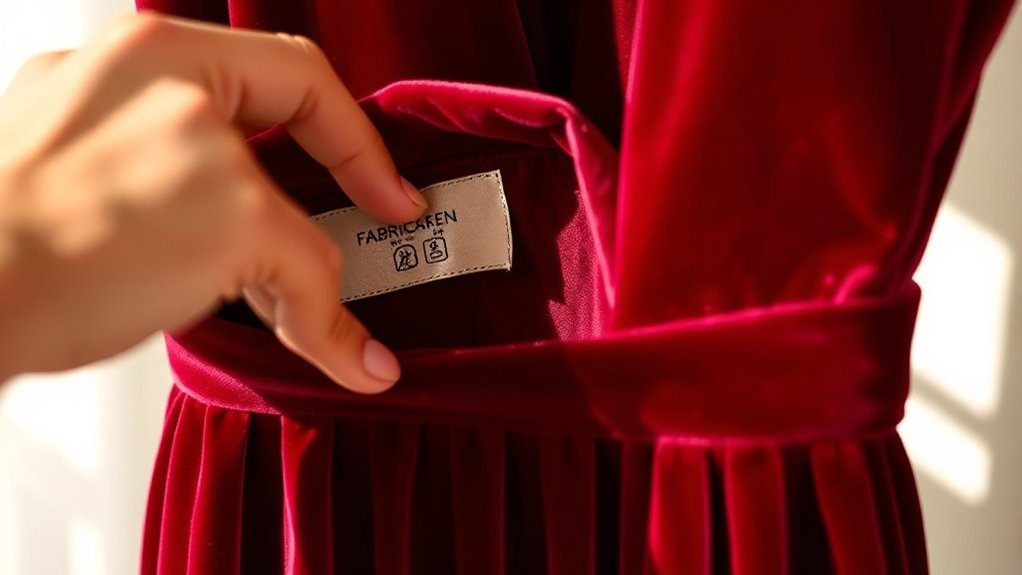
Before you wash a velvet dress, check the care label to see whether the fabric is washable or dry clean only. That single tag guides your fabric care choices and helps you avoid damaging the pile. If the label says dry clean only, don’t risk home washing.
Check the care label first—if it says dry clean only, skip home washing to protect the velvet pile.
If it allows washing, look for notes about hand washing, machine cycles, or water temperature. You should also inspect the dress for embellishments, linings, or mixed fabrics, since these can affect safe washing methods.
Velvet made from cotton or polyester may tolerate gentler cleaning than silk velvet, which often needs professional care. When the label is unclear, treat the dress as delicate and choose the safest option.
Confirming care instructions first saves time, protects texture, and keeps the dress looking rich and smooth. Never guess; use the label as your guide and decide before you begin.
Test the Colorfastness First
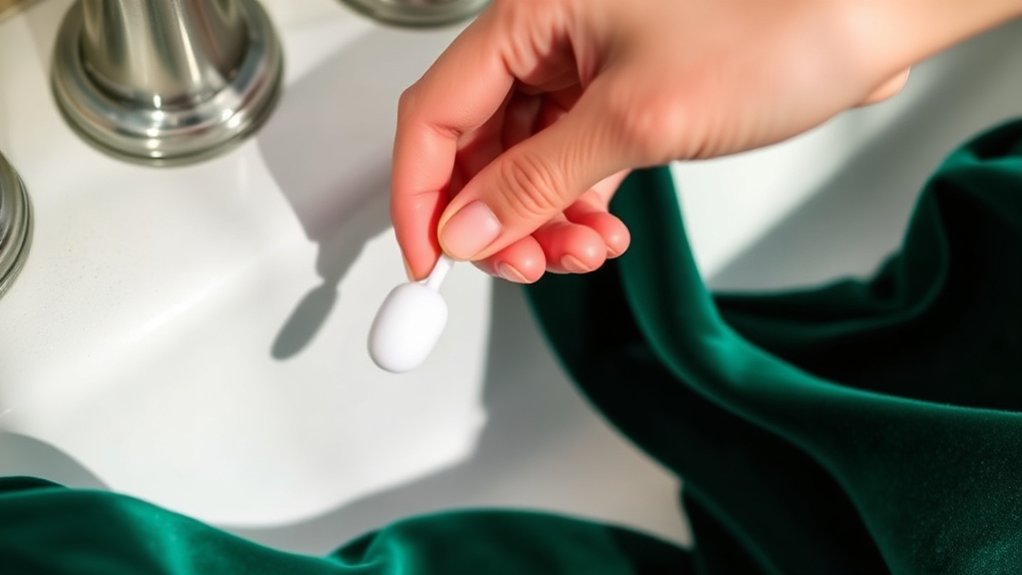
Now that you know the dress is washable, test the dye in a hidden spot, such as an inside seam or hem. Dampen a white cotton swab with cool water and press it lightly against the area. Check the swab and the velvet for any transfer, fading, or dulling.
This simple color testing tells you whether the dye can handle moisture without bleeding. If you see color on the swab, stop and treat the dress as delicate. If the spot stays stable, you can move ahead with more confidence. Watch the fabric reaction for a few minutes since some dyes change slowly after contact with water.
Protect the dress before you commit
Trust evidence over guesswork
Small tests prevent costly mistakes
Care now preserves texture later
Patience helps you wash wisely
Spot Clean Stains Before Washing
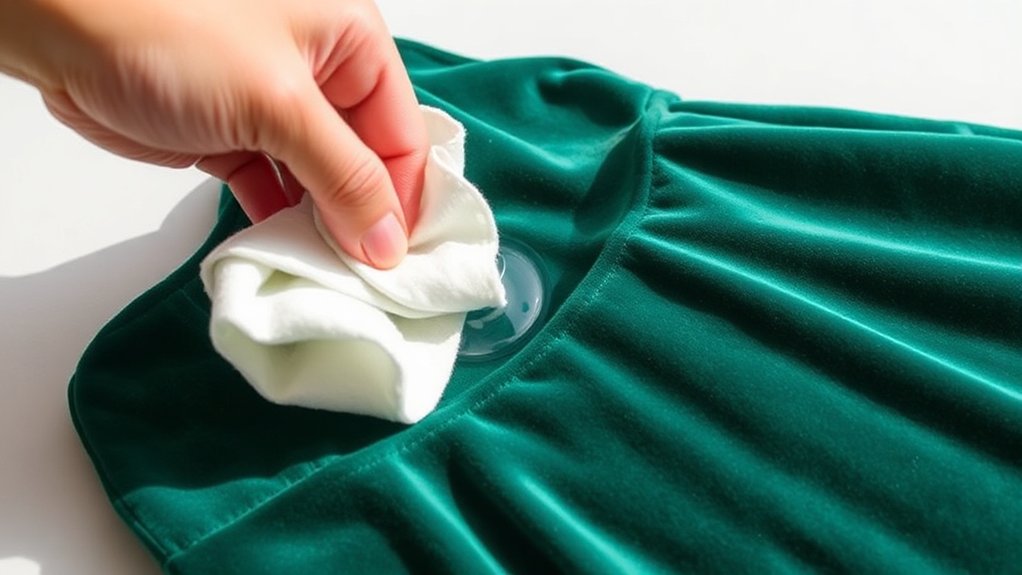
Before you wash your velvet dress, take a moment to figure out what kind of stain you’re dealing with. That way, you can treat it the right way.
Next, gently blot the spot with a clean cloth to lift the stain without spreading it around. Just be careful not to rub, because that could push the stain deeper into the fabric and damage the velvet.
Identify Stain Type
Take a close look at the stain before you touch the fabric with water or cleaner, because different marks need different treatment. You’ll protect velvet better when you match the fix to the mess. Food, makeup, oil, and water spots each respond to different cleaning methods, so check the stain types first.
Light-colored residue may signal sugar or drink spills. Greasy marks usually come from lotion or food. Pigmented stains often need gentle care. Old spots may need extra patience. Unknown marks should get the mildest approach.
Once you know what you’re dealing with, you can choose the safest cleaner and avoid making the blemish spread or set deeper into the pile.
Blot, Don’t Rub
Use a clean white cloth or paper towel to blot the stain gently, lifting moisture without pressing it deeper into the velvet pile. Work from the outside of the mark toward the center, and switch to a fresh section of cloth as soon as it picks up color.
If you need extra help, dab a small amount of cool water or a velvet-safe cleaner onto the cloth first, not directly onto the fabric. These blotting techniques protect the nap and keep the texture smooth.
Don’t scrub, twist, or drag the fabric, since friction can crush fibers and leave a shiny spot. Good velvet care means acting quickly, staying light-handed, and testing any cleaner on a hidden area before you treat the stain.
Hand Wash Your Velvet Dress
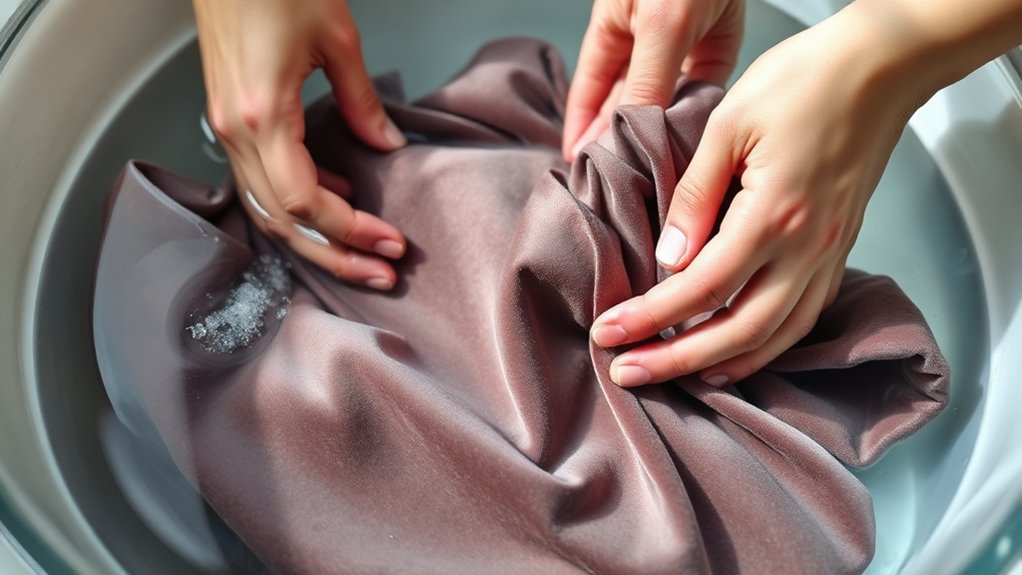
Fill a clean basin with cool water and a small amount of gentle detergent. Then turn your velvet dress inside out and lower it into the water. Let it soak briefly, then move it through the water with slow, careful motions.
Support the fabric fully so you don’t stretch or crush the pile. Lift it out, drain the basin, and refill with fresh water to rinse away soap. Press, don’t twist, to remove excess moisture.
Treat the fabric like a delicate investment. Keep your movements calm and deliberate. Protect the nap so the dress keeps its rich texture.
Use care tips that prevent avoidable wear. Choose drying techniques that preserve shape and softness.
After washing, lay the dress flat on a clean towel and reshape it gently. Let it air-dry away from heat and direct sun.
This steady approach helps your velvet stay smooth, elegant, and ready to wear.
Wash Velvet Gently in Cold Water
Use cold water to protect your velvet’s texture and color while you wash it. Just gently move the fabric through the water with your hands—try not to rub or wring it. And when you rinse, make sure to support the dress fully so it won’t stretch out of shape.
Cold Water Basics
When you wash velvet, start with cold water to help protect the fabric’s pile and keep the dress looking smooth. Cold water benefits your dress by reducing fiber stress and limiting color loss, so you keep the rich texture intact.
Watch temperature effects closely, since even slightly warm water can flatten the nap and make the fabric look tired. Use a basin or sink with enough room for the dress to move without crowding. Keep the water cool and steady, and avoid sudden changes that can shock the fabric.
- Protects pile structure
- Helps preserve color depth
- Reduces shrink risk
- Keeps texture soft
- Supports longer wear
Gentle Hand Washing
Now that the water is cold, wash the velvet by hand with a light touch. Use a small basin, add a tiny amount of gentle detergent, and swish the dress just enough to loosen dirt.
Keep the fabric supported in the water, and never scrub, twist, or pinch the pile. These hand wash techniques help protect the nap and preserve the dress’s shape.
Move your fingers in slow, controlled motions, focusing on soiled spots without rubbing hard. If an area needs extra attention, dab it softly with your fingertips instead of pulling at the cloth.
Good velvet fabric care depends on patience, minimal agitation, and steady handling. When the dress feels clean, lift it carefully and keep it folded loosely in your hands.
Rinse Without Stretching
Rinse the dress in cold water right away to wash away the detergent without disturbing the velvet’s pile. Keep the fabric supported in both hands, and let water flow through it instead of twisting or wringing. This gentle approach protects shape, sheen, and texture while you finish your velvet care routine.
Use short, steady movements and stop as soon as the water runs clear. If you need a second rinse, repeat the same washing techniques with fresh cold water.
Hold the dress from the seams, not the body. Press lightly to guide out soap. Never stretch wet velvet. Keep agitation to a minimum. Treat every rinse as a chance to preserve softness.
Rinse Without Wringing
Gently lift the velvet dress out of the wash water and press it under cool running water to remove soap. Keep the fabric supported with both hands so you don’t twist the pile or stress the seams.
Let the water flow through the velvet until it runs clear, turning the dress only as needed to reach every section. This simple rinse fits careful washing techniques and supports good fabric care because it prevents residue from dulling the finish.
If the dress has lining or trim, guide the water across those areas too, but stay gentle and avoid pulling. Stop once you’ve removed all detergent, then hold the dress steady over the sink for a moment so the rinse water can drain away naturally.
Don’t wring, squeeze, or fold the velvet sharply, since pressure can leave marks that are hard to remove later and may distort the dress’s shape.
Blot Out Excess Water
Lay the velvet dress flat on a clean, dry towel. Then, gently press another towel on top to blot away the moisture. Don’t rub or twist the fabric though, because that can crush the pile. If you notice any standing water, just keep blotting with a fresh towel until the dress feels only damp.
Gentle Towel Blotting
Use a clean, dry towel to lift excess water from the velvet without rubbing the fabric. Press gently, then move to a fresh area of the towel as it absorbs moisture. This careful fabric care helps protect the pile and keeps the dress looking smooth.
Your drying techniques should stay light and deliberate so you don’t crush the nap or stretch delicate seams.
Pat, don’t scrub, to avoid flattening the texture. Fold the towel often to expose a drier surface.
Support the dress as you blot to reduce strain. Work in sections for even moisture removal.
Stop when the velvet feels damp, not soaked.
Remove Standing Water
If water has pooled on the velvet, blot it out right away with a clean, dry towel. Press lightly so you lift moisture without crushing the pile or spreading the spot. Keep turning the towel to a dry section and repeat until no more water transfers.
Don’t rub, twist, or wring the dress, because that can flatten the fibers and leave marks. If the fabric still feels damp, lay it flat on another dry towel and reshape it gently. These water removal techniques help you protect the texture while you reduce excess moisture fast.
After blotting, move to careful drying methods, such as air drying in a cool, shaded area with good airflow. Never use heat, which can damage velvet and set in distortion.
Dry Your Velvet Dress Flat
After washing, gently press out excess water with a clean towel. Then place your velvet dress flat on a dry, clean surface. This helps the fibers stay supported while they dry and prevents stretching, creasing, and distortion.
Choose a spot with good airflow, but keep the dress away from direct sun, heaters, and vents. These drying techniques protect the pile and fit, which is essential fabric care.
Smooth the dress lightly with your hands so it lies evenly, then leave it untouched until it feels fully dry.
Flat drying keeps the shape intact. Airflow speeds drying without harsh heat. Clean surfaces reduce transfer stains. Gentle handling protects delicate fibers. Patience supports better long-term wear.
Check the dress occasionally, and move it only if the surface becomes damp.
Bring Back Velvet’s Soft Finish
Once your velvet dress is fully dry, restore its soft finish by lightly brushing the pile with a soft clothes brush in one direction. Work slowly and keep your strokes gentle so you lift the fibers without flattening them again. This simple step supports velvet care by smoothing out any marks left from washing and helping the nap look even and plush.
If you notice a few stubborn spots, brush those areas a little longer, but don’t press hard.
For fabric restoration, you can also hang the dress in a steamy bathroom for a few minutes, then let the moisture relax the pile. After that, give it another light brush to revive the sheen.
Always test a small hidden area first if you’re unsure how the velvet will react. With careful handling, you’ll bring back that rich, soft texture and keep your dress looking elegant and refined.
Store Your Velvet Dress Properly
To keep your velvet dress looking its best, store it in a cool, dry place away from direct sunlight and humidity. Use a breathable garment bag instead of plastic so air can circulate and moisture won’t build up.
Hang the dress on a padded hanger to protect the shoulders, or fold it loosely with acid-free tissue if you need to pack it away. Good velvet storage prevents crushing, fading, and lingering odors, so you can wear the dress confidently later.
Before storing, make sure it’s completely clean and dry, since stains and dampness can set in over time. Careful fabric care also means keeping jewelry, zippers, and rough fabrics away from the pile.
Choose breathable protection
Support the shape with padding
Keep it clean and dry
Avoid cramped closets
Check it occasionally
Frequently Asked Questions
Can I Steam a Velvet Dress to Remove Wrinkles?
Yes, you can steam a velvet dress to remove wrinkles, but you’ve got to do it gently. Hold the steamer a few inches away and use short bursts, so you don’t crush the pile.
Test a hidden spot first and avoid soaking the fabric. Good steaming techniques protect the finish, and careful fabric care keeps your dress looking smooth, rich, and luxurious without damaging the velvet.
How Often Should I Wash a Velvet Dress?
You should wash your velvet dress only when it’s visibly dirty, stained, or smells. For most wear, you can spot-clean and air it out instead. Since velvet comes in different fabric types, check the label and follow care tips that match your dress.
If you wear it occasionally, washing every few wears is usually too much. Once or twice a season may be enough.
Can Velvet Dresses Be Machine Dried Safely?
No, you shouldn’t machine dry a velvet dress safely. The heat and tumbling can crush the pile, shrink the fabric, and leave permanent marks. For proper velvet care, you should air dry it instead.
Lay it flat on a clean towel or hang it away from direct sunlight and heat. If you need faster drying, gently press out moisture with another towel, but don’t wring or twist the dress.
What Detergent Is Best for Velvet Fabrics?
You should choose a mild, liquid detergent made for delicate detergent types, because it cleans velvet without stripping the pile. You’ll get the best fabric care from a fragrance-free, dye-free formula, since harsh additives can dull the fabric.
If you’re handwashing, dilute the detergent well and use only a small amount. Avoid bleach, enzymes, and heavy-duty washes, because they can damage velvet’s texture and leave it looking flat or worn.
How Do I Remove Odors From a Velvet Dress?
You can remove odors from a velvet dress by airing it out first. Hang it in a well-ventilated spot for several hours, then lightly mist it with fabric freshening sprays made for delicate fabrics.
If the smell lingers, use odor elimination techniques like placing the dress in a sealed bag with baking soda nearby overnight. Don’t rub the velvet, and let it dry completely before wearing it again.
Conclusion
With a little care, you can keep your velvet dress looking like it just stepped off a moonlit runway. Check the label, wash gently, and treat every stain like it’s a tiny villain in a grand story.
When you blot, dry flat, and restore that plush finish, you protect its rich glow for the next time you wear it. Store it well, and your velvet dress will stay ready for its next starring role.