How Many Different Fabrics Are in a Jelly Roll?
If you’ve ever shopped for quilting supplies, you know how confusing it can be to figure out exactly how many different fabrics are in a jelly roll. You’re not alone—many people struggle with this because the variety can really impact your project’s look and feel. Getting a clear idea of fabric diversity helps you make better choices and plan your quilting with confidence.
You’ll usually find about 40 fabric strips in a jelly roll, but the number of different fabrics can vary a lot. Some rolls have just a few unique prints repeated, while others include dozens, depending on the collection’s theme, dyeing method, and design choices.
This variety affects your project’s look and how you plan your quilting. Keep investigating to understand how fabric diversity can influence your creative options and project planning.
Key Takeaways
- A typical jelly roll contains about 40 fabric strips, each 2.5 inches wide, made from quilting cotton.
- The number of unique fabrics varies widely, often ranging from a few to dozens depending on the collection.
- Fabric diversity depends on dyeing methods, collection themes, manufacturer focus, and whether fabrics repeat in the roll.
- High fabric variety enhances design options, visual complexity, and tailoring of quilting projects.
- Knowing fabric count helps estimate project scope, plan fabric usage, and coordinate with other fabric bundles.
What Is a Jelly Roll in Quilting?
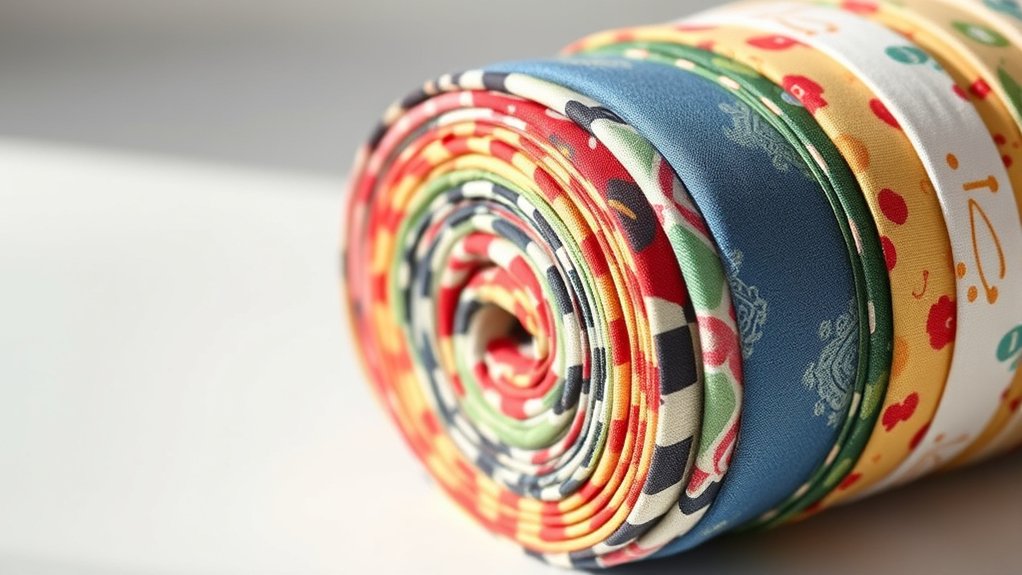
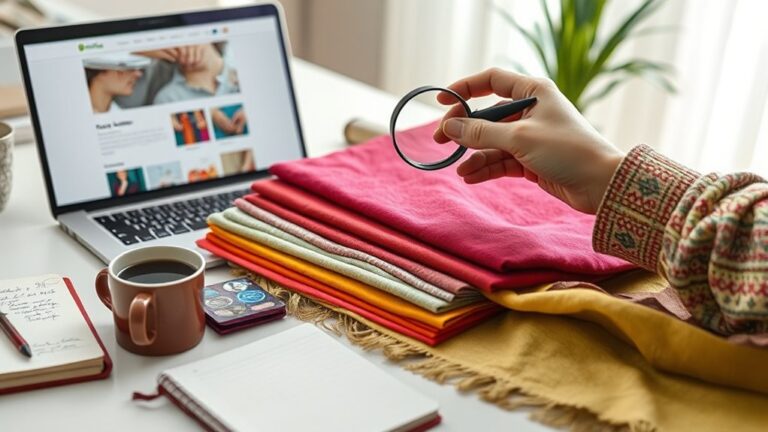
What exactly is a jelly roll in quilting? It’s a pre-cut bundle of fabric strips, usually 2.5 inches wide, rolled up like a jelly roll cake. When you pick one up, you’ll notice the strips feature coordinated colors and patterns. This makes it easier for you to create cohesive quilts without second-guessing your choices. The color coordination ensures your project looks polished and harmonious right from the start.
Besides convenience, the fabric durability in a jelly roll is essential. These strips come from high-quality quilting cotton, designed to withstand washing and repeated handling during your sewing process. This means you don’t have to worry about the fabric fraying or fading quickly, so your finished quilt holds up well over time.
Using a jelly roll simplifies your fabric selection, letting you focus more on sewing and less on matching colors or cutting strips yourself. It’s a handy tool that saves you time and effort while maintaining quality.
How Many Fabric Strips Are in a Jelly Roll?
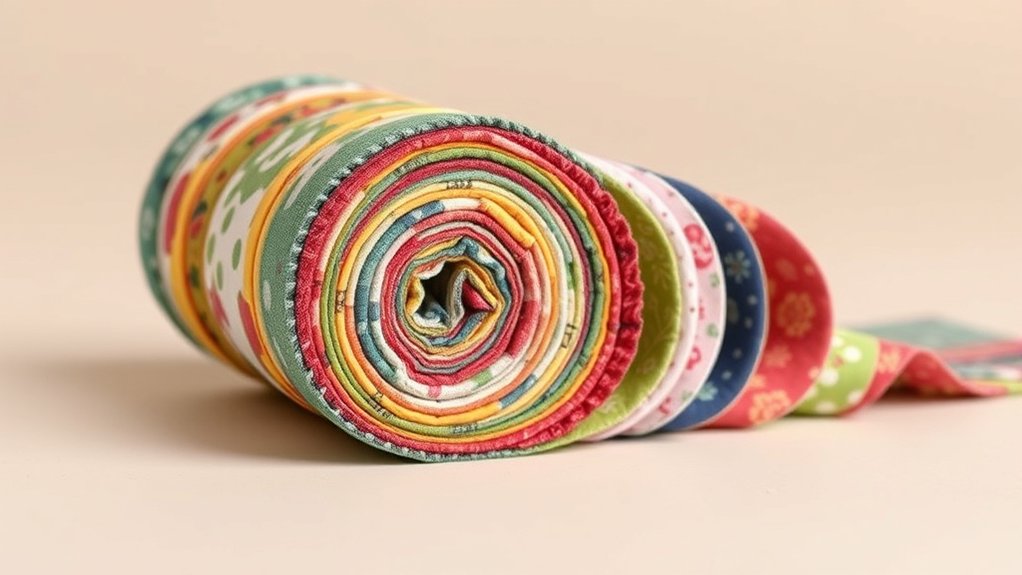
When you pick up a jelly roll, you might wonder how many fabric strips it actually contains. Typically, a jelly roll includes 40 pre-cut strips, each measuring 2.5 inches wide and the full width of the fabric.
A jelly roll usually contains 40 pre-cut fabric strips, each 2.5 inches wide and full fabric width.
These strips provide a convenient way to access a variety of fabrics without cutting them yourself. The design of a jelly roll ensures excellent fabric durability, as the strips are cut from high-quality quilting cotton, making them sturdy enough for multiple uses.
Furthermore, the strips are carefully selected to maintain color coordination, giving you a harmonious palette to work with. This makes planning your quilt easier since the colors and patterns blend well together.
Whether you’re a beginner or an experienced quilter, knowing the exact number of strips helps you estimate how much fabric you have and how far it can stretch in your projects.
How Many Different Fabrics Come in a Jelly Roll?
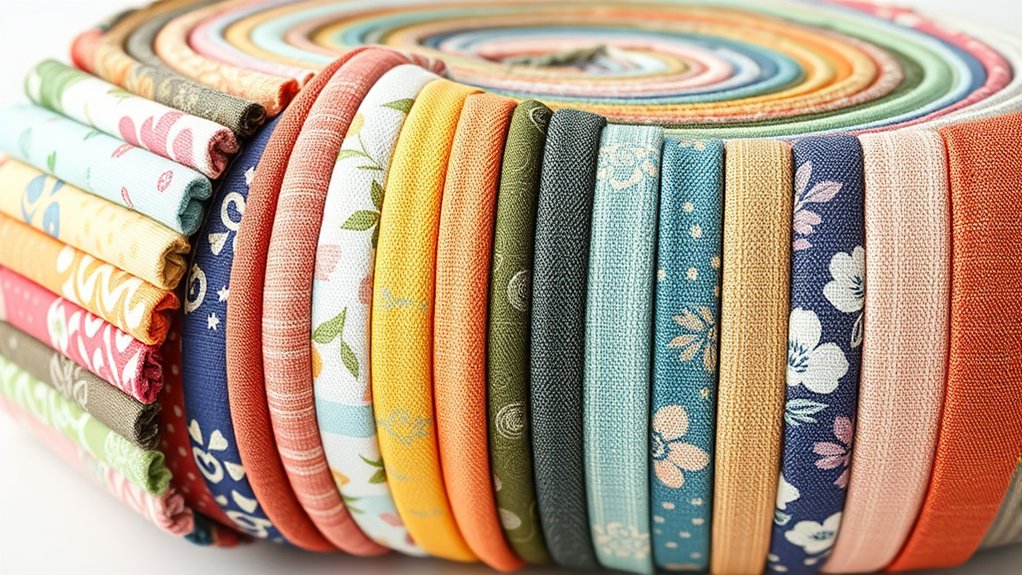
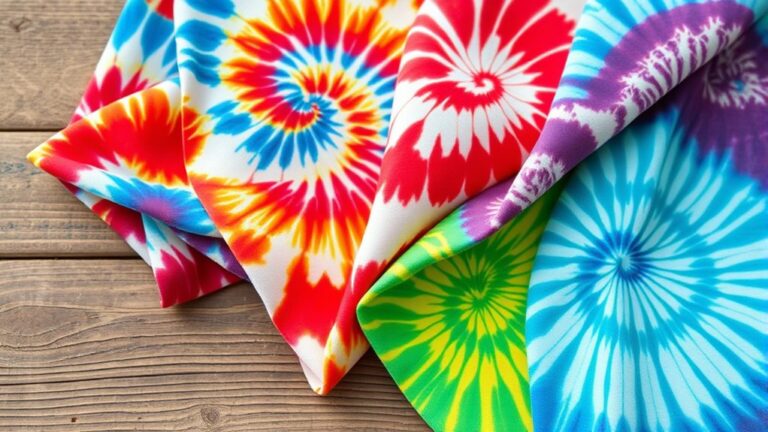
Although jelly rolls typically contain 40 fabric strips, the number of different fabrics included can vary depending on the collection. You might find jelly rolls with anywhere from just a few to dozens of unique fabrics. This variation often reflects the fabric dyeing techniques and trends rooted in textile history.
When you pick a jelly roll, consider these factors:
- Fabric Dyeing Method Some collections use hand-dyed fabrics, resulting in fewer but richer variations.
- Theme of the Collection Seasonal or themed rolls often have fewer different fabrics repeated in strips.
- Manufacturer’s Design Some brands focus on mixing many prints, while others favor fewer designs with multiple repeats.
- Purpose of the Roll Quilting collections might include more unique fabrics to provide diverse options, while basics rolls emphasize coordination.
Understanding these elements helps you select a jelly roll that fits your project’s needs perfectly.
Why Are Jelly Rolls Made of Coordinated Fabrics?
Because jelly rolls contain multiple fabric strips meant to be used together, manufacturers coordinate the fabrics to guarantee they blend harmoniously. When you work with a jelly roll, you’ll notice how fabric color coordination ensures each strip complements the others, making your project look polished without extra effort. This thoughtful selection saves you time, so you don’t have to hunt for matching fabrics yourself.
Pattern consistency also plays a key role. The fabrics in a jelly roll often share a theme or scale of prints, so when you sew them together, your quilt or craft project flows visually. You won’t have to worry about clashing patterns or jarring contrasts breaking your design.
How Fabric Sizes Affect Jelly Rolls
You’ll find that jelly rolls usually feature fabric strips measuring 2.5 inches wide. This size really makes cutting and sewing easier. Because of these standard dimensions, you’ll need to think about how you plan your quilt design.
These measurements also affect the patterns you can create. So, understanding the sizes helps you make the most of your fabric and get the look you want. It’s all about working with what you’ve got to make something beautiful.
Standard Fabric Strip Dimensions
When selecting fabric strips for your jelly roll, understanding standard dimensions is essential to guarantee your project turns out as expected. Fabric dyeing and textile weaving influence the texture and color consistency of these strips, making size uniformity critical.
Typically, jelly rolls feature strips cut to 2.5 inches wide, which is the industry standard for easy piecing. They are usually 42 to 44 inches long, matching fabric width after selvages are trimmed.
Consistent length ensures smooth sewing and pattern alignment. A balanced width to length ratio also helps manage fabric stretch during textile weaving.
Knowing these dimensions helps you anticipate how each strip behaves when sewn together. This knowledge lets you pick jelly rolls that suit your quilting needs and guarantee a seamless creative process.
Impact On Quilt Design
Although fabric strip sizes might seem minor, they considerably influence your quilt’s overall design and construction. When you work with jelly rolls, the uniform strip width ensures consistency, but the length and texture of each fabric can alter how your quilt comes together.
Fabric texture plays a vital role; smooth cotton blends sew easily, while rougher textures might require extra care to maintain crisp seams. Furthermore, the size of each strip affects how you arrange patterns, helping you achieve better color harmony throughout your quilt.
Smaller strips encourage intricate designs, while wider strips offer bold, striking blocks. Understanding these impacts lets you plan effectively, guaranteeing your quilt not only looks beautiful but also holds up well through use and washing.
Jelly Rolls vs. Other Quilting Fabric Bundles
While jelly rolls offer a convenient way to gather coordinated strips of fabric for quilting, other fabric bundles like charm packs and layer cakes bring different advantages to your projects. When choosing between them, consider these key points:
- Fabric Durability: Jelly rolls typically feature pre-cut strips that maintain fabric quality, but layer cakes often come from the same fabric bolts, ensuring consistent durability across pieces.
- Color Fastness: All bundles aim for color fastness, but charm packs, with smaller squares, might fade unevenly if exposed to sunlight more frequently.
- Project Versatility: Jelly rolls shine in strip-based patterns, while charm packs suit patchwork, and layer cakes are perfect for larger blocks.
- Ease of Use: Jelly rolls save cutting time with pre-cut strips, but charm packs and layer cakes offer more variety in shapes and sizes, letting you customize your quilt design more flexibly.
Understanding these differences helps you choose the best fabric bundle to match your quilting style and needs.
How to Choose the Right Jelly Roll for Your Project
Because every quilting project has unique needs, selecting the right jelly roll can make a big difference in your final design and ease of assembly. Start by considering the fabric texture. Smooth cottons work best for intricate piecing, while textured fabrics add depth but may require careful handling.
Next, focus on color coordination. A well-balanced mix of hues and patterns ensures your quilt looks cohesive and vibrant.
Use this quick guide to match jelly rolls with your project goals:
| Project Type | Recommended Fabric Texture | Color Coordination Tip |
|---|---|---|
| Baby Quilt | Soft, smooth cotton | Pastels or gentle contrasts |
| Modern Quilt | Crisp, smooth cotton | Bold colors with minimal prints |
| Traditional Quilt | Slightly textured cotton | Classic color combos |
| Wall Hanging | Varied textures | High contrast for impact |
| Table Runner | Smooth to medium texture | Coordinated shades, subtle prints |
Choosing thoughtfully saves time and elevates your quilt’s appearance.
Tips for Using All Jelly Roll Fabrics Efficiently
When you want to get the most out of every strip in your jelly roll, planning your cuts and layout carefully is key. Efficient use means minimizing waste and maximizing fabric variety. Here are four tips to help you use all your jelly roll fabrics effectively:
- Plan Your Layout by Color Coordination: Group strips by color and pattern before cutting. This helps you visualize combinations and avoid unused scraps.
- Measure Twice, Cut Once: Accurately measure your project needs to prevent cutting excess or too little fabric from each strip.
- Use Fabric Storage Wisely: Store leftover strips flat or rolled to keep them in good condition. Label them by color or project for easy access.
- Incorporate Small Scraps: Save small pieces for accents or appliqués. These can add unique touches without requiring full strips.
Best Projects to Make With Jelly Roll Fabrics
You can create stunning quilting patterns using jelly roll fabrics that really bring your designs to life. But don’t stop there! Beyond quilts, why not try crafting home décor items like pillows or table runners? They’re a great way to add a personal touch to any room. And hey, jelly roll fabrics aren’t just for décor—you can also make unique scarves, bags, and all sorts of accessories. The possibilities are pretty endless!
Quilting Patterns To Try
Although jelly roll fabrics come pre-cut and coordinated, choosing the right quilting pattern can make all the difference in showcasing their vibrant designs. You’ll want to pick patterns that highlight the fabric dyeing techniques used and complement your sewing skills.
Here are four quilting patterns to try with your jelly roll fabrics:
- Rail Fence: Simple strips create dynamic, colorful blocks, perfect for beginners mastering sewing techniques.
- Log Cabin: Showcases fabric dyeing contrasts, offering a classic, structured look.
- Bargello: Uses strips to form flowing waves, ideal for emphasizing color gradations.
- Strip Quilt: Fast and straightforward, it lets the coordinated fabrics shine without complex sewing.
Try these to bring out the best in your jelly roll fabrics and raise your quilting projects.
Home Décor Ideas
Wondering how to bring your jelly roll fabrics beyond quilts? You can create stunning home décor pieces that highlight the fabric texture and color palette in your collection. Consider making throw pillow covers; they’re quick to sew and instantly refresh your living space.
Use fabrics with contrasting textures to add depth and visual interest. Table runners and placemats are another great option, allowing you to showcase a coordinated color palette that ties your room together. You could also craft fabric baskets or storage bins, functional and stylish, perfect for organizing while displaying your fabric’s patterns.
Apparel And Accessories
Beyond home décor, jelly roll fabrics offer a fantastic opportunity to craft stylish apparel and accessories that showcase their vibrant patterns and colors. Thanks to their textile durability, these fabrics hold up well in everyday wear, aligning perfectly with current fashion trends.
Here are four great projects to try:
- Patchwork skirts Mix prints for a trendy, unique statement piece.
- Headbands and scarves Quick, fashionable accessories that highlight bold patterns.
- Tote bags Durable and eye-catching, perfect for daily use.
- Children’s clothing Soft, colorful fabrics ideal for playful, long-lasting outfits.
You’ll love how easy it is to combine style and function with jelly roll fabrics in your wardrobe and accessories.
Where to Buy Jelly Rolls With Great Fabric Selection
When you’re ready to find jelly rolls with a fantastic fabric selection, knowing the best places to shop makes all the difference. Start by visiting local fabric stores, where you can touch and see the fabrics firsthand. Use fabric store tips like asking staff about new arrivals or exclusive collections to uncover hidden gems. Many stores also offer curated jelly rolls that showcase diverse prints and textures.
If you prefer shopping from home, online options offer incredible variety. Follow online shopping guides that highlight reputable shops with extensive jelly roll selections, clear product photos, and detailed descriptions. Websites like Fat Quarter Shop and Connecting Threads often have customer reviews to help you choose quality fabrics.
Whether you shop in person or online, focusing on trusted sources guarantees you get jelly rolls featuring vibrant, well-coordinated fabrics. With these fabric store tips and online shopping guides, you’ll confidently find jelly rolls that inspire your next quilting project.
Frequently Asked Questions
How Should I Store Unused Jelly Roll Strips?
You should store unused jelly roll strips in a cool, dry place to maintain fabric care. Keep them rolled up and secure with a rubber band or ribbon to prevent unraveling.
Avoid direct sunlight, which can fade colors. For extra protection, place the strips in a breathable fabric bag or a plastic container with ventilation. These storage tips will help keep your fabrics fresh and ready for your next quilting project.
Can Jelly Rolls Be Used for Non-Quilting Crafts?
Absolutely, you can use jelly rolls for non-quilting crafts. There’s more than meets the eye with these fabric strips.
Thanks to their durability, they’re perfect for a range of creative project ideas. Think beyond quilts: try making fabric baskets, patchwork tote bags, or even colorful garlands.
Their pre-cut size saves time and sparks creativity, turning your craft projects into unique, vibrant pieces that last. You’ll love the possibilities!
Are Jelly Roll Fabrics Pre-Washed Before Packaging?
No, jelly roll fabrics usually aren’t pre-washed before packaging. You’ll want to handle fabric preparation yourself to avoid any shrinking or color bleeding later.
Washing procedures vary by manufacturer, but most leave that step up to you. It’s a good idea to wash and dry the strips gently before you start your project, so your finished piece stays true to size and color.
Taking this extra step helps guarantee quality results.
What Is the Average Price Range of a Jelly Roll?
You’ll find jelly rolls priced anywhere from $20 to $45, depending on fabric quality and color selection. Imagine unrolling vibrant strips of soft cotton, each hue carefully chosen to complement the next.
Higher-end rolls often use premium fabrics with richer colors that pop, while more affordable options offer basic but still lovely shades. Your budget and project needs will guide you to the perfect jelly roll, blending value with beautiful fabric choices.
How Long Do Jelly Rolls Typically Stay in Stock?
Jelly rolls typically stay in stock for a few weeks to a couple of months, depending on the fabric variety and demand. If the fabric variety is popular or limited edition, you’ll find stock availability decreases quickly as crafters snatch them up.
To guarantee you get the fabric variety you want, it’s smart to act fast or sign up for restock alerts from your favorite stores.
Conclusion
Now that you know a jelly roll usually contains 40 coordinated fabric strips, you’re ready to create stunning quilts with ease. Imagine Sarah, who used every strip from her floral-themed jelly roll to craft a vibrant quilt that became her family heirloom.
By choosing the right jelly roll, you’ll save time and enjoy a cohesive look without fuss. Jump in, pick your favorite set, and watch your quilting project come alive with beautiful, ready-to-use fabrics.
Understanding how many different fabrics are in a jelly roll helps you pick the perfect set for your next creation. With this knowledge, your quilting journey can be even more enjoyable and successful.