Nylon Vs Polyester: 3 Key Differences
Choosing the right fabric for your gear or clothing can be confusing. You want something durable, comfortable, and affordable, but finding the perfect balance isn’t always easy.
If you’ve struggled to decide between nylon and polyester, you’re not alone—many people face the same dilemma when shopping for outdoor gear or everyday wear.
Nylon and polyester differ most in strength, comfort, and cost. You’ll find nylon tougher and more abrasion-resistant, so it works well for backpacks and outdoor gear, but polyester holds its shape better and dries faster.
Nylon feels softer and more supple, while polyester wicks sweat better and stays less clingy in heat. Polyester is usually cheaper, too.
If you keep going, you’ll see which fabric fits your needs best.
Key Takeaways
- Nylon is stronger and more abrasion-resistant, making it better for heavy-duty and high-wear items.
- Polyester resists stretching better, holds its shape well, and usually costs less.
- Polyester absorbs less moisture, dries faster, and wicks sweat better than nylon.
- Nylon feels softer and more flexible, while polyester is less clingy during sweaty activity.
- Nylon suits backpacks and outdoor gear; polyester suits everyday shirts and low-maintenance basics.
Nylon vs Polyester: Strength and Durability

When you compare nylon and polyester for strength and durability, nylon usually has the edge in raw toughness and abrasion resistance. This makes it a strong choice for gear that takes a beating. You’ll notice it handles rubbing, scraping, and repeated flexing well, so it often lasts longer in backpacks, tents, and outdoor fabrics.
Polyester still performs strongly, but it tends to resist stretching better and keeps its shape under load. That can matter when you want materials that won’t sag or deform over time. You should also consider water resistance because polyester absorbs less moisture and dries faster, which helps it stay stable in wet conditions.
Nylon can take on more water, so its performance may shift a bit when it’s soaked. In short, if you need maximum toughness, nylon often wins; if you want steadier performance in damp environments, polyester deserves a close look.
Nylon vs Polyester: Breathability and Comfort

Breathability and comfort can matter just as much as strength, especially if you’ll wear or handle the fabric for long periods. Nylon usually feels smoother and softer against your skin, so you may notice less friction during active use.
Polyester often feels slightly drier and can support moisture wicking better, helping sweat move away from you faster. Both fabrics trap some heat, but polyester often offers better temperature regulation in humid conditions because it dries quickly and keeps you cooler.
| Fabric | Feel | Comfort factor |
|---|---|---|
| Nylon | Smooth | Gentle on skin |
| Polyester | Dry | Better moisture wicking |
| Both | Light | Useful for active wear |
If you want a fabric that feels supple and flexible, nylon may suit you. If you want quicker drying and less cling when you sweat, polyester often wins. Your comfort depends on how much you move and how warm the environment feels.
Nylon vs Polyester: Cost, Care, and Best Uses
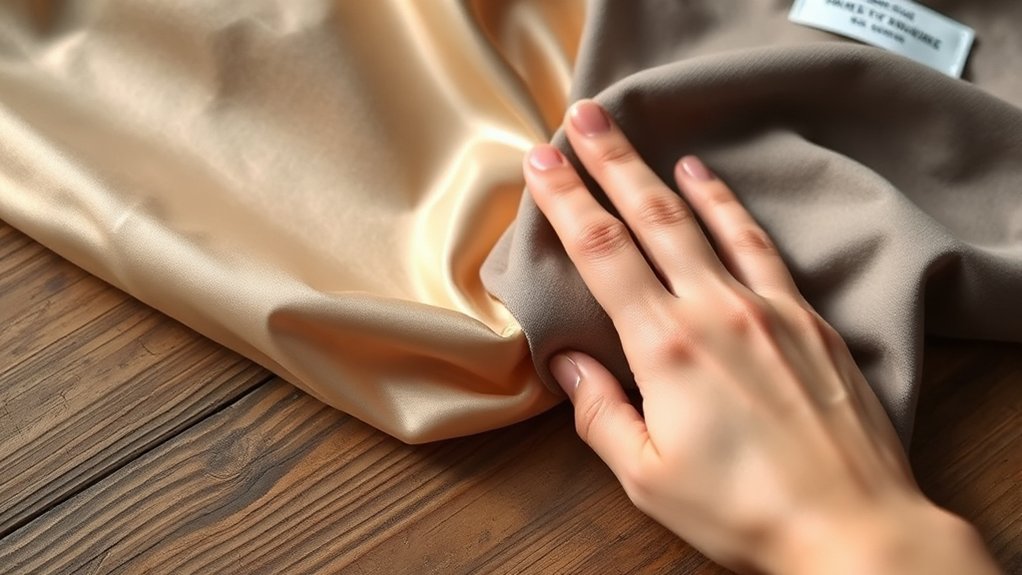
If cost matters, polyester usually gives you the cheaper option, while nylon often costs more because it offers greater strength and stretch. In a cost comparison, polyester fits budgets for everyday shirts, gym gear, and home textiles, while nylon can justify its higher price in backpacks, hosiery, ropes, and outdoor gear that need durability. You’ll usually save more with polyester when you buy in bulk or replace items often.
For care instructions, both fabrics are easy, but polyester resists wrinkles and dries fast, so you can wash and wear it with little effort. Nylon also handles machine washing, though you should avoid high heat, which can weaken fibers or cause damage.
Choose polyester for low-cost, low-maintenance basics. Choose nylon when you need toughness, abrasion resistance, and a smoother, more elastic feel for activewear, travel accessories, and performance-focused products.
Frequently Asked Questions
Which Fabric Is More Environmentally Friendly?
Polyester usually has a greener edge if you’re comparing recycling processes because you can find more established collection and reuse systems. Nylon can also be recycled, but it often needs more energy to produce.
Neither fabric is truly biodegradable, so your biodegradability comparison shouldn’t be the deciding factor. If you want a lower-impact choice, you’d do better with recycled polyester, careful washing, and buying less overall to reduce waste.
How Do Nylon and Polyester React to Sunlight?
Sunlight can be brutal, and you’ll notice nylon and polyester handle it differently. You’ll usually find polyester offers better UV resistance, so it resists fading and keeps its strength longer in direct sun.
Nylon can weaken and discolor faster, which may reduce fabric longevity over time. If you’re choosing for outdoor use, you’ll often get more reliable performance from polyester, though both can benefit from UV-protective coatings.
Can Nylon or Polyester Cause Skin Allergies?
Yes, either fabric can bother your skin, though true allergies are uncommon. If you have Nylon sensitivity, you may notice itching, redness, or rashes after wearing tight garments.
Polyester irritation can also happen, especially when heat, sweat, or friction builds up. You’ll usually do better with breathable, soft layers and a quick wash before wearing new clothes.
If symptoms keep coming back, you should see a dermatologist for testing and advice.
Which Fabric Is Better for Dye Absorption?
Nylon usually takes dye better than polyester, so you’ll often get richer color with less effort. Like a sponge in a rainstorm, it drinks up dye more readily, especially with acid dyes.
Polyester resists dye unless you use high heat and special disperse dyes. If you’re choosing between them, nylon gives you more flexible dye techniques and easier colorfastness methods.
Polyester can still hold color well after proper processing.
How Are Nylon and Polyester Manufactured?
You make nylon by reacting petrochemicals into long polymer chains, then melting and spinning them into fibers, which gives you strong nylon properties.
You make polyester in a comparable way, but you use terephthalic acid and ethylene glycol to form polyester chains before spinning. Both fabrics start as synthetic polymers, yet polyester durability comes from its stable structure and moisture resistance.
After spinning, you stretch, cool, and finish the fibers for weaving or knitting.
Conclusion
When you choose between nylon and polyester, you’re really choosing the tool that fits your journey. Nylon is the climbing rope, tough, flexible, and ready for rougher paths. Polyester is the steady shield, affordable, low-maintenance, and dependable in the sun.
Neither is “better” in every case; each shines in the right setting. So when you pick your fabric, let your needs lead the way. Your choice between nylon and polyester will carry you further.