Chenille Vs Velvet: 3 Key Differences
Choosing the perfect fabric for your home or wardrobe can be tricky, especially when options like chenille and velvet come up. If you’ve ever felt overwhelmed trying to decide which one suits your style and needs better, you’re not alone. Many people struggle with understanding the subtle differences that make each fabric unique.
Chenille and velvet differ mainly in texture, appearance, and durability. Chenille feels plush, fuzzy, and cozy, while velvet is smoother, denser, and more refined.
You’ll usually see chenille as softer and more casual, while velvet has a richer sheen and a more formal look. Chenille can snag or flatten faster, but velvet tends to hold up better with care.
If you keep going, you’ll see how each fabric fits different styles and lifestyles.
Key Takeaways
- Chenille uses fuzzy twisted yarns, while velvet has a dense woven pile for a smoother finish.
- Chenille feels plush and cozy, while velvet feels smoother, denser, and more refined.
- Velvet usually looks richer and shinier, while chenille appears softer, more muted, and casual.
- Chenille may snag, flatten, or shed faster. Velvet resists abrasion better but can crush over time.
- Chenille is often cheaper, while velvet costs more and suits more formal designs.
Chenille Vs Velvet: Key Differences at a Glance

At a glance, chenille and velvet can look similar, but they differ in how they’re made, how they feel, and how they perform. Chenille uses fuzzy yarns twisted into fabric, while velvet relies on a dense pile woven for a smoother finish.
Chenille and velvet may look alike, but their texture, construction, and performance set them apart.
You’ll usually notice chenille in casual furniture and throws, while velvet often appears in more formal pieces. When you compare color options, velvet typically shows richer depth and a subtle sheen, while chenille can look softer and more muted.
A price comparison also helps: chenille often costs less, so it’s a practical choice if you want style on a budget. Velvet usually sits higher in price because its weave and finish take more precision.
You should also think about where you’ll use it, since each fabric suits different design goals and budgets.
Chenille Vs Velvet: Feel, Look, and Texture

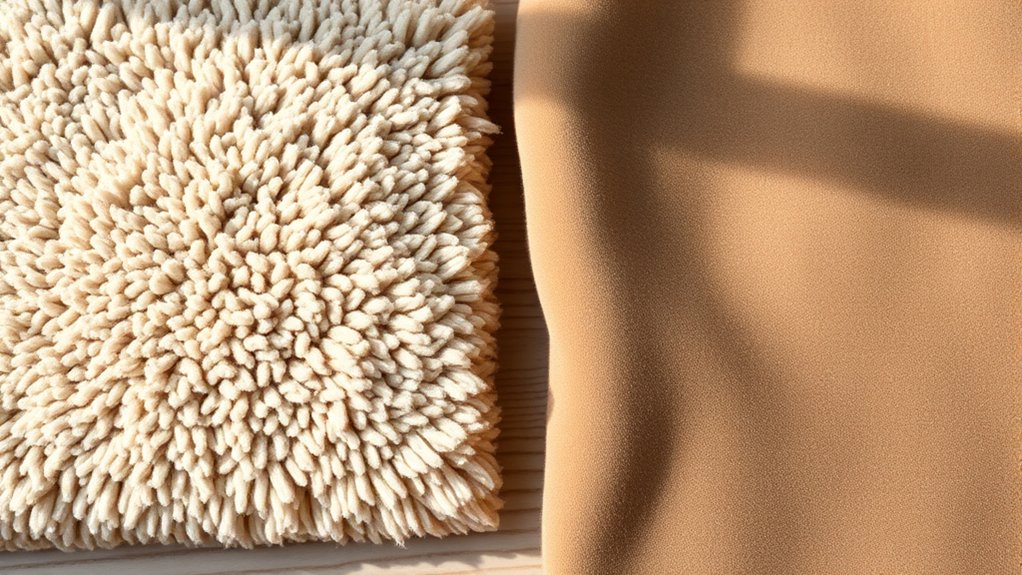
When you compare chenille and velvet up close, the biggest difference is how each fabric feels and catches the eye. Chenille has a plush, fuzzy surface that you can almost sink into, while velvet feels smoother, denser, and more refined under your hand.
You’ll notice chenille’s pile creates a cozy, slightly textured look, but velvet reflects light in a sleek, uniform way that gives it a richer sheen. Their fabric origins also shape the experience: chenille often comes from woven yarns that form that soft, tufted finish, while velvet relies on a tightly constructed pile for its signature gloss.
- Chenille feels more casual and tactile.
- Velvet looks more polished and luminous.
- Both show color variations differently, depending on light and angle.
If you want warmth and softness, chenille stands out. If you want elegance and depth, velvet usually wins.
Chenille Vs Velvet: Durability and Care
Beyond how they look and feel, chenille and velvet also differ in how they hold up over time and how much upkeep they need. Chenille can wear faster because its raised yarns snag, flatten, or shed with regular use, especially in busy households.
Velvet usually resists abrasion better, but it can crush and show pressure marks if you sit on it often. Your lifestyle matters here.
If you want easier care, velvet often wins with gentle vacuuming and prompt stain removal. Chenille needs more careful brushing and spot cleaning to keep its texture even.
For both fabrics, follow maintenance tips like rotating cushions, keeping pets’ claws trimmed, and avoiding harsh cleaners.
In a lifespan comparison, high-quality velvet often lasts longer in daily use, while chenille may need replacement sooner if it gets heavy traffic.
Choose the fabric that matches your wear expectations, cleaning routine, and the amount of attention you’re willing to give it.
Frequently Asked Questions
Which Fabric Is More Suitable for Upholstery in Humid Climates?
You’ll usually find velvet more suitable for upholstery in humid climates if you choose a synthetic blend, because it offers better moisture resistance and handles wear well. Still, you should check fabric breathability, since some velvets trap heat and dampness.
Chenille can feel cozy, but it tends to absorb moisture more easily. For humid spaces, you’ll want a tightly woven, easy-care upholstery fabric that resists mildew and dries faster.
Is Chenille or Velvet Better for Pet-Friendly Homes?
You’ll usually find chenille better for pet-friendly homes because it hides minor marks and feels sturdier in everyday use. In a durability comparison, chenille often handles claws and constant cuddling better than velvet, which can show scratches, sheds, and crushed pile more easily.
Still, your texture preference matters. If you love a plush, polished look, velvet tempts, but chenille offers calmer, cozier comfort for furry families and frequent, happy messes.
Which Fabric Is Less Likely to Show Stains Over Time?
Velvet usually shows stains less over time because its tight pile can hide minor marks better than chenille. You’ll still want strong stain resistance and regular fabric care to keep either fabric looking fresh.
If you choose a darker velvet, you’ll notice spills less, while chenille can trap dirt and wear patterns more easily. Clean up messes quickly, and you’ll help both fabrics stay attractive longer.
Can Chenille and Velvet Be Used for Outdoor Furniture?
You can use chenille and velvet outdoors only if they’re specially treated for outdoor durability; otherwise, they’ll soak up moisture like thirsty moss and fade under sun. You should choose performance versions with UV resistance and water repellency because regular chenille and velvet need frequent fabric maintenance and don’t handle rain, mildew, or dirt well.
For open patios, you’re better off with outdoor-rated fabrics that stay strong, clean, and comfortable longer.
Which Fabric Is More Eco-Friendly to Produce?
Velvet is often more eco-friendly to produce when you choose recycled fibers or organic cotton, while chenille can also be sustainable if you select natural yarns and responsible mills.
You should compare sustainability practices and production processes because dyeing, water use, and energy demand matter a lot.
Neither fabric is always better; you’ll get the greenest option by checking certifications, fiber source, and how efficiently the maker handles waste.
Conclusion
When you’re choosing between chenille and velvet, think about how you want your space to feel and function. Chenille brings a cozy, textured warmth, while velvet offers a smoother, more polished look.
If you need durability and easier care, chenille may suit you better. But if you want drama and elegance, velvet can shine.
Pick the fabric that fits your lifestyle because the right choice between chenille and velvet can feel like finding the perfect key for a lock.