Woven Vs Knit: 10 Key Differences
Choosing the right fabric for your wardrobe can be confusing, especially when deciding between woven and knit materials. If you’ve ever struggled to find clothes that fit well, feel comfortable, and look great all day, you’re not alone. Many people face this challenge, but understanding the difference between woven and knit fabrics can make your shopping experience much easier.
Woven and knit fabrics differ in how they’re made, how they stretch, and how they wear. Wovens use two yarn sets at right angles, so you get a firmer, more structured fabric that holds shape and resists wrinkles.
Knits loop one yarn, so they’re softer, stretchier, and more comfortable for movement. You’ll also notice knits drape more casually, while wovens look sharper and more tailored, and there’s even more to compare.
Key Takeaways
- Woven fabrics use intersecting yarns, while knit fabrics use looped yarns, creating different structures and textures.
- Knits stretch naturally and recover well, making them comfortable for casual, active, and body-moving wear.
- Wovens are generally stronger, more durable, and better at holding crisp shapes and clean lines.
- Knits feel softer and more flexible, while wovens feel firmer, smoother, and more structured.
- Wovens resist wrinkles and suit tailored looks. Knits wrinkle less and work well for relaxed, easy-care clothing.
What Makes Woven And Knit Fabrics Different?

Woven and knit fabrics differ mainly in how they’re made: woven fabrics are created by interlacing two sets of yarns at right angles, while knit fabrics are formed by looping a single yarn into rows of connected loops.
When you compare them, you notice woven characteristics usually include a firmer feel, better shape retention, and less stretch unless the fiber blend adds it. You’ll often find them in shirts, trousers, and structured pieces that need crisp lines.
Knit characteristics, by contrast, give you natural stretch, softness, and recovery, so they move with your body and feel comfortable for casual wear, activewear, and fitted styles. You can also spot differences in drape: woven fabric tends to hang cleanly, while knit fabric follows your shape more closely.
These traits help you choose the right fabric based on comfort, durability, and the look you want.
How Woven Fabrics Are Made
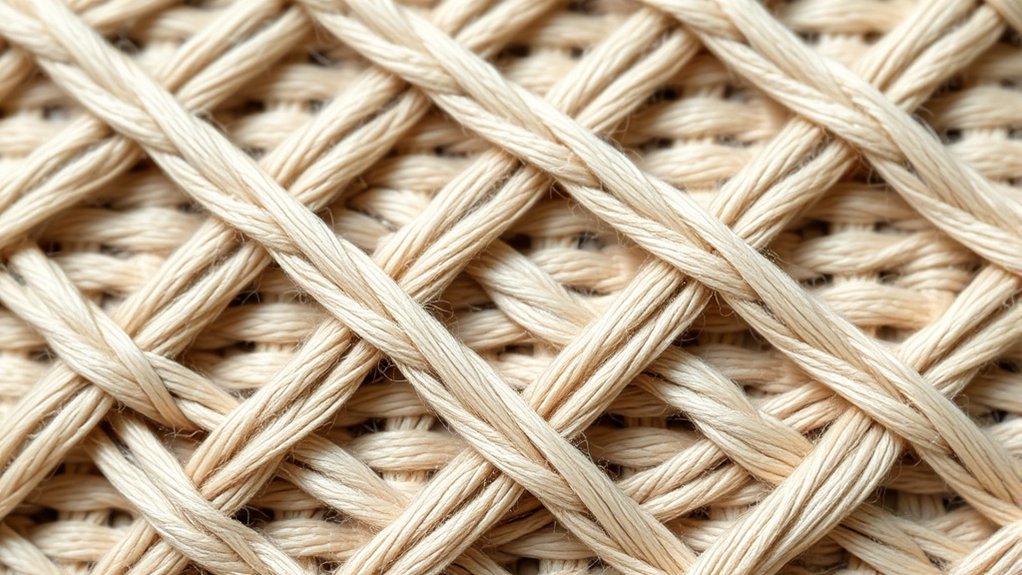
To make woven fabric, two sets of yarns cross each other at right angles on a loom: the lengthwise yarns are called the warp, and the crosswise yarns are the weft. You watch the loom hold the warp taut while you thread the weft over and under it, building cloth row by row.
Different loom techniques shape texture, strength, and drape, so you can create many fabric types from one basic setup. Simple changes in weaving patterns, like plain weave, twill, or satin, give each cloth a distinct look and feel.
Different weaving patterns shape texture, strength, and drape, creating distinct fabrics from the same loom setup.
Textile history shows that this method has endured for centuries because it’s precise, adaptable, and reliable.
Picture:
- a wooden loom clicking steadily
- crisp yarns forming a tight grid
- a finished bolt of cloth rolling forward
When you understand the process, you can see why woven textiles often feel structured and stable.
How Knit Fabrics Are Made
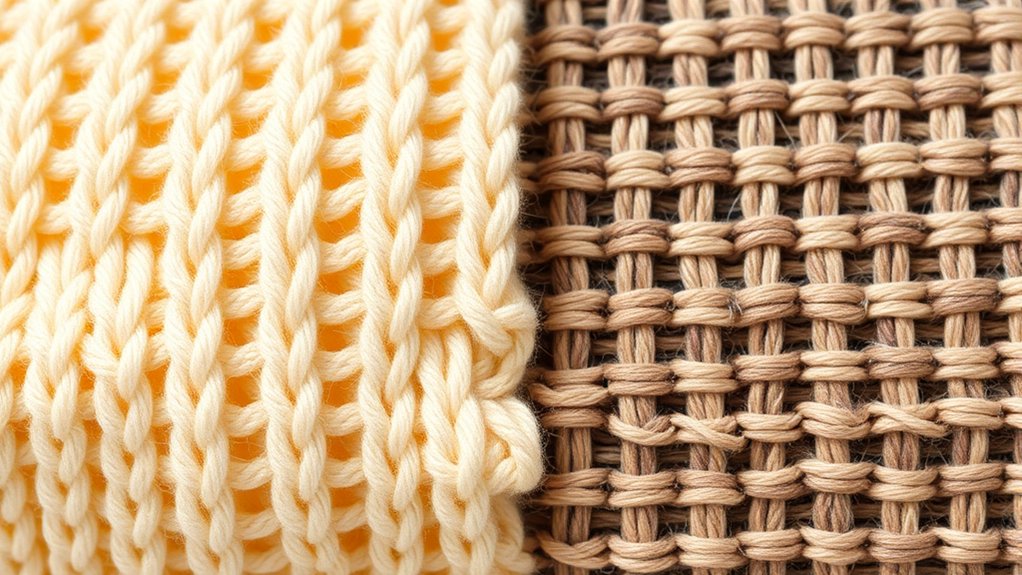
Knitting builds fabric by looping yarn into interlocking rows, so you can see each stitch link to the next as the cloth grows. You guide needles or machines to form loops, then stack those loops into courses and wales.
Your knit techniques shape the fabric’s surface, from smooth jersey to textured rib and cable patterns. Careful yarn selection matters too, because fiber, twist, and thickness affect how cleanly the loops form and how the cloth feels.
| Step | What You Do |
|---|---|
| 1 | Choose yarn selection |
| 2 | Set up needles or machine |
| 3 | Create the first loop |
| 4 | Repeat knit techniques |
| 5 | Finish the edge |
As you continue, each row locks into the last, creating a flexible structure that’s easy to shape. This process lets you make garments, accessories, and home textiles with varied looks and finishes.
Woven Vs Knit: Stretch And Flexibility
Stretch is where these two fabric types really part ways: knit fabric usually gives easily and springs back, while woven fabric stays more stable and resists movement. When you reach for a tee, leggings, or sweater, you feel knit’s stretch patterns moving with your body. That extra give can make dressing, bending, and layering feel smoother.
Knit fabric stretches and springs back, moving with you for easy comfort and flexibility.
Woven fabric, by contrast, offers less stretch, so it can feel crisp and structured. You’ll notice its flexibility benefits most when you need controlled ease rather than full freedom.
A knit top that hugs your shoulders like a soft cloud
A woven shirt that holds a clean line in a breeze
A pair of joggers that flex as you sit, squat, and stride
If you want comfort that adapts, knit usually wins. If you want a fabric that moves a little but keeps its form, woven gives you that steadier feel without much resistance.
Woven Vs Knit: Durability And Shape Retention
When you compare woven and knit fabrics, you’ll notice that woven materials often hold up better under abrasion and frequent wear. They tend to be more durable, which makes them great for things that get a lot of use.
On the other hand, knit fabrics can feel softer and stretchier, which is super comfortable. But here’s the catch—they might lose their shape faster over time if you don’t take good care of them.
Fabric Strength Comparison
Woven fabrics generally deliver greater strength and better shape retention because their yarns lock together in a tight grid. This structure resists wear, distortion, and fraying. You’ll notice higher fabric tensile strength when you pull on seams, hems, or stress points, so woven pieces often handle heavy use better.
They also resist fabric abrasion, making them a smart choice when surfaces rub against bags, furniture, or your body.
- crisp shirting that holds under pressure
- denim that fights scuffs and scrapes
- canvas that takes hard knocks daily
Knit fabrics feel softer and stretchier, but that looped structure can’t match a woven’s raw resistance to tearing. If you want durability first, you’ll usually reach for woven cloth.
Shape Retention Over Time
Beyond raw strength, how a fabric keeps its form over time matters just as much. You’ll notice woven fabrics usually deliver better shape stability because their interlaced yarns resist stretching and sagging.
Knit fabrics, by contrast, move with you, so they can relax, grow, or lose their outline faster. That doesn’t mean knits fail; it means you should choose them for comfort, not rigid structure.
For long term performance, consider use, care, and recovery after washing.
| Fabric | Shape Retention |
|---|---|
| Woven | Holds crisp lines |
| Knit | Stretches easily |
| Woven | Resists distortion |
| Knit | Needs more support |
| Woven | Keeps fit longer |
Woven Vs Knit: Breathability And Comfort
Airy fabrics can make all the difference in how clothes feel against your skin. When you compare woven and knit options, you notice different breathability factors at work. Woven fabric usually lets air move through a tighter, more structured grid, so it can feel crisp on warm days.
Knit fabric stretches and opens slightly with movement, which can boost airflow and support comfort levels during active wear. Think of it this way:
- A woven shirt can feel like a cool window shade on a breezy afternoon.
- A knit tee can feel like a soft mesh that flexes as you move.
- Your choice changes how heat, sweat, and motion interact all day.
If you want a polished look with steady ventilation, woven often delivers. If you want easy motion and relaxed comfort, knit usually wins. Your climate, activity, and layering needs should guide you.
Woven Vs Knit: How They Feel On Skin
On your skin, woven fabrics usually feel smoother, firmer, and more structured. Knit fabrics tend to feel softer, stretchier, and more forgiving. You’ll often notice a clear softness difference when you touch both side by side.
Woven cloth can feel crisp and polished, which you may like if you prefer a clean, defined touch. Knit fabrics usually move with you and can feel cozy against skin sensitivity, especially for everyday wear.
| Fabric type | Skin feel |
|---|---|
| Woven cotton | Smooth, crisp |
| Woven denim | Firm, textured |
| Jersey knit | Soft, pliable |
| Rib knit | Gentle, stretchy |
| Heavy knit | Cozy, cushioned |
If your skin gets irritated easily, you may lean toward softer knits or finely finished wovens. Your best choice depends on how much softness, surface texture, and flexibility you want against your body.
Woven Vs Knit: Wrinkles, Drape, And Fit
When you compare woven and knit fabrics, you’ll notice that woven materials usually resist wrinkles better. On the other hand, knits tend to bounce back more easily after being stretched.
You’ll also see that drape changes the way each fabric hangs. Woven cloth often holds a sharper shape, while knit fabric flows more softly.
That difference really affects fit. Woven garments usually feel more structured, whereas knits tend to move closer to your body.
Wrinkle Resistance
Wrinkle resistance is one of the clearest differences between woven and knit fabrics. When you pack clothes, you’ll usually notice that knits bounce back better after folding, while wovens often hold sharp creases. That can make a big difference in fabric care and travel versatility, especially if you want clothing that looks neat with less effort.
A knit tee unfurls smoothly after a suitcase squeeze. A woven shirt may show fold lines from shelf to shoulder. A knit dress can look ready after a quick shake.
You’ll often spend less time ironing knit pieces, while woven items may need steaming or pressing to look crisp. If you want easy everyday wear, choose knits. If you don’t mind extra care, wovens can still work well.
Drape Behavior
Drape is another major difference between woven and knit fabrics because each one hangs on the body in a distinct way. You’ll notice woven fabrics often hold their shape and create a more defined outline, while knit fabrics usually move with you and soften the silhouette.
Their drape characteristics shape how the material falls, pools, and follows curves. Knit’s stretch gives you easier fabric flow, so it can appear relaxed and fluid. Wovens tend to fall in cleaner lines, which can feel crisp or structured.
Here’s a quick comparison:
| Fabric type | Drape behavior |
|---|---|
| Woven | Holds form, falls in sharper lines |
| Knit | Moves easily, flows and softens edges |
When you feel a garment, you can often predict how it’ll hang before you even wear it.
Fit And Shape
Fit and shape are where these fabric differences become really obvious on the body. Woven fabric holds a cleaner outline, so you get crisp shoulders, straighter hems, and a more structured silhouette in tailored clothing. Knit fabric stretches with your body movement, so it hugs curves, skims lines, and keeps comfort high without much restriction.
A woven blazer sits like a sharp frame around you. A knit top moves like a soft second skin. A woven skirt keeps its intended shape through the day.
When you want polish, choose woven. When you want flexibility, choose knit. You’ll notice woven can feel more formal, while knit adapts easily to sitting, reaching, and bending. That’s why fit changes not just how you look, but how you live in the garment.
When To Use Woven Vs Knit Fabrics
Choose woven fabrics when you need structure, shape retention, and a cleaner, more tailored look, such as for shirts, trousers, jackets, or upholstery. You’ll usually reach for them at formal events, in office wear, or anytime you want a crisp finish that holds up well.
Wovens also suit pieces that must keep their silhouette through repeated wear, so they often fit your wardrobe basics and dressier layers.
Use knit fabrics when comfort, stretch, and easy movement matter most. They’re a smart pick for casual occasions, active days, travel, and relaxed tops, dresses, or loungewear.
Because knits flex with your body, they feel softer and less restrictive, making them ideal when you want ease over polish.
Your choice can also reflect fabric care and seasonal trends. Wovens may need pressing to stay sharp, while knits often need gentler handling.
In warmer months, lighter knits feel breezy; in cooler seasons, heavier wovens add warmth and structure.
How To Choose The Right Fabric
Now that you know when to use woven or knit fabrics, the next step is matching the fabric to your specific project. Start by thinking about your fabric types, style applications, and garment construction. A crisp woven can hold structure for shirts and trousers, while a stretchy knit works better for fitted tees, dresses, and activewear.
Consider texture preferences too: smooth sateen feels polished, while rib knit feels casual and soft.
Picture a tailored blazer with sharp seams and clean lines. Imagine a draped jersey dress moving with your stride. Envision a linen skirt in a breezy summer breeze.
Check seasonal suitability, color options, and fashion trends before you buy. Then review care instructions so your choice fits your routine.
If you want durability, choose a fabric that keeps its shape. If you want comfort, pick one that moves with you and suits the final look.
Frequently Asked Questions
Which Fabric Is Better for Embroidery, Woven or Knit?
Woven fabric’s usually better for embroidery because you get more fabric stability and cleaner stitch definition. You’ll find your embroidery techniques hold up well on it, especially for detailed designs, lettering, and dense fills.
Knit fabric can work, but you’ll need stabilizer and more careful handling to prevent stretching or puckering. If you want crisp results and easier stitching, choose woven. For stretchy garments, though, knit can still be a smart option.
Can Woven Fabrics Be Machine Washed Safely?
Yes, you can machine wash many woven fabrics safely, but you should treat them like a delicate map folded in your hands. You’ll want to check the care label, use cool water, and choose gentle washing techniques to protect fibers and shape.
With proper fabric care, cotton and polyester blends usually hold up well, while silk, wool, and embellished weaves may need hand washing or dry cleaning instead.
Do Knit Fabrics Pill More Than Woven Fabrics?
Yes, you’ll usually see more pilling on knit fabrics than on woven ones because loops can rub and loosen more easily. You can reduce this with better fabric durability choices, tighter knits, and gentle washing.
For pilling prevention, turn garments inside out, avoid harsh agitation, and use a fabric shaver when needed. Woven fabrics typically resist fuzzing better, so they often stay smoother longer with regular wear and care.
Which Fabric Is Easier to Sew for Beginners?
You’ll usually find woven fabric easier to sew when you’re starting out. It stays stable, feeds through your machine more predictably, and forgives basic sewing techniques better than knit.
Knit fabric’s stretch can shift, curl, or stretch out if you handle it carelessly. If you’re new, pick a medium-weight woven and practice straight seams, pressing, and pinning first.
Once you’re comfortable, try knits and stretch stitches.
Are Woven and Knit Fabrics Suitable for All Seasons?
Yes, you can wear both woven and knit fabrics in all seasons, but you’ll choose differently for comfort. You’ll want lightweight cotton or linen for summer because their fabric breathability keeps you cool.
For winter, you can pick heavier knits or layered wovens for warmth. Their seasonal versatility depends on fiber, weave, and thickness, so you’ll match the fabric to the weather and your activity.
Conclusion
So, when you’re choosing between woven and knit fabrics, you’re really choosing how your clothes will live with you. Woven fabrics hold their shape and feel polished, while knit fabrics move more easily and feel softer against your skin.
If you want structure, go woven. If you want comfort, go knit. Either way, you’re picking the fabric that will help your outfit feel just right, without any fuss or bother. Choosing between woven and knit fabrics means deciding what feels best for your style and comfort.