10 Best Places to Buy Fabric in Bulk Wholesale
Finding quality fabric in bulk at wholesale prices can feel overwhelming. You want good deals, but sorting through countless options and comparing prices, fibers, and minimum orders is time-consuming. You’re not alone—many people struggle to find reliable sources that fit their budget and project needs.
You can buy fabric in bulk wholesale from mills, textile wholesalers, online marketplaces like Alibaba, Faire, and DHgate, and discount fabric warehouses with clearance bolts and overstock.
For better pricing, compare fiber, weave, weight, minimum order, and shipping costs, then request swatches and certifications before you commit. If you need upholstery, designer, or eco-friendly options, specialized distributors can help.
Keep going to see which sources fit your project best.
Key Takeaways
- Top wholesale fabric suppliers like mills, importers, and textile distributors offer better pricing, consistent quality, and larger fiber selections.
- Online marketplaces such as Alibaba, Faire, DHgate, Etsy Wholesale, and Amazon Business make bulk fabric comparison and negotiation easier.
- Compare fabrics by fiber, weave, weight, finish, and landed cost to find the best value for your project.
- Discount fabric warehouses and clearance racks can provide deep savings on overstock, remnants, and seasonal bolts.
- Specialized sources like cotton mills, eco-friendly wholesalers, and designer distributors offer direct sourcing, lower minimums, and reliable reorders.
Top Wholesale Fabric Suppliers to Start With

When you’re ready to source fabric in bulk, a handful of trusted wholesale suppliers can give you a strong starting point. You can begin with mills, importers, and established textile distributors that specialize in large-volume orders. These suppliers often offer better pricing, consistent quality, and wider fiber options than retail outlets.
Focus on partners that publish minimum order quantities, fabric specs, and lead times, so you can compare them quickly. Strong fabric sourcing strategies help you verify weave, weight, finish, and colorfastness before you commit. Ask for swatches, review certifications, and request repeat-order guarantees when possible.
Your wholesale networking tips should include building direct relationships with sales reps, attending textile trade events, and following up promptly after introductions. When you communicate clearly about your production needs, you’ll earn faster responses and better terms. Start small, evaluate reliability, then scale with suppliers who consistently deliver.
Best Online Marketplaces for Bulk Fabric

When you shop for bulk fabric online, you’ll come across top wholesale marketplaces that make it super easy to compare prices, minimum orders, and shipping options. Plus, you can browse all kinds of fabric types in one spot.
This means you can quickly narrow down what fits your project and budget without any hassle. By checking listings side by side, you’ll be able to spot the best value without wasting time. It’s a smart way to shop!
Top Wholesale Marketplaces
If you want to source fabric in bulk without spending hours chasing suppliers, the best online wholesale marketplaces can save you time, money, and hassle. You can browse large catalogs, compare vendors fast, and use smart sourcing strategies to narrow your choices.
Platforms like Alibaba, Faire, and DHgate give you direct access to wholesale sellers, while Etsy Wholesale and Amazon Business can help you find smaller-run suppliers with flexible order sizes. You’ll also improve pricing negotiations when you message vendors directly, ask about minimums, and request sample swatches before committing.
Check seller ratings, shipping terms, and return policies so you don’t get stuck with a bad deal. By staying organized and responsive, you’ll build reliable supplier relationships and keep your fabric purchases efficient.
Comparing Fabric Options
To compare fabric options on the best online marketplaces, start by narrowing your search to the fiber, weave, weight, and finish that fit your project. You’ll spot clear differences in fabric types when you compare swatches, product photos, and seller notes.
Look closely at fabric blends, too, because they can change drape, durability, and care. Use this quick guide:
| Market factor | What you should check |
|---|---|
| Fiber content | Natural, synthetic, or mixed |
| Weave | Plain, twill, satin, knit |
| Weight | Light, medium, heavy |
| Finish | Brushed, coated, prewashed |
| Minimum order | Yardage, bolt, or roll |
You’ll make smarter bulk buys when you match specs to use, budget, and repeat supply.
Discount Fabric Warehouses for Lower Prices
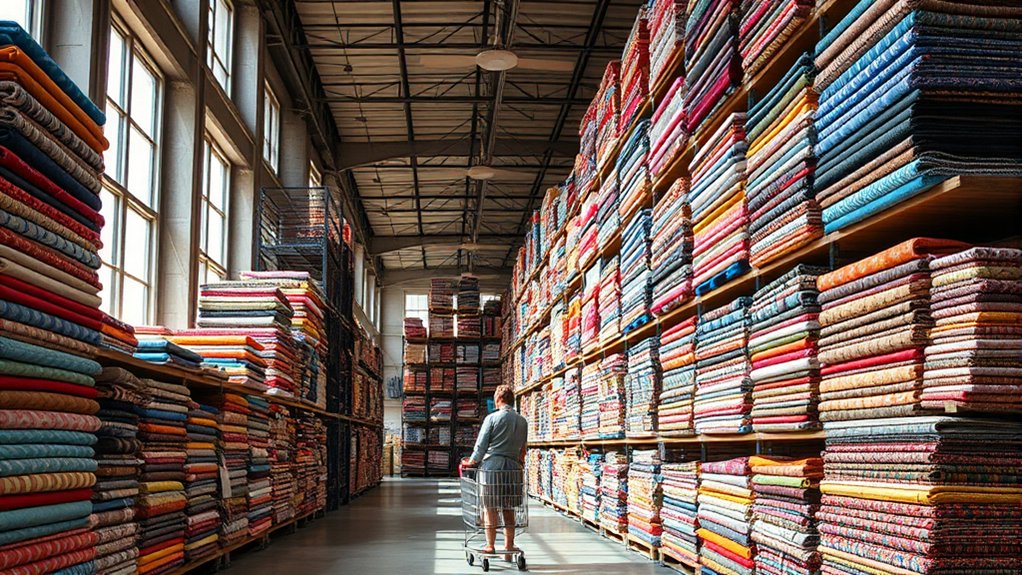
Discount fabric warehouses can save you money, especially when you dig through their clearance racks for hidden bargains. You’ll also find bolt price reductions that make buying in bulk even cheaper. Plus, keep an eye out for seasonal overstock deals—they often offer the lowest prices on quality fabric.
Warehouse Clearance Racks
When you shop warehouse clearance racks, you can uncover deep discounts on bolts, remnants, and overstock fabric that suppliers need to move fast. You’ll often find fabric clearance sections tucked near loading docks or back aisles, where warehouse deals reward quick decisions and flexible buying.
Check yardage, fiber content, and dye lots before you load up, since stock changes fast and quantities can be limited.
| What to check | Why it matters |
|---|---|
| Fabric type | Matches your project needs |
| Yardage left | Helps you plan purchases |
| Color consistency | Keeps batches uniform |
| Damage or flaws | Prevents costly surprises |
| Return policy | Protects your order |
If you visit regularly, you can catch fresh markdowns and build a reliable bulk supply without paying full wholesale prices.
Bolt Price Reductions
Bolt price reductions can make a big difference when you’re buying fabric in bulk, especially at warehouses that mark down bolts to clear space for incoming inventory. You can stretch your budget by watching for cuts on full bolts, not just small remnants.
Ask staff how they track fabric price trends so you know whether a deal reflects real value or just temporary pricing. When you’re comparing options, inspect bolt length, fiber content, and dye lot consistency to avoid surprises later.
You should also use wholesale fabric negotiations to request better terms on larger purchases, especially if you’re willing to take multiple bolts at once. These lower prices often help you stock dependable materials while keeping your per-yard cost manageable and your margins healthier.
Seasonal Overstock Deals
Seasonal overstock deals at fabric warehouses can give you some of the lowest prices of the year, especially when suppliers need to move last season’s prints, colors, or weights fast. You can snag quality yardage when seasonal trends shift and clearance sales begin.
Watch for warehouse events after holidays or fashion cycles, when racks fill with surplus cotton, knits, and upholstery bolts. If you buy in bulk, you’ll stretch your budget and still get fresh inventory for your projects.
Tall stacks of patterned bolts
Rolled linen in muted autumn shades
Discount tables under bright warehouse lights
Pallets of quilt cotton marked down
End of season fabric bundles in clear wrap
How to Compare Fabric Prices and Minimums
To compare fabric prices and minimums effectively, look beyond the quoted yardage price and calculate the real cost per usable yard, including shipping, setup fees, and any surcharge for small orders. Then compare vendors using the same unit: total landed cost divided by the yards you can actually order. That’s where smart fabric pricing strategies help you spot true savings instead of flashy discounts.
Next, check minimum order guidelines carefully. A low per-yard price can disappear if you must buy far more than you need. Ask whether the minimum applies per color, pattern, or total order, and see if mixed lots count toward it. You should also compare price breaks at different quantities, since one extra bolt can drop your unit cost enough to justify the larger buy.
Keep a simple spreadsheet so you can rank suppliers quickly and negotiate from facts, not guesswork.
How to Judge Fabric Quality
Quality matters as much as price, so inspect fabric before you buy in bulk. Run your hand across the fabric texture; it should feel even, not scratchy, thin, or oddly stiff. Hold it up to the light to spot weak weave lines, slubs, or transparent gaps.
Pull a corner gently and see whether it springs back or distorts. Check the selvedge and cut edge for fraying, loose threads, and crooked stitching. Ask for rub tests and wash samples to judge color fastness before you commit.
- A smooth roll under your fingertips
- Light shining through a tight weave
- Color staying true after a damp cloth
- Edges that stay neat and firm
- A fabric sample that bounces back cleanly
If possible, compare several bolts side by side, because small differences add up fast. Good bulk fabric looks consistent from end to end and performs the same every time you handle it.
Where to Buy Cotton Fabric in Bulk
When you’re buying cotton fabric in bulk, a good place to start is with cotton mills. They offer direct sourcing and usually have strong pricing.
But if you’re looking for more variety and a dependable supply, textile wholesalers are a solid option too. They can provide large quantities to meet your needs.
Now, if convenience is what you want, online fabric markets are great because you can quickly compare options from multiple sellers all in one place. It really makes browsing a lot easier.
Cotton Mills
Cotton mills can be one of the best places to buy cotton fabric in bulk if you want consistent yardage, direct sourcing, and better pricing. You can speak with the mill about cotton sourcing, fabric weights, and finishes before you place an order. If you need organic cotton, ask for certification records and production details so you know what you’re getting.
Rows of clean white bolts stacked high
Looms humming in a bright production floor
Freshly rolled fabric with crisp edges
Sample swatches spread across a table
Heavy pallets ready for shipping
You’ll also see how the fabric feels, drapes, and holds color. That hands-on access helps you choose material that fits your project and keep quality steady from batch to batch.
Textile Wholesalers
Textile wholesalers give you another smart way to buy cotton fabric in bulk, especially if you want variety without dealing directly with a mill. You can compare weights, weaves, and finishes in one stop, which makes your textile sourcing strategies more efficient.
Wholesalers often stock basics like broadcloth, poplin, and twill, plus seasonal options that reflect current fabric market trends. You’ll usually find lower minimums than mills require, so you can test styles before placing larger orders.
Ask about bolt pricing, color consistency, and lead times, then inspect samples for shrinkage and hand feel. When you build a relationship with a reliable wholesaler, you can secure steady supply, better pricing, and faster restocking for your production needs.
Online Fabric Markets
Online fabric markets can open up a much wider range of cotton fabric in bulk, letting you compare prices, yardages, and suppliers without leaving your desk. You can spot fabric trends fast, then choose prints, weights, and finishes that fit your project. Look for clear photos, swatch options, and detailed fiber content so you know exactly what you’re buying.
Stacks of folded cotton in bright warehouse light
A cursor hovering over a bulk order cart
Swatches spread beside a laptop
Supplier ratings beside shipping maps
Recycled cotton rolls labeled for sustainable sourcing
Check minimum orders, return policies, and lead times before you commit. When you buy from trusted online markets, you save time and build a reliable supply chain.
Best Sources for Upholstery and Home Decor Fabric
When you’re sourcing upholstery and home decor fabric in bulk, the best places usually combine strong yardage discounts, reliable stock, and durable materials built for everyday use. Start with mill-direct outlets and regional textile warehouses, where you can inspect weaves, test hand feel, and compare fabric textures before you commit.
These sources often track upholstery trends, so you can choose sturdy chenilles, performance velvets, and stain-resistant blends that fit current demand. You should also check home decor showrooms that sell by the bolt, because they often carry coordinated prints, jacquards, and neutral basics for sofas, cushions, and drapery.
If you need more variety, buy from trusted online wholesalers that list abrasion ratings, width, and repeat details clearly. Always request swatches, confirm lead times, and verify return terms. That way, you’ll protect your budget and keep your projects consistent, durable, and visually polished.
Wholesale Distributors for Designers and Studios
Wholesale distributors can be a smart next step when you need bulk fabric for client work, production runs, or studio collections. You can tap into broader mills, faster reorders, and more consistent yardage, which keeps your workflow steady.
Many distributors also support design collaboration, so you can request swatches, custom color matches, and notes on weave, drape, and finish before you commit. For smoother fabric sourcing, ask about minimums, lead times, dye lots, and cutting services.
That helps you compare options without wasting time or material.
- Sample books stacked on a worktable
- Bolts of fabric lined in clean rows
- Swatches clipped beside sketch pages
- A designer approving colors with a supplier
- Packed cartons ready for studio delivery
Eco-Friendly Wholesale Fabric Sources
If sustainability matters to your shop, eco-friendly wholesale fabric sources can help you buy in bulk without compromising your standards. You can prioritize suppliers that document fiber origin, dye processes, and waste reduction.
Look for certifications, recycled content, and clear minimums so your orders stay efficient. Many organic textile suppliers now offer sustainable fabric options that fit apparel, home goods, and accessories.
| Source Type | What to Check |
|---|---|
| Organic mills | GOTS or similar certification |
| Recycled fabric vendors | Post-consumer or pre-consumer content |
| Low-impact dye houses | Water and chemical controls |
| Hemp and linen suppliers | Renewable fiber practices |
| Deadstock wholesalers | Fabric quality and consistent yardage |
When you compare vendors, ask for samples, lead times, and traceability documents. You’ll make better buying decisions and support cleaner production.
Best Wholesale Fabric Sources for Small Businesses
For small businesses, the best wholesale fabric sources balance low minimums, reliable quality, and quick turnaround. You’ll get the most value from mill-direct suppliers, local textile wholesalers, and online fabric marketplaces that support flexible ordering.
Use smart fabric sourcing strategies by comparing swatches, checking yardage availability, and confirming lead times before you commit. If you sell apparel, home goods, or crafts, pick vendors that keep colors consistent and replenish fast.
- A rolled bolt of cotton on a warehouse shelf
- Swatches clipped to a clipboard under bright lights
- A shipping label on a packed fabric carton
- A busy showroom with stacked linen bolts
- A laptop open to a wholesale fabric catalog
Apply bulk buying tips like grouping orders by season, negotiating freight, and testing one small run first. When you build dependable supplier relationships, you can keep costs down and your inventory moving.
Frequently Asked Questions
What Payment Methods Do Wholesale Fabric Suppliers Usually Accept?
Wholesale fabric suppliers usually accept credit cards, bank transfers, PayPal, and other digital payments. You’ll often see credit card options for fast checkout, while larger orders may need wire transfers or ACH payments.
Some suppliers also take checks or invoicing for approved business accounts. You should confirm fees, minimums, and payment timing before you order, because policies can vary by supplier, region, and order size.
How Long Do Bulk Fabric Orders Typically Take to Ship?
Bulk fabric orders usually take 3 to 14 business days to ship, but you’ll see longer waits for custom cuts or overseas suppliers. You should check shipping times before you order because stock levels and processing speed affect delivery.
Once your order leaves the warehouse, you can use order tracking to follow it. If you need fabric fast, ask about rush options and same-day dispatch before you buy.
Can I Request Fabric Samples Before Placing a Large Order?
Absolutely, you can usually request fabric samples before you commit, and that’s your safety net before the full plunge. You’ll want to check fabric quality up close, feel the texture, and see how colors hold in real light.
Some suppliers charge sample costs, while others waive them if you place an order later. Ask about swatches, yardage limits, and shipping so you know exactly what you’re getting before you buy big.
Do Wholesale Fabric Sellers Offer Custom Dyeing or Printing Services?
Yes, you can often get custom dyeing or printing from wholesale fabric sellers, though not every supplier offers it. You’ll usually ask about minimums, lead times, and setup fees.
Many sellers provide custom fabric options with specific colors, logos, or patterns, and they’ll use different dyeing techniques to match your needs. Always request a strike-off or proof first, so you can check the color, hand feel, and print quality before ordering.
What Return Policies Apply to Bulk Fabric Purchases?
You’ll usually face stricter return policies on bulk fabric purchases. Most sellers accept returns only for defective or miscut fabric, and you may need to report issues within a short window.
You should check fabric quality before ordering because many wholesalers won’t take back cut yardage. Some require original packaging, restocking fees, or meeting order minimums for any return. Always review the policy first so you don’t get stuck with unsellable stock.
Conclusion
When you choose the right wholesale fabric source, everything seems to click: your prices stay low, your quality stays high, and your projects move faster. Whether you’re stocking a studio, sourcing upholstery, or building a small business, the best supplier is the one that matches your goals and your budget.
Trust your eye, compare the details, and you’ll find fabric that works for you before you even know you needed it. Finding the best places to buy fabric in bulk wholesale can make all the difference in your creative process and your bottom line.