How to Choose the Right Knitted Fabric Material
Finding the perfect knitted fabric material can feel overwhelming, especially with so many options out there. You’re not alone—many people struggle to choose the right fabric that balances comfort, stretch, and durability for their projects.
Whether you’re sewing activewear, casual tops, or cozy loungewear, understanding what to look for makes all the difference.
Choose knitted fabric by matching stretch, weight, recovery, and fiber to your project. Use high-stretch, resilient knits for fitted tees, leggings, and activewear, and softer drape for relaxed tops or loungewear.
Cotton feels cool and breathable, wool adds warmth, synthetics boost durability and stretch, and blends balance comfort and performance.
Always test a swatch for stretch, opacity, and wash changes before you buy, and you’ll soon spot the best options for every garment.
Key Takeaways
- Match stretch, weight, and recovery to your project so the knit performs well and keeps its shape.
- Check surface texture and comfort, choosing smooth, non-clingy fabrics for everyday wear.
- Test swatches for drape, stretch, opacity, wrinkling, and prewash behavior before buying.
- Choose fiber content based on use: cotton for breathability, wool for warmth, synthetics for durability, and blends for balance.
- Consider fabric weight and climate. Use lightweight knits for warm weather and heavier knits for structure and warmth.
How to Choose the Right Knit Fabric
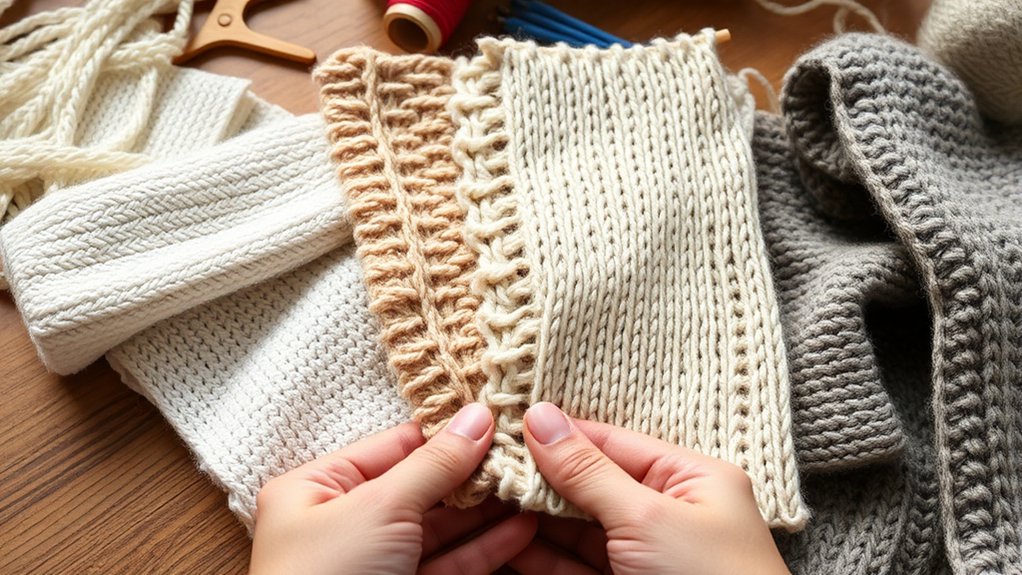
When you choose the right knit fabric, start by matching its stretch, weight, and recovery to your project’s needs. You’ll get better results when you compare fabric types side by side and test how each one feels in your hand. Smooth jerseys drape differently than rib knits, and stable knits behave differently than lofty ones.
Check how the fabric snaps back after you stretch it. Strong recovery helps it keep its shape. You should also feel the surface texture since a soft finish can change how the final piece looks and wears.
Think about project suitability, too. A fabric that works well for a fitted top may not suit a structured layer or a loose garment. Read fiber content, inspect the knit structure, and note opacity before you commit.
When possible, cut a small swatch, wash it, and see how it changes. That quick test helps you choose confidently and avoid surprises later.
Match the Knit to Your Project
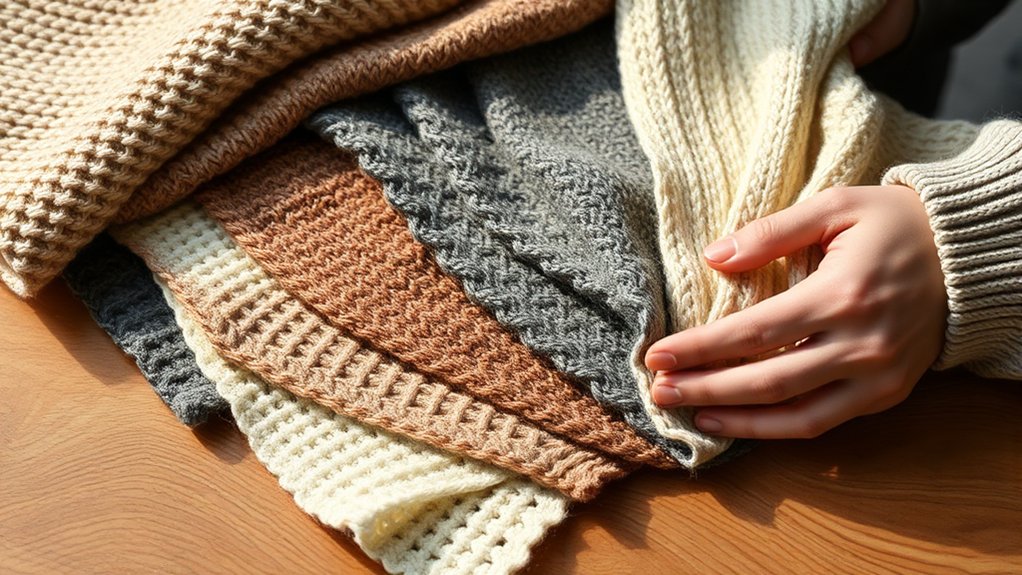
Now that you know how knit fabrics differ in stretch, recovery, and weight, match those qualities to what you’re making. If you’re sewing a fitted tee, leggings, or baby clothes, pick a knit that moves with you and snaps back cleanly.
For relaxed tops, cardigans, or loungewear, you can choose softer drape and cozy textures that feel comfortable all day. When you’re making pieces with ruffles, gathers, or structured seams, test how the fabric holds shape before you cut.
You should also think about the garment’s purpose: activewear needs dependable stretch, while blankets and scarves benefit from warmth and plush feel. If your project features stylish patterns, make sure the knit shows them clearly without distorting the design.
Always drape a sample over your pattern pieces, then imagine how it’ll wear, wash, and move. That quick check helps you choose a knit that fits both your project and your skills.
Compare Cotton, Wool, Synthetics, and Blends
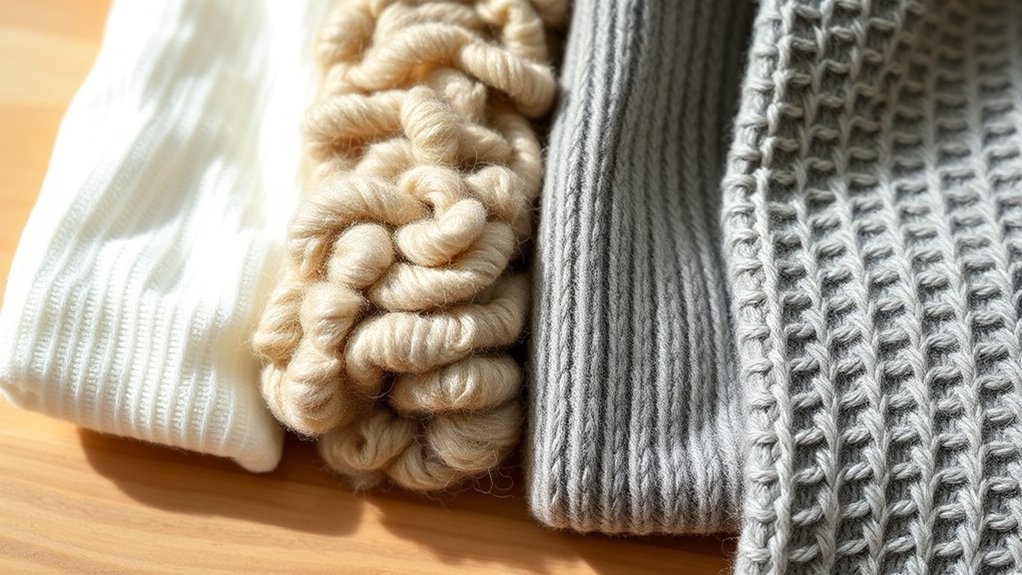
When you compare cotton and wool, you’ll notice cotton feels cool, soft, and breathable. On the other hand, wool gives you warmth and better insulation. Synthetics often add stretch, durability, and easy care, but they might not feel as natural against your skin. Blends? They can give you the best of each fiber, so you get to balance comfort, performance, and price.
Cotton Versus Wool
Should you choose cotton or wool? You’ll feel cotton’s benefits in breathability, smooth knitting characteristics, and crisp fabric textures. Wool offers advantages like warmth, springy drape, and cozy insulation for colder seasonal uses.
Both give you plenty of color options, so you can match your project fast. For maintenance tips, cotton usually tolerates easy washing, while wool asks for gentler care. If you want eco friendly choices, both can work well when sourced responsibly.
| Fiber | Best for |
|---|---|
| Cotton | Lightweight layers, summer knits |
| Wool | Warm garments, cool weather |
When you compare them, think about comfort, texture, and care. You’ll pick better fabric when you match the fiber to your project’s purpose.
Synthetics And Blends
Synthetics and blends give you a wider range of performance options, from durable polyester knits to stretchy blends that hold shape, resist wrinkles, and dry quickly. You’ll notice they often outperform cotton in moisture management and wool in care ease, especially when you need everyday durability.
When you compare fabric properties, look at recovery, breathability, warmth, and abrasion resistance. A cotton-poly blend can feel softer than pure synthetics while still washing well, and a wool blend can add warmth without the scratchy feel. You can also use different dye techniques to improve color depth and reduce fading.
If you want easy maintenance, reliable stretch, and consistent fit, synthetics and blends usually give you the most practical balance for activewear, casual garments, and travel pieces.
Check Stretch and Recovery
You should check how far the knitted fabric stretches so you can get a good idea of its stretch ratio. Then, give it a pull and see how well it snaps back. Recovery retention is important because it shows how well the fabric will hold its shape over time. If it loses resilience quickly, it probably won’t perform well in everyday use.
Stretch Ratio
Before you choose a knitted fabric, check its stretch ratio and how well it snaps back after being pulled. You can compare stretch measurements by pulling the cloth across the grain and noting how far it extends.
Different stretch types suit different stretch applications, so match the fabric to your project’s needs. For activewear, you may want higher stretch fabrics with clear stretch benefits. For tailoring, a moderate ratio often works better.
Use simple stretch testing to spot stretch patterns and judge stretch characteristics before you buy. Look at the knit structure, too, because it affects stretch techniques and performance.
New stretch innovations can improve comfort, but your best choice still depends on balanced stretch ratios and consistent feel across the fabric.
Recovery Retention
Stretch tells you how far a knitted fabric will extend, but recovery retention shows how well it returns to shape afterward. You should test this by stretching a sample, then letting it relax to see whether it snaps back smoothly.
Good recovery means your garment keeps its fit, stays neat, and resists bagging at elbows, knees, and hems. Poor recovery can reduce fabric elasticity in use, causing loosened areas and pattern distortion after repeated wear or washing.
When you choose a knit, look for strong recovery in both length and width, especially if you need comfort and structure together. Rib knits, spandex blends, and tightly engineered structures often rebound better than loose knits, so check how the fabric behaves before you commit to it.
Choose the Right Fabric Weight
Fabric weight can make or break how a knitted piece looks, feels, and performs. When you choose fabric weight, start with the garment’s purpose. Lightweight knits drape softly and suit layering pieces, while midweight options add structure without feeling bulky.
Heavy knits hold shape better and work well for outer layers or pieces that need more coverage. Use fabric thickness comparison to judge how much loft and opacity you need, then apply weight classification techniques to narrow your options quickly.
You should also match weight to the pattern’s design details. Fine stitches can disappear in overly heavy fabric, and oversized silhouettes may sag in something too light. Check stretch, recovery, and how the knit behaves when you move it, so the finished piece keeps its intended form.
If you’re unsure, test a swatch in the same stitch pattern and measure how it hangs, stretches, and returns before you cut.
Pick the Best Fiber for Comfort
When you’re choosing a fiber, start by thinking about how soft it feels against your skin—comfort really begins there. You’ll also want to consider breathability because a fiber that lets air flow through keeps you cooler and more comfortable. And don’t forget to look for good stretch and recovery, so your knit moves with you and snaps back into shape.
Fiber Softness Levels
Softness can make or break how a knitted fabric feels against your skin, so you’ll want to match the fiber to the comfort you need. Compare fiber types by touch and by softness measurement, since both help you judge what suits your project best. Cotton feels smooth, merino feels plush, and acrylic can vary widely.
| Fiber type | Softness level |
|---|---|
| Cotton | Medium |
| Merino wool | High |
| Acrylic | Low to medium |
When you choose, think about how the yarn drapes in your hands and how it feels after repeated wear. If you want a cozy result, pick a finer, well-spun fiber. If you prefer a firmer hand, choose a sturdier option. Test swatches before you commit, and trust your skin’s response over labels alone.
Breathability And Feel
Breathability is what keeps a knitted piece comfortable through heat, movement, and long wear, so you’ll want a fiber that lets air pass through and manages moisture well. When you touch different breathable materials, notice how they feel against your skin and how quickly they dry after a little warmth.
A light, open knit often feels cooler, while a denser one can feel more cocooning. The right fabric texture should feel smooth enough for all-day wear, but not slick or clingy.
- A cotton tee with a crisp, airy hand
- A linen-blend sweater with a dry, fresh feel
- A bamboo knit that feels cool and silky
- A wool jersey that stays pleasantly soft without trapping heat
Stretch And Recovery
Comfort and breathability matter, but a knitted fabric also needs to move with you and bounce back after wear. You should check how far it stretches and how well it recovers, because that tells you whether it’ll keep its shape.
Cotton knits feel soft, but they may sag unless blended with spandex. Wool and bamboo often offer better elastic properties, while polyester blends can hold recovery well for active use.
When you compare fabric types, test the garment at the elbows, knees, and cuffs, where strain shows first. If you want comfort for daily wear, choose a knit that springs back quickly and resists bagging. That way, you get flexibility without sacrificing a neat fit over time.
Think About Durability and Care
When you’re choosing knitted fabric, durability and care matter just as much as feel. You want a knit that keeps its shape, resists pilling, and stands up to regular use. Check the fiber blend and stitch density because they often signal fabric longevity.
If you’re buying for everyday wear, choose materials that handle washing without stretching out or fading. Follow the label, but also use practical maintenance tips: turn garments inside out, wash gently, and dry flat when needed. These habits protect the surface and help the fabric stay neat longer.
- A sweater draped over a chair, still smooth after many wears.
- A folded knit tee with crisp edges and no pills.
- A laundry basket with care labels facing up.
- A shelf of neatly stacked knits, each ready to wear.
When you compare options this way, you’ll avoid pieces that look great once but wear out fast.
Consider Breathability and Climate
Once you’ve thought about durability and care, the next thing to check is how the knit performs in your climate. You want fabric properties that match your daily temperatures, humidity, and activity level. Lightweight knits often breathe better, so they help you stay cooler in warm weather and during active wear. Tighter, denser knits can trap more heat, which makes them a stronger choice for chilly months or air-conditioned spaces.
Seasonal considerations matter, too. In summer, choose materials that let air move and wick moisture away from your skin. In winter, look for knits that balance warmth with enough breathability to prevent overheating. If you live somewhere with changing weather, a versatile midweight knit can adapt better across seasons.
You should also think about how often you’ll wear the garment outdoors versus indoors. By matching breathability to climate, you’ll pick a knit that feels comfortable, performs well, and suits your routine year-round.
Test the Fabric Before You Buy
Before you commit to a knit fabric, test how it feels and behaves in real life. Ask for a sample first, then handle it the way you’ll use the finished piece. Fabric swatch testing lets you judge drape, stretch, recovery, and color in daylight, not under store lights.
Run your fingers across it for texture evaluation, and notice whether it feels smooth, springy, or rough against your skin.
- Hold the swatch up to light and check opacity.
- Stretch it gently and watch how quickly it snaps back.
- Scrunch it in your hand to see if it wrinkles or relaxes.
- Wash and dry it once to see how it changes.
If possible, pin the swatch to a pattern piece or garment shape. That quick trial helps you imagine fit, movement, and comfort before you spend money on yardage.
Avoid Common Knit Fabric Mistakes
Even after you’ve tested a swatch, a few easy mistakes can still ruin a knit project. You need to match the fabric’s stretch and recovery to your pattern, or seams can wobble and hems can wave.
Don’t ignore fiber content, either; cotton knits feel stable, while rayon blends drape more and may grow after washing. Avoid buying only by color or print because you can miss knit fabric pitfalls like twist, curl, or thin spots.
Check width, weight, and percentage of spandex before you cut. You should also prewash and dry the fabric the same way you’ll care for the finished garment. If you skip that step, shrinkage can change the fit fast.
Keep practical fabric shopping tips in mind: touch the cloth, hold it to the light, and ask how it behaves when stretched. That small attention saves time, money, and frustration later.
Frequently Asked Questions
How Do I Identify Knit Fabric Grainline?
You identify knit fabric grainline by finding the straightest direction of stretch and aligning pattern pieces with it. Check the selvedges, then note the grainline orientation: it usually runs parallel to the selvage and the least-stretch direction.
Different knit fabric types, like jersey, rib, and interlock, may shift slightly, so test both lengthwise and crosswise stretch before cutting. Mark your pattern carefully, and you’ll keep garments hanging right.
What Tools Help Measure Knit Fabric Stretch Percentage?
You can measure knit fabric stretch percentage with a stretch gauge, a clear ruler, and marking pins. First, you’ll mark a set length, then gently pull the fabric and compare the new length to the original. This helps you judge fabric elasticity quickly and accurately.
A tape measure and calculator also help you convert that change into a percentage, so you can choose the right knit for your project.
How Do Dye Lots Affect Knitted Fabric Selection?
Dye lots can change your knit fabric’s color consistency, so you’ll want to buy enough yardage from the same batch. Different lots can vary in shade, even when the style looks identical, because dye absorption isn’t always uniform.
If you mix lots, you may see noticeable color shifts in the finished piece. Always check lot numbers, compare swatches, and order extra fabric upfront to keep your project looking cohesive and professional.
Can Knit Fabrics Be Stabilized Before Sewing?
Yes, you can stabilize knit fabrics before sewing, and you should choose stabilizer types based on stretch and drape. You can use fusible interfacing, stay tape, or wash-away stabilizers to control seams, hems, and embroidery areas.
Match the method to the fabric weight, since lightweight knits need gentle support while heavier knits can handle firmer backing. Always test a scrap first so you don’t lose the knit’s natural flexibility.
What Stitches Work Best on Highly Elastic Knits?
You’ll get the best results with stitches that move with the fabric. Use a narrow zigzag, lightning stitch, or overlock stitch for highly elastic knits. These stretchy stitches let seams expand without popping.
You should also use elastic techniques like a stretch needle, polyester thread, and a walking foot if needed. Test on scraps first because different knits behave differently and need small stitch adjustments for a clean finish.
Conclusion
Choosing the right knit fabric isn’t just about feel; it’s about fit, function, and finish. You want a fabric that stretches when you need movement but stays steady when you need shape.
Cotton feels soft, wool feels warm, synthetics feel resilient, and blends balance both worlds. Test before you buy because the wrong knit can sag, scratch, or disappoint.
Pick with purpose, and you’ll create something that looks good, wears well, and lasts. Choosing the right knit fabric material makes all the difference in your final product.