What Are the Key Materials in Clothing and Textile?
Finding the right materials for your clothing and textiles can be frustrating. You want something comfortable, durable, and easy to care for, but with so many options, it’s easy to feel overwhelmed. If you’ve struggled to choose fabrics that meet your needs, you’re not alone.
You’ll find that key materials in clothing include natural fibers like cotton, wool, and linen, valued for comfort, breathability, and durability. Synthetic fibers such as polyester and nylon offer strength, wrinkle resistance, and easy care.
Blended fabrics combine the best of both worlds, balancing softness with long-lasting performance. Sustainable and recycled materials are also gaining ground, helping reduce environmental impact.
Keep going to uncover how these fibers shape your wardrobe’s quality and sustainability.
Key Takeaways
- Natural fibers like cotton, wool, and linen offer breathability, comfort, and cultural significance in clothing.
- Synthetic fibers such as polyester and nylon provide durability, wrinkle resistance, and easy maintenance.
- Blended fabrics combine natural and synthetic fibers for enhanced softness, strength, and care convenience.
- Sustainable textiles include recycled materials and eco-friendly dyeing methods to reduce environmental impact.
- Fabric finishes improve garment performance by adding water resistance, stain repellency, UV protection, and durability.
Why Natural Fibers Matter in Clothing

Although synthetic fibers have gained popularity, natural fibers still matter in clothing because they offer unmatched breathability, comfort, and sustainability. When you examine historical textile practices, you’ll see that natural fibers have shaped human culture for thousands of years.
People relied on materials like cotton, wool, and linen not only for practical use but also to express identity and tradition. These fibers connect you to cultural significance, reflecting the customs and artistry of different communities worldwide.
Wearing natural fibers isn’t just about comfort; it’s about preserving a legacy that synthetic materials can’t replicate. You engage with a story woven through time, where textiles symbolize more than fabric. They symbolize history and heritage.
Key Natural Fibers: Cotton, Wool, and Linen

You’ll find cotton everywhere because it’s incredibly versatile and comfortable for all kinds of clothing. It’s soft, breathable, and works well in pretty much any season. Then there’s wool, which is great when you need to stay warm. Thanks to its natural insulating properties, it’s perfect for cooler weather. And when it’s hot out, linen really shines. Its breathable texture helps you stay cool and dry, making it an ideal choice for warm days.
Cotton’s Versatile Uses
When you think about everyday clothing, cotton likely comes to mind first due to its incredible versatility. You’ll find cotton woven into everything from casual t-shirts to high-end fashion pieces because it’s breathable, soft, and easy to dye.
The fashion industry relies heavily on cotton’s adaptability to create a wide range of styles that suit different seasons and occasions. In textile manufacturing, cotton’s natural fibers blend well with synthetic materials, enhancing durability and comfort.
Whether it’s denim jeans, summer dresses, or cozy bed linens, cotton’s ability to absorb moisture and maintain shape makes it a top choice. So, whenever you pick an outfit, chances are cotton plays a key role, proving its importance beyond just basic clothing.
Wool’s Insulating Properties
Cotton’s breathability and softness make it a favorite for many, but when you need warmth, wool takes the spotlight. Wool’s insulating properties come from its natural crimp, which traps air and retains heat, keeping you cozy even in cold, damp conditions.
Unlike many fabrics, wool manages moisture effectively; its moisture-wicking abilities pull sweat away from your skin, helping regulate your body temperature. This means you stay warm without feeling clammy or wet.
Whether you’re layering for winter or wearing outdoor gear, wool adapts to your body’s needs, providing comfort and protection. So, when warmth and moisture control matter most, wool is a reliable choice that outperforms many synthetic alternatives. You’ll appreciate its natural ability to keep you dry and warm all day long.
Linen’s Breathable Texture
Although linen may feel crisp at first touch, its breathable texture makes it an ideal choice for warm weather clothing. When you wear linen, you benefit from its unique weaving, which creates tiny gaps allowing air to flow freely.
This natural ventilation helps keep you cool and comfortable, especially in humid conditions. Linen is one of the best breathable fabrics available, absorbing moisture without feeling damp against your skin.
Its fibers quickly wick away sweat, making it perfect for summer outfits or active wear. Plus, the durability of linen weaving ensures your clothes last longer while maintaining breathability.
How Synthetic Fibers Like Polyester and Nylon Changed Clothing
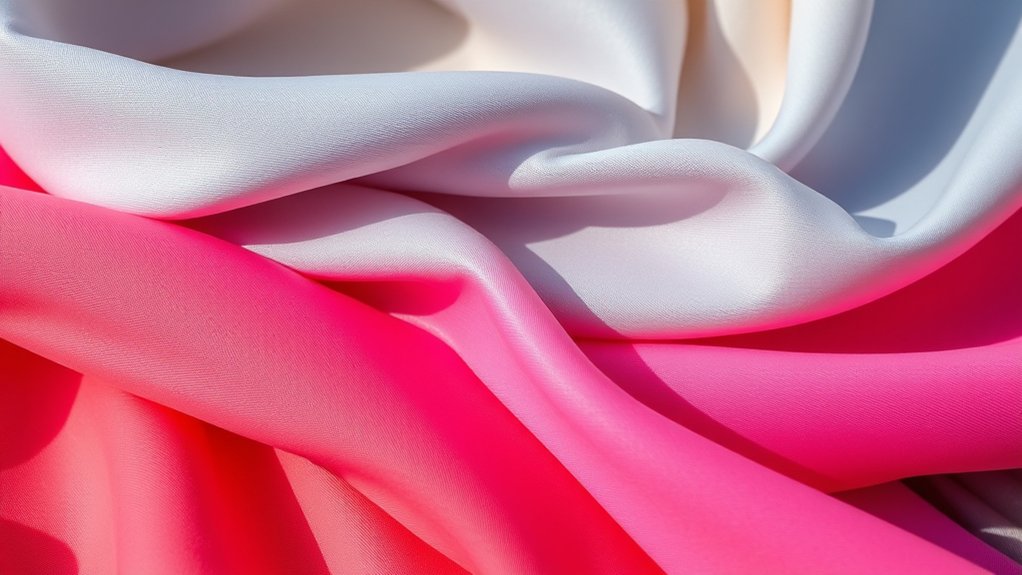
How did synthetic fibers like polyester and nylon transform the way we dress? They revolutionized clothing by offering unmatched fabric durability and versatility. When you choose garments made from synthetic fibers, you benefit from materials that resist wrinkles, shrinkage, and stretching far better than many natural fibers.
This means your clothes last longer and require less maintenance, saving you time and money.
Polyester and nylon also enabled designers to create lightweight, moisture-wicking, and quick-drying fabrics, making activewear and outdoor clothing more comfortable and functional. These fibers can be blended with natural ones, enhancing strength and longevity without sacrificing softness.
Polyester and nylon revolutionized activewear with lightweight, moisture-wicking, quick-drying fabrics that blend strength and softness.
Thanks to synthetic fibers, you now have access to affordable, durable, and easy-care clothing that suits a variety of lifestyles and climates. In short, polyester and nylon changed clothing by making it more practical and accessible for everyday wear.
Why Sustainable and Recycled Materials Are Shaping Textiles
You’re noticing more sustainable and recycled materials in textiles these days because they help reduce environmental impact. It’s pretty cool how new recycling methods can turn old fabrics into fresh fibers. This makes the whole process smarter and cleaner.
And it’s not just about the technology. Your demand for eco-friendly options is really pushing brands to get creative and put green choices first. So, it’s a win-win for both the planet and the fashion world.
Environmental Impact Reduction
Why does the choice of materials in textiles matter so much for the environment? When you pick fabrics made with eco friendly dyeing processes, you reduce harmful chemical use and pollution. These dyes conserve water by requiring less rinsing and waste, which helps preserve precious water resources.
Choosing sustainable fibers also lowers energy consumption during production, cutting down greenhouse gas emissions. By opting for materials designed with water conservation in mind, you directly support efforts to protect ecosystems and reduce the textile industry’s massive water footprint.
Your decisions influence how much waste, pollution, and resource depletion occur. So, when you choose textiles thoughtfully, you’re not just picking clothing. You’re actively reducing environmental impact and promoting a healthier planet.
Innovative Recycling Techniques
As the fashion industry faces increasing pressure to reduce waste, innovative recycling techniques are transforming how textiles are made. You’ll find that sustainable methods now focus on minimizing resource use while enhancing fabric quality.
Here are three key innovations shaping this shift:
- Fiber dyeing This technique dyes fibers before they’re spun into yarn, cutting water use and energy compared to traditional methods.
- Advanced textile printing Digital printing on recycled fabrics reduces chemical waste and allows precise color application on sustainable materials.
- Mechanical and chemical recycling These processes break down old garments into fibers for new textiles, closing the loop on fabric waste.
Consumer Demand Influence
How much does your buying choice impact the fashion industry’s shift toward sustainability? More than you might think. When you choose sustainable and recycled materials, you directly influence fashion trends, encouraging brands to prioritize eco-friendly options.
Your demand pushes manufacturers to adopt greener manufacturing processes, reducing waste and energy consumption. As more consumers like you opt for responsible choices, companies invest in innovative recycling and sustainable fibers, reshaping the entire supply chain.
This shift not only benefits the environment but also promotes ethical labor practices. By staying informed and selecting textiles made from recycled or sustainable materials, you help accelerate the industry’s transformation. Your role as a conscious buyer is essential in making sustainable fashion mainstream and driving lasting change.
How Blended Fabrics Combine Natural and Synthetic Benefits
When you choose blended fabrics, you get the best of both natural and synthetic fibers in one material. Thanks to fiber blending and ongoing textile innovation, these fabrics offer unique advantages that neither fiber type can provide alone. You’ll enjoy comfort, durability, and style all at once.
Here’s why blended fabrics stand out:
- Comfort and Breathability: Natural fibers like cotton bring softness and moisture-wicking properties, keeping you comfortable throughout the day.
- Strength and Durability: Synthetic fibers such as polyester add resilience and resistance to wrinkles, stretching, and shrinking, making your clothing last longer.
- Easy Care: Blended fabrics often require less maintenance, combining the ease of synthetic fibers with the feel of natural ones.
How Fabric Finishes Improve Clothing Performance
Although the fabric itself plays a big role in your clothing’s comfort and durability, the finishing processes can make a huge difference in how it performs. Fabric finishes are treatments applied to textiles after weaving or knitting, designed to improve specific properties. When you choose garments with these finishes, you get benefits like water resistance, wrinkle reduction, stain repellency, and improved softness. These treatments protect your clothes from wear and environmental factors, extending their life.
Fabric finishes contribute markedly to performance enhancement by tailoring textiles to meet your needs. For example, moisture-wicking finishes keep you dry during exercise, while antimicrobial finishes reduce odor. Some finishes add flame retardancy or UV protection, making your clothing safer in various conditions. By understanding how fabric finishes work, you can select clothes that not only look good but also perform better throughout your daily activities.
New Textile Innovations Improving Clothing Quality
You’ll find that new textile innovations are making clothes more sustainable and longer-lasting than ever. These sustainable fabric technologies not only reduce environmental impact but also keep materials strong and comfortable.
And that’s not all—improved durability materials help your clothing withstand wear and tear, which means better quality overall. It’s pretty exciting to see how these advancements are changing the way we think about what we wear!
Sustainable Fabric Technologies
How can clothing become both high-quality and eco-friendly? Sustainable fabric technologies are reshaping fashion trends by combining innovation with responsibility. You’ll find that these advancements not only improve clothing quality but also reduce environmental impact during textile manufacturing.
Here are three game-changers you should know:
- Bio-based fibers: Made from renewable resources, they lower reliance on petroleum-based materials and decompose naturally.
- Recycled textiles: By transforming waste into new fabric, they cut down landfill and reduce energy consumption.
- Waterless dyeing: This technique minimizes water use and harmful chemicals, making colors vibrant and sustainable.
Enhanced Durability Materials
What makes clothing truly stand out is not just style but how well it lasts. Enhanced durability materials are transforming the way your clothes hold up over time.
Advances like fiber dyeing embed color directly into the fibers, preventing fading even after many washes. This technique ensures your garments stay vibrant and fresh longer.
Moreover, innovations in textile weaving create stronger, more resilient fabrics by interlacing threads with precision, boosting resistance to wear and tear.
When you choose clothing made with these new methods, you’re investing in quality that endures daily use. These advancements not only improve longevity but also maintain comfort and appearance, making your wardrobe smarter and more sustainable.
Embracing these materials means you don’t have to sacrifice durability for style.
Why Cotton Became the Most Popular Clothing Fiber
Although many fibers compete in the textile world, cotton has stood out as the most popular choice for clothing. You’ll find cotton’s appeal rooted in its natural comfort and versatility. Here’s why cotton dominates:
Cotton remains the top fabric for clothing, prized for its comfort and unmatched versatility.
- Breathability and Softness: Cotton fibers let your skin breathe, keeping you comfortable in all seasons.
- Fabric Dyeing and Textile Printing: Cotton absorbs dyes and prints beautifully, allowing vibrant colors and patterns that last.
- Easy Care: Cotton garments are simple to wash and maintain, making them practical for everyday wear.
When you choose cotton, you’re opting for a fiber that balances comfort, style, and functionality. Its ability to take on rich dyes and detailed textile printing means your clothes don’t just feel good, they look great too. This combination has helped cotton stay front and center in your wardrobe and the fashion industry alike.
Why Wool Remains Essential for Warmth and Durability
When you need reliable warmth and long-lasting wear, wool stands out as a top choice. Its natural crimp traps air, providing excellent insulation even when wet, so you stay warm in cold, damp conditions. Wool’s durability means your clothing withstands regular use without losing shape or comfort, making it a smart investment.
You’ll also appreciate wool aesthetics. Its rich texture and natural luster give garments a timeless, sophisticated look that synthetic fibers can’t match. Whether in a cozy sweater or a tailored coat, wool adds depth and style to your wardrobe.
Wool sourcing plays a key role in quality. Ethical and sustainable sourcing ensures the fiber retains its strength and softness while supporting responsible farming practices. When you choose well-sourced wool, you get a material that’s not only functional but also environmentally conscious, making wool essential for warmth and durability in your clothing collection.
Why Linen Is Ideal for Summer Wear
Because linen fibers breathe exceptionally well, you’ll stay cool and comfortable even on the hottest summer days. Linen’s natural moisture-wicking ability keeps sweat away from your skin, making it a go-to fabric in summer fashion. Plus, its lightweight texture allows air to circulate easily, preventing overheating.
Here’s why linen is ideal for your summer wardrobe:
- Breathability: Linen fibers create tiny gaps that let air flow, so you feel fresh all day.
- Durability: Despite its light feel, linen is strong, meaning your summer pieces last longer.
- Easy Linen Care: Linen becomes softer with each wash, and caring for it is simple. Just avoid high heat to maintain its shape and texture.
With linen, you get a fabric that’s stylish, practical, and perfect for summer’s heat. Incorporate linen pieces into your summer fashion staples for comfort and effortless elegance.
Frequently Asked Questions
How Do Textile Dyes Affect Fabric Quality and Safety?
Textile dyes directly impact fabric quality and safety by influencing colorfastness and chemical safety. When you use poor-quality dyes, your fabric may fade quickly or bleed, causing colorfastness issues.
Moreover, some dyes contain harmful chemicals that can irritate your skin or harm the environment. To keep your clothing safe and vibrant, you should choose dyes that meet strict chemical safety standards. Make certain the colors stay bright and stable through washing and wear.
What Are the Environmental Impacts of Fabric Production Processes?
Fabric production frequently fuels fierce environmental fallout, from water waste to chemical contamination. You can combat this by choosing sustainable sourcing, which supports soil health and reduces resource strain.
Plus, prioritizing water conservation during processing curbs pollution and preserves precious supplies. When you demand eco-friendly fabrics, you drive designers and manufacturers to adopt cleaner, greener methods, making a meaningful difference in minimizing fashion’s footprint on our planet.
How Does Fabric Weight Influence Clothing Comfort?
Fabric weight plays a big role in your clothing comfort. Heavier fabrics often trap heat and reduce fabric breathability, making you feel warmer and less comfortable. On the other hand, lighter fabrics usually allow better airflow, keeping you cooler.
Also, fabric elasticity affects how the garment moves with you. Stretchy fabrics improve comfort by adapting to your body. So, choosing the right weight and elasticity helps you stay comfortable all day.
What Role Do Textile Certifications Play in Material Selection?
Textile certifications guide you in choosing materials that meet specific certification standards, ensuring quality and sustainability. When you prioritize sustainable sourcing, these certifications prove that fabrics are produced ethically and with minimal environmental impact.
They help you confidently select textiles that align with your values, reducing harm to the planet and supporting fair labor practices. So, certifications play a vital role in making informed, responsible material choices in clothing and textiles.
How Do Antimicrobial Treatments Work in Textiles?
Antimicrobial treatments work by embedding antimicrobial agents into the fabric, which actively fight bacteria, fungi, and odors. When you wear treated textiles, these agents help keep the material fresher for longer while enhancing textile durability by preventing microbial damage.
This means your clothes stay cleaner and last longer, reducing the need for frequent washing and extending their lifespan. You’ll notice improved hygiene and durability in your everyday wear.
Conclusion
You might be surprised to learn that cotton accounts for nearly 40% of the world’s fiber production, making it the most widely used material in clothing. This shows just how much natural fibers still matter, even as synthetic and recycled options grow.
By understanding these key materials, you can make smarter choices that balance comfort, durability, and sustainability in your wardrobe. Your clothing decisions truly shape the future of textiles and highlight the importance of key materials in clothing and textile.