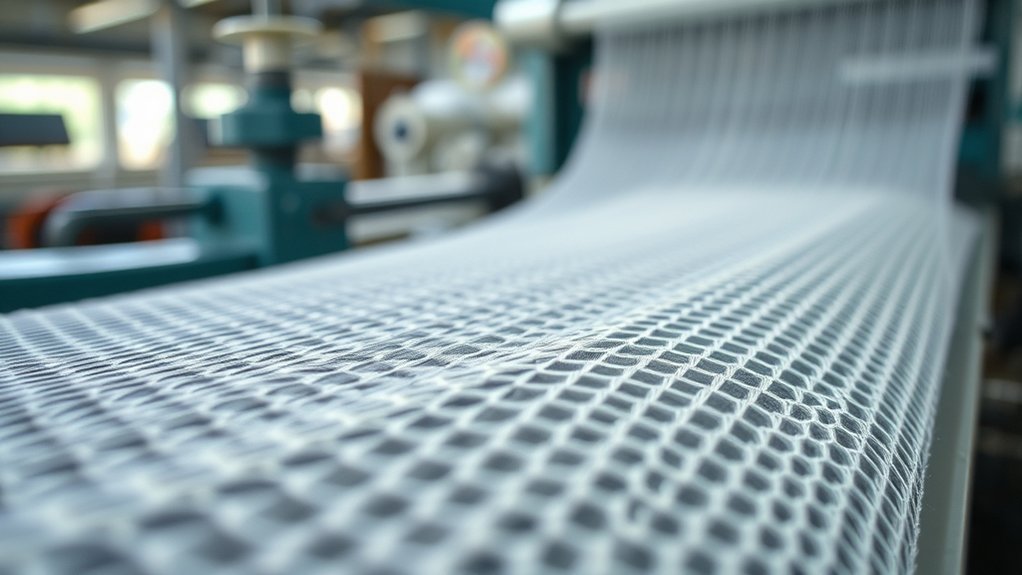
How Is Mesh Fabric Made?
Finding the perfect how is mesh fabric can be frustrating. You want something breathable, durable, and flexible, but not all mesh fabrics are created equal. If you’ve ever struggled to understand what makes one mesh better than another, you’re not alone. Many people find it tricky to navigate the different types and manufacturing processes.
You start making mesh fabric by choosing quality fibers like polyester, nylon, or cotton, then clean, sort, and sometimes dye them to get the right color and texture. Next, you form the mesh using weaving or knitting, which creates open, breathable patterns tailored for strength and flexibility.
After that, finishing treatments boost durability and appearance, followed by tests to guarantee quality. Keep exploring to understand the different mesh types and how these choices impact performance.
Key Takeaways
- Mesh fabric is made by selecting and preparing high-quality fibers like polyester, nylon, or cotton. This includes cleaning, dyeing, and blending.
- Manufacturing involves weaving or knitting yarns to create open-hole structures with customizable mesh sizes and patterns.
- Fabric tension and yarn arrangement control mesh hole size, durability, flexibility, and dye absorption uniformity.
- Various mesh structures like Hexagon, Square, and Diamond affect dye penetration and fabric performance.
- Finishing processes and quality tests enhance fabric strength, durability, and resistance to environmental factors.
What Is Mesh Fabric and Why Is It Popular?
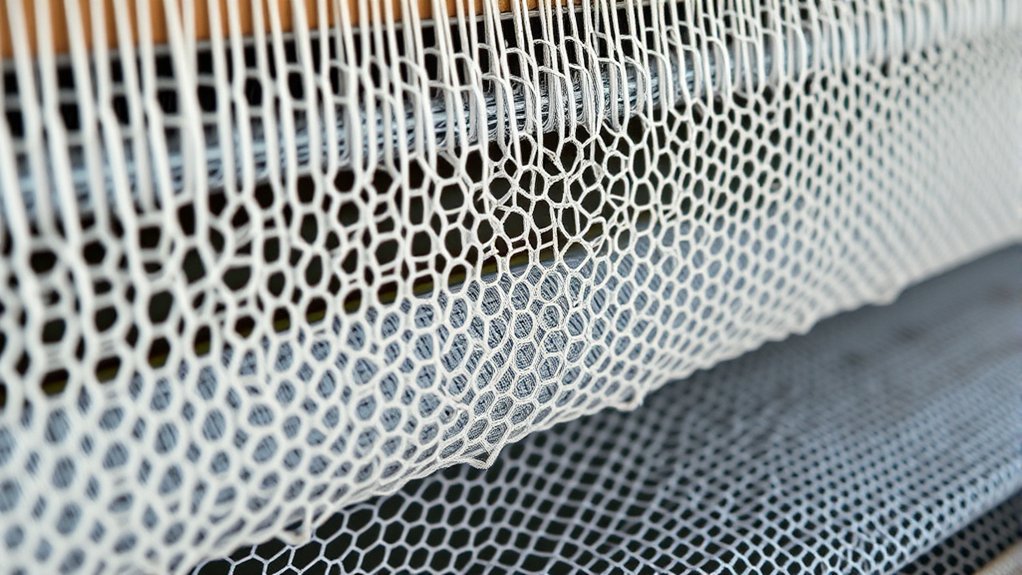
Although mesh fabric might seem simple at first glance, its unique construction sets it apart by allowing air to flow freely while maintaining durability. When you look back at the historical development of mesh, you’ll see how it evolved from basic netting used in fishing and sports to a versatile textile adopted worldwide. Its open-weave design lets you stay cool, which is why it quickly gained popularity in activewear and sports gear.
Fashion trends have also fueled mesh’s rise, turning it into a statement fabric beyond functionality. You’ll find it in everything from high-end runway collections to everyday casual wear. Designers love how mesh adds texture and breathability, making garments both stylish and comfortable. So, mesh fabric’s popularity is no accident. It’s the result of clever design combined with shifting fashion trends that prioritize comfort and innovation. You’ll appreciate how this fabric meets practical needs while keeping you on-trend.
What Materials Are Used to Make Mesh Fabric?
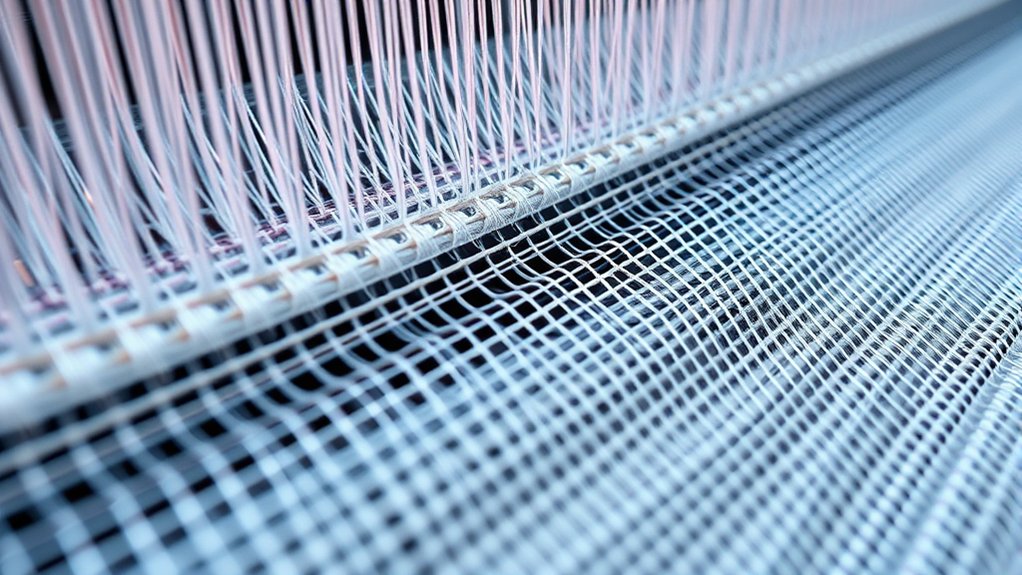
You’ll find mesh fabric made from common synthetic fibers like polyester and nylon. These materials offer durability and flexibility, making them great for activewear and outdoor gear. Sometimes, natural fibers like cotton are used too, giving the fabric a softer feel and better breathability. Blending these materials together can really give you the best of both worlds—performance and comfort all in one.
Common Synthetic Fibers
When you investigate mesh fabric, you’ll find it’s often made from a few key synthetic fibers that balance durability, flexibility, and breathability. Polyester and nylon are the most common choices because they hold up well under stress and resist moisture.
These fibers undergo rigorous colorfastness testing to verify the fabric maintains its vibrant look even after repeated washing and exposure to sunlight. While synthetic fibers offer excellent performance, you should also consider their environmental impact.
Production relies heavily on petrochemicals, contributing to pollution and non-biodegradability. However, many manufacturers now focus on recycled polyester to reduce these effects.
Choosing mesh fabric made from responsibly sourced synthetics helps you enjoy the benefits of durability and breathability while supporting more sustainable practices.
Natural Fiber Options
How do natural fibers compare when used in mesh fabric? When you choose natural fibers like cotton, linen, or hemp, you’re opting for eco friendly options that reduce environmental impact. These fibers come from renewable sources, making them more sustainable than many synthetic alternatives.
You’ll also benefit from organic fiber benefits such as breathability, softness, and biodegradability. Mesh fabrics made from organic cotton, for example, are gentle on your skin and allow better airflow. This makes them ideal for apparel or home textiles.
While natural fibers may not always match the durability or water resistance of synthetics, they excel in comfort and sustainability. So, if you value eco conscious choices and natural performance, natural fiber mesh fabrics present a compelling option for your projects.
Blended Material Benefits
Natural fibers offer great benefits, but blending them with synthetic materials can improve mesh fabric’s performance in ways pure natural fibers sometimes can’t. When you choose blended mesh fabrics, you get increased durability, better moisture management, and more vibrant colors that keep up with changing fashion trends.
Plus, blends can reduce environmental impact by optimizing resource use and extending fabric life. Here’s a quick look at common materials used in mesh blends:
| Material | Benefit |
|---|---|
| Cotton | Softness, breathability |
| Polyester | Strength, color retention |
| Nylon | Elasticity, quick drying |
| Rayon | Smooth texture, drape |
| Spandex | Stretch, shape retention |
Blended mesh fabrics let you enjoy the best of both worlds, comfort and performance, while aligning with eco-conscious choices.
How Fibers Are Prepared for Mesh Fabric Production
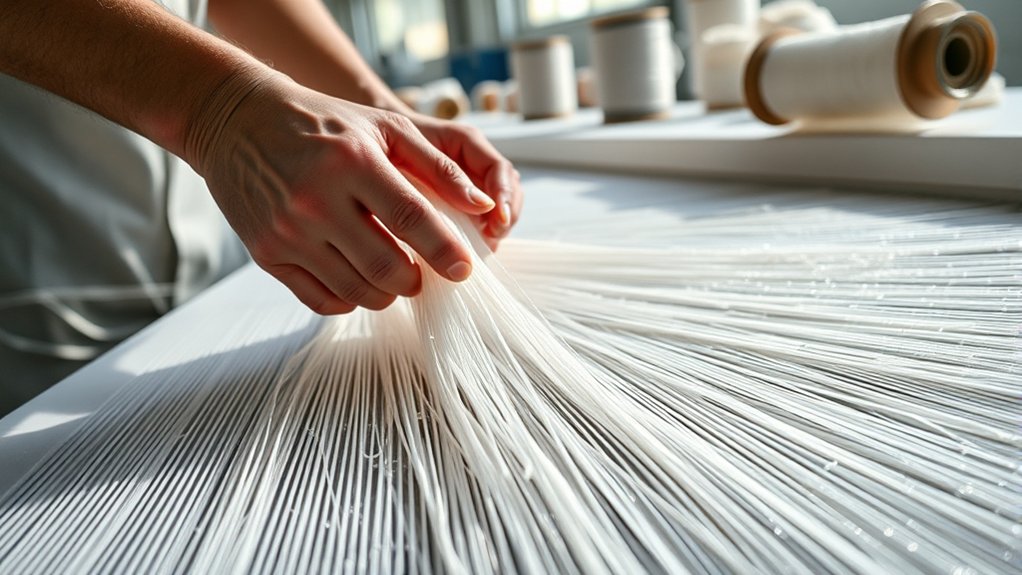
What steps do manufacturers take to get fibers ready for mesh fabric production? First, they focus on raw material sourcing, selecting high-quality fibers like polyester, nylon, or cotton, depending on the desired mesh characteristics.
Once the fibers arrive, they undergo cleaning and sorting to guarantee uniformity. Next, fiber dyeing takes place if colored mesh is required. This process involves immersing fibers in dye baths to achieve consistent coloration throughout the material.
Fibers are cleaned, sorted, and dyed through immersion to ensure uniform color and quality for mesh production.
Manufacturers carefully control temperature and timing during dyeing to prevent damage and maintain fiber strength. After dyeing, the fibers are dried and sometimes blended to create specific textures or performance features.
Preparing fibers this way guarantees the mesh fabric has the right color, durability, and texture before moving on to weaving. By managing raw material sourcing and fiber dyeing effectively, manufacturers set a solid foundation for producing high-quality mesh fabrics tailored to various uses.
How Weaving Creates the Mesh Fabric Pattern
Once the fibers are prepped and ready, weaving brings them together to form the mesh fabric’s distinctive pattern. You guide warp and weft yarns to interlace at right angles, creating the open, grid-like structure unique to mesh. This method guarantees consistent holes for breathability and strength. You can adjust tension and spacing to customize the mesh size and density, tailoring it to specific uses.
Weaving also boosts the fabric’s colorfastness properties. By tightly integrating dyed fibers, you help colors resist fading from washing and sunlight. Plus, choosing natural or recycled fibers promotes environmental sustainability. Weaving minimizes waste compared to other methods, making it eco-friendly.
How Knitting Differs in Making Mesh Fabric
Although knitting shares the goal of creating breathable mesh fabric, it approaches the process differently by interlooping yarns rather than interlacing them. When you knit mesh fabric, you use specific knitting patterns designed to form open spaces within the loops, giving the fabric its characteristic mesh appearance. These patterns can vary widely, allowing you to customize the look and function of the mesh.
One key advantage you’ll notice with knitted mesh is its fabric elasticity. Because the yarns are looped, the fabric naturally stretches and recovers, offering more flexibility compared to woven mesh. This elasticity makes knitted mesh ideal for applications where comfort and movement are important, like sportswear or medical textiles.
How Open-Hole Structures Form in Mesh Fabric
You’ll notice that open-hole structures form depending on how the yarn is arranged and the specific knitting or weaving techniques used. Plus, fabric tension plays a big role in shaping these gaps. When you understand these factors, it becomes easier to control the size and pattern of the mesh openings.
Yarn Arrangement Patterns
How do yarns arrange themselves to create the open-hole structures characteristic of mesh fabric? They follow specific patterns to maintain strength while allowing airflow and flexibility. The yarns interlock with deliberate spacing, forming stable open holes.
This arrangement also affects the fabric’s colorfast properties, as the spacing influences how dyeing techniques penetrate and hold color evenly.
Here’s a breakdown of common yarn arrangement patterns:
| Pattern Type | Hole Shape | Impact on Dyeing |
|---|---|---|
| Hexagonal | Hexagon | Uniform dye absorption |
| Square | Square | Enhanced colorfastness |
| Diamond | Diamond | Better dye penetration |
| Ribbed | Rectangular | Varies with yarn tension |
| Open Loop | Circular | Allows vibrant dye effects |
Understanding these helps you predict fabric performance and appearance.
Knitting And Weaving Techniques
The way yarns arrange themselves sets the stage for the techniques used to create mesh fabric. You’ll primarily see knitting and weaving methods shaping the open-hole structures that define mesh.
Knitting loops yarns together, creating flexible, breathable fabrics ideal for activewear following current fashion trends. Weaving, on the other hand, crosses yarns at right angles, producing stronger, more stable mesh often used in industrial or durable fashion applications.
Both methods allow you to control hole size and pattern, impacting the fabric’s look and function. When choosing a technique, consider the environmental impact. Knitting often uses less energy and produces less waste, making it a greener option.
Role Of Fabric Tension
Although yarn arrangement sets the foundation, fabric tension plays a crucial role in shaping the open-hole structures you see in mesh fabric. When tension is carefully controlled, the holes form consistently, allowing the fabric to breathe and stretch as intended.
Too tight, and the holes shrink, reducing airflow; too loose, and the fabric loses strength and shape. This balance also influences fabric dyeing and pattern customization, as tension affects how dye spreads and how patterns align.
You’ll appreciate how fabric tension impacts:
- The size and uniformity of mesh holes
- Overall fabric durability and flexibility
- Precision in pattern customization for unique designs
- Consistency in fabric dyeing results for vibrant colors
Mastering tension ensures your mesh fabric performs and looks exactly how you want.
How Mesh Fabric Is Finished and Made Durable
Once mesh fabric comes off the loom, manufacturers apply specialized finishing techniques to improve its strength and longevity. You’ll notice that mesh fabric finishing often involves treatments like heat setting, coating, or resin application. These processes help lock the fibers in place, preventing deformation and increasing resistance to wear and tear.
For durability boosting, manufacturers may add waterproof or UV-resistant coatings, ensuring the fabric withstands environmental stressors. You’ll also find that some mesh fabrics undergo mechanical finishing, like calendaring, which smooths and compresses the surface for extra toughness.
These finishing steps don’t just improve strength; they also refine texture and appearance, making the mesh more practical and visually appealing. By understanding these mesh fabric finishing methods, you can better appreciate how manufacturers turn delicate woven structures into durable materials ready for various uses.
How Quality and Strength Are Tested in Mesh Fabric
When you examine mesh fabric, you want to be certain it can handle real-world use without falling apart. That’s why manufacturers follow strict testing standards and durability assessments before the fabric reaches you. These tests ensure the mesh won’t tear, stretch, or lose its shape under stress.
Here’s how quality and strength are typically tested:
- Tensile strength tests measure how much force the fabric can withstand before breaking, guaranteeing it holds up under tension.
- Abrasion resistance tests simulate wear and tear, so you know the mesh won’t fray or degrade quickly.
- Puncture resistance assessments check if sharp objects can easily penetrate the fabric, crucial for protective uses.
- Environmental exposure tests evaluate how sunlight, moisture, and temperature changes affect the mesh’s durability.
What Types of Mesh Fabric Exist and How They’re Made
Mesh fabric comes in various types, each designed to meet specific needs and applications. You’ll find woven mesh, knitted mesh, and bonded mesh, all created through different manufacturing methods.
Woven mesh interlaces yarns at right angles, making it strong and durable. Knitted mesh loops yarns together, offering stretch and flexibility, while bonded mesh fuses fibers using heat or adhesives for a lightweight, often more sustainable option. Innovative mesh designs now focus heavily on mesh fabric sustainability, using recycled materials and eco-friendly processes.
| Type | Manufacturing Method |
|---|---|
| Woven Mesh | Interlacing yarns at right angles |
| Knitted Mesh | Looping yarns for stretch |
| Bonded Mesh | Fusing fibers via heat/adhesives |
Understanding these types helps you choose mesh fabric that balances strength, flexibility, and environmental impact according to your needs.
Common Uses and Benefits of Mesh Fabric
You’ll find mesh fabric in everything from sportswear to outdoor gear because it’s so versatile. Its open structure lets air flow freely, which helps keep you cool and comfortable. So, when you think about it, these benefits explain why mesh fabric is such a popular choice across different industries.
Versatile Applications
Although its lightweight and breathable structure might seem simple, mesh fabric offers a surprising range of uses across various industries. You’ll find it at the heart of many fashion trends, adding texture and visual interest to artistic designs. Its adaptability means you can rely on mesh for both style and function.
Here are four versatile applications that might inspire you:
- Activewear keeps you comfortable during workouts with its flexible, airy feel.
- Footwear adds durability and ventilation in sneakers and sandals.
- Home décor improves curtains and upholstery with a modern touch.
- Industrial uses provide strength and filtration in safety gear and equipment.
With mesh fabric, you get creativity and practicality woven into one.
Enhanced Breathability
How does fabric keep you cool and comfortable during intense activities? Mesh fabric’s improved breathability plays a key role. Its open weave design allows air to circulate freely, wicking away sweat and reducing heat buildup. This makes mesh ideal for sportswear, outdoor gear, and even casual clothing.
Over time, the historical evolution of mesh has improved its breathability while reducing environmental impact. Modern production methods use eco-friendly materials and less water. When you choose breathable mesh, you’re not just staying comfortable; you’re supporting sustainable fabric innovation.
This balance of performance and responsibility shows how mesh fabric benefits both you and the planet, making it a smart choice for active lifestyles and environmentally conscious consumers alike.
Frequently Asked Questions
Can Mesh Fabric Be Recycled or Is It Biodegradable?
Mesh fabric isn’t usually biodegradable, so you can’t just compost it. You’ll face biodegradability challenges because most mesh is made from synthetic fibers like polyester or nylon.
However, you can recycle mesh fabric through specialized recycling processes designed for textiles. Just remember, not all recycling centers accept it, so you’ll need to find one that handles synthetic fabrics.
Recycling helps reduce waste, so it’s definitely worth exploring those options.
How Do Environmental Factors Affect Mesh Fabric Longevity?
You might think mesh fabric lasts forever, but environmental degradation proves otherwise. Exposure to sunlight weakens it over time, so UV resistance is essential for longevity.
If your mesh fabric lacks UV protection, it’ll degrade faster, becoming brittle and losing strength. Humidity, pollution, and temperature changes also speed up wear and tear.
To keep your mesh fabric durable, choose materials with strong UV resistance and protect them from harsh environmental conditions.
Are There Special Care Instructions for Washing Mesh Fabric?
Yes, you should follow special care instructions when washing mesh fabric. Use gentle washing techniques, like hand washing or a delicate machine cycle with cold water. Avoid harsh detergents and bleach to protect the fibers.
For stain removal, treat stains promptly with mild soap and a soft brush or cloth. Always air dry your mesh fabric to maintain its shape and durability, preventing damage from heat or rough handling.
What Innovations Are Emerging in Mesh Fabric Technology?
You’ll notice emerging innovations in mesh fabric technology focus on boosting fiber durability and improving manufacturing processes. New fibers blend strength with flexibility, making mesh tougher and longer-lasting.
Advanced manufacturing techniques, like 3D knitting and laser cutting, improve precision and reduce waste. These improvements let you enjoy more breathable, durable mesh fabrics used in sportswear, medical gear, and even smart textiles, keeping you comfortable while extending the fabric’s lifespan.
How Does Mesh Fabric Compare Cost-Wise to Other Fabrics?
Imagine you’re sourcing materials for athletic wear and choose mesh fabric over traditional cotton. In a cost comparison, mesh often offers better fabric affordability due to its lightweight construction and lower material use.
While cotton might cost more per yard, mesh’s durability and breathability can reduce overall expenses in production and performance wear. So, when you evaluate fabric affordability, mesh stands out as a budget-friendly yet functional option.
Conclusion
Now that you know how mesh fabric is crafted, from fiber preparation to weaving or knitting, you see it’s more than just holes in cloth. Like a finely tuned orchestra, each step works in harmony to create a material that’s strong, breathable, and versatile.
Whether for sportswear or industrial uses, mesh fabric proves that sometimes, less truly is more. So next time you touch mesh, remember the careful craft woven into every thread of mesh fabric.