10 Tips to Soften Fabrics Quickly
If you’ve ever pulled clothes out of the wash feeling like they’re stiff or rough, you’re not alone. Many people struggle with getting fabrics soft without spending a ton of time or money.
Whether it’s your favorite shirt or a cozy blanket, finding quick and easy ways to soften fabrics can make a huge difference in how comfortable your clothes feel.
You can soften fabrics quickly by adding fabric softener or natural alternatives like white vinegar and baking soda during wash or rinse cycles.
Use hair conditioner mixed with warm water for fast results, and toss dryer or tennis balls into the dryer to naturally fluff clothes.
Try gently massaging or steaming fabric to relax fibers.
Avoid overdrying and store clothes properly for lasting softness.
Keep exploring to uncover more easy and effective fabric-softening tips.
Key Takeaways
- Use hair conditioner diluted in warm water during the rinse cycle. Soak fabric 15–20 minutes, then rinse to quickly soften fibers.
- Toss dryer or tennis balls into the dryer to naturally soften fabrics by improving air circulation and reducing static cling.
- Wash fabrics in warm water (90°F–110°F) to relax fibers and dissolve residues. Avoid this for delicate or wool fabrics.
- Gently hand massage or knead stiff areas to loosen fiber bonds and enhance fabric softness without chemicals.
- Steam garments evenly using a handheld steamer to relax fibers and reduce stiffness. Test hidden areas first to avoid damage.
Add Fabric Softener for Instant Softness
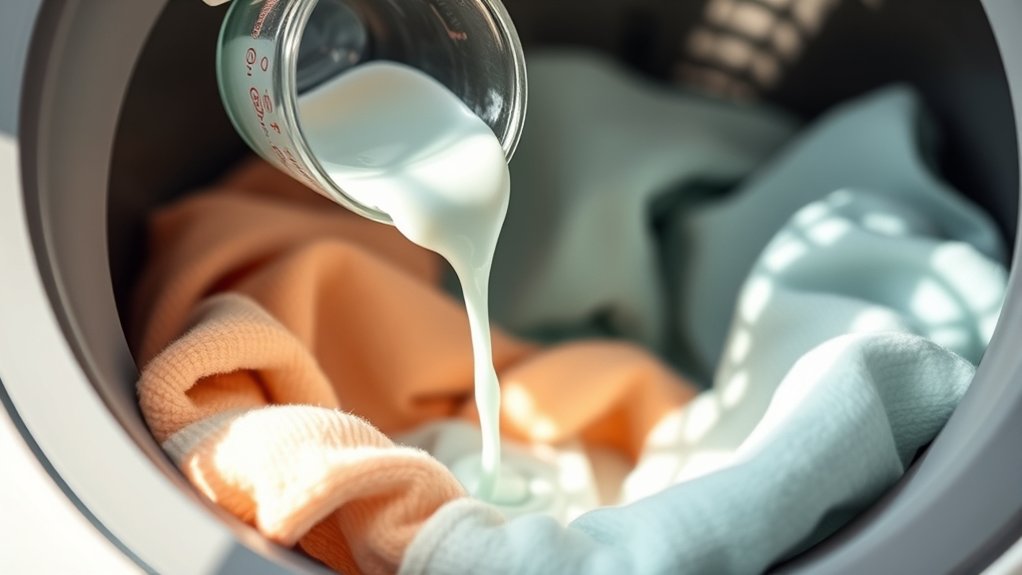
While washing your clothes, you can add fabric softener to make them feel instantly softer. Fabric softeners coat the fibers, reducing stiffness and making your garments more comfortable to wear. Plus, they often leave a pleasant fabric scent that keeps your clothes smelling fresh longer.
However, you should use softeners carefully, as some formulas may contribute to color fading, especially on darker or brightly colored fabrics. To avoid this, choose a softener designed to protect colors or use it sparingly on delicate items.
Adding fabric softener in the rinse cycle is the most effective way to guarantee even distribution without interfering with detergent performance. This simple step not only improves softness but also helps reduce static cling, making ironing easier.
Add White Vinegar to Soften Stiff Fabrics
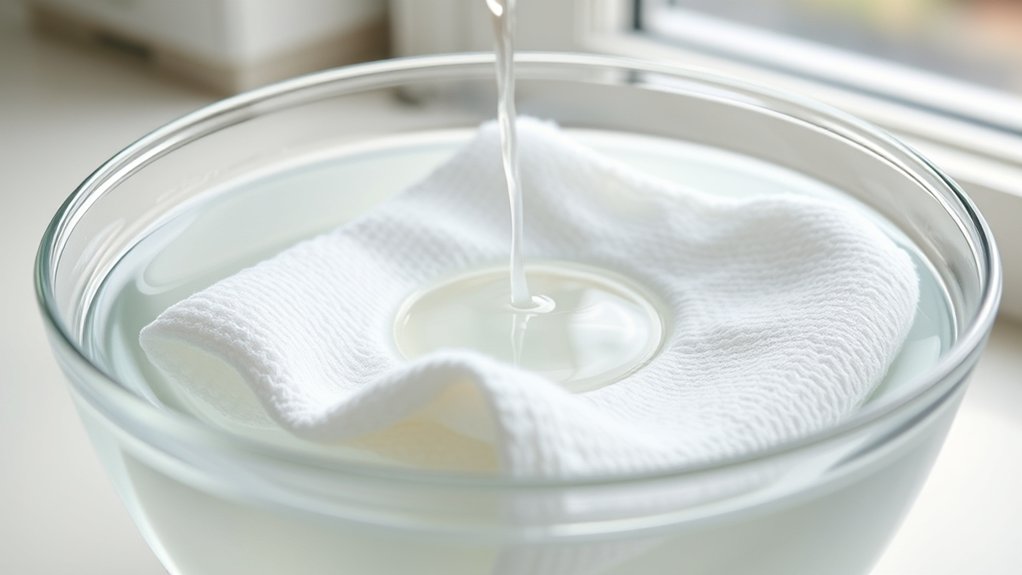
If your fabrics feel stiff after washing, adding white vinegar to the rinse cycle can quickly restore softness. White vinegar helps break down detergent residues that cause rough fabric texture, making your clothes feel smoother without harsh chemicals. Plus, it naturally improves scent by neutralizing odors, leaving your laundry smelling fresh without overpowering fragrances.
To use, simply add half a cup of white vinegar to the rinse cycle. It’s safe for most fabrics and won’t harm colors or fibers.
| Benefit | Result |
|---|---|
| Fabric Texture | Softens stiff fabrics |
| Residue Removal | Eliminates detergent buildup |
| Scent Improvement | Neutralizes odors |
| Color Safe | Maintains fabric brightness |
| Eco-Friendly | Natural alternative to softeners |
This simple trick transforms rough, stiff fabrics into soft, comfortable wearables with minimal effort.
Wash Fabrics With Baking Soda to Soften
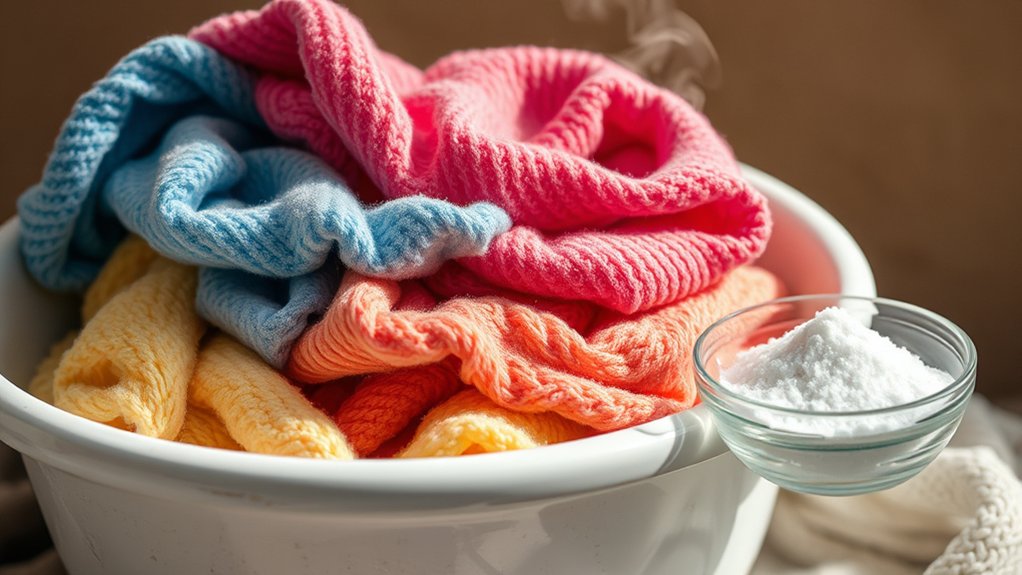
Adding white vinegar to your rinse cycle can work wonders, but baking soda takes fabric softening a step further during the wash itself. When you add half a cup of baking soda to your washing machine along with detergent, it helps break down residues that make fabrics stiff. This not only softens the fibers but also revitalizes colors affected by fabric dyeing, making your clothes look fresher.
Especially with textiles created through textile weaving, baking soda gently restores flexibility without damaging the weave.
You’ll love how baking soda:
- Brightens and softens your fabrics naturally
- Enhances the longevity of color and texture after fabric dyeing
- Keeps textile weaving intact while loosening fibers for a plush feel
Soften Fabrics Fast With Hair Conditioner
You can soften fabrics quickly by using hair conditioner, but picking the right one really makes a difference. Look for conditioners that have moisturizing ingredients and won’t leave any residue behind. Just apply it evenly during the rinse cycle, and you’ll notice your fabrics feeling soft and smooth in no time. It’s a simple trick that works great when you want to freshen up your clothes or linens fast!
Choosing The Right Conditioner
Though fabric softeners are common, hair conditioner offers a surprisingly effective alternative for softening your fabrics quickly. When choosing the right conditioner, pick one with moisturizing ingredients but avoid formulas designed for oily hair, as they may leave residue.
Select a conditioner without added dyes or heavy perfumes, especially if your fabric involves delicate textile weaving or has undergone fabric dyeing. This helps prevent color fading or damage.
Look for these qualities in your conditioner:
- Gentle, nourishing formulas that respect fabric fibers
- Free from harsh chemicals that interfere with fabric dyeing
- Suitable for various fabric types, preserving textile weaving integrity
Application Techniques For Softness
When aiming to soften fabrics quickly with hair conditioner, applying it correctly makes all the difference. First, mix a small amount of conditioner with warm water in a basin. Submerge your fabric, ensuring it soaks evenly. This step is especially important for textiles with tight weaving, as conditioner penetrates fibers better when fully immersed.
Gently knead the fabric to distribute the conditioner without damaging the weave. After 15–20 minutes, rinse thoroughly with cool water to remove residue. Avoid over-soaking to prevent weakening fibers or affecting fabric dyeing.
For patchy softness, spot-treat by applying conditioner directly and massaging it in. With these techniques, you’ll revive your fabrics’ softness quickly while preserving their texture and color from dyeing or textile weaving processes.
Use Tennis or Dryer Balls to Soften Fabrics
Although many people overlook this simple trick, tossing tennis or dryer balls into your dryer can dramatically soften fabrics without adding chemicals. These balls work by gently separating your clothes as they tumble, allowing warm air to circulate more efficiently and reducing stiffness. Using tennis balls or dryer balls is a natural, eco-friendly way to improve softness while cutting drying time.
When you use tennis balls or dryer balls, you’ll notice softer fabrics that feel cozy against your skin, reduced wrinkles making ironing easier or unnecessary, and less static cling so your clothes stay comfortable and fresh.
You don’t need fancy products to get great results. Just a few tennis balls or specially designed dryer balls in your dryer will do the trick. They’re reusable, affordable, and safe for all fabrics. Next time you want soft clothes fast, give this simple trick a try and enjoy the difference!
Wash Fabrics in Warm Water to Soften
You’ll get softer fabrics by washing them in warm water, usually between 90°F and 110°F. This temperature helps relax fibers and remove detergent residues that can make fabrics stiff. Just be careful with delicate or wool items, as warm water might damage them.
Benefits of Warm Water
Warm water plays a crucial role in softening fabrics quickly by loosening fibers and dissolving detergent more effectively than cold water. When you wash your clothes in warm water, the fibers relax, making the fabric feel softer and more comfortable. This is especially important for materials with a higher thread count, which can feel stiff otherwise.
Warm water also helps maintain vibrant fabric dyeing, preventing colors from dulling while enhancing softness. By choosing warm water, you guarantee your fabrics get cleaner and softer in less time.
Experience the joy of soft, cozy clothes right after washing. Protect your favorite colors and patterns from fading. Feel the difference in fabric quality with every wear.
Using warm water is a simple step to make your laundry feel fresh and inviting.
Ideal Temperature Range
Choosing the right water temperature directly impacts how effectively your fabrics soften during washing. To achieve the best results, aim for a fabric temperature that provides optimal warmth, typically between 90°F and 110°F (32°C to 43°C). This range loosens fibers without causing damage or excessive wear.
Using water that’s too hot can weaken fabrics or cause colors to fade, while cold water often fails to soften materials adequately. By selecting warm water within this ideal temperature range, you ensure detergents dissolve properly and fibers relax, making your fabrics feel softer after each wash.
Adjust your washer settings accordingly to maintain this balance, and you’ll notice a significant improvement in fabric softness with every load.
Fabric Types to Avoid
Although washing fabrics in warm water generally helps soften them, certain fabric types don’t respond well to this method and may suffer damage or shrinkage. You should be cautious with synthetic fabrics, as warm water can increase fabric stiffness rather than soften it. These materials might also lose their shape or develop pilling.
To protect your clothes, avoid washing these fabrics in warm water:
- Delicate silks that can shrink or fade
- Wool garments prone to felting and stiffness
- Synthetic blends that may become rigid or distorted
Hand Massage Fabrics to Loosen Fibers Quickly
When you hand massage fabrics, you directly loosen the fibers, making them feel softer in no time. By gently rubbing and kneading the fabric, you disrupt the tight fiber alignment, improving the overall fabric texture. This simple technique helps break down stiffness without harsh chemicals or long wait times.
To get started, focus on areas that feel rigid or rough, applying consistent pressure with your fingers. As you work, you’ll notice the fabric becoming more pliable and pleasant to touch. Hand massaging works best on natural fibers like cotton and linen, where fiber alignment plays a big role in texture.
| Step | Action | Result |
|---|---|---|
| 1 | Rub fabric gently | Loosens fiber bonds |
| 2 | Knead with fingers | Softens fabric texture |
| 3 | Repeat on stiff areas | Improves pliability |
This hands-on approach gives you quick, tactile feedback for ideal softness.
Steam Fabrics to Soften Them Fast
You can soften fabrics quickly by using steam—it works by relaxing the fibers and cutting down on stiffness. Just hold the steamer a few inches away from the fabric and move it evenly across the surface. With the right touch, you’ll have soft, smooth material in no time. Easy, right?
Benefits of Fabric Steaming
Steam fabric quickly softens fibers by relaxing their tension and smoothing out stiffness. When you steam your clothes, you revive the feel created through fabric dyeing and textile weaving, restoring softness without damaging delicate materials. This method is gentle yet effective, making your fabrics feel fresh and comfortable sooner than you’d expect.
You’ll appreciate these benefits of fabric steaming:
- Instant softness: Feel the difference in texture immediately after steaming.
- Preserves fabric integrity: Maintains the quality and colors from the original dyeing process.
- Eco-friendly refresh: Reduces the need for frequent washing, saving water and energy.
How to Use Steamers
Although fabric steamers are simple tools, knowing how to use them correctly can make a big difference in softening your clothes quickly and safely. First, hang your garment on a sturdy hanger to keep fabric patterns visible and avoid stretching.
Hold the steamer a few inches away and move it slowly over the fabric, allowing the steam to penetrate fibers evenly. Be cautious with delicate colors, as excessive heat or prolonged steaming may cause color fading.
Always test a small, hidden area before steaming the entire piece. Avoid pressing the steamer directly onto the fabric to prevent damage.
Using steamers this way helps relax fibers, restoring softness without harsh chemicals or washing. It makes your fabrics feel fresh and comfortable in no time.
Tips for Effective Steaming
When aiming to soften fabrics quickly, mastering a few key steaming techniques can make all the difference. You want to protect fabric dyes from fading while loosening fibers effectively. Start by adjusting the steamer’s temperature to suit the fabric’s thread count. Higher counts need gentler heat. Hold the steamer close but avoid direct contact to prevent water spots. Move steadily to cover all areas evenly.
Here’s how to steam like a pro:
- Test a small area first to ensure no dye runs or fabric distortion
- Use vertical steaming to relax fibers without stretching
- Steam both sides for even softening and to preserve fabric vibrancy
Following these tips ensures your fabrics stay vibrant and soft quickly and safely.
Avoid Overdrying to Keep Fabrics Soft
If you want your fabrics to stay soft, you should avoid overdrying them. When you leave clothes in the dryer too long, the heat strips away natural moisture, causing fibers to weaken. This can lead to fabric fraying, where threads start to unravel and roughen.
Overdrying also accelerates color fading, dulling the vibrant hues of your garments. To prevent this, try using shorter drying cycles or remove items while they’re still slightly damp. This helps maintain the fabric’s integrity and softness.
Furthermore, consider air-drying delicate fabrics or using a low-heat setting. By paying attention to drying times, you’ll keep your clothes feeling cozy and looking fresh longer.
Avoiding overdrying not only preserves softness but also extends your fabrics’ lifespan, saving you money and effort in the long run. Keep these tips in mind, and your wardrobe will thank you with lasting comfort and color.
Store Fabrics Properly to Keep Them Soft Longer
Properly storing your fabrics plays a crucial role in keeping them soft over time. When you pay attention to fabric storage, you protect your clothes and linens from damage, preserving the effects of any softening ingredients you’ve used.
Proper fabric storage safeguards softness and extends the life of your clothes and linens.
To maintain that fresh, cozy feel, avoid stuffing fabrics into tight spaces where they can wrinkle or lose their softness.
Here are some simple tips to help you store fabrics properly:
Use breathable cotton bags or pillowcases instead of plastic to prevent moisture buildup and mildew.
Keep fabrics away from direct sunlight to avoid fading and fiber weakening.
Add sachets with natural softening ingredients like lavender or chamomile to keep fabrics smelling fresh and feeling gentle.
Frequently Asked Questions
Can Fabric Softeners Cause Allergies or Skin Irritation?
Yes, fabric softeners can cause allergies or skin irritation, especially if you have chemical sensitivities or fragrance concerns. You might notice redness, itching, or a rash after wearing clothes treated with them.
Since many fabric softeners contain fragrances and chemicals, your skin could react. To avoid this, you can try fragrance-free or hypoallergenic options, or skip fabric softeners altogether if you know your skin is sensitive.
How Does Fabric Type Affect the Softening Process?
You’d think all fabrics soften the same way, but fabric composition totally changes the game! Natural fibers like cotton soak up softness quickly, while synthetics can be stubborn, needing different treatment methods like longer soaking or special softeners.
If you don’t adjust your approach, you might end up with stiff clothes. Knowing your fabric’s makeup helps you pick the right method to get that perfect, cozy feel fast every time.
Are There Eco-Friendly Alternatives to Chemical Fabric Softeners?
Yes, you can use eco-friendly ingredients like white vinegar, baking soda, or wool dryer balls as natural softening agents. These alternatives soften your fabrics without harsh chemicals, reducing environmental impact and keeping your clothes fresh.
Simply add half a cup of vinegar during the rinse cycle or toss wool dryer balls in the dryer to naturally soften fabrics. You’ll keep your laundry routine green and gentle on your skin and the planet.
Can Softening Fabrics Affect Their Durability or Lifespan?
Yes, softening fabrics can impact their material longevity if done excessively or with harsh chemicals. When you prioritize fabric softness, you might weaken fibers over time, reducing durability.
However, using gentle, natural softeners or occasional treatments helps maintain softness without compromising material longevity. By balancing fabric care and softness, you guarantee your clothes stay comfortable and last longer, avoiding premature wear or damage from aggressive softening methods.
Is It Safe to Use Fabric Softeners on Baby Clothes?
You should be cautious with fabric softener safety regarding baby clothing care. Many fabric softeners contain chemicals that can irritate your baby’s sensitive skin or cause allergies.
Instead, opt for hypoallergenic, fragrance-free softeners made specifically for babies, or use natural alternatives like white vinegar. Always check labels and test on a small fabric area first to ensure your baby’s clothes stay soft without risking irritation or discomfort.
Conclusion
You might think softening fabrics takes forever, but with these quick tips, it’s almost too easy, almost suspiciously so. Who knew that vinegar or even your tennis balls could turn stiff clothes into cozy favorites in no time?
So, skip the waiting game and get your fabrics feeling fantastic faster than you thought possible. Ironically, the secret to softness isn’t patience; it’s just a few simple tricks you probably already have at home.
By using these 10 tips to soften fabrics quickly, you’ll have your clothes feeling soft and comfy in no time.