How to Identify the Types of Fabrics There Are
Struggling to figure out what type of fabric you’re working with? You’re not alone. Many people find it tricky to identify fabrics just by looking or touching them. Whether you’re shopping for clothes, sewing, or just curious, knowing how to recognize different fabric types can save you time and frustration.
You can identify fabric types by feeling their texture and weight. Cotton feels soft and breathable, wool is warm and coarse, while synthetics like polyester feel smooth and shiny. Check fabric labels for fiber content and care instructions.
A simple burn test reveals fibers too: natural fabrics burn quickly with soft ash, while synthetics melt and smell like plastic. Examining weave patterns and stretch helps as well. Keep exploring to uncover more handy tips for accurate fabric identification.
Key Takeaways
- Identify fabric by touch, noting texture, weight, warmth, and surface smoothness to distinguish natural fibers from synthetics. This hands-on approach gives you a good initial sense of the material.
- Examine weave patterns and fabric weight. Tighter weaves tend to feel heavier, while looser weaves are lighter and more breathable, which helps in figuring out the fabric type.
- Read fabric labels to determine fiber content percentages and care instructions. These details clearly indicate the material type and its properties, making identification easier.
- Perform burn tests safely to observe odor, ash, and melting behavior. This method helps differentiate natural fibers from synthetic materials effectively.
- Assess fabric stretch and recovery by gently pulling to test elasticity. Notice how quickly it returns to its original shape, as this can tell you a lot about the fabric’s composition.
How to Use Touch and Texture to Identify Fabric Types
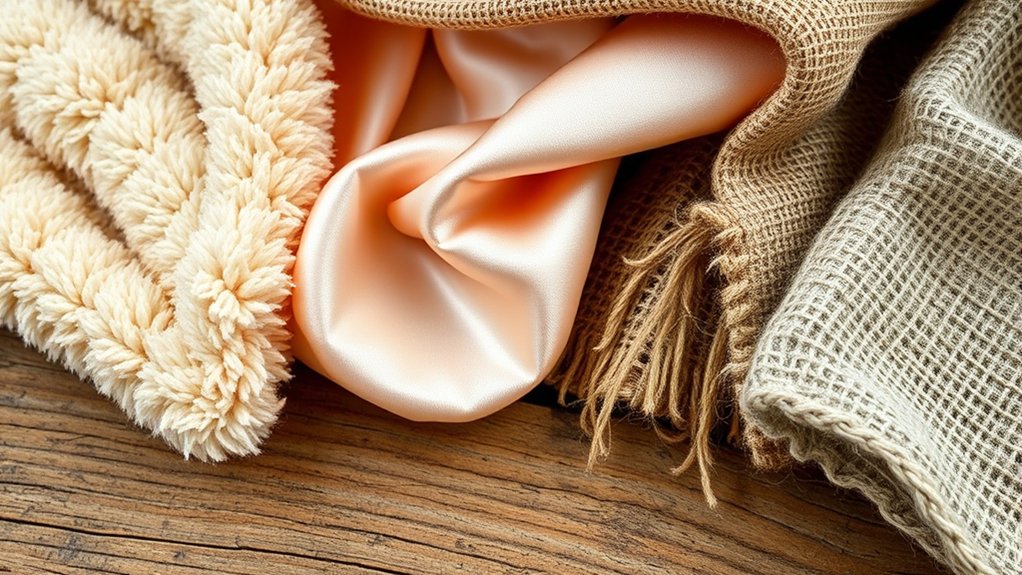
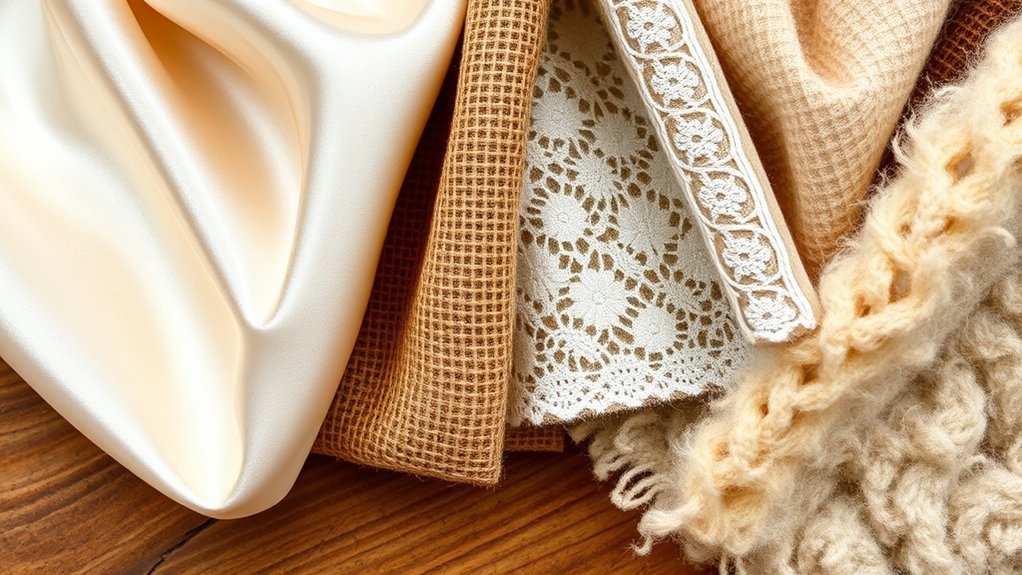
How can you tell what fabric you’re holding just by feeling it? Start by focusing on texture and weight. Natural fibers like cotton feel soft and breathable, while synthetic ones like polyester often have a slick or smooth finish.
Textile weaving plays a huge role, too. Tight weaves feel dense, while looser weaves feel airy or rough. Run your fingers over the surface to detect these differences. Fabric dyeing can also affect texture; some dyes make fabrics stiffer or smoother depending on the process used.
Try to notice if the fabric feels cool or warm to the touch, which hints at fiber type. For example, silk feels smooth and cool, whereas wool feels warm and slightly coarse.
How to Read Fabric Labels to Identify Fiber Content
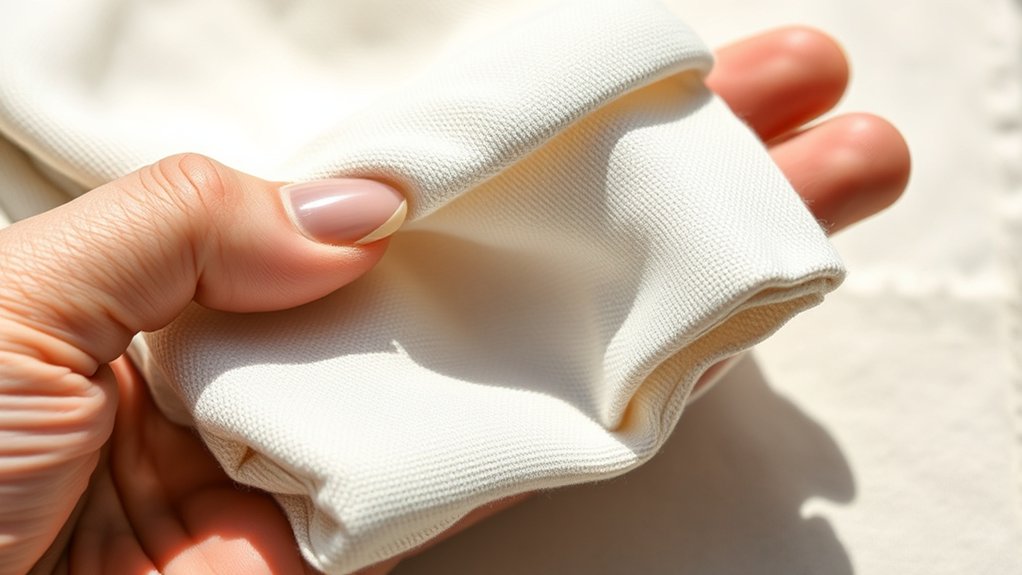
Feeling a fabric can tell you a lot, but the label provides concrete information about its fiber content. When you read fabric labels, focus on the fiber percentages listed. They reveal what materials the fabric contains. This info helps you understand how fabric dyeing might affect colorfastness and how the weave or pattern contributes to texture and durability.
Here’s a quick guide to common label terms:
| Fiber Content | What It Means |
|---|---|
| 100% Cotton | Natural fiber, breathable, soft |
| Polyester Blend | Synthetic with durability, wrinkle-resistant |
| Wool | Warm, often used in textured weaves |
Labels also mention care instructions, which relate to fiber type and dyeing methods. By knowing these details, you can better identify fabrics and predict how they’ll react to washing or wear. Next time you shop or clean clothes, let the label guide your fabric knowledge.
How to Tell Natural Fabrics Like Cotton and Wool Apart
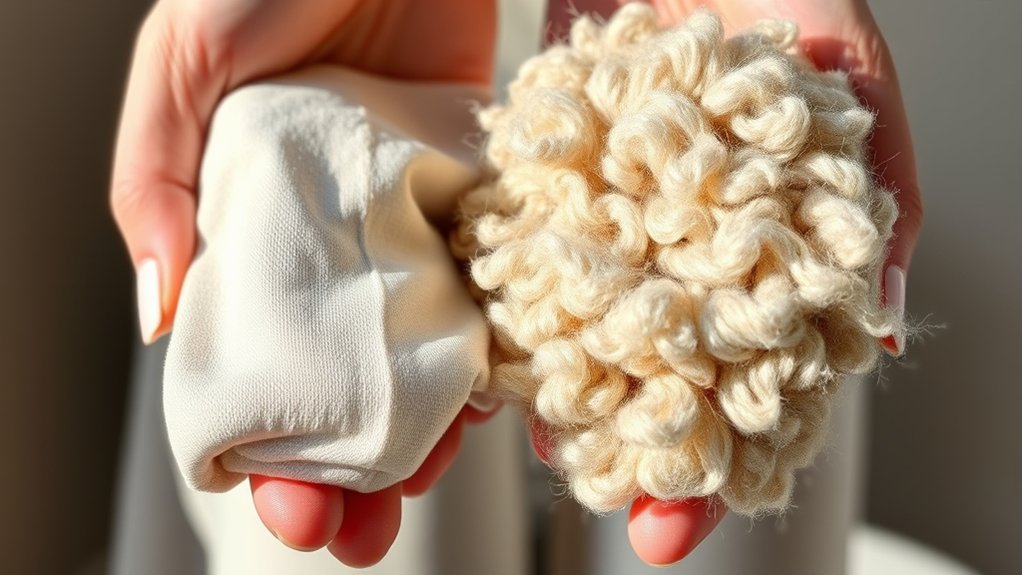
You can tell cotton and wool apart just by feeling their textures. Cotton feels smooth and soft, while wool is a bit coarser and has a springy touch.
Another easy way is the burn test. When you burn cotton, it smells like burning paper. Wool, on the other hand, gives off a smell similar to burning hair.
Also, cotton soaks up moisture pretty quickly, but wool tends to hold off water for a little longer. So, those are some simple tricks to help you tell them apart!
Texture Differences Explained
Why does cotton feel soft and breathable while wool often feels coarser and warmer? It all comes down to their texture and fiber structure, shaped during textile manufacturing. Cotton fibers are smooth and fine, allowing air to flow freely, making it comfortable in warm weather. Wool fibers, however, are crimped and thicker, trapping heat and giving a coarser feel.
To tell them apart by texture, consider these factors:
- Surface Feel: Cotton is smooth and soft; wool feels rougher and sometimes itchy.
- Fiber Flexibility: Cotton bends easily, while wool is springy due to its crimp.
- Absorption after Fabric Dyeing: Cotton absorbs dye evenly, producing uniform color; wool may show slight variations due to its texture.
Understanding these helps you identify fabrics confidently.
Burn Test Characteristics
How can you quickly distinguish cotton from wool when looking at a fabric sample? The burn test is a reliable method. Take a small piece of fabric and carefully burn it.
Cotton, a natural cellulose fiber, burns quickly with a steady flame, smells like burning paper, and leaves fine, soft ash. Wool, an animal protein fiber, burns more slowly, often self-extinguishes, smells like burning hair, and leaves a brittle, dark residue.
This difference stems from their unique fiber structures affected during fabric manufacturing and fabric dyeing processes. Fabric dyeing won’t change burn characteristics but can help identify treated fibers.
Moisture Absorption Traits
When comparing cotton and wool, how they absorb moisture offers a clear clue. Both are natural fibers, but their moisture management and fabric breathability differ markedly. You can tell them apart by:
- Absorption Rate: Cotton absorbs moisture quickly and feels wet, while wool takes longer but doesn’t feel damp because of its moisture-wicking properties.
- Drying Time: Cotton dries slower since it retains water, whereas wool dries faster by releasing moisture into the air.
- Breathability: Cotton lets air pass through easily, which helps with breathability. Wool, on the other hand, traps warmth while still letting moisture escape, making it great for regulating temperature.
How to Identify Common Synthetic Fabrics Like Polyester and Nylon
What makes synthetic fabrics like polyester and nylon stand out is their unique texture and durability. When you examine these fabrics, you’ll notice they often feel smooth and slightly slippery compared to natural fibers.
Polyester holds vibrant colors well due to advanced fabric dyeing techniques, while nylon’s surface can appear shinier thanks to specific textile finishing processes. You can also test their strength. Both resist stretching and wrinkling, which is a clear sign of synthetic origin.
Polyester keeps colors vibrant, nylon shines brightly, and both resist stretching and wrinkling, revealing their synthetic nature.
If you’re unsure, try a burn test carefully. Polyester melts and forms a hard bead, whereas nylon tends to melt and smell like plastic or celery. These characteristics, combined with visual inspection of weave tightness and sheen, help you identify these common synthetics.
Recognizing polyester and nylon becomes easier once you focus on texture, color retention, and durability from fabric dyeing and finishing treatments. These qualities set them apart from natural fabrics.
How Fabric Blends Affect Identification and Feel
Because fabric blends combine fibers with different properties, they can be trickier to identify by touch and appearance alone. You’ll notice that blends often balance qualities like softness, durability, and breathability, which single fibers can’t always offer.
When you’re trying to identify a blend, keep these points in mind:
- Look closely at the texture. Blends may feel smoother or more textured depending on the fiber mix.
- Observe the color uniformity. Fabric dyeing reacts differently to natural and synthetic fibers, sometimes causing subtle color shifts.
- Consider the fabric’s weight and drape since blends often combine the strengths of each fiber, influenced by textile history and manufacturing methods.
Understanding blends helps you appreciate how textile history has evolved, mixing fibers for better performance. So, when you test a fabric, think beyond single fibers and focus on how the blend’s unique characteristics affect feel and appearance.
How to Safely Use Burn Tests to Identify Fabrics
Before you start a burn test, make sure you set up a safe workspace. It’s important to have good ventilation and use a fireproof surface to prevent any accidents.
When you burn the fabric, watch closely how it burns, notice any smells, and check the residue it leaves behind. These clues can really help you figure out what type of fabric you’re dealing with.
After the test, be careful handling the materials. You don’t want to risk burns or accidentally inhale any fumes. Safety first!
Preparing a Safe Workspace
How can you guarantee safety when performing burn tests to identify fabrics? Setting up a safe workspace is essential, especially since burn tests involve open flames and fabric samples that may have undergone fabric dyeing or complex textile manufacturing processes.
Follow these steps:
- Work in a well-ventilated area to avoid inhaling fumes from burning synthetic dyes or treated textiles.
- Keep a fire extinguisher or a bucket of water nearby to quickly manage any accidental fires.
- Use heat-resistant surfaces like metal trays to contain burning fabric pieces and prevent fire spread.
Recognizing Fabric Burn Characteristics
Now that you’ve set up a safe workspace for burn tests, you can focus on recognizing fabrics by observing how they react to flame. Different fibers burn distinctly: natural fibers like cotton ignite quickly, smell like burning paper, and leave soft ash, while synthetic fabrics melt, smell like plastic, and form hard beads.
Pay close attention to these burn characteristics to distinguish fabric types. Keep in mind that fabric dyeing and textile printing can sometimes affect the burn’s color and smell, so consider these factors when evaluating results.
Always hold a small fabric sample with tweezers and ignite it briefly, then extinguish the flame quickly to observe safely. This method helps you accurately identify fabrics without damaging your entire textile piece.
Handling Materials Post-Burn
What should you do immediately after conducting a burn test to guarantee safety and accuracy? First, carefully extinguish any remaining embers to prevent fire hazards. Next, handle the burnt fabric with care, as the edges may be sharp or fragile. Finally, document your observations promptly to avoid confusion later.
Here’s a quick checklist to follow:
- Douse the sample in water or smother it to fully put out flames.
- Use tweezers or gloves to avoid burns while inspecting the residue.
- Record details like smell, ash texture, and burn speed for accurate fabric identification.
How to Test Fabric Stretch and Recovery at Home
Wondering if a fabric will hold its shape after stretching? You can easily test fabric stretch and recovery at home with a simple method. First, lay the fabric flat and gently stretch it in one direction.
Observe how far it stretches. Some fabrics, especially those with a lower thread count or blended fibers, will stretch more. After releasing, watch how quickly it snaps back to its original size. Fabrics with good recovery, like spandex blends, will bounce back almost immediately, while others may remain stretched out.
Keep in mind that fabric dyeing can affect stretch and recovery too. Some dyeing processes weaken fibers, making them less elastic. By combining this stretch test with your knowledge of thread count and dyeing, you’ll better understand the fabric’s durability and suitability for your projects.
This hands-on test helps you decide if a fabric will maintain its shape over time.
How to Recognize Fabric Weight and Weave Patterns
How can you tell if a fabric will feel heavy or light in your hands? Recognizing fabric weight and weave patterns is key. First, gently lift the fabric. Thicker weaves usually feel heavier. Next, examine the pattern variation; tight, dense weaves often indicate a heavier fabric, while loose weaves feel lighter and airier.
Lift the fabric gently—thicker, tighter weaves feel heavier, while looser patterns feel light and airy.
Finally, consider the fabric dyeing process. Some dyes penetrate deeply, affecting weight and texture subtly.
Here’s a quick guide to help you identify fabric weight and weave:
- Weave Tightness: Look closely. Tighter weaves like twill or satin feel heavier than plain or loose weaves.
- Thread Thickness: Thicker threads add weight, while thinner threads create lighter fabrics.
- Fabric Dyeing Impact: Fabrics with heavy, saturated dyeing may feel stiffer, influencing perceived weight.
Common Visual Clues That Help Identify Fabric Types
Although fabric weight and weave patterns provide valuable information, you can often identify fabric types by observing key visual clues. Look closely at the fabric’s texture, sheen, and how it interacts with light.
Natural fibers like cotton have a matte finish, while silk often shines. Synthetic fabrics may show a uniform surface. You can also consider how fabric paint adheres. Some fabrics absorb it better due to dye compatibility, revealing fiber content clues.
Here’s a quick reference table:
| Visual Clue | Fabric Type | Notes on Paint/Dye Compatibility |
|---|---|---|
| Matte, soft | Cotton | High dye compatibility; fabric paint soaks well |
| Slight sheen | Silk | Moderate dye compatibility; paint may sit on surface |
| Shiny, smooth | Polyester | Low dye compatibility; fabric paint adheres unevenly |
| Rough, coarse | Linen | Good dye compatibility; paint absorbs unevenly |
| Fuzzy, warm | Wool | Moderate dye compatibility; paint can cause stiffness |
Use these clues to identify fabrics before working with them.
How Knowing Fabric Types Helps With Proper Care and Durability
Recognizing fabric types through visual clues not only helps you identify them but also guides you in caring for each material properly. Different fabrics react distinctly to washing, drying, and storage, so knowing the type guarantees longevity and maintains appearance. Understanding fabric dyeing, weaves, and patterns plays a key role in this.
Here’s why knowing fabric types matters:
- Tailored Cleaning: Natural fibers like cotton tolerate high heat, while synthetic ones require gentle care to prevent damage or color fading from fabric dyeing.
- Preventing Wear: Tight weaves resist abrasion better, so you’ll know when to handle delicate patterns more gently to avoid fraying.
- Maintaining Shape: Some fabrics stretch or shrink based on their weave and fiber content. This helps you select the right washing technique to preserve fit and texture.
Frequently Asked Questions
What Tools Are Best for Professional Fabric Identification?
You’ll want to use tools like microscopes and spectrometers for professional fabric identification. They help with textile composition analysis by revealing fiber structure and chemical makeup.
Fabric sample testing kits, including burn tests and solubility tests, also give you quick insights. Combining these lets you identify fibers accurately, whether natural or synthetic.
Don’t forget to use standardized methods and reference charts to guarantee your results are reliable and consistent.
How Does Fabric Dye Affect Identification Accuracy?
Dye penetration affects, dye penetration challenges, and dye penetration consistency all influence your fabric identification accuracy. When you rely on colorfastness testing, you’ll notice that uneven dye penetration can mask true fiber characteristics, making it harder to identify the fabric correctly.
If dye bleeds or fades, your tests might give misleading results. So, always consider how dye penetration and colorfastness impact your evaluation to improve your identification precision.
Can Fabric Identification Help Detect Counterfeit Textiles?
Yes, fabric identification plays a vital role in textile fraud detection by verifying fabric authenticity. When you analyze the fiber content, weave, and dye, you can spot inconsistencies that indicate counterfeit textiles.
This helps you confirm if a fabric matches its claimed origin or brand. By using proper identification techniques, you’ll protect yourself from fake products and guarantee you’re getting genuine materials every time, boosting your confidence in fabric quality.
Are There Apps Available for Identifying Fabric Types?
Imagine holding a fabric like a magician’s cloak, each thread whispering secrets. Yes, there are apps that help you reveal fabric texture and fiber composition with a simple scan or photo.
These handy tools analyze patterns and materials, revealing if it’s cotton, silk, or synthetic. You don’t need to be a textile expert. Just use these apps to instantly access the fabric’s story right from your phone.
How Do Environmental Factors Alter Fabric Characteristics?
Environmental exposure can considerably change your fabric’s texture, color, and strength. When your fabric faces sunlight, moisture, or pollution, it accelerates fabric aging, causing fading, brittleness, or even mold growth.
You’ll notice natural fibers like cotton and wool degrade faster under harsh conditions, while synthetics might resist better but still weaken over time. Protecting your fabric from these factors helps maintain its original look and durability longer.
Conclusion
You might think identifying fabrics is tricky, but with a little touch, label reading, and keen observation, it’s surprisingly simple. Natural fabrics like cotton feel soft and breathable, while synthetics like polyester are often slick and durable.
Blends blur these lines, yet understanding stretch, weave, and weight helps you spot differences quickly. Knowing fabric types isn’t just about guessing; it’s about caring for your clothes right, ensuring they last longer and feel better every wear.
Learning how to identify the types of fabrics there are will make your wardrobe care easier and more effective.