How to Wash Microfiber in 5 Steps
If you’ve ever struggled with keeping your microfiber cloths clean and effective, you’re not alone. Many people find it tricky to wash microfiber properly without damaging the fibers or losing their absorbency. Getting it right means your cloths stay fluffy and ready to tackle dirt and grime whenever you need them.
Sort your microfiber by color, dirt level, and item type, then wash similar pieces together so lint and grime don’t spread. Use a gentle cycle with cool or warm water, small loads, and the shortest spin that still removes excess water.
Skip fabric softener because it coats fibers and cuts absorbency. Dry on low heat or air-dry, then store everything clean, dry, and dust-free so it stays fluffy, effective, and ready for more helpful tips.
Key Takeaways
- Sort microfiber by color, fabric type, and soil level before washing. This helps prevent lint transfer and contamination.
- Wash microfiber in small loads on a gentle cycle with cool or warm water.
- Use mild detergent only and skip fabric softener. Fabric softener coats fibers and reduces absorbency.
- Dry microfiber on low heat or air-dry to protect the fibers and keep them soft.
- Store completely dry microfiber in a clean, dust-free place. Keep it separated from lint and chemicals.
Sort Microfiber Before Washing

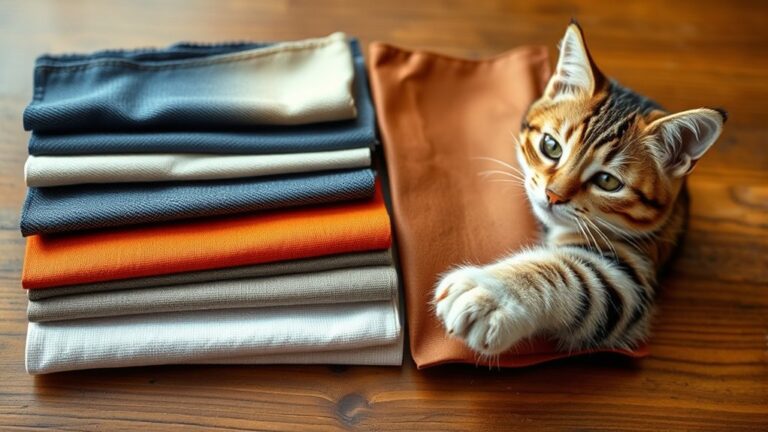
Before you wash microfiber, sort it by color and by how dirty it is so you don’t spread lint, grime, or dye. Then separate cloths, towels, and mops from each other, because different microfiber types collect different debris and need different care.
Keep heavily soiled pieces apart from lightly used ones so you don’t muddy cleaner loads. If you’ve used microfiber with grease, polish, or cleaning chemicals, isolate those items for washing soon.
Separate heavily soiled microfiber from lightly used pieces, and wash grease- or chemical-used items promptly.
You should also group like fabrics together, since plush towels and thin dusting cloths behave differently in the wash. Check the tags if you have them, then set each pile aside neatly.
Sorting now helps you protect the fabric’s grip and absorbency, and it makes later steps easier. Adjust your washing frequency based on use: daily cleaning cloths need sorting more often than occasional dusting cloths.
Choose the Right Wash Settings
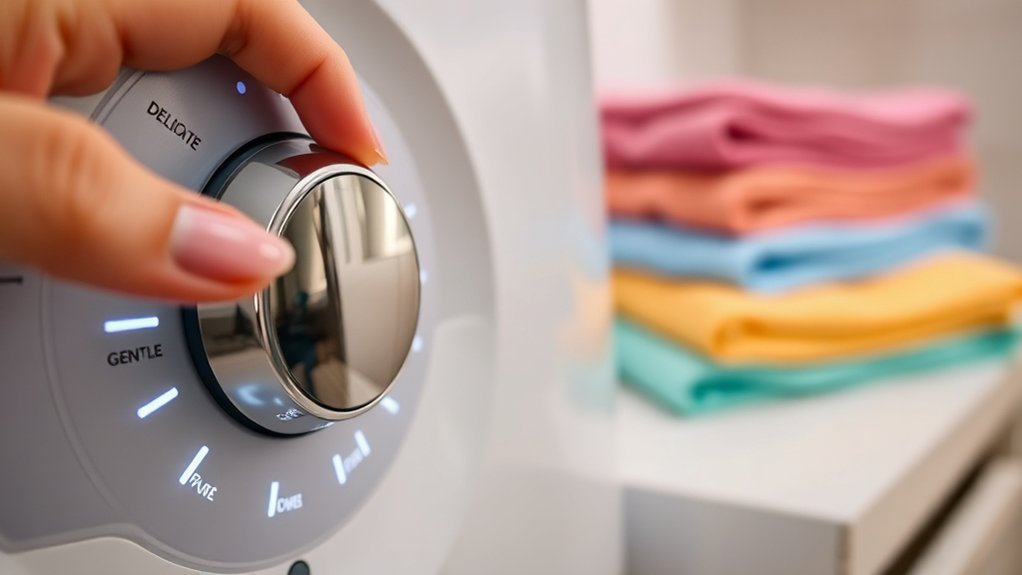
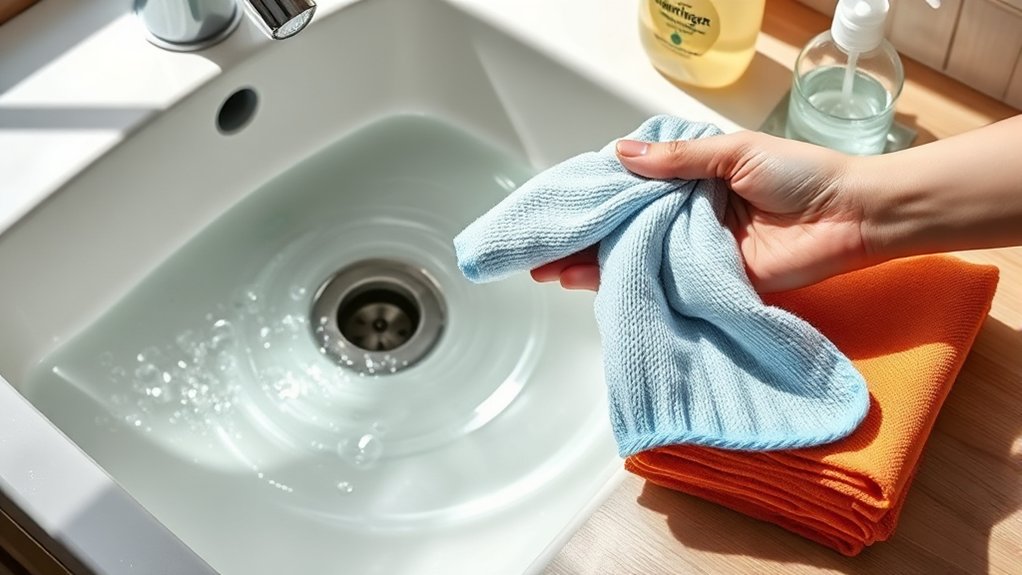
Now that your microfiber is sorted, set your washer to a gentle cycle with cool or warm water, since hot water can damage fibers and trap residue. Use the shortest spin that still removes excess water, and keep the load small so the cloths can move freely.
For thicker microfiber types, a moderate wash time usually works best; for lighter cloths, a shorter cycle often does the job. Match your washing frequency to how dirty the items are: clean cloths after light use, but wash heavily soiled ones right away.
If your machine has a delicate or hand-wash option, that’s often the safest choice because it reduces friction and helps preserve the soft weave. Check the care tag before you start, since some microfiber pieces need slightly different settings.
The right cycle protects absorbency, keeps the texture consistent, and helps your microfiber last longer.
Skip Fabric Softener When Washing Microfiber
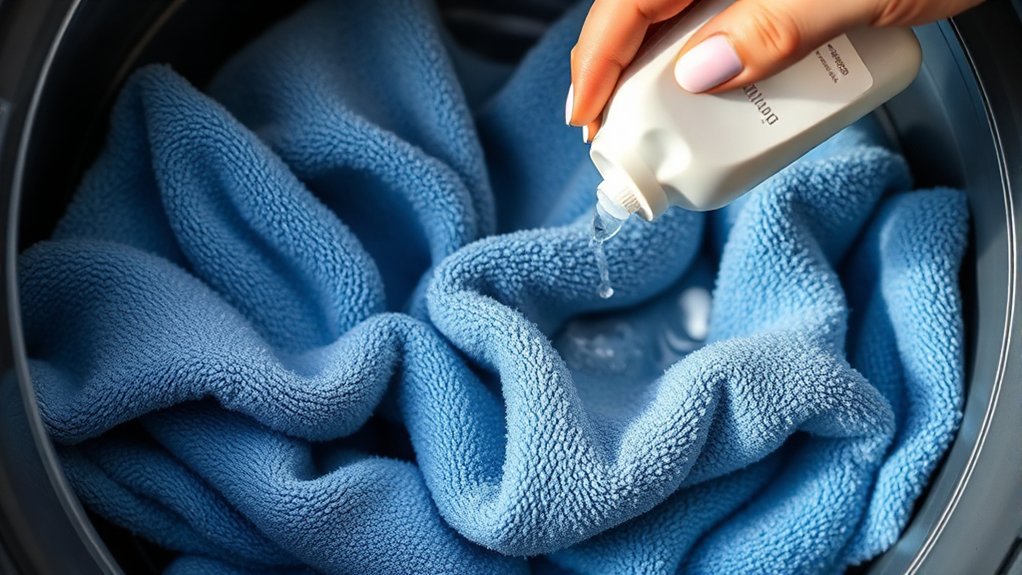
Fabric softener might seem helpful, but it leaves a coating on microfiber that reduces absorbency and can make the fibers feel slick instead of soft. Skip it every time you wash microfiber, even if you want extra fragrance or a softer touch.
The tiny fibers work best when they stay clean and open, so anything that clogs them cuts performance. If you use softener once, your cloths may stop grabbing dust and moisture the way they should.
To protect microfiber durability, stick with a mild detergent and follow the right washing frequency for each item’s use. Heavily used towels need washing more often, while lightly used cloths can go longer between loads.
Dry Microfiber on Low Heat
Tumble dry microfiber on low heat, or air-dry it if you’d rather play it safe. Choose gentle heat settings so you don’t melt the fibers or shrink the fabric. If your dryer has a delicate cycle, use it and remove the microfiber as soon as it’s dry. Overdrying can make it stiff, reduce its grab, and leave it less effective for dusting or cleaning.
You can also mix drying techniques based on the load. For plush cloths, low heat works well; for thinner towels, air-drying may be enough. Shake each item out before drying to help it dry evenly and avoid clumping.
Never use high heat, since it can damage the microfiber structure and shorten its life. If you line-dry, hang the pieces flat or drape them where air can move around them. Keep the process simple, controlled, and gentle, and your microfiber will stay soft, absorbent, and ready for the next cleaning task.
Store Microfiber Clean and Ready to Use
Once your microfiber is completely dry, fold or stack it in a clean, dust-free spot so it stays ready for the next job. Choose microfiber storage that keeps towels separate from lint, oils, and chemicals. Even the best cleaning techniques can’t rescue fabric that picks up debris afterward.
Use a breathable bin, drawer, or sealed bag, and label it if you keep different cloths for glass, dusting, or spills. You’ll save time, protect absorbency, and make every wipe feel effortless. Keep sharp items away, and don’t compress the fibers too tightly since they need a little space to stay fluffy and effective.
You’ll feel confident when each cloth looks fresh. You’ll avoid frustration from musty, tangled towels. You’ll enjoy smoother, quicker cleaning sessions. You’ll know your tools are always ready.
Frequently Asked Questions
Can Microfiber Cloths Be Washed With Cotton Towels?
Yes, you can wash microfiber cloths with cotton towels, but you shouldn’t if you want the best results. Cotton sheds lint that can stick to microfiber and reduce its cleaning power.
For better microfiber care, wash them separately in warm water with a mild detergent. These laundry tips help preserve absorbency and softness.
Skip fabric softener and dryer sheets, and dry on low heat or air dry to keep them working well.
How Often Should Microfiber Be Washed?
Wash microfiber after every 3 to 5 uses, and sooner if it’s greasy, dusty, or heavily soiled. A clean cloth can trap up to 99% of dirt, so your microfiber maintenance tips should include checking it regularly.
Follow simple washing frequency guidelines: rinse after light jobs, then machine-wash when performance drops. You’ll keep it soft, absorbent, and effective longer if you avoid fabric softener and high heat.
Can Microfiber Remove Bacteria After Washing?
Yes, microfiber can remove bacteria better after washing if you clean it well and keep its fibers intact. You’ll get better bacteria removal when you use proper detergent, warm water, and no fabric softener, which can reduce washing effectiveness.
Dry it fully, too, because damp cloths can hold germs. Clean microfiber won’t sterilize surfaces, but it can still trap and lift more bacteria than a dirty, clogged cloth.
How Do You Clean Microfiber Stains Before Washing?
You can tackle stains with gentle stain removal techniques before washing. Blot, don’t rub, then apply a mild cleaning solution like diluted dish soap or vinegar to the spot. Use a soft cloth to work it in, and let it sit briefly.
For stubborn marks, repeat the process with steady, soft strokes. Always test first on a hidden area so you don’t damage the microfiber’s delicate fibers.
Does Microfiber Lose Absorbency Over Time?
Yes, microfiber can lose absorbency over time, especially if you use harsh detergents, fabric softener, or high heat. You can extend microfiber lifespan by using gentle cleaning techniques, washing in warm water, and air-drying or tumble-drying low.
If your cloths start leaving moisture behind, they may be coated with residue. You’ll get better results when you rinse them well and keep them free of buildup regularly.
Conclusion
Now you know how to wash microfiber the right way, but the real payoff comes next. When you sort it, wash it gently, skip fabric softener, and dry it on low, each fiber stays ready to trap dust again.
Then, when you fold it and store it clean, you’re not just putting it away, you’re setting up your next spotless win. The next time you grab it, your microfiber will be ready to work its magic.