How to Wash Polyester in 10 Steps
Washing polyester can be tricky, and if you’ve ever ended up with stiff, misshapen clothes or stubborn stains, you’re not alone. Many people struggle with getting their polyester garments clean without damaging the fabric or losing that smooth finish.
Luckily, knowing the right steps makes all the difference in keeping your polyester looking fresh and feeling comfortable.
Check the care label first so you know whether your polyester is machine washable or needs dry cleaning. Then sort lights, darks, and bright colors, and pretreat any stains right away.
Wash on a gentle cycle in cold or warm water with a mild detergent, and skip fabric softener unless the label allows it.
Use a mesh bag for delicate items, then dry on low heat, remove wrinkles carefully, and store it clean and dry for best results.
Key Takeaways
- Check the care label first, and sort polyester by color to prevent shrinkage and dye transfer.
- Treat stains before washing, using spot treatment and cool water to improve removal.
- Wash polyester in cold water on a gentle cycle with mild detergent.
- Avoid fabric softener unless the label allows it, and use a mesh bag for delicate items.
- Tumble dry on low heat, remove promptly, and reshape or hang to reduce wrinkles.
Check the Care Label First
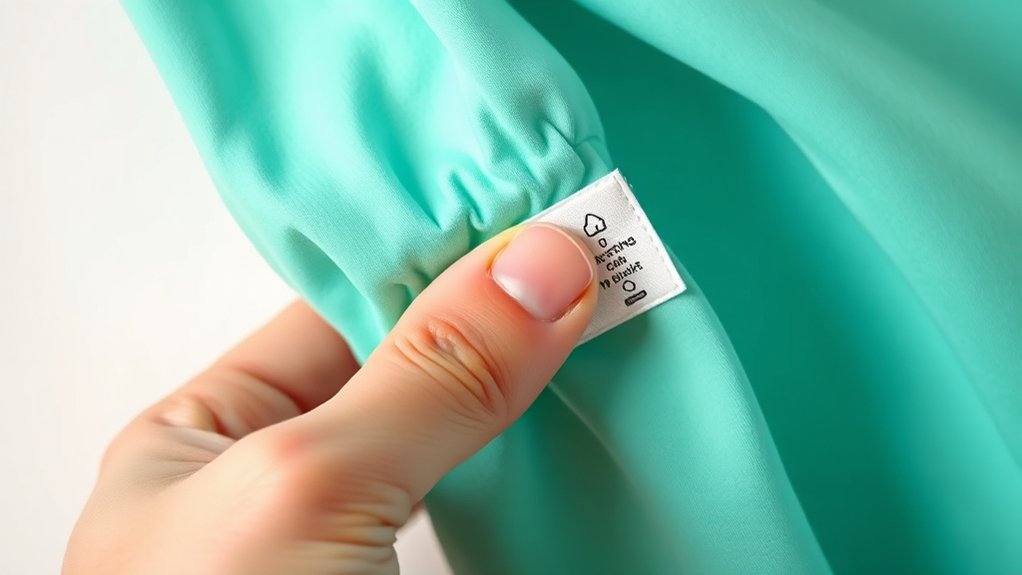
Before you toss polyester into the wash, check the care label first so you know exactly what the fabric can handle. You’ll see the fabric composition, which tells you whether the garment is 100% polyester or a blend that needs gentler care.
The label also spells out the best washing techniques, including water temperature, cycle type, and whether you should skip bleach or fabric softener. Don’t assume every polyester item behaves the same; some pieces can handle warm water, while others need cold water and a delicate cycle to keep their shape and finish.
The care label tells you the right water temperature, cycle, and whether to skip bleach or softener.
If the tag says “dry clean only,” follow that instruction instead of guessing. Reading the label takes seconds, but it helps you avoid shrinkage, pilling, and damage.
When you match your cleaning method to the care instructions, you protect the fabric and get better results every time.
Sort Polyester by Color

Sort your polyester into lights, darks, and bright colors so you don’t accidentally transfer dye in the wash. This simple step helps you protect every piece from color fading and fabric bleeding, especially when you wash newer items.
Keep white shirts, pastel tops, black leggings, and vivid reds in separate piles before you load the machine. If you mix them carelessly, one runaway dye job can dull the whole load.
- Put whites and pale shades together.
- Wash dark navy, black, and charcoal items separately.
- Group reds, oranges, and brights on their own.
You’ll get cleaner results and keep your clothes looking fresher longer. If a garment seems extra vivid or new, give it its own load the first time.
That little bit of sorting saves you from faded favorites and keeps your polyester looking sharp, bright, and ready to wear again.
Pretreat Stains Before Washing
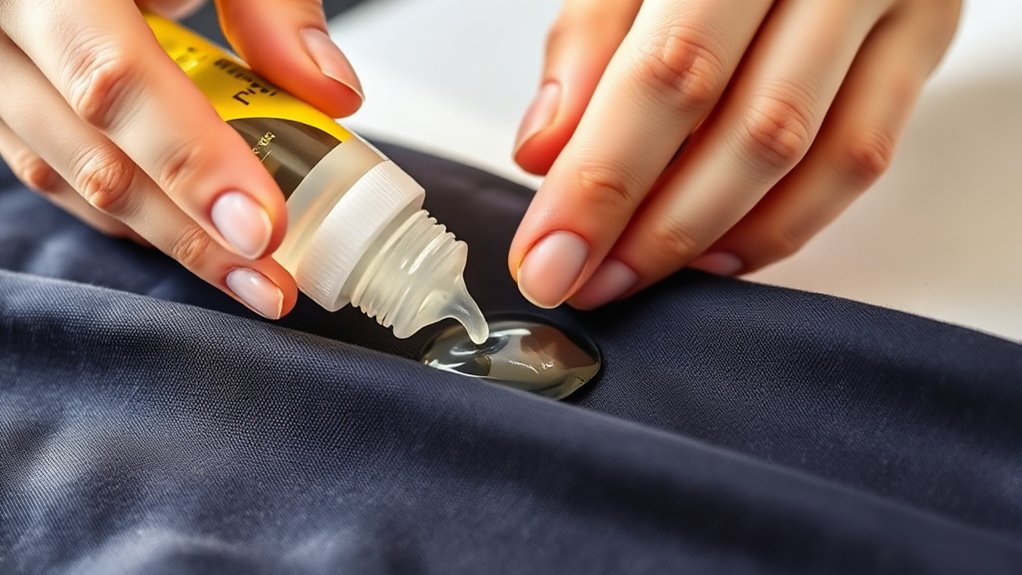
Before you wash polyester, take a moment to check the stain and figure out what caused it. Different spots need different care, so this step really helps. Next, apply a small amount of spot treatment directly to the stain and gently work it in. Let it sit for a few minutes so it can start breaking down the stain before you toss it in the wash.
Identify Stain Types
Stains on polyester all need different treatment, so identify what you’re dealing with before you wash the item. Check the mark’s color, texture, and smell to narrow it down. Good fabric care starts with knowing whether you’re handling food, oil, mud, or makeup, because each affects stain removal differently.
Fresh, wet stains usually lift more easily, so don’t rub them in. Greasy stains often look darker and may feel slick to the touch. Colored stains from drinks or cosmetics can spread if you ignore them.
When you spot the type, you can choose the safest next step and avoid damaging the fibers. Careful sorting like this helps you wash polyester confidently and keeps the fabric looking its best.
Apply Spot Treatment
Once you’ve identified the stain, treat it right away with a small amount of stain remover, liquid detergent, or a paste of water and baking soda. Gently work it into the fibers with your fingers or a soft cloth, then let it sit for 5 to 10 minutes. Don’t scrub hard, since that can damage polyester or spread the mark.
For oil, makeup, or food stains, focus the product only on the affected area. These treatment techniques improve stain removal without stressing the fabric. After the spot treatment, rinse the area with cool water and check whether the stain has faded.
If it’s still visible, repeat the process before washing. Acting quickly gives you the best chance to remove the stain completely and keep your polyester looking clean.
Wash Polyester in Cold or Warm Water
- Check the tag before you start.
- Pick cold for everyday washing.
- Choose warm only when buildup needs more help.
You’ll get the best results by keeping the cycle gentle and matching the water setting to the fabric’s needs. After washing, remove polyester promptly so it stays smooth and keeps its fit.
Use a Mild Detergent
Choose a mild detergent that’s made for delicate fabrics or regular laundry without harsh additives. You’ll protect polyester fibers by avoiding bleach, strong enzymes, and heavy perfumes that can break down finishes or leave residue.
When you compare detergent types, look for formulas labeled gentle, clear, or free of brighteners. Use only the amount the label recommends; extra soap won’t clean better, and it can cling to synthetic fabric.
If you’re handwashing, dissolve the detergent fully before adding your garment. If you’re using a machine, pour it into the dispenser so it mixes evenly during washing techniques you already use.
A low-sudsing detergent helps polyester rinse clean and stay smooth. You should also skip fabric softener unless the care label says otherwise, since it can coat fibers and trap dirt.
With the right detergent, you’ll keep your polyester looking fresh, feeling soft, and lasting longer after every wash.
Choose the Delicate Cycle
Set your washer to the delicate cycle so it uses a gentler agitation and shorter wash time. This setting helps polyester keep its shape, color, and smooth finish while reducing stress on the fibers. You don’t need a heavy-duty cycle for these clothes, especially when you’re caring for delicate fabrics that can wrinkle or snag with rougher motion.
Use the delicate cycle for polyester to protect its shape, color, and smooth finish.
Use these washing tips to get better results:
- Select cold or lukewarm water to limit shrinkage and fading.
- Keep the load small so the garments move freely.
- Stop the cycle as soon as it finishes to avoid extra creasing.
If your machine offers adjustable spin speed, choose the lower option for a softer finish. Always read the care label first, since some blends need extra caution. By choosing the delicate cycle, you give polyester a cleaner wash without beating it up, which helps your clothes last longer and look neater after every laundry day.
Use a Mesh Bag for Delicates
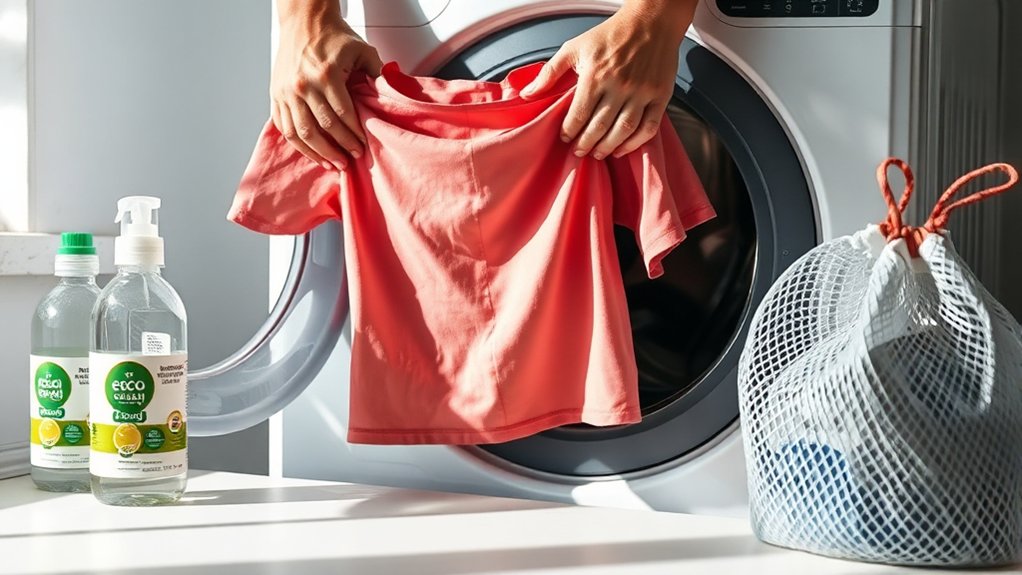
Put delicate polyester items in a mesh bag before washing. This helps shield the fibers from rough agitation. Plus, that extra layer cuts down on snags and keeps stretchy pieces from getting pulled out of shape. It’s a simple step, but it can make a big difference in how your clothes hold up.
Protecting Delicate Fibers
If your polyester piece has lace, mesh, trim, or other fragile details, tuck it into a mesh laundry bag before washing. This simple step supports fiber care and keeps your washing techniques gentle and effective. The bag acts like a buffer, so detergent and water can move through while delicate fibers stay protected. You’ll also keep small embellishments together, which makes cleanup easier.
- Zip or close the bag fully before loading it.
- Choose a bag that fits the garment without crowding it.
- Wash the bagged item with similar fabrics on a mild cycle.
After washing, lift the item out right away and reshape it by hand. That extra minute helps preserve the fabric’s look and feel, so your polyester stays neat longer.
Preventing Snags And Stretching
To prevent snags and stretching, slip delicate polyester items into a mesh bag before they go in the wash. You’ll keep zippers, hooks, and rough seams from catching the fabric, which makes snag prevention much easier.
Close clasps, turn garments inside out, and don’t overcrowd the bag; polyester needs room to move, but not enough to twist around other clothes. Choose a fine-weave bag for lingerie, blouses, or lightweight activewear, and use a separate bag for each small load.
This simple step also gives you reliable stretching solutions because the mesh limits tugging during agitation and spin cycles. When the wash ends, remove items promptly and reshape them by hand. Air-drying helps them keep their fit and finish.
Dry Polyester on Low Heat
Tumble dry polyester on the lowest heat setting to help prevent shrinking, warping, or heat damage. You’ll protect the fibers and keep your clothes looking smooth longer when you choose gentle drying techniques and smart fabric care. Before you start, shake out each item so it dries more evenly and doesn’t bunch up in the drum.
- Set the dryer to low or delicate heat.
- Dry similar weights together so lighter pieces don’t overheat.
- Check the load near the end and stop it while it’s still slightly damp.
Avoid high heat, which can weaken polyester and shorten its life. If your dryer has a moisture sensor, use it to avoid over-drying. Once the cycle ends, remove items promptly and fold or hang them right away. That simple habit helps them keep their shape and stay comfortable to wear.
Remove Wrinkles Safely
You can smooth out polyester wrinkles by using a low-heat iron setting—this way, you won’t damage the fabric. If you decide to use steam, just be careful and keep the heat gentle. Another handy tip is to hang the item right after drying, which helps it stay smooth.
Low Heat Settings
Use the lowest heat setting on your dryer to smooth out wrinkles without damaging polyester. You’ll protect the fibers and keep the fabric looking crisp longer. For polyester fabric care, low heat benefits matter because high temperatures can warp shape and dull the finish. Before you dry, shake the garment out so wrinkles relax faster.
- Check the care label first.
- Put the item in alone or with similar fabrics.
- Remove it as soon as the cycle ends.
If wrinkles remain, hang the piece briefly and let gravity finish the job. You can also turn the garment inside out to reduce surface stress. By choosing gentle drying, you help polyester stay neat, comfortable, and ready to wear without extra effort or damage.
Steam With Care
When wrinkles linger, steam can smooth polyester safely if you keep the heat gentle and the tool moving. Hold the steamer a few inches away and test a hidden spot first. Use short passes, not long blasts, so you don’t overheat the fibers.
If you’re using an iron, choose the steam setting and press lightly with a thin cloth between the plate and fabric. These steam techniques help release creases without flattening the material or leaving shine.
Work on one section at a time, and stop once the wrinkles relax. Good fabric care means watching the fabric closely and adjusting before any damage starts. Let the polyester cool naturally after steaming so the shape sets cleanly and the finish stays smooth.
Hang Dry Smoothly
After steaming, the way you dry polyester can make a big difference in how smooth it looks. For best fabric care, shake out the garment, then hang it on a padded hanger so the weight pulls out light wrinkles without stretching the fibers. Keep the item away from direct sun and heat, since both can set creases or fade color.
While hang drying, smooth seams and hems with your hands, and leave space around the fabric so air moves freely.
- Fasten buttons or zippers to keep the shape neat.
- Clip hems gently if the piece sags.
- Check it once dry and remove it promptly.
If a few wrinkles remain, lightly steam again instead of ironing hard.
Store Polyester to Stay Fresh
Keep polyester fresh by storing it only when it’s completely clean and dry. Choose storage solutions that let air circulate, like breathable cotton garment bags, open shelves, or clear bins with vent holes. Fold pieces neatly to prevent deep creases, and avoid cramming them into tight spaces where moisture can linger.
If you need long-term storage, add freshness tips such as cedar blocks or silica packets to help control odors and humidity. Keep polyester away from direct sunlight, which can fade colors and weaken fibers over time. Store workout wear separately from everyday clothes so sweat smells don’t spread.
Before you wear any stored item, give it a quick shake and check for dust or stale odors. If something feels musty, air it out for a few hours before putting it on. With the right habits, you’ll keep polyester looking crisp, smelling clean, and ready to wear anytime.
Frequently Asked Questions
Can Polyester Be Hand Washed Instead of Machine Washed?
Yes, you can hand wash polyester instead of machine washing it. You’ll protect delicate items by using cool water and a mild detergent.
Follow the care instructions on the label, and gently swish the fabric rather than scrubbing it. These hand washing tips help prevent stretching, fading, and snagging.
Rinse well, then press out excess water and air dry the item flat or on a hanger.
Does Polyester Shrink After Washing?
Yes, polyester usually doesn’t shrink much after washing, like a sturdy bridge holding its shape. You’ll keep its fabric durability strong with careful polyester care: use cool or warm water, gentle cycles, and low heat drying.
High heat can still warp or slightly shrink it, so you shouldn’t treat it like cotton. If you wash and dry it gently, you’ll protect the fit and keep your clothes looking fresh longer.
Can You Bleach Polyester Fabric Safely?
You shouldn’t bleach polyester fabric with chlorine bleach because it can weaken fibers, dull color, and leave damage. You can use oxygen-based bleach instead, which is safer for most polyester garments.
Always check the care label first, then test a hidden spot. For better fabric care, choose bleach alternatives like stain remover, baking soda, or detergent boosts.
If you need whitening, wash gently and dry with low heat.
How Often Should Polyester Clothes Be Washed?
You should wash polyester clothes after every few wears, or sooner if you sweat, get them dirty, or notice odors. Your washing frequency depends on activity and climate. For everyday outfits, you can often wear them 2–4 times before washing.
Good polyester care means checking stains right away, airing items out between uses, and following the care label so you don’t damage the fabric or trap smells.
Can Polyester Be Washed With Other Fabrics?
Yes, you can wash polyester with other fabrics if you sort carefully. You’ll do best pairing it with similar colors and lightweight items, especially polyester blends.
Avoid mixing it with lint-heavy towels or rough fabrics that can snag it. Use cold water, a gentle cycle, and mild detergent for smart washing tips.
Always check care labels first, since some fabrics need different handling and drying.
Conclusion
So there you have it: polyester, the fabric that asks for the care of a newborn and the attitude of a gym sock. Check the label, sort it, treat stains, and don’t bully it with hot water unless you enjoy tiny fabric rebellions.
Use mild detergent, a mesh bag, and low heat like you’ve got some manners. Then store it properly, because even polyester deserves a respectable retirement, not a wrinkled exile in the closet.
Remember, knowing how to wash polyester the right way keeps your clothes looking great and lasting longer.