Is Bear Spray Flammable?
If you’re gearing up for outdoor adventures, you’ve probably wondered about the safety of bear spray—especially if you’re concerned about its flammability. You’re not alone; many people struggle with how to store and handle this essential protection without risking accidents.
Yes, bear spray can be flammable. You should treat it like an aerosol with alcohol-based solvents and a pressurized propellant, so keep it away from flames, sparks, stoves, grills, and hot surfaces.
Heat can raise pressure inside the canister and increase the risk of leaking, rupturing, or even exploding.
Store it in a cool, dry place and check it for damage often.
There’s more to know about safe storage and use.
Key Takeaways
- Bear spray can be flammable because some formulations contain alcohol-based solvents and pressurized propellants.
- Keep bear spray away from open flames, stoves, grills, sparks, and other heat sources.
- High heat can cause pressure buildup, increasing the risk of canister rupture or explosion.
- Never leave bear spray in a hot car or direct sunlight. Store it in a cool, dry place.
- Inspect damaged, bulging, leaking, or expired canisters and replace them immediately.
What Is Bear Spray Made Of?
Bear spray is usually a concentrated capsaicin and related capsaicinoids solution, mixed with an oil-based or alcohol-based solvent and packed into a pressurized aerosol canister. You’re dealing with a deterrent, not a poison, and its bear spray composition is designed to irritate a bear’s eyes, nose, and respiratory tract.
The active ingredient comes from hot peppers, while the carrier helps it spray in a wide cloud. You’ll also find propellants that create pressure inside the canister, letting you release the spray quickly at close range. Other ingredients may stabilize the formula or help it disperse evenly.
When you’re evaluating effectiveness factors, check concentration, spray pattern, range, and can size. A stronger formula doesn’t always work better if you can’t aim it well. Wind, distance, and your response time all matter too.
If you understand what’s inside the canister, you can use it more confidently and choose a product that fits your safety needs.
Is Bear Spray Flammable?
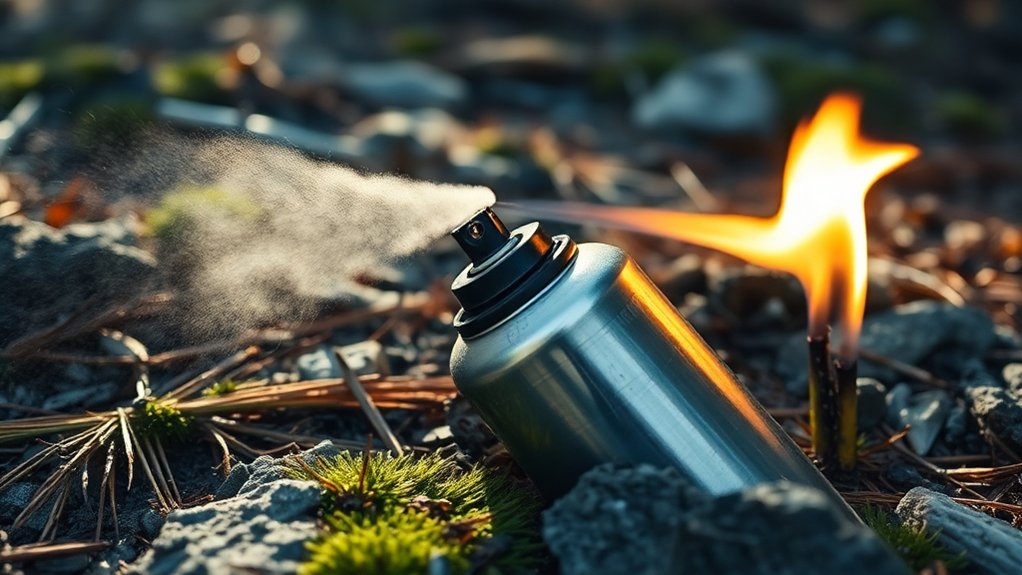
You might be wondering if bear spray can catch fire. Well, it really depends on what’s inside and how you store it. Many bear sprays use a pressurized carrier along with alcohol-based or similar ingredients. Because of this, it’s a good idea to keep your bear spray away from heat, sparks, and open flames. Knowing these fire safety risks can help you handle your bear spray more safely when you’re out in the field.
Bear Spray Ingredients
At its core, bear spray is a pressurized aerosol made with capsaicin and related capsaicinoids, the compounds that trigger the intense burning sensation in chili peppers. These are mixed into a solvent and propellant system.
When you use it, the active ingredients coat the aerosol droplets and irritate an animal’s eyes, nose, and lungs, creating a strong deterrent. The solvent keeps those compounds dispersed, while the propellant helps you release them in a controlled cloud.
You don’t need to expect any special chemical reactions for the spray to work; its effect comes from physical delivery and biological irritation. Manufacturers formulate it for consistency, so you get a reliable burst rather than a simple pepper extract. That mix also helps the spray stay effective in a compact canister during storage.
Fire Safety Risks
Yes, bear spray can be flammable because it’s usually packaged with a pressurized propellant that may ignite if exposed to flame, sparks, or intense heat. You should treat it like other aerosol products and keep it away from stoves, heaters, and direct sunlight. For fire prevention, store it in a cool, dry place and never puncture or burn the canister.
| Hazard | Risk | Action |
|---|---|---|
| Open flame | Ignition | Move away immediately |
| Hot vehicle | Pressure build-up | Remove and cool |
| Sparks | Flash fire | Avoid nearby use |
| Damaged can | Leak | Replace it |
| Storage area | Accumulation | Check ventilation |
A quick risk assessment helps you spot unsafe storage and use before trouble starts.
Can Bear Spray Explode in Heat?
Yes, bear spray can build up dangerous pressure when exposed to high heat, which increases the risk of it rupturing or even exploding. So, it’s really important to avoid leaving it in hot cars, direct sunlight, or any place where temperatures can rise quickly.
Make sure to store it within the temperature range recommended by the manufacturer. That way, it stays stable and ready to use whenever you need it.
Heat and Pressure Risks
When bear spray gets too hot, the pressure inside the canister can rise fast, which raises the risk of leaking, rupturing, or even exploding in extreme cases. You should think about pressure effects any time the canister sits in direct sun, near a heater, or inside a hot vehicle.
The spray’s propellant expands as temperatures climb, and that extra force can stress the metal seam, valve, and nozzle. With smart temperature considerations, you lower the chance of sudden failure and accidental discharge. You also avoid handling a canister that feels swollen, hisses, or shows damage, since those signs point to internal stress.
Treat heat seriously because a pressurized bear spray can become dangerous long before it actually ignites.
Safe Storage Temperatures
Bear spray should stay within the temperature range listed by the manufacturer, and you should never leave it in a hot car, direct sunlight, or near any heat source for long. You should check the label for safe temperature ranges, because heat can raise internal pressure and damage the canister.
Store it in a cool, dry place, away from stoves, heaters, and windows. Don’t keep it in storage containers that trap heat, and avoid garages that get hot in summer.
If you hike or camp, carry it in shade when you can and bring it indoors after use. Watch for bulging, leaking, or hissing cans, since those signs mean trouble.
Proper storage lowers the chance of failure and keeps spray ready when you need it.
What Happens If Bear Spray Gets Hot?
If bear spray gets too hot, the pressure inside the canister can rise quickly, which may cause it to leak, rupture, or in extreme cases burst. You might also notice the nozzle clogging or the spray pattern changing because the propellant expands as temperatures climb.
These heat effects can weaken the canister over time, so you shouldn’t leave it in direct sun, a closed vehicle, or near other heat sources. Bear spray also shows temperature sensitivity, so extreme heat can make it less reliable when you need it most.
While the contents aren’t meant to catch fire easily, added pressure raises the risk of accidental discharge if the can is damaged. Handle it carefully after exposure to heat, and inspect the can for dents, bulging, or leaks before you carry it again. If anything looks off, replace it instead of taking chances.
How to Store Bear Spray Safely
Store bear spray in a cool, dry place away from direct sunlight, heaters, and anything that could spark or ignite. You should choose a spot where the canister stays upright and is easy to reach when you need it.
Store bear spray in a cool, dry place away from heat and direct sunlight.
For indoor storage, pick a closet, cabinet, or shelf that stays near room temperature and away from moisture. If you use outdoor storage, keep the spray in a shaded, weather-protected container, but don’t leave it exposed to heat swings.
Check the label for storage instructions before you put it away. Keep the safety clip engaged so the trigger can’t get pressed. Inspect the canister regularly for dents, leaks, or swelling.
You’ll protect the spray’s performance and reduce risk by storing it thoughtfully. When you pack it for trips, place it where it won’t get crushed or left in extreme conditions.
How to Keep Bear Spray Away From Flames
Keep bear spray well away from open flames, hot stoves, grills, campfires, and any other ignition source because the propellant can ignite under high heat. When you’re cooking outdoors, keep the can in a cool, shaded spot. Never set it on a burner, fire ring, or tailgate near heat.
If you’re hiking or camping, pack it in a side pocket or holster that stays clear of lanterns, fuel canisters, and heated gear. Don’t leave it inside a hot vehicle, where temperatures can climb fast.
Check the label before each trip and follow the manufacturer’s storage guidance. Good fire prevention starts with simple habits: keep the spray sealed, dry, and separated from anything that gets hot. These steps support outdoor safety and help you avoid unnecessary risk while keeping your bear spray ready when you need it most.
What Happens If You Spray Near Fire?
Spraying bear spray near fire can be dangerous because the aerosol propellant and fine particles may ignite or flare up when they hit flames or very hot surfaces. If you use it close to fire, you risk creating a sudden burst of heat, smoke, or flame that can harm you and others nearby. The spray distance matters too, since a short range puts you closer to the hazard and leaves less room to react.
You may see a flash if the spray meets open flame.
You could worsen the fire by adding combustible aerosol.
You should back away immediately if ignition starts.
Keep your face turned aside, move upwind, and avoid firing bear spray where sparks, campfires, stoves, or hot metal are present. Even brief exposure near heat can turn a defensive tool into an extra danger.
How to Store Bear Spray in Your Car
In your car, bear spray should ride in a cool, shaded spot out of direct sunlight, like the glove box, center console, or a bag in the footwell. Just make sure it won’t roll around or get crushed. Focus on proper placement and temperature control so the canister stays accessible without baking on the dash or freezing near an open window.
Keep it away from heaters, vents, and loose gear that can trap heat or knock the safety tab loose.
| Spot | Pros | Watch for |
|---|---|---|
| Glove box | Hidden and protected | Don’t overcrowd it |
| Center console | Easy to reach | Avoid pressure on the can |
| Footwell bag | Stable and shaded | Secure the bag well |
Check the canister before each trip, and move it indoors when extreme weather could raise cabin temperatures.
Signs Your Bear Spray Is Damaged
Even with careful storage, bear spray can still get damaged, so it’s worth checking the canister before you head out. Look for dents, rust, bulging, or leakage around the seal, since any of these signs can mean the spray won’t work when you need it.
If the nozzle looks cracked or clogged, the spray pattern may weaken or fail completely. A faded label can also hint at old stock, and you should treat expired spray with caution.
- Inspect the body for dents or corrosion.
- Check the nozzle for cracks, clogs, or residue.
- Confirm the label and date still look valid.
If you notice a damaged canister, don’t assume it’ll perform normally. Shaking, rattling, or a stuck safety clip can point to internal problems too. When something seems off, replace the canister instead of risking unreliable protection.
Bear Spray Safety Tips for Hikers
You should store bear spray in a cool, dry place and make sure it’s not past its expiration date so it works when you really need it. When you’re out hiking, carry it somewhere you can grab it quickly—don’t let it get buried deep in your pack.
If a bear comes toward you, use a short, controlled burst of spray. Then, calmly back away while keeping the spray aimed right at the bear. This way, you stay safe and give yourself the best chance to avoid a close encounter.
Proper Storage
Store bear spray in a cool, dry place away from direct sunlight, open flames, and high heat. Pressure buildup can damage the canister and increase the risk of leaks or accidental discharge. Keep it in its original packaging or secure storage containers so the safety clip stays protected.
Check the label for climate considerations, especially if you live where garages, cars, or cabins swing from freezing to hot. Avoid tossing it loosely in a pack, glove box, or shelf where it can get crushed.
Store it upright when possible. Inspect the canister for dents, rust, or expiration dates. And keep it separate from cooking fuel and other chemicals.
Safe Deployment
When you’re ready to use bear spray, handle it with care and only deploy it if a bear is close and acting aggressively. Keep the canister accessible on your belt or chest strap, not buried in your pack.
Aim slightly downward and toward the bear’s face, then spray in short bursts while backing away slowly. Stay calm, watch the wind, and keep a safe distance so the mist doesn’t blow back on you.
Practice your deployment techniques before your trip so you can react fast without fumbling. If the bear keeps coming, continue spraying until it turns away.
Once it retreats, leave the area immediately and don’t run unless you must. Check the canister after use and replace it before your next hike.
Frequently Asked Questions
Can Bear Spray Expire?
Yes, you can expect bear spray to expire, so you should check the expiration date on the can before heading out. You’ll usually find it lasts about three to four years, depending on the brand.
Proper storage conditions matter, too: keep it cool, dry, and out of direct sunlight. If it’s damaged, leaking, or past date, you shouldn’t rely on it for protection and should replace it promptly.
Is Bear Spray Toxic to Humans?
Yes, bear spray can cause health effects in humans if you inhale it, get it in your eyes, or touch it on your skin. You’ll likely feel burning, coughing, tearing, and temporary vision loss.
It isn’t meant for regular exposure, only emergency use against aggressive bears. If you’re exposed, move to fresh air, flush eyes with water, and wash skin thoroughly.
Seek medical help if symptoms don’t fade quickly.
How Far Can Bear Spray Spray?
Bear spray usually reaches about 20 to 35 feet, so you’ll want to keep that spray range in mind. Its effective distance depends on the brand, wind, and how you aim it.
You should start spraying when a bear is still far enough away to give you time to react. Don’t wait until it’s close. Practice reading the label, because your can’s exact range can vary a bit.
Can You Carry Bear Spray on an Airplane?
You usually can’t carry bear spray on a plane in your carry-on, and checked baggage rules vary by airline and destination. You’ll need to check bear spray regulations before you pack, or you could face a travel disaster bigger than a grizzly’s roar.
For traveling safety, buy it at your destination if possible. Always confirm the latest airline and TSA rules before you fly, because policies can change fast.
Does Bear Spray Work on Other Animals?
Yes, bear spray can work on other animals, but you’ll get the best results with large, aggressive wildlife. You can use it as an animal deterrent when a dog, coyote, or similar threat charges, since it irritates the eyes and nose.
It won’t stop every animal, and bear behavior varies, so don’t rely on it alone. Stay calm, create distance, and use it only when necessary.
Conclusion
So, is bear spray flammable? Yes, it can be. You should keep it away from heat, flames, and direct sunlight so it stays safe and effective.
If you store it properly and check for damage before each trip, you reduce the risk of leaks, bursts, or accidental discharge. Isn’t it better to spend a minute on safety than deal with a dangerous surprise later?
Stay prepared, stay cautious, and hike with confidence knowing your bear spray is handled safely.