What Is Rayon?
Finding the perfect fabric that feels great, looks beautiful, and is easy to care for can be a real challenge. If you’ve struggled to find a versatile material that hits all those marks, you’re not alone. Many people want something soft and smooth that also holds color well and drapes nicely.
Rayon is a soft, semi-synthetic fabric made from cellulose, usually wood pulp, so you get a material that sits between natural and fully synthetic fibers. It feels smooth, drapes beautifully, and takes dye well, which is why you’ll see it in dresses, blouses, and home textiles.
You’ll also find it in modal and lyocell forms, each with different strengths and care needs, and there’s more to understand about how it’s made and used.
Key Takeaways
- Rayon is a semi-synthetic fabric made from natural cellulose, usually derived from wood pulp. It was developed as an affordable silk alternative and is considered a man-made fiber.
- Rayon feels soft, smooth, and drapey, and it dyes well.
- Common rayon types include viscose, modal, and lyocell, each with different strength and sustainability levels.
- Rayon is used in clothing and home textiles, but it needs gentle care and has environmental concerns.
What Is Rayon?
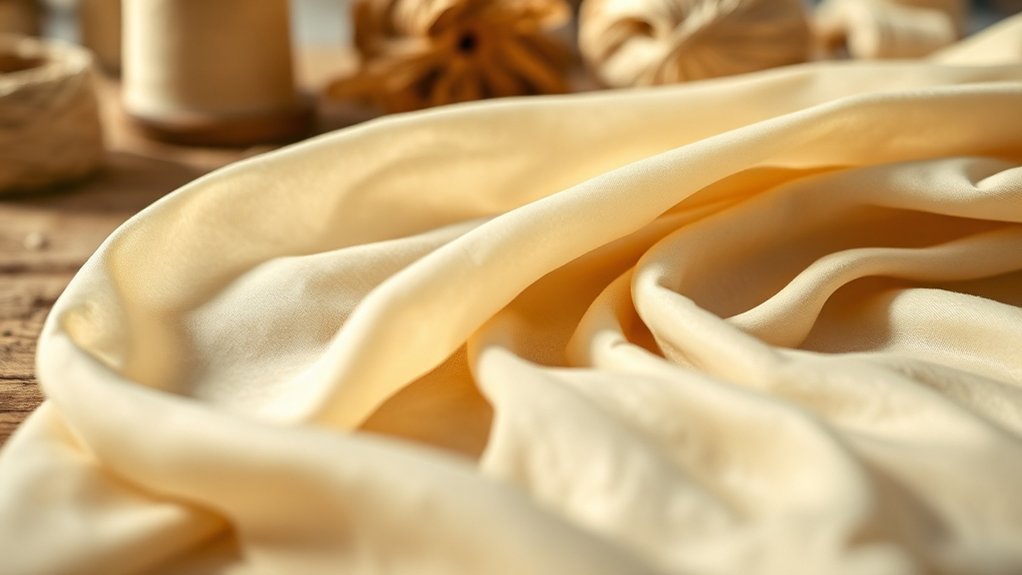
Rayon is a semi-synthetic fabric made from natural cellulose, usually sourced from wood pulp. You’ll often hear it called a man-made fiber, but it starts with plant material, so it sits between natural and synthetic textiles.
You can use rayon when you want a smooth, drapey fabric that feels soft against your skin and takes dye well. Its historical origins go back to the late 19th century, when manufacturers sought an affordable silk alternative.
Today, you’ll find rayon in clothing, linings, and home textiles because it offers versatility and comfort. Still, you should weigh sustainability concerns, since rayon’s appeal can come with environmental tradeoffs depending on how it’s sourced and produced.
Rayon offers versatility and comfort, but its sustainability depends on how it is sourced and produced.
That balance makes rayon interesting: it gives you many of the benefits of natural fibers while raising questions about responsible material choices.
How Rayon Is Made

You start with raw materials like wood pulp or other plant-based cellulose. Then, you turn that cellulose into a liquid solution. After that, you spin it through fine holes to form fibers. Those fibers are washed, stretched, and finished into rayon yarn or fabric.
Raw Materials
To make rayon, manufacturers start with cellulose, a plant-based polymer usually sourced from wood pulp or cotton linters. You’ll often see suppliers emphasize sustainable sourcing, since the choice of trees, farming methods, and harvesting practices affects quality and availability.
If you care about the environmental impact, look closely at how the pulp is certified, processed, and transported. Those steps shape rayon’s footprint before production even begins.
You should also know that purity matters: higher cellulose content helps manufacturers create a smoother, more consistent raw material. Additives, moisture, and contamination can change performance, so producers test and refine the feedstock carefully.
In short, rayon begins with renewable plant matter, but responsible sourcing and careful processing make the biggest difference.
Fiber Spinning
Once the cellulose feedstock is ready, manufacturers turn it into a spinnable solution so they can form rayon fibers. You’ll see them push this viscose through tiny spinnerets, creating thin filaments that solidify as they meet a coagulating bath.
This step shapes the yarn’s diameter, strength, and texture, so spinning techniques matter a lot. By adjusting speed, chemistry, and draw ratio, they can tune fiber properties for softness, drape, and absorbency.
- Extrude the solution through spinnerets.
- Solidify the filaments in a bath.
- Stretch, wash, and finish the fibers.
You get rayon’s smooth feel because the process aligns chains and removes impurities. Careful control keeps the final fiber consistent, which helps manufacturers meet fabric performance goals.
The Main Types of Rayon

Rayon comes in a few main types, and each one is made to balance softness, strength, and performance in a different way. You’ll usually hear about viscose, modal, and lyocell.
Viscose is the classic form, and it’s the most common in clothing and lining because it’s versatile and affordable. Modal is a stronger, more stable version that holds up better after repeated washing, so you’ll see it in everyday basics and activewear.
Viscose is versatile and affordable, while modal offers greater strength and better durability after repeated washing.
Lyocell is the newer option, and it’s made with a more efficient process that often appeals to people focused on rayon sustainability. When you look into rayon history, you’ll see how each type reflects a different step in improving the fiber’s usefulness.
If you’re choosing among them, think about where you’ll wear it, how often you’ll wash it, and whether you want a fabric that prioritizes cost, durability, or a cleaner production method.
Why Rayon Feels So Soft
Silky drape is one of rayon’s biggest appeals, and it comes from the way the fiber is made and shaped. You feel its soft texture because manufacturers spin cellulose into smooth, fine filaments that slide easily against your skin. The fibers absorb moisture well, so they don’t cling in a stiff way. That adds to the luxurious feel you notice right away.
- Smooth fibers: Rayon’s long, even strands reduce roughness and create a gentle hand.
- High absorbency: The material takes in moisture, helping it stay comfortable and less scratchy.
- Flexible structure: Rayon bends easily, so it moves with you instead of resisting touch.
When you compare it with firmer fabrics, you’ll see why rayon often feels softer at first touch. It delivers comfort through structure, not just finish, and that’s what makes it stand out.
Rayon Uses in Clothing and Home Textiles
You’ll often find rayon in clothing like dresses, blouses, skirts, and linings because it drapes beautifully and feels really comfortable against your skin. It’s one of those fabrics that just flows nicely, making your outfit look effortlessly elegant.
But rayon isn’t just for clothes. It also shows up in home textiles like curtains, bed linens, and upholstery fabrics. Its smooth texture adds a polished, refined look to any room. Because it hangs softly and moves well, rayon gives both your wardrobe and your home décor a light, elegant finish that’s hard to beat.
Apparel Applications
In wardrobes and interiors alike, this versatile fiber brings a smooth drape and soft hand to garments, linings, curtains, and bedding. You can wear it in blouses, dresses, skirts, and suits when you want flow without stiffness.
Designers often use rayon blends to add breathability and movement, so you stay comfortable while looking polished. In sustainable fashion, you may value it for its plant-based origin and adaptable feel, especially when paired with smarter sourcing choices.
- It skims your body for a flattering silhouette.
- It takes dye well, giving you rich color.
- It layers easily under jackets and sweaters.
You’ll also notice that rayon works well for everyday outfits because it feels light and smooth.
Home Textile Uses
At home, rayon brings a soft, fluid feel to curtains, bedspreads, pillow covers, and upholstery accents. It helps rooms look polished without feeling heavy. You can use it to add color and sheen to bedding styles that need a refined finish.
In your living room, rayon blends easily with cotton, linen, or polyester. This way, you can mix fabric textures without overwhelming the space. It also works well in decorative pieces like table runners and throw pillows, where you want a neat look that’s easy to style.
Because it takes dye well, you can choose rich hues or subtle shades to match your room’s palette. With rayon, you get a versatile option that supports both everyday decorating and more dressed-up interiors.
Comfort And Drape
Rayon’s appeal goes beyond style, since it also feels comfortable against the skin and hangs beautifully in both clothing and home textiles. You’ll notice its soft texture right away, especially when you choose shirts, dresses, or curtains that need a gentle touch.
Rayon moves with your body, creating fluid movement that makes garments look elegant and relaxed. In your home, it drapes well over windows and furniture, giving rooms a polished look without feeling stiff.
- You get breathable comfort for warm days.
- You enjoy graceful drape in skirts and blouses.
- You add a smooth finish to drapes and bedding.
Because rayon blends comfort and elegance, you can wear it or display it with ease, and it still feels inviting.
Rayon vs. Cotton, Silk, and Linen
Compared with cotton, silk, and linen, rayon sits somewhere in the middle: it can feel soft and breathable like natural fibers, but its performance depends heavily on how it’s made. You’ll notice rayon usually drapes more fluidly than cotton or linen, so it can mimic silk’s smooth look without matching silk’s natural strength.
Compared with cotton, it often feels cooler and less crisp; compared with linen, it wrinkles less easily, though it still needs gentle care. When you compare rayon properties, think about fiber type, weave, and finishing, because those details change texture, absorbency, and durability.
You should also weigh rayon sustainability against the other fibers: cotton can demand lots of water, silk requires animal processing, and linen often uses fewer inputs. Rayon’s sourcing and manufacturing matter, so choose responsibly made versions when you want a softer, versatile fabric.
Rayon Benefits for Clothing and Bedding
For everyday comfort, rayon offers a nice balance of softness, drape, and breathability that works well in both clothing and bedding. You can wear it for shirts, dresses, and loungewear because it moves with you and feels smooth against skin.
In your bedroom, rayon sheets and duvet covers can help you stay cool and comfortable through the night. Its versatile look also fits changing fashion trends, so you can choose pieces that feel current without sacrificing comfort.
- You get a silky feel without the stiffness of heavier fabrics.
- You can enjoy easy drape that flatters flowing garments and layered bedding.
- You can consider sustainability concerns while choosing rayon blends or responsibly made options.
When you want comfort that looks polished, rayon gives you a practical, stylish option for daily wear and restful sleep.
Common Rayon Problems to Know
Although rayon feels soft and drapes beautifully, you should know it can wrinkle easily, lose strength when wet, and sometimes shrink or stretch if you wash it carelessly. You may also notice that the fabric pills or snags more than sturdier fibers, especially in high-friction areas like cuffs and seat seams.
These rayon durability issues can make garments look tired sooner than you expect. Because rayon absorbs moisture well, it can also trap odors and take longer to recover its shape after wear. You’ll want to keep in mind that not all rayon is made the same; some versions feel more delicate than others.
Beyond performance, there are environmental concerns tied to how rayon is produced, since the process can involve chemicals and energy use that raise sustainability questions. So, while rayon offers comfort and a smooth finish, you should weigh its beauty against its weaker wear resistance and production impacts.
How to Care for Rayon
To keep rayon looking its best, you’ll want to wash it gently in cold water with a mild detergent. It’s important not to wring it out. Instead, just lay it flat or hang it up to dry, making sure it’s away from direct heat. Once it’s clean and dry, store it in a cool, dry place so it holds its shape nicely.
Washing Rayon Safely
Rayon needs gentle care if you want it to keep its shape and softness, so always check the care label before washing. For safe rayon washing, use cool water and a mild detergent. Then move the fabric gently through the suds instead of scrubbing it.
Good fabric care means you treat rayon like a delicate fiber, because harsh handling can weaken it and cause shrinkage or distortion.
- Wash by hand when you can.
- If you use a machine, choose the delicate cycle.
- Rinse well with cool water to remove soap.
You should also avoid twisting the fabric after washing. Handle it carefully from start to finish, and you’ll help rayon stay smooth, clean, and wearable longer.
Drying And Storage
After washing, dry rayon gently so it keeps its shape and soft feel. Lay it flat on a clean towel or hang it on a padded hanger away from direct sun and heat. Avoid twisting or wringing, since wet fibers stretch easily.
For rayon drying, smooth seams and reshape hems before it dries. For rayon storage, choose a cool, dry closet and keep garments folded or hung with space to breathe.
| Method | Best For | Tip |
|---|---|---|
| Flat drying | Knits | Reshape first |
| Hanging | Dresses | Use padding |
| Folding | Heavy items | Avoid sharp creases |
Store rayon in breathable covers, not plastic, so moisture doesn’t linger. If needed, steam lightly instead of ironing hard.
How to Tell If Fabric Is Rayon?
If you’re trying to identify rayon, start by checking the feel, drape, and care tag. Rayon usually feels soft and smooth, hangs loosely, and often looks a bit lustrous rather than stiff or crisp. You can also use simple rayon identification techniques to narrow it down before you buy or wash it.
- Touch and drape: Rayon feels cool, fluid, and silky, but it may wrinkle easily and lose shape when wet.
- Look at the label: Care tags often say rayon, viscose, modal, or lyocell, all of which are rayon fibers.
- Test carefully: A fabric burn test can help if the label’s missing, but use caution. Rayon typically burns like paper and leaves soft ash.
If the fabric looks shiny, hangs well, and feels breathable yet delicate, you’re probably holding rayon. When in doubt, compare it with cotton or polyester and check how it behaves in light and water.
Frequently Asked Questions
Is Rayon Considered a Sustainable Fabric?
Rayon isn’t usually considered a truly sustainable fabric, though you can find better options depending on how it’s made. When you look at rayon production, you’ll see it often uses chemicals, energy, and wood pulp from forests, which can raise its environmental impact.
Some forms, like lyocell, are better choices. If you want a lower-impact option, you should check sourcing, manufacturing practices, and certifications before you buy.
Does Rayon Cause Skin Irritation or Allergies?
Rayon can irritate, sting, or soothe. Your skin may react differently depending on its rayon properties and your skin sensitivity.
You might feel fine in soft, well-finished fabric, but you could notice redness, itching, or discomfort if the weave traps heat or chemicals linger.
If you’re prone to eczema or allergies, you should test it first, wash it before wearing, and choose breathable blends that won’t aggravate you.
Can Rayon Be Recycled After Use?
Yes, you can recycle rayon after use, but it’s not always straightforward. You’ll need to check local textile programs since rayon recycling options are limited and depend on the fabric blend.
If you choose rayon, you should consider its environmental impact because processing and disposal can still create waste. You can extend its life by reusing, repairing, or donating it before recycling, which helps reduce landfill burden.
Why Does Rayon Sometimes Shrink After Washing?
Rayon can shrink after washing because its fibers soak up water, lose shape, and react to heat or agitation like a sponge in a storm. You can reduce this by using shrink prevention steps and gentle washing techniques: wash in cold water, choose a delicate cycle, and air-dry flat or hang it carefully.
If you treat it kindly, you’ll keep it looking smoother, longer, and fitting better after each wash.
Is Rayon Suitable for Hot-Weather Clothing?
Yes, rayon can work well for hot-weather clothing because you’ll often feel its soft drape and cooling touch. Its breathability lets air move through the fabric, and its moisture absorption helps pull sweat away from your skin.
You should still choose lightweight weaves and avoid heavy blends since they can trap heat. If you want comfort in warm weather, rayon’s a smart option for you.
Conclusion
Now you know what rayon is: a regenerated fiber that can feel silky, drape beautifully, and dress up your wardrobe and home. You’ve seen how it’s made, why it’s so soft, and what strengths and shortcomings it brings.
So, shop smart, spot the label, and care for it carefully. When you choose rayon wisely, you’ll enjoy its graceful glow, gentle touch, and everyday versatility without the surprise of shrinkage, stretching, or snags.
In the end, understanding what rayon is helps you make the most of this fabric’s benefits while avoiding common pitfalls.