How to Sew in 5 Steps
If you’ve ever wanted to start sewing but felt overwhelmed by all the tools and techniques, you’re not alone. Many people struggle with where to begin and how to build confidence in their skills.
Luckily, learning how to sew can be simple and enjoyable with the right guidance.
Start by gathering basic sewing tools: a machine or needle, thread, scissors, pins, measuring tape, and an iron.
Next, practice simple stitches like straight, backstitch, and zigzag on scrap fabric. Then thread your needle, press your fabric, and pin pieces in place.
Sew a beginner project such as a pouch or tote with steady seams.
Finally, fix mistakes by rethreading, adjusting tension, or removing bad stitches, and you’ll pick up even more useful tips.
Key Takeaways
- Gather basic sewing tools, choose suitable fabric and thread, and set up a safe, well-lit workspace.
- Learn essential stitches like running stitch, backstitch, straight stitch, and zigzag stitch on scrap fabric first.
- Thread the needle or machine, prep and press the fabric, then pin or clip pieces to prevent shifting.
- Start a simple beginner project, sew steady straight seams, and press the finished work neatly.
- Fix mistakes by rethreading, changing needle or tension settings, and using a seam ripper on bad seams.
Gather Your Sewing Tools and Materials
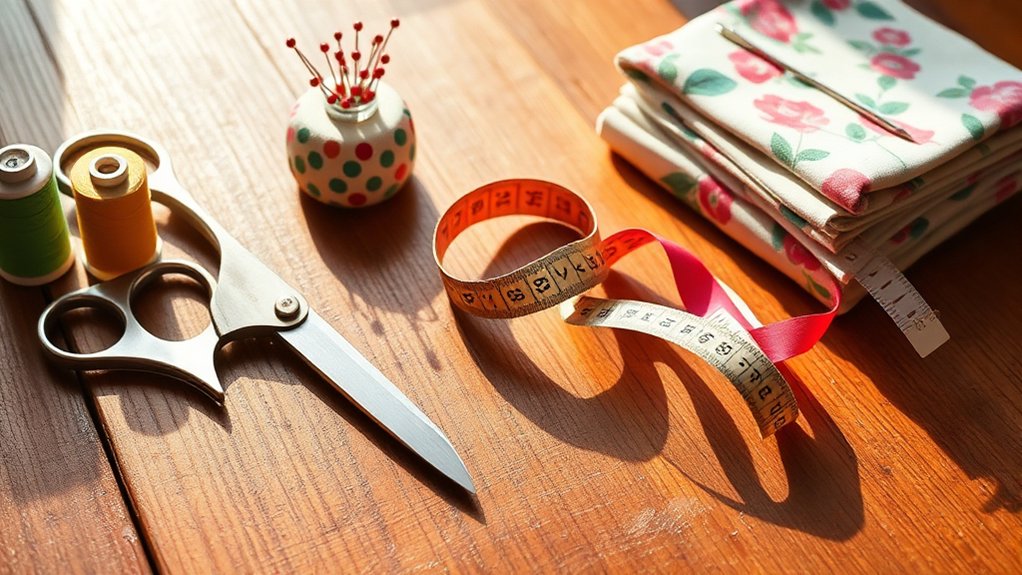
Before you stitch your first seam, gather the basics: a sewing machine or hand needle, thread, fabric, sharp scissors, pins or clips, a measuring tape, and an iron. Choose a sewing machine that matches your projects, then sort fabric types by weight and stretch so you can work confidently.
Compare thread choices to your fabric color and strength needs. Use measuring techniques carefully; mark lengths, seam allowances, and placement before you cut. For pattern selection, start with a simple design and read the instructions first.
Compare thread choices, measure carefully, and start with a simple pattern you understand before cutting.
Keep cutting tools dedicated to fabric so they stay sharp and clean. Set up your workspace organization with a clear table, good lighting, and nearby storage for notions. Follow safety tips by keeping fingers clear of blades, unplugging the machine when you change parts, and storing sharp tools safely.
With the right materials ready, you’ll save time and avoid mistakes as you start sewing.
Learn Basic Sewing Stitches
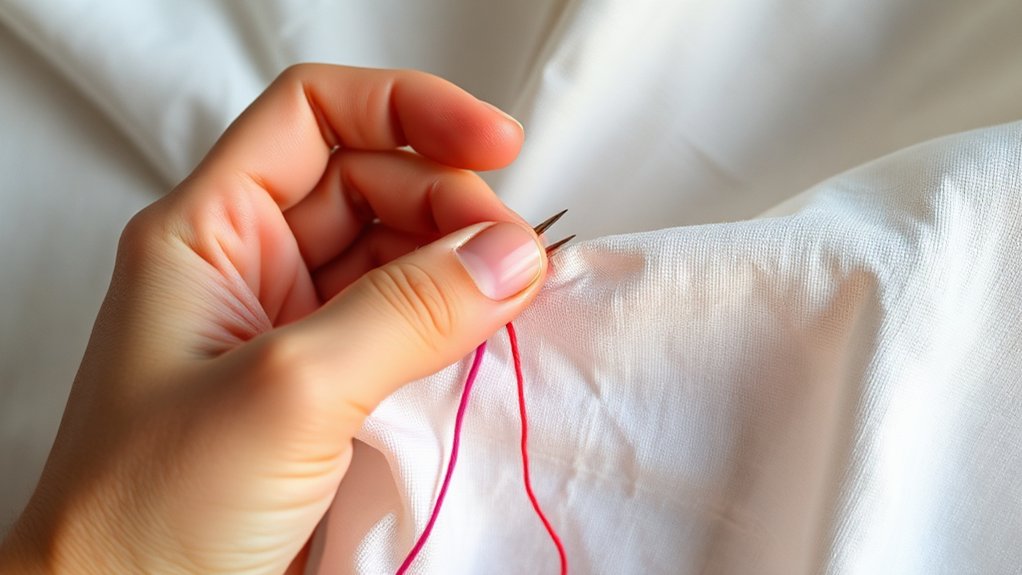
With your tools ready, you can start building the stitches that hold every project together. You’ll use a few stitch types again and again, so practice them until they feel natural.
In hand sewing, a running stitch moves quickly through seams, while a backstitch creates stronger lines. For machine sewing, straight stitch and zigzag stitch cover most sewing patterns and let you finish edges cleanly.
Match your stitch to fabric choices: light fabrics need shorter, gentler stitches, and thicker cloth often needs longer ones. Keep an eye on thread tension so your seams lie flat and don’t pucker.
- Try a running stitch on scrap cotton.
- Work a backstitch for sturdy joins.
- Test a zigzag stitch on woven edges.
- Compare stitch length on different fabrics.
As you repeat each stitch, you’ll build control, confidence, and smoother results.
Thread Your Needle and Prep Fabric
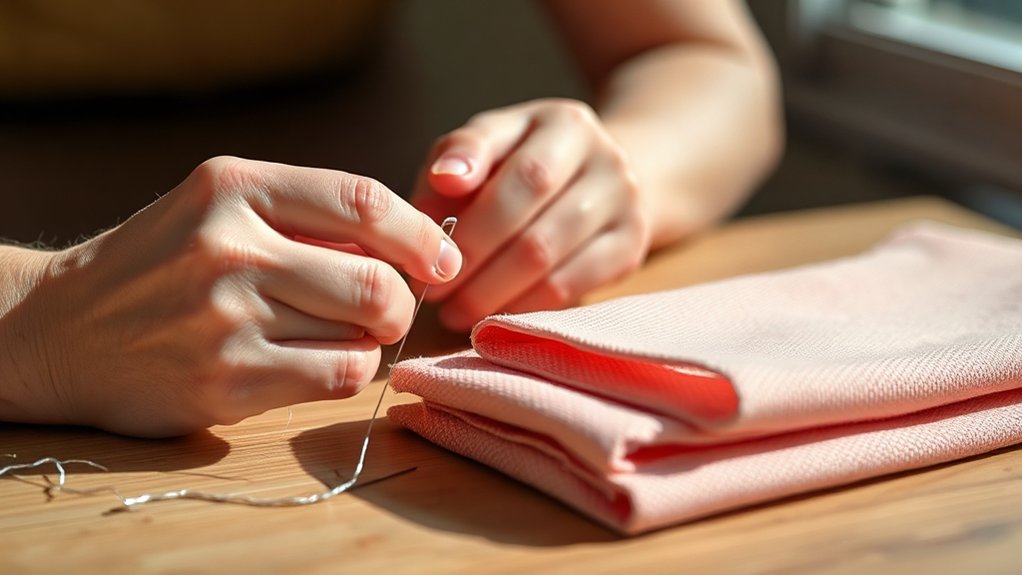
Thread your needle by cutting a clean thread end, moistening it slightly if needed, and guiding it through the eye without fraying. Choose needle types that match your thread and project: sharps suit woven fabric, while ballpoint needles glide through knits without snagging. If you’re unsure, test on scrap fabric first.
Pull enough thread for comfortable handling, then knot the end firmly or anchor it as your technique requires. Before you sew, inspect fabric types for wrinkles, loose fibers, or uneven edges. Press the fabric flat so your stitches lie smoothly and your measurements stay accurate.
Trim stray threads and align any pattern markings or edges you need to follow. When working with slippery or thick materials, use pins or clips to hold layers in place and keep shifting to a minimum. A little preparation now helps your stitches look neater and makes sewing easier from the start.
Sew Your First Beginner Project
Now that your needle is threaded and your fabric is prepped, pick a simple first project so you can focus on learning the stitches. Choose something small, like a pillowcase, tote bag, or drawstring pouch, because you can finish it in one sitting and see real progress.
Match your project to easy fabric types, such as cotton, so your seams stay manageable while you practice sewing machine basics and guide the fabric evenly.
- Lay out your pieces and check the grain.
- Pin or clip the edges so they stay aligned.
- Sew a straight seam at a steady pace.
- Press the finished piece for a clean look.
As you work, keep your hands relaxed and your eyes on the seam line. A first win builds confidence, and each simple project teaches you control, rhythm, and patience without overwhelming you.
Fix Common Sewing Mistakes
Mistakes happen when you sew, but most of them are easy to fix once you know what to look for. If your stitches bunch, check your thread path, then rethread the machine and test on scrap fabric.
When seams drift off line, slow down and guide the cloth without pulling it. For puckers or skipped stitches, change the needle and match it to your fabric weight.
If you need to remove a bad seam, use smart seam ripper techniques: slide the tool under a few stitches at a time, cut carefully, and brush away loose threads so you don’t damage the fabric.
You can also correct uneven results by adjusting stitch length and using fabric tension tips, like balancing the upper and bobbin settings before you sew again. Keep scraps nearby for practice, and inspect each fix before moving on.
With patience, you’ll solve most problems quickly and keep your project looking neat.
Frequently Asked Questions
How Do I Choose the Right Sewing Machine for Beginners?
You’ll want a beginner sewing machine with simple controls, a few sturdy stitches, and an automatic needle threader. When you spot a model that matches your budget and project goals, that’s no coincidence. It’s the right fit.
Compare sewing machine features like speed control, drop-in bobbin, and free arm. Then check beginner machine recommendations, read reviews, and choose one that feels easy to use, maintain, and grow with.
What Fabrics Are Easiest for First-Time Sewers?
You’ll find cotton blends easiest because they’re stable, affordable, and forgiving while you practice straight seams. Fleece options are also beginner-friendly since they don’t fray much and hide small mistakes.
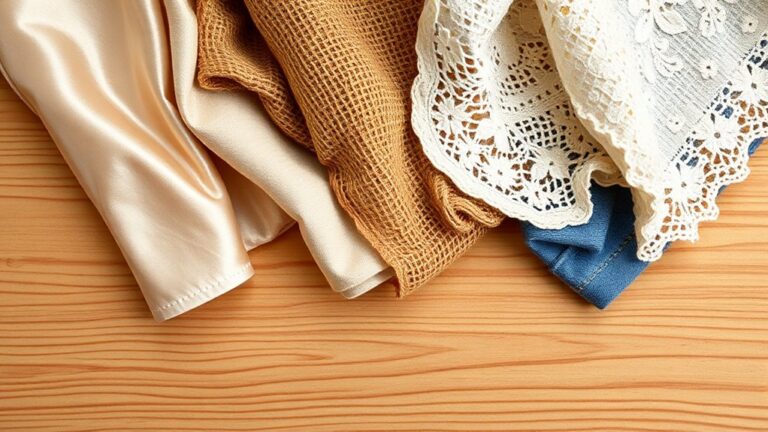
You can try quilting cotton, denim, or jersey once you’re comfortable, but avoid slippery fabrics like silk or satin at first. Pick medium-weight fabrics, use sharp scissors, and press your seams often for cleaner results and easier sewing.
How Do I Store Sewing Supplies Safely?
Store your sewing supplies in clear, labeled bins so you can grab what you need fast and keep hazards contained. You’ll protect supply safety by closing needles, pins, and blades in sturdy cases, then placing them out of children’s reach.
Good sewing organization means you keep thread, fabric, and notions sorted by type. Store glue, chemicals, and sharp tools separately, and check containers regularly for damage or spills.
When Should I Use a Sewing Pattern?
You should use a sewing pattern whenever you want a garment or project to fit well, match a specific design, or save time. Different pattern types help you make shirts, skirts, bags, and more with clearer instructions.
You’ll also want to use one when you need pattern adjustments for your body, style, or fabric. Even simple projects benefit from a pattern when accuracy matters and you want cleaner results.
How Do I Read Fabric Care Labels?
You read fabric care labels by checking the fabric composition first, then matching the washing instructions to your project. You’ll also see drying methods, ironing tips, colorfast checks, and shrinkage concerns, so follow each symbol carefully.
If the label says hand wash or dry clean only, don’t improvise. Always test delicate colors before washing, and prewash yardage when shrinkage could affect fit. This keeps your fabric looking great.
Conclusion
Now that you’ve got the basics down, you’re ready to stitch your way forward with confidence. Sewing may feel like a tiny thread at first, but it can grow into a strong rope of creativity, holding your ideas together one seam at a time.
Keep practicing, and don’t worry if your stitches aren’t perfect yet. Every project is a step toward mastery. Grab your tools, trust your hands, and let your imagination take the lead.
With patience and practice, sewing will become second nature, helping you bring your ideas to life with skill and style. Keep sewing, and watch your creativity flourish!