How to Understand Chiffon of Characteristics
If you’ve ever tried working with chiffon, you know how tricky it can be to get it just right. Many people struggle with choosing the perfect chiffon fabric that balances beauty and practicality. You’re not alone—chiffon’s delicate nature often leaves crafters and designers feeling frustrated or unsure.
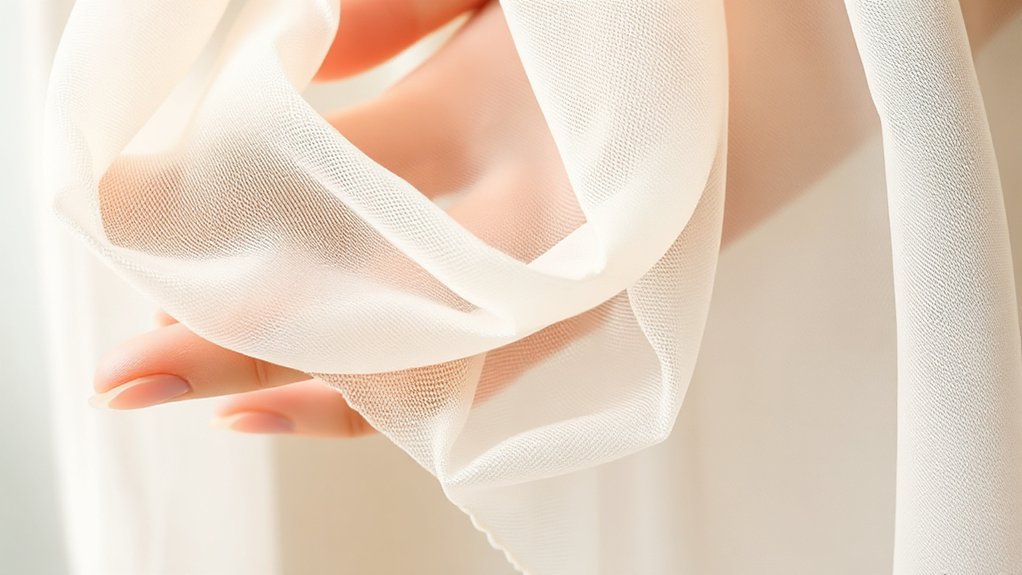
To understand chiffon of characteristics, you should look for a lightweight, sheer fabric with a soft, airy drape and a slightly grainy texture. It’s usually made from silk, polyester, nylon, or rayon, and its plain weave with tightly twisted yarns gives it that delicate, flowing feel.
Chiffon looks elegant but can wrinkle and snag easily, so it’s trickier to sew and care for.
Keep going, and you’ll see how to choose and use it with confidence.
Key Takeaways
- Chiffon is a lightweight, sheer fabric made from silk, polyester, nylon, or rayon. Its tightly twisted yarns create a slightly grainy texture and an airy, fluid drape.
- Chiffon’s open plain weave lets light pass through, giving it a soft, translucent look.
- It is delicate, prone to wrinkling and snagging, so it needs careful handling while sewing.
- Chiffon works well for dresses, blouses, scarves, skirts, and elegant layered overlays.
What Chiffon Is Made Of
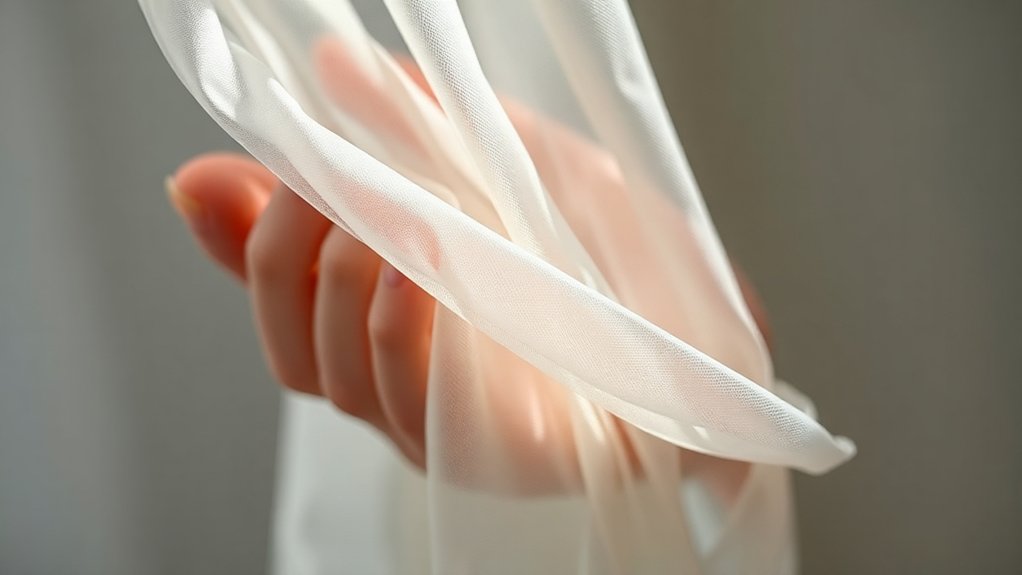
Chiffon is a lightweight, sheer fabric made from tightly twisted yarns, usually silk, polyester, nylon, or rayon. You’ll usually find it woven with crepe twist threads, which give it a slightly grainy feel and help it hold its structure.
In chiffon history, silk chiffon first appeared in luxury dressmaking, then later synthetic fibers made it more affordable and easier to care for. When you shop for chiffon types, you’ll notice each fiber changes the fabric’s behavior. Silk feels refined, polyester resists wrinkles, nylon adds strength, and rayon offers a softer drape.
You can choose one based on how you plan to use it in clothing or decor. Because manufacturers blend or substitute fibers, chiffon can vary in cost, texture, and durability, so you should always check the label before buying.
Chiffon’s Sheer Look and Light Weight
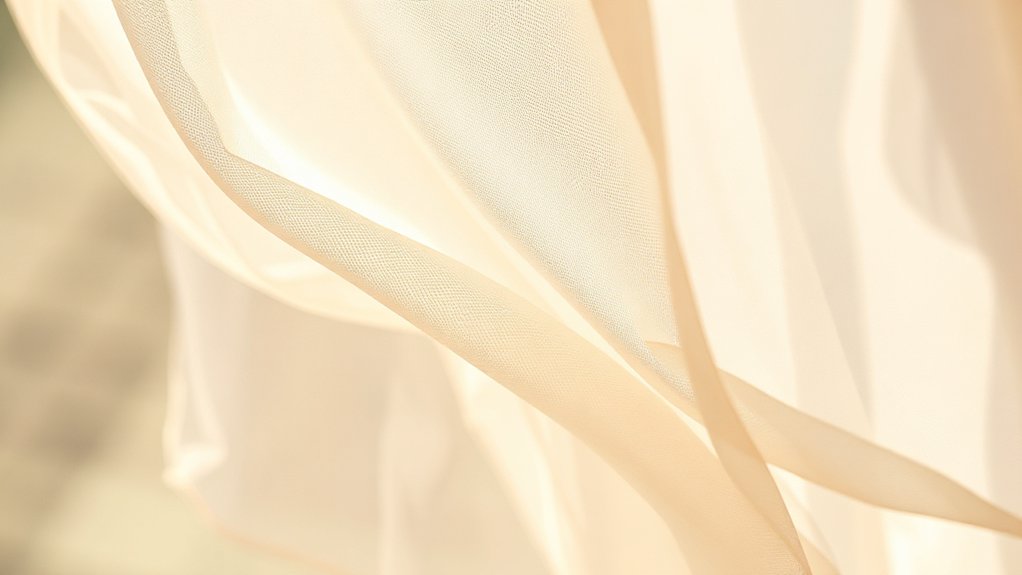
Its tightly twisted weave gives chiffon the airy, see-through quality people recognize right away. You notice this sheer surface when you layer it over linings, satin, or structured fabrics because it softens edges without hiding the design beneath.
Chiffon’s tightly twisted weave creates an airy, sheer finish that softens layers without concealing the design beneath.
That transparency creates sheer elegance, making chiffon a favorite for evening wear, scarves, and overlays where you want a delicate visual effect.
You also appreciate chiffon’s light weight the moment you pick it up. It doesn’t feel bulky, so you can wear or carry it comfortably in warm weather and in garments that need movement without extra mass.
This lightweight versatility lets you use chiffon for sleeves, ruffles, blouses, and event pieces that need an airy presence. Because it adds style without heaviness, chiffon works well when you want a fabric that looks refined, feels effortless, and keeps your outfit from seeming too dense or overpowering.
How Chiffon Feels and Drapes
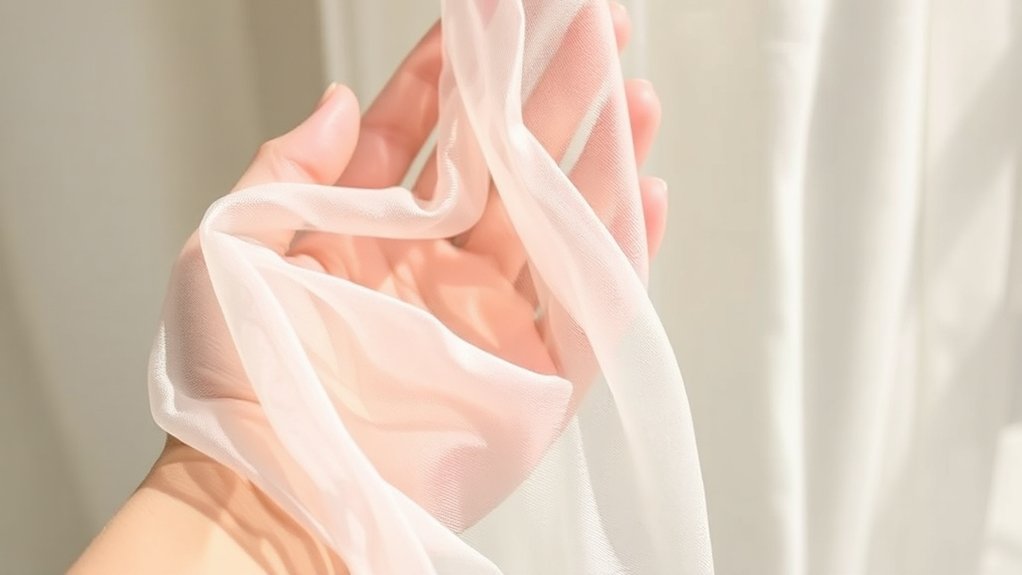
When you touch chiffon, you’ll notice its soft, airy texture right away. It feels light and sheer against your skin. Plus, it moves with a fluid drape that gives it a really graceful motion.
Soft, Airy Texture
Silk-like and weightless, chiffon has a soft, airy hand that feels delicate rather than dense. You’ll notice its lightly textured surface when you hold it, and that subtle grip keeps it from feeling slippery or stiff.
Because the fabric stays thin and breathable, you can wear it comfortably in warm weather or layer it over other pieces when temperatures dip. That makes it ideal for delicate layering and strong seasonal versatility.
You also get a refined look without bulk, so your outfits feel polished but never heavy. When you choose chiffon, you’re choosing a fabric that softens your silhouette, adds a gentle touch, and gives your clothing an effortless, easygoing feel.
Fluid Drape Movement
Chiffon moves with a graceful, fluid drape that seems to follow your body instead of fighting it. You’ll notice how it settles into soft folds, then shifts again as you walk, turn, or sit.
That responsiveness lets you shape silhouettes with simple drape techniques, whether you want a gathered waist, a cascading hem, or a loose overlay. Because it glides rather than clings, you can investigate different movement styles without losing elegance.
Each motion creates a smooth ripple that reads polished and intentional. When you handle chiffon, you’ll feel how easily it falls into place, making it ideal for designs that need natural movement and controlled flow.
Its drape gives your garment life, helping every step look effortless and refined.
Light, Sheer Feel
Because chiffon is so airy, you’ll notice a light, almost weightless feel the moment you touch it. It slips through your fingers with a smooth, delicate texture that never feels bulky. When you wear it, the fabric barely clings, so you get easy movement and a graceful silhouette.
This softness makes chiffon ideal for sheer layering and lightweight dresses, especially when you want elegance without heaviness.
- It lets light pass through, creating a subtle glow.
- It drapes softly, following your body without stiffness.
- It adds dimension without adding much weight.
You can use chiffon to soften structured outfits or to create floaty, romantic looks. Its sheer quality gives your clothing a refined, airy finish.
Chiffon Weaves, Fibers, and Finishes
You can spot chiffon by its airy weave, which gives the fabric that sheer, lightweight feel. And it’s interesting how different fibers—like silk, polyester, or nylon—can change how chiffon looks and performs. On top of that, finishes come into play; they can add softness, sheen, or texture, which really helps shape the fabric’s final effect.
Chiffon Weave Structure
Though it looks airy and delicate, chiffon gets its signature drape from a plain weave that uses tightly twisted yarns, usually silk, polyester, or nylon. This creates a sheer, lightweight fabric with a crisp finish.
You’ll notice the open spacing lets light pass through, while the twisted threads give the cloth bounce and subtle resistance. This structure shapes your chiffon texture, making it smooth, slightly grainy, and fluid rather than glossy.
It also supports chiffon durability by helping the fabric recover from movement without losing its shape.
- Tighter twists add body.
- Plain weave keeps it balanced.
- Open construction improves drape.
When you handle chiffon, you’ll feel how the weave controls fall, airflow, and softness, even before you cut or sew it.
Fiber Types Explained
The weave sets chiffon’s structure, but the fiber content determines how it feels, hangs, and wears. When you choose silk chiffon, you get a soft, airy drape and a natural sheen that suits elegant chiffon uses.
Polyester chiffon usually feels crisper, resists wrinkles, and often costs less, so you’ll see it in everyday chiffon trends. Chiffon blends mix these traits, giving you balanced movement and better chiffon durability.
Fiber also affects how chiffon colors appear: silk can look richer, while polyester may hold brighter shades. The same applies to chiffon patterns, which can read delicately or boldly depending on the fiber.
As you compare options, think about comfort, care, budget, and the look you want for your project or wardrobe.
Finish Effects Overview
Finish effects can change chiffon’s final look and feel just as much as the weave and fiber do. When you choose chiffon, notice how finish techniques alter drape, sheen, and grip. A soft wash can make it floatier, while a polished finish can sharpen its glow.
You’ll also see texture variations when mills brush, calendary, or lightly crinkle the cloth. These effects matter because they change how the fabric moves against your skin and how it catches light.
- Matte finishes mute shine and feel subtle.
- Glossy finishes boost luster and structure.
- Textured finishes add depth and surface interest.
If you compare samples side by side, you’ll spot how small finishing choices shift chiffon from delicate to crisp without changing its basic character.
What Sewing Chiffon Is Really Like
Sewing chiffon can feel tricky at first because the fabric is so lightweight, slippery, and delicate, but once you understand how it behaves, it becomes much easier to control. You’ll need steady hands and thoughtful sewing techniques to guide it without stretching or distorting the weave.
Keep your fabric handling gentle, and let the material move naturally instead of forcing it through the machine. You can test stitches on scraps to see how your needle and thread interact with the fabric before you start the real project.
Short, careful seams often give you better results than long, rushed passes. Pressing should stay light, so you don’t flatten the airy drape that makes chiffon appealing. When you slow down and stay precise, you’ll find that sewing chiffon rewards patience with clean, graceful finishes and a polished look.
Why Chiffon Wrinkles and Snags Easily
Chiffon wrinkles and snags so easily because its fibers are fine, loosely woven, and often very light. This leaves little structure to resist stress. When you move, fold, or press it, the fabric shifts quickly and keeps those marks.
You’ll notice that even small tugs can catch on jewelry, zippers, or rough seams. For wrinkle prevention, handle chiffon gently and let gravity do less work by storing it flat or hanging it with care. For snag avoidance, keep nails, hooks, and abrasive surfaces away from the cloth.
- Don’t rub or twist it.
- Use smooth, clean tools and hands.
- Keep it separated from textured items.
Because chiffon offers so little surface strength, you need to treat it like a delicate net. Small habits matter, and careful handling will help you keep its smooth look longer.
Best Uses for Chiffon in Clothing
When you want a fabric that looks airy and moves beautifully, chiffon works best in pieces where drape matters more than structure. You’ll see it shine in chiffon dresses, evening wraps, and soft layering pieces that skim your shape instead of clinging. It also suits chiffon blouses, where the sheer surface adds elegance without heaviness. Use it when you want motion, lightness, and a delicate finish that feels refined.
| Garment | Effect | Best Setting |
|---|---|---|
| Dress | Floaty silhouette | Parties |
| Blouse | Soft transparency | Office |
| Skirt | Fluid movement | Evenings |
| Scarf | Light accent | Travel |
| Overlay | Romantic depth | Weddings |
You can pair chiffon with linings, satin, or tailored basics to balance its softness and keep your outfit polished.
How to Care for Chiffon Properly
To keep your chiffon looking its best, it’s a good idea to wash it gently by hand or use the delicate cycle on your washing machine with cold water. Make sure to use a mild detergent, and try not to wring the fabric—that can actually damage the fibers.
Once it’s clean, just lay it flat or hang it up to air-dry, but keep it away from direct heat and sunlight. This way, your chiffon will stay beautiful and last longer!
Gentle Washing Methods
A little extra care goes a long way with chiffon, since its fine weave can snag, stretch, or lose shape if you handle it roughly. You should choose hand washing with cool water and a gentle detergent. Then move the fabric softly through the water without twisting or rubbing.
Keep your motions light, and don’t let the garment soak for too long.
- Use a clean basin, not a rough sink edge.
- Wash one chiffon item at a time.
- Rinse with cool water until the soap is gone.
If you notice stains, treat them lightly before washing instead of scrubbing hard. This approach helps you protect the delicate fibers and keep chiffon looking smooth, airy, and elegant after every clean.
Proper Drying Techniques
After washing chiffon, drying it gently is just as important as cleaning it carefully. You should never wring the fabric because that can stretch fibers and leave creases. Instead, lay the garment flat on a clean towel and press out excess water with light pressure.
Then hang it on a padded hanger or spread it on a drying rack in a shaded, well-ventilated space. Air drying protects chiffon’s delicate weave and helps it keep its shape. Avoid direct sunlight, which can fade color and weaken the fabric over time.
Skip machine drying, too, since heat and tumbling can damage chiffon and cause shrinking. If you need to smooth wrinkles, use a cool iron with a pressing cloth once the fabric is fully dry.
Chiffon vs. Other Lightweight Fabrics
Though chiffon belongs to the lightweight-fabric family, you’ll notice it stands apart from silk georgette, organza, and voile in both drape and texture. You feel chiffon’s airy, floating hand immediately, while georgette has more grain and bounce. Organza keeps a crisp structure, and voile lies flatter and smoother.
When you compare them side by side, chiffon often looks softer and more fluid, which boosts chiffon versatility in dresses, scarves, and layered styles. Its sheer finish can seem delicate, but good construction supports chiffon durability better than you might expect.
- Chiffon drapes softly and moves easily.
- Georgette feels slightly textured and less slippery.
- Organza and voile hold shape more firmly.
You’ll also notice chiffon catches light with a subtle glow, making it ideal when you want elegance without stiffness.
How to Choose the Right Chiffon
When you’re choosing chiffon, start with how you plan to wear it: a softer, lighter chiffon works well for flowing dresses and scarves, while a denser version gives you a bit more control for lining, draping, or gathered details.
Choose chiffon by purpose: lighter weaves for flowing pieces, denser ones for lining, draping, and gathered detail.
Next, check how the fabric feels in your hands; you want enough softness for movement, but enough body to hold shape. Consider color selection carefully, since chiffon can look sheer and may shift in tone over a lining or under bright light.
If you’re sewing, test how it cuts, frays, and gathers, because some chiffon types behave better with fine needles and narrow hems. Also think about pattern choices, since small prints often read softly, while bold motifs can lose sharpness in the fabric’s airy weave.
Match the chiffon to your project’s purpose, and you’ll get better drape, comfort, and finish overall.
Frequently Asked Questions
How Do You Tell Real Chiffon From Imitation Chiffon?
Real chiffon feels lightweight, slightly rough, and airy, while imitation versions often feel slick, overly shiny, or too stiff. You can hold it up to the light: real chiffon has a soft, sheer drape and uneven texture from twisted yarns.
Check the weave, burn a tiny hidden thread if allowed, and review the label. Good chiffon quality needs careful chiffon care, so the fabric should hang naturally, not plasticky.
Does Chiffon Stretch When Worn?
Yes, chiffon can stretch a little when you wear it, but it usually doesn’t have much give. You’ll notice more drape than elasticity, so the stretch properties depend on whether it’s silk, polyester, or a blended fabric.
If you tug it, it may move slightly, then return to shape slowly. Good chiffon recovery helps it keep its flowy look, but it won’t feel like knitwear or spandex.
Is Chiffon Suitable for Hot Weather?
Yes, chiffon can suit hot weather because you’ll often feel cooler in a breathable fabric. About 70% of warm-weather shoppers prefer airy clothes, and chiffon fits that need well.
You’ll appreciate its lightweight material, which lets air move around your body and helps reduce cling. Just choose lined or light-colored pieces, since dark or layered chiffon can trap heat more easily and feel less comfortable in strong sun.
Can Chiffon Be Dyed at Home?
Yes, you can dye chiffon at home, but you’ll get the best results if you match your chiffon dyeing techniques to the fiber content. You should test a small swatch first and check fabric colorfastness before you start.
Silk chiffon takes dye more easily than polyester chiffon, which often needs special dye. Use gentle heat, mild agitation, and avoid wringing the fabric so you don’t damage its delicate weave.
Does Chiffon Need Lining in Garments?
Yes, you usually need lining with chiffon garments, unless you want a sheer look. You’ll notice chiffon transparency quickly, so lining helps you feel confident and covered.
Its light chiffon weight makes it floaty, but also revealing. Choose lining based on chiffon care needs and the drape you want.
Like a medieval lantern in modern daylight, it balances modesty and style. That’s where chiffon versatility really shines.
Conclusion
Now that you understand chiffon characteristics, you can see why it’s such a favorite for airy, elegant clothing. You’ll notice its sheer look, fluid drape, and delicate feel make it sparkle like a whisper of moonlight.
Whether you’re sewing with it, caring for it, or choosing the right type, chiffon rewards a careful hand. With the right fabric in mind, you’ll pick pieces that move beautifully and feel effortlessly refined.
Keeping chiffon characteristics in mind helps you appreciate its unique charm and versatility in fashion.