How Are Fabrics Made Step by Step
Finding the perfect fabric can feel overwhelming, especially when you want something that looks great, feels comfortable, and lasts long. You’re not alone—many people struggle to understand how fabrics are made and what makes one better than another. Knowing the process can help you make smarter choices when shopping for textiles or DIY projects.
You start by selecting natural or synthetic fibers and preparing them, cleaning natural ones or chemically forming synthetic polymers. Then, you spin these fibers into yarn by twisting and blending for strength and texture.
Next, yarns are woven or knitted into fabric, shaping its look and stretch.
After that, you dye or print the fabric and apply finishing treatments to improve feel and durability. Testing ensures quality and safety, so you get fabric that performs well.
What follows uncovers each step in detail.
Key Takeaways
- Natural or synthetic fibers are selected, cleaned, and prepared for spinning by aligning and combing them into uniform strands.
- Fibers are spun into yarn by twisting, with controlled tension and blending to enhance strength and texture.
- Yarn is formed into fabric through weaving, which interlaces yarns, or knitting, which loops yarns. This step determines the fabric’s structure and elasticity.
- Fabrics undergo dyeing or printing using eco-friendly methods. After that, finishing treatments improve texture, durability, and appearance.
- Quality tests make sure the fabric has good strength, colorfastness, and resistance to pilling. They also check if it meets environmental and safety standards.
Overview of the Fabric-Making Process
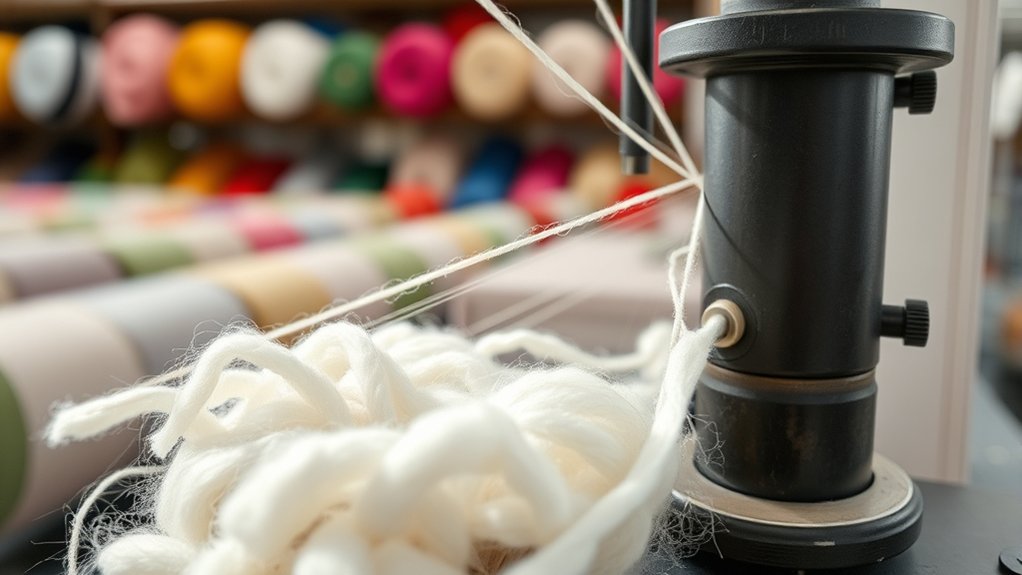
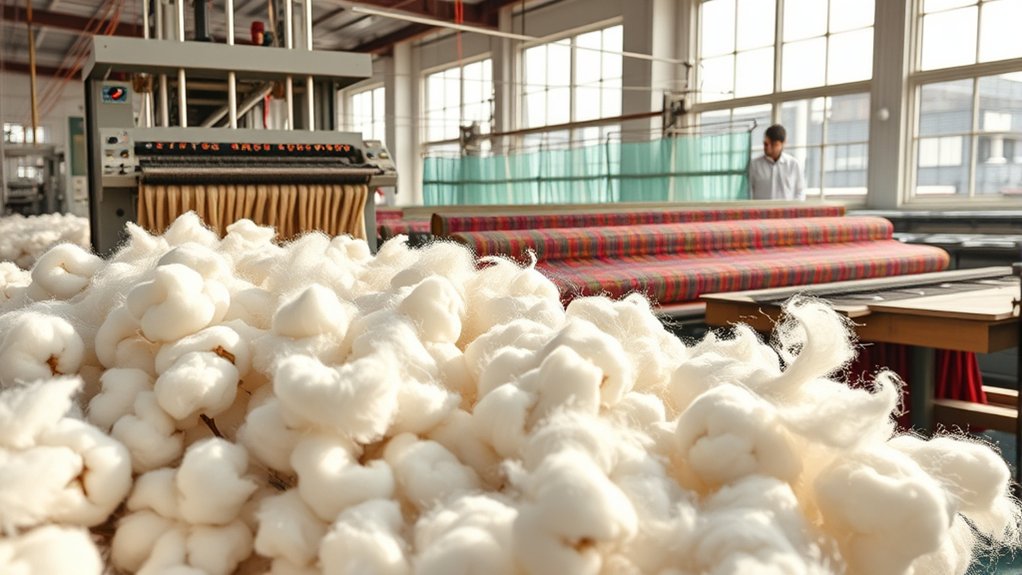
Although fabric-making involves many detailed steps, you’ll find the overall process follows a clear progression from raw fibers to finished cloth. First, fibers are cleaned and spun into yarns, which are then woven or knitted to form fabric.
Once the fabric is created, it’s time for dyeing. Eco-friendly dyes are increasingly popular to reduce environmental impact. These dyes not only provide vibrant colors but also minimize harmful chemicals.
After dyeing, colorfastness testing guarantees the fabric’s colors won’t fade or bleed during use or washing. This testing is essential to maintain the fabric’s quality and appearance over time.
Finally, the fabric undergoes finishing processes to improve texture, durability, or special properties like water resistance. By understanding these steps from fiber to final product, you’ll appreciate how each phase contributes to producing high-quality fabric that meets both aesthetic and functional standards.
Types of Raw Materials Used to Make Fabrics
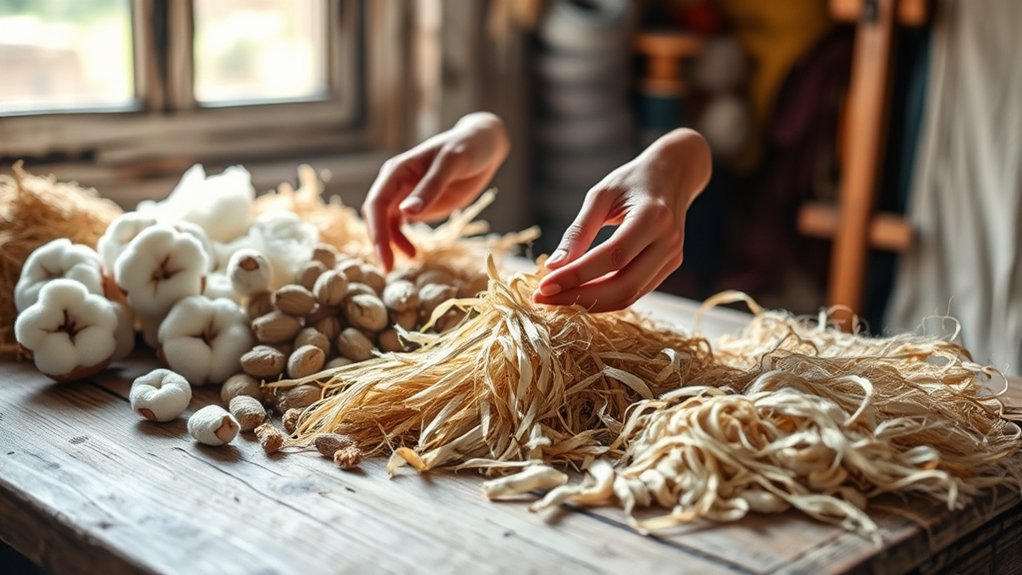
You’ll find that fabrics come from all sorts of raw materials. For example, natural fibers like cotton and wool are pretty common. Then, there are synthetic fibers such as polyester and nylon, which bring their own unique strengths and uses to the table. By blending these materials, you can actually get the best of both worlds when it comes to fabric performance.
Natural Fiber Sources
Where do the fibers that create your favorite fabrics come from? Natural fibers originate from plants or animals, each offering unique qualities.
Plant cultivation plays a crucial role, as fibers like cotton and flax are harvested directly from crops. These fibers often retain natural coloration, reducing the need for chemical dyes and making fabrics more eco-friendly.
Animal fibers, such as wool and silk, provide warmth and softness. Understanding these sources helps you appreciate fabric diversity and sustainability.
| Fiber Type | Source | Key Feature |
|---|---|---|
| Cotton | Plant | Breathable, natural coloration |
| Flax | Plant | Strong, eco-friendly |
| Wool | Animal (sheep) | Warm, resilient |
| Silk | Animal (silkworm) | Smooth, luxurious |
Synthetic Fiber Types
Natural fibers offer many benefits, but synthetic fibers bring different strengths to fabric production. When you examine synthetic fiber types, you’ll notice they’re created from chemical compounds, giving fabrics improved durability and specific qualities.
These fibers often resist moisture, stains, and wrinkles better than natural ones, making them practical for various uses. Here are common synthetic fiber types you should know:
- Polyester: Known for its strength, wrinkle resistance, and quick-drying features.
- Nylon: Offers excellent elasticity and abrasion resistance.
- Acrylic: Mimics wool and maintains warmth while being lightweight.
- Spandex: Provides superior stretch and recovery, ideal for activewear.
Blended Material Benefits
Why choose a single fiber when blending materials can combine the best qualities of each? Blended fabrics give you the perfect mix of comfort, durability, and style because they use material mixing to harness the strengths of different fibers.
For example, cotton-polyester blends offer breathability and wrinkle resistance, while wool-nylon blends boost warmth and toughness. When you opt for blended fabrics, you get improved performance that single fibers can’t always deliver.
Material mixing also allows manufacturers to customize fabrics for specific uses, from activewear to formal suits. So, next time you pick a fabric, consider blends. They provide versatility and better wear, making your clothes more comfortable and longer-lasting.
Blended materials truly maximize the potential of raw fibers in fabric production.
How Natural Fibers Are Harvested and Prepared
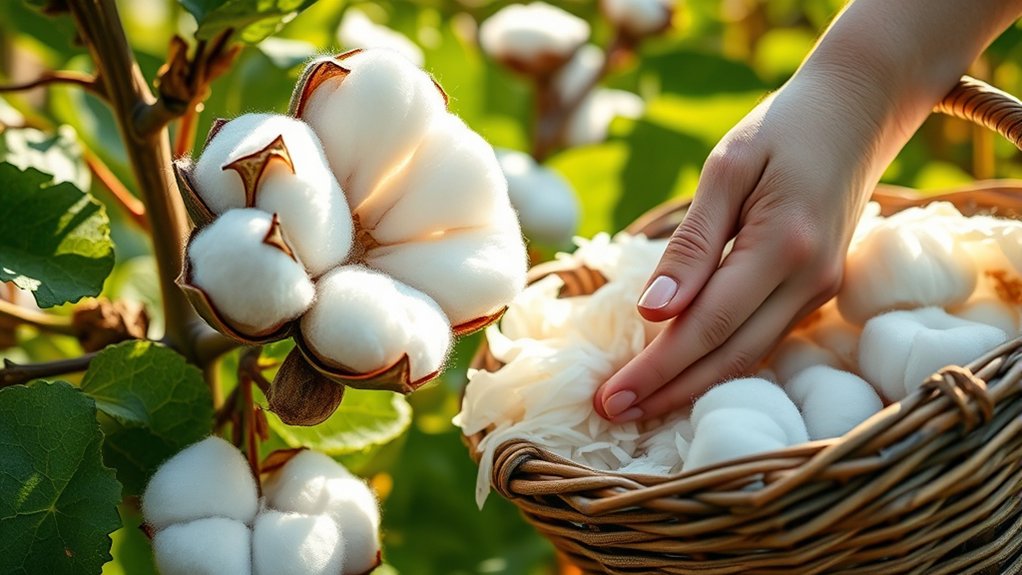
Although harvesting fibers may seem straightforward, it involves careful timing and technique to guarantee quality. You need to pick fibers at their peak to assure fiber durability and ideal dye absorption, especially when natural dyes are used later.
Here’s what you’ll do to prepare natural fibers:
- Harvest fibers by hand or machine depending on the crop, like cotton or flax.
- Clean and remove seeds or impurities to improve texture and strength.
- Dry fibers properly to prevent mold and maintain quality.
- Align and comb fibers to prepare them for spinning into yarn.
How Synthetic Fabric Fibers Are Made
First, you’ll get to know how polymers are made—these are the building blocks of synthetic fibers. After that, you’ll find out how these polymers are turned into fibers using different spinning methods. This whole process takes raw materials and changes them into the fabrics we use every day.
Polymer Production Process
How do synthetic fabric fibers come to life? It all starts with the polymer production process, a pivotal step shaped by historical influences that transformed textile manufacturing. This process holds cultural significance as it changed how fabrics are made worldwide.
You’ll see this process involves:
Extracting raw materials like petroleum
Creating monomers through chemical reactions
Polymerizing monomers into long polymer chains
Cooling and forming these polymers into pellets for fiber production
Each step guarantees the synthetic fibers have the desired strength, flexibility, and texture. Understanding this process helps you appreciate how modern fabrics evolved from traditional methods, blending science with cultural shifts to meet today’s textile demands.
Fiber Spinning Techniques
Once polymers have been prepared, manufacturers turn to fiber spinning techniques to transform these materials into usable synthetic fibers. You’ll see two main methods: melt spinning and wet spinning. Melt spinning melts polymers before extruding them into fibers, while wet spinning dissolves polymers in a solution, then solidifies them.
Both methods allow the creation of sustainable fibers, which is essential for reducing environmental impact. After spinning, fibers can be dyed using eco-friendly dyes, ensuring the fabric remains environmentally responsible.
| Fiber Spinning Method | Emotional Impact |
|---|---|
| Melt Spinning | Efficient, precise, and clean |
| Wet Spinning | Gentle, controlled, and sustainable |
| Dyeing Process | Vibrant yet eco-friendly |
You actively contribute to more sustainable fabric production by understanding these techniques.
How Fibers Are Spun Into Yarn
Before fibers can be woven into fabric, they must be carefully spun into yarn. Spinning twists fibers together, transforming them into a continuous thread strong enough for weaving or knitting. This process directly impacts the yarn’s color fastness and fabric durability, so precision matters.
When spinning fibers into yarn, you’ll focus on aligning fibers to guarantee smoothness and strength, controlling twist tightness to balance softness and durability, managing fiber blending to improve color fastness and texture, and monitoring tension for consistent yarn thickness.
How Weaves and Knits Form Fabric Structure
Wondering what turns yarn into fabric? It’s all about weaving and knitting, the two main ways to form fabric structure. When you weave, you interlace yarns at right angles, creating a stable, durable fabric.
Fabric comes to life through weaving and knitting, the essential techniques shaping yarn into durable or flexible textiles.
Knitting, on the other hand, loops yarns together, giving you stretchier, more flexible material. Both methods shape the fabric’s strength and appearance.
Using sustainable fibers in these processes not only supports eco-conscious production but also improves fabric quality. Plus, applying eco-friendly dyes during and after weaving or knitting ensures the fabric stays vibrant without harming the environment.
These dyes often come from natural sources, reducing chemical waste.
How Weaves and Knits Shape Fabric Texture
You’ll notice that weaving and knitting create fabric textures in pretty different ways. Weaving, for instance, tightly interlaces threads. On the other hand, knitting loops yarns, which gives the fabric stretch and softness. When you get how these techniques work, it’s easier to see how texture really comes to life in fabric.
Differences Between Weaving
Although weaving and knitting both create fabric, they do so in distinct ways that shape the texture and durability you feel. Weaving crosses threads at right angles, producing a firm, stable fabric. This method aligns well with fabric industry trends focusing on durability and textile sustainability.
When you choose woven fabrics, you get:
- Stronger, less stretchable material ideal for structured garments
- Clear patterns and textures due to the interlaced threads
- Better resistance to wear, supporting long-lasting use
- More options for sustainable fibers, helping reduce environmental impact
Understanding these differences helps you pick fabrics that suit your needs and align with eco-friendly textile choices. As fabric industry trends evolve, weaving remains a key technique for creating reliable, sustainable textiles.
Knitting Techniques Explained
While weaving creates fabric by crossing threads at right angles, knitting forms fabric by looping yarns together, giving it a very different texture and stretch. When you investigate knitting techniques, you’ll notice how loops create elasticity and softness, ideal for garments requiring comfort and flexibility.
You can choose from methods like weft knitting, which loops yarns horizontally, or warp knitting, looping them vertically. Using sustainable fibers, such as organic cotton or bamboo, improves your fabric’s eco-conscious profile. Plus, applying eco friendly dyes ensures the coloring process doesn’t harm the environment.
How Fabrics Are Dyed and Printed
When you want to add color or patterns to fabric, dyeing and printing are the essential processes. Dyeing techniques involve immersing fabric in dye baths, allowing colors to penetrate fibers thoroughly. You can choose from methods like vat dyeing, tie-dyeing, or reactive dyeing, depending on the fabric type and desired effect.
Printing methods, on the other hand, apply colors just to the fabric’s surface, creating distinct patterns. Common printing techniques include screen printing, block printing, digital printing, and roller printing.
Here are key points to understand about these processes:
- Dyeing techniques ensure uniform color absorption throughout the fabric.
- Printing methods give you precise, repeatable designs.
- Both methods require careful preparation to fix colors and prevent fading.
- The choice between dyeing and printing depends on the look and texture you want.
How Finishing Techniques Enhance Fabric Feel and Strength
Adding color and patterns gives fabric its visual appeal, but finishing techniques shape how it feels and performs. When you handle fabric, fabric softening treatments make a big difference, turning stiff material into something smooth and comfortable against your skin.
Finishing techniques transform fabric’s feel and performance, with softening treatments making stiff materials smooth and comfortable.
These softeners not only improve comfort but also improve flexibility, making the fabric easier to work with.
You’ll also notice how embroidery embellishments add texture and strength, reinforcing the fabric in specific areas while giving it a decorative touch. These embellishments aren’t just for looks; they contribute to durability, especially in garments that undergo frequent wear.
Other finishing methods, such as heat-setting and coating, further strengthen fabric resilience and resistance to shrinking or wrinkling.
How Fabric Quality Is Tested
To guarantee you get durable and comfortable fabric, manufacturers test its quality through several precise methods. These tests ensure the fabric meets standards for strength, appearance, and longevity. They also align with fabric care instructions and ethical sourcing policies.
Here’s how they do it:
- Tensile Strength Test: Measures how much pulling force the fabric can handle before breaking, ensuring durability.
- Colorfastness Test: Checks if the fabric retains color after washing or exposure to light, so it won’t fade easily.
- Pilling Resistance Test: Assesses the fabric’s ability to resist small fiber balls forming on the surface, maintaining a smooth look.
- Chemical Analysis: Confirms that fibers meet ethical sourcing standards and contain no harmful substances.
Frequently Asked Questions
What Environmental Impacts Result From Fabric Production?
You’ll face significant environmental pollution from fabric production, mainly due to chemical usage. Factories often release harmful dyes and toxins into water sources, contaminating ecosystems.
Plus, producing synthetic fibers involves energy-intensive processes that increase carbon emissions. When you choose fabrics, keep in mind that the chemicals used can harm both the environment and your health.
Opting for sustainable or organic options helps reduce this pollution and supports eco-friendly practices.
How Is Fabric Waste Managed or Recycled?
You can curb fabric waste by creatively collecting and converting scraps, cutting down on clutter. Many mills mix fabric dyeing leftovers with other materials to minimize mess and maximize reuse.
Waste reduction wins when you donate old clothes, recycle fibers, or choose brands that champion circularity. By staying savvy about sorting and sending fabric waste to specialized recyclers, you help halt heaps of harmful landfill and support sustainable style solutions.
What Are the Most Sustainable Fabrics Available Today?
You’ll find the most sustainable fabrics today include organic cotton, which relies on organic cotton cultivation without harmful pesticides. Linen and hemp also stand out for their low environmental impact.
When choosing fabrics, look for those dyed with eco friendly dyes, reducing chemical waste. These options help you support a cleaner planet while enjoying quality materials that are kinder to the earth and your skin.
How Do Fabric Production Costs Vary by Type?
Oh, you’ll love how fabric costs play hide and seek! Natural fibers often demand pricier dyeing processes and fancy textile machinery, making your wallet sweat.
Synthetic fabrics? They’re cheap thrill rides, thanks to streamlined production and less fuss with colors.
But don’t be fooled. Sometimes those low costs come with hidden environmental bills. So, when you pick fabric, remember: price tags are just the start of the story.
What Safety Precautions Are Taken During Fabric Manufacturing?
You’ll find that fabric manufacturing prioritizes chemical safety by controlling exposure to dyes and solvents through proper ventilation and handling procedures. You’ll also wear personal protective equipment like gloves and masks to guarantee worker protection.
Regular training teaches you how to manage spills and use machinery safely, minimizing risks. These precautions help keep you and your coworkers safe while maintaining product quality in the factory environment.
Conclusion
Now that you know how fabrics transform from humble fibers into vibrant cloth, you’re holding the thread that weaves the story of every garment you wear. Each step, from harvesting to finishing, adds its own stitch to the fabric’s character.
So next time you touch a piece of fabric, remember it’s not just material but a tapestry of nature, science, and skill all woven together just for you. Understanding how fabrics are made helps you appreciate the journey behind every textile you use.