What Are Fabrics Made Of?
If you’ve ever struggled to choose the right fabric for your clothes or home, you’re not alone. Many people find it confusing to understand what fabrics are made of and how that affects their feel, care, and durability. Getting the right fabric can make all the difference in comfort and longevity.
Fabrics are made from natural fibers like cotton, wool, silk, and hemp, or from synthetic fibers such as polyester, nylon, and acrylic. Natural fibers come from plants and animals, offering breathability and comfort but usually need gentler care.
Synthetic fibers are man-made, durable, and easy to maintain but may impact the environment. Many fabrics blend both for the best qualities.
If you want to understand how these fibers affect fabric feel, care, and sustainability, keep exploring this topic.
Key Takeaways
- Fabrics are made from natural fibers like cotton, wool, silk, linen, and hemp. These come from plants and animals.
- Synthetic fibers, such as polyester, nylon, and acrylic, are man-made from petrochemicals. They’re created through chemical and extrusion processes.
- Blended fabrics combine natural and synthetic fibers. This mix helps improve durability, comfort, and colorfastness.
- Natural fibers offer breathability, biodegradability, and insulation. However, they may wear out faster than synthetics.
- Synthetic fibers provide wrinkle resistance, strength, quick drying, and are easier to care for. But they rely on fossil fuels and might release microplastics.
What Are Natural Fibers and Where Do They Come From
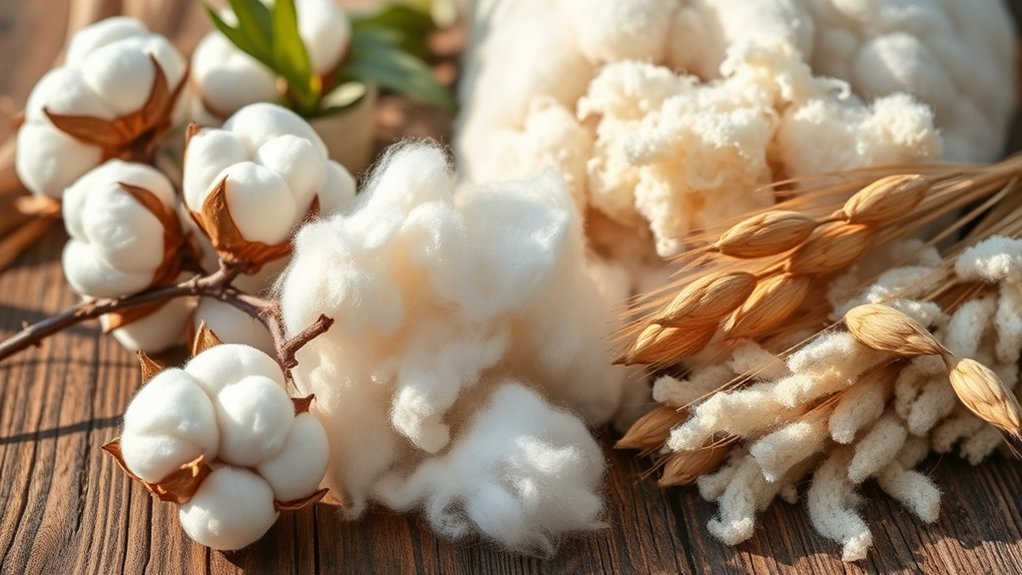
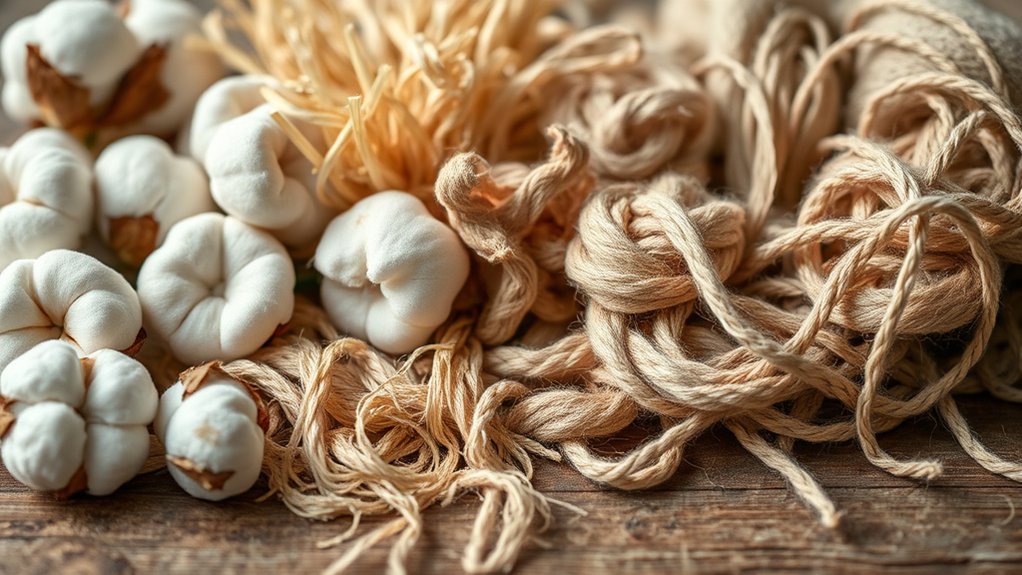
Although you might not always notice, natural fibers come from plants and animals, making them different from synthetic materials. When you work with natural fibers, you’re handling materials like cotton, wool, silk, and flax. These fibers undergo processes like fiber dyeing, where colors are absorbed deeply, resulting in vibrant, long-lasting hues.
After dyeing, the fibers move into fabric weaving, where threads intertwine to form textiles that feel breathable and comfortable against your skin. You’ll find that natural fibers have unique properties; cotton is soft and absorbent, wool keeps you warm, while silk offers smoothness and shine.
Because these fibers come directly from nature, they tend to be biodegradable and eco-friendly. When you choose fabrics made from natural fibers, you’re embracing materials shaped by traditional techniques, from fiber dyeing to fabric weaving, that have been refined over centuries. This connection to nature and craftsmanship sets natural fibers apart.
Production and Uses of Synthetic Fibers in Fabrics
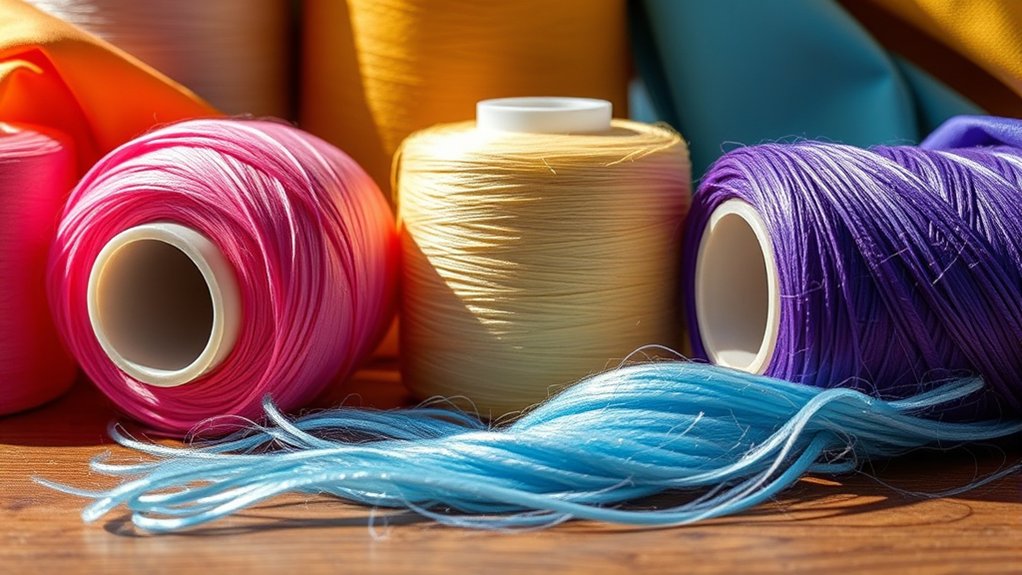
When you choose synthetic fibers, you’re selecting materials engineered through chemical processes rather than natural sources. These fibers, like polyester, nylon, and acrylic, start as polymers created from petrochemicals.
Manufacturers melt or dissolve these polymers, then extrude them through spinnerets to form continuous filaments. Once spun, synthetic fibers undergo fabric dyeing, which is often more efficient than with natural fibers due to their uniform structure. This allows vibrant, long-lasting colors.
After dyeing, textile finishing treatments improve qualities such as water resistance, wrinkle resistance, or softness, tailoring fabrics for various uses. You’ll find synthetic fibers widely used in activewear, upholstery, and outdoor gear because they offer durability, elasticity, and easy care.
Their consistent texture also makes them ideal for blending with natural fibers, improving fabric performance. By understanding their production and uses, you can better appreciate how synthetic fibers contribute to the versatility and functionality of modern fabrics.
Natural vs Synthetic Fabrics: What Sets Them Apart
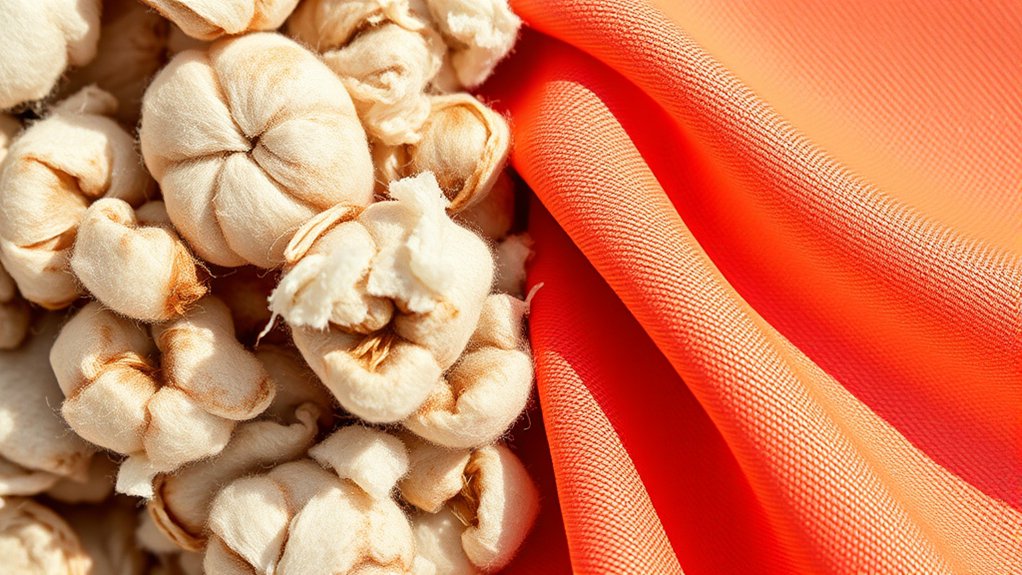
While both natural and synthetic fabrics serve important roles in textiles, you’ll notice key differences in their origins, properties, and care requirements. Natural fabrics come from plants or animals, while synthetic ones are man-made through chemical processes. These differences affect how fiber dyeing and fabric weaving are approached.
When you work with these fabrics, keep in mind:
- Natural fibers often absorb dyes better, giving richer colors.
- Synthetic fabrics resist wrinkles and are more durable.
- Fabric weaving varies: natural fibers may require gentler handling.
- Synthetic fibers can be engineered for specific functions like moisture-wicking.
- Care differs; natural fabrics usually need delicate washing, while synthetics handle machine cycles well.
Understanding these contrasts helps you choose the right fabric for your needs, whether comfort, durability, or aesthetics. Knowing how fiber dyeing and fabric weaving differ allows you to appreciate the unique qualities each type brings to your wardrobe or projects.
Common Plant-Based Fibers: Cotton, Linen, and Hemp
You’ll find that cotton is soft and breathable, which is why it’s such a popular choice for everyday clothing. Then there’s linen—it really stands out because of its durability and natural moisture-wicking properties, making it perfect for warm weather. Hemp, on the other hand, offers strength and versatility. It’s often used in sturdy fabrics and eco-friendly products.
Characteristics of Cotton
Although cotton grows in many regions around the world, you’ll find its fibers consistently soft, breathable, and durable. When you work with cotton, you notice how easily it absorbs dyes, making fabric dyeing vibrant and long-lasting.
Cotton also responds well to textile finishing processes, enhancing its texture and strength without sacrificing comfort. Here’s what you should know about cotton’s characteristics:
- Natural moisture absorption keeps you cool and dry.
- Soft texture makes it comfortable for everyday wear.
- High durability ensures long-lasting garments.
- Versatility suits various fabric dyeing techniques.
- Easy care with resistance to harsh textile finishing treatments.
Understanding these traits helps you appreciate why cotton remains a favorite in the textile world.
Benefits of Linen
Cotton’s softness and durability have made it a staple in fabric choices, but linen offers its own unique set of benefits that you might find appealing. Linen is highly breathable and moisture-wicking, keeping you cool and comfortable in warm weather.
Its natural fibers are strong and get softer with each wash, ensuring long-lasting wear. If you’re interested in fabric dyeing, linen’s texture absorbs colors beautifully, resulting in vibrant, lasting hues.
From a textile branding perspective, linen’s eco-friendly reputation and luxurious feel can enhance your product’s image. By choosing linen, you not only enjoy its comfort and durability but also support sustainable practices that resonate with today’s conscious consumers.
It’s a smart choice for both style and substance.
Uses of Hemp
Where can hemp truly shine among plant-based fibers? You’ll find its versatility impressive, especially given advances in hemp cultivation and hemp textile processing. Hemp is eco-friendly and strong, making it ideal for many uses.
When you investigate hemp’s potential, consider these common applications:
- Durable clothing and accessories
- Eco-conscious home textiles like curtains and upholstery
- Biodegradable packaging materials
- Industrial ropes and nets requiring high tensile strength
- Sustainable paper products
Animal-Derived Fibers: Wool, Silk, and Alpaca
You’ll find that wool comes in many types, each suited for different uses. Whether it’s cozy sweaters or durable outerwear, there’s a wool for that. Silk, on the other hand, offers a smooth, luxurious feel that’s hard to beat. Then there’s alpaca, which really stands out because of its softness and warmth. Knowing these qualities makes it easier to pick the right animal-derived fiber for whatever you need.
Wool Types And Uses
Although wool comes from various animals, each type offers unique qualities that suit different uses and preferences. When you examine fabrics in fashion, understanding wool types helps you select the right material for your needs. Textile manufacturing processes often highlight these differences to optimize fabric performance and comfort.
Here are common wool types and their uses:
- Merino: Soft, breathable, ideal for activewear and fine garments
- Shetland: Coarser, perfect for durable outerwear and tweeds
- Cashmere: Luxuriously soft, used in high-end sweaters and scarves
- Lambswool: Smooth and gentle, great for cozy knitwear
- Mohair: Lustrous and strong, favored in suits and upholstery
Knowing these types lets you appreciate wool’s versatility and make informed fabric choices.
Silk And Alpaca Qualities
Wool offers a range of textures and strengths thanks to its animal origins, and silk and alpaca fibers bring their own distinct qualities to the table. When you investigate silk, you’ll notice its smooth, lustrous feel created through intricate silk weaving techniques. This process transforms silk strands into lightweight, strong fabric that drapes beautifully and resists wrinkles.
On the other hand, alpaca fleece comes from the alpaca, a South American camelid, known for producing soft, warm, and hypoallergenic fibers. When you work with alpaca fleece, you’ll appreciate its durability and insulating properties, making it ideal for cold weather garments. Both silk and alpaca fibers offer unique benefits that complement wool, giving you versatile options for luxurious, comfortable fabrics.
Popular Synthetic Fibers: Polyester, Nylon, and Acrylic
When you choose synthetic fabrics, polyester, nylon, and acrylic stand out as some of the most popular options. These fibers offer durability and versatility, making them go-to choices in fashion and home textiles. Thanks to advances in sustainable dyeing, these fabrics can now be produced with less environmental impact.
Plus, fabric weaving techniques improve their texture and strength, giving you a wide range of fabric styles.
Here’s what makes these synthetic fibers special:
Polyester: Wrinkle-resistant, quick-drying, and holds vibrant colors well.
Nylon: Strong, elastic, and resistant to abrasion.
Acrylic: Soft, warm, and often used as a wool substitute.
Sustainable dyeing: Reduces water and chemical use in production.
Fabric weaving: Adds durability and aesthetic appeal to synthetic textiles.
Why Fabric Blends Matter: Combining Fibers for Performance
Because no single fiber offers all the qualities you might want, fabric blends combine different fibers to improve performance. When you wear blended fabrics, you benefit from the strengths of each fiber, like the breathability of cotton paired with the durability of polyester. This mix also strengthens fabric dyeing; synthetic fibers often hold vibrant colors better, while natural fibers provide softness and comfort.
By blending, manufacturers augment color retention and fabric resilience, giving you garments that look great longer.
Blends also support textile recycling efforts. Combining fibers can make recycling more complex, but advances in technology now help separate and repurpose blended fabrics efficiently. When you choose blended fabrics, you’re supporting innovation in recycling, reducing waste, and promoting sustainability.
How Fiber Content Influences Fabric Feel and Longevity
Although fabric blends offer versatility, the fiber content primarily shapes how your clothes feel and how long they last. When fibers are carefully chosen, fiber weaving techniques improve texture and durability, while fiber dyeing locks in vibrant colors without compromising softness. Knowing what fibers make up your fabric helps you predict its performance.
Consider these factors when evaluating fiber content:
- Natural fibers (like cotton and wool) offer breathability and comfort but may wear faster.
- Synthetic fibers (such as polyester) add strength and wrinkle resistance.
- Fiber weaving density affects fabric weight and durability.
- Fiber dyeing methods influence colorfastness and fabric softness.
- Blends combine fibers to balance feel, strength, and longevity.
How Different Fibers Impact Sustainability and Care
Understanding how different fibers impact sustainability and care helps you make smarter choices for both your wardrobe and the planet. Natural fibers like cotton and wool often require less energy in fiber manufacturing, but they might need more water or pesticides.
On the other hand, synthetic fibers such as polyester rely heavily on fossil fuels, which affects their environmental footprint. Yet advances in textile innovation are creating recycled options to reduce waste.
When you choose fabrics, consider how care practices differ. Natural fibers usually need gentler washing and can biodegrade, making them eco-friendlier at the end of their life cycle.
Synthetic fibers tend to be more durable but may release microplastics when washed, impacting waterways.
Choosing the Right Fabric Fiber for Your Needs
When selecting fabric fibers, you should consider how you plan to use the garment and what qualities matter most to you, like comfort, durability, or ease of care. Different fibers react differently during fabric dyeing and textile weaving, which affects the final look and feel of your clothing. For example, natural fibers like cotton are breathable and dye well, while synthetics often offer higher durability but may need special care.
To choose the right fabric fiber, focus on these factors:
- Comfort: How soft and breathable the fabric feels against your skin
- Durability: Resistance to wear and tear, especially if you need long-lasting garments
- Care requirements: Whether the fabric needs special washing or can handle machine cycles
- Appearance: How the fiber holds dye colors and texture after textile weaving
- Purpose: Suitability for the activity or climate you’ll wear it in
Balancing these will help you pick fabric fibers that fit your lifestyle perfectly.
Frequently Asked Questions
How Are Fabrics Dyed and Colored?
You dye and color fabrics using various dyeing techniques like immersion, tie-dye, or screen printing to apply color evenly or create patterns. After dyeing, you’ll perform colorfastness testing to guarantee the fabric maintains its vibrancy and resists fading or bleeding during washing and exposure to light.
This testing helps you pick the best dyes and methods, so your fabrics stay bright and durable over time.
What Role Do Fabrics Play in Fashion Trends?
Fabrics act as the canvas where fashion trends paint their stories, shaping how you express yourself. You’ll find that fabric sustainability influences these trends, pushing you toward eco-friendly choices.
At the same time, fabrics carry cultural significance, weaving history and identity into every stitch. When you choose what to wear, you’re not just following fashion; you’re embracing values and traditions that ripple through time and style.
How Do Fabrics Affect Skin Allergies?
Fabrics affect your skin allergies because natural fibers like cotton and linen tend to be gentler and less likely to irritate your skin. Synthetic materials, on the other hand, can trap heat and moisture, which might cause itching or rashes.
If you have sensitive skin, you’ll want to choose breathable, hypoallergenic fabrics and avoid harsh synthetics. Always check fabric labels and test new clothes to see how your skin reacts.
What Innovations Exist in Fabric Technology?
Innovations in fabric technology are evolving like a river carving new paths. You’ll find synthetic fibers engineered for durability and moisture-wicking, keeping you comfortable during intense activities.
Eco-friendly textiles are also gaining traction. They’re made from recycled materials or biodegradable fibers to reduce environmental impact.
These advances not only improve performance but also promote sustainability, letting you choose fabrics that protect both your skin and the planet.
How Is Fabric Quality Tested and Measured?
You test fabric quality by analyzing fiber composition and measuring fabric durability through various methods. You’ll perform strength tests like tensile and abrasion resistance to see how well the fabric holds up under stress.
You also check pilling, colorfastness, and shrinkage. Understanding fiber composition helps you predict how the fabric behaves and lasts over time. By combining these tests, you guarantee the fabric meets your quality standards before use.
Conclusion
Choosing the right fabric is like picking the perfect recipe. You want the right mix of ingredients for comfort, durability, and style. Natural fibers bring the earth’s warmth, while synthetics add a splash of modern magic.
Blending them lets you have the best of both worlds. So whether you crave softness, strength, or sustainability, understanding fabric fibers helps you weave your way to smarter, cozier choices every time.
Knowing what fabrics are made of makes all the difference when you shop, helping you find exactly what suits your needs and lifestyle.