How to Wash Linen in 10 Steps
Washing linen can be tricky, right? You want to keep it looking fresh and feeling soft, but it’s easy to end up with stiff, wrinkled fabric or shrinkage. If you’ve ever struggled to get your linen just right, you’re not alone—many people find caring for this delicate fabric a challenge.
Fortunately, with the right approach, washing linen can be simple and rewarding.
Check the care label first, then sort your linen by color and weight. Wash by hand when possible, or use a delicate cycle with cold or lukewarm water and a mild, fragrance-free detergent.
Rinse until the water runs clear, then dry linen gently without leaving it bunched up or using high heat. Remove wrinkles with steam if needed, and store clean, fully dry pieces in a cool, dry place.
Keep going for the finer details.
Key Takeaways
- Check the care label, fabric blend, and sort linen by color and weight before washing.
- Use cold or lukewarm water with a mild liquid detergent on a gentle cycle or by hand.
- Wash small loads and avoid twisting, wringing, or over-agitating the fabric.
- Dry linen on low heat or air-dry. Remove it while slightly damp to reduce wrinkles.
- Steam or iron gently if needed, then store clean, dry linen in a cool, breathable place.
Check the Care Label First
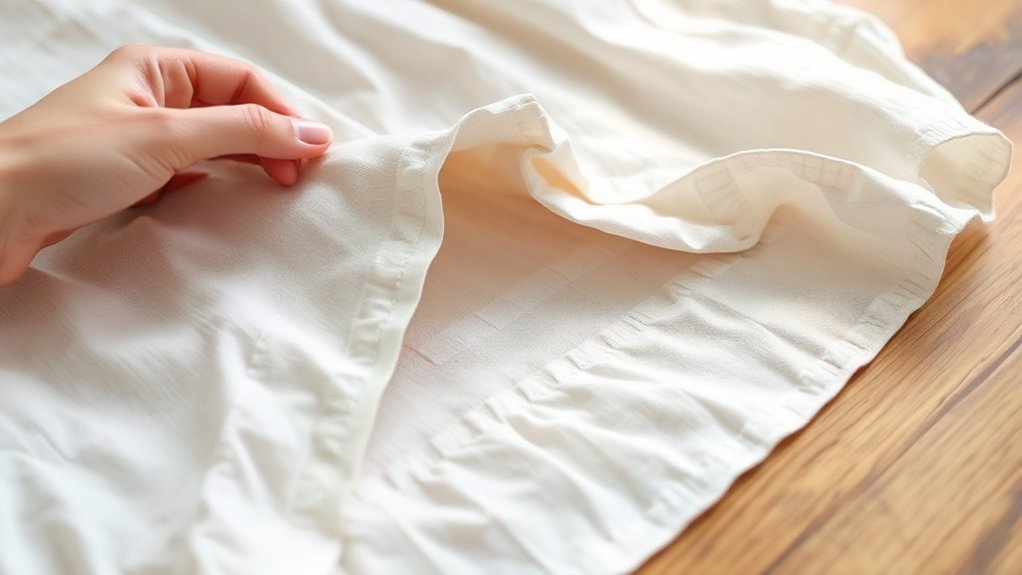
Before you wash linen, check the care label first so you know exactly how to treat the fabric. Read the fabric composition to see whether your item is pure linen or a blend, because blends can need gentler settings.
Then study the care symbols, which tell you if you can machine wash, hand wash, or need dry cleaning. If the label says cold water, choose it to help protect fibers and limit shrinkage.
If it allows tumble drying, use low heat only; otherwise, air-dry the piece flat or on a hanger. You should also note any warnings about bleach, ironing, or special finishes, since those details affect the result.
When the label seems missing or unclear, test a small hidden area first and follow the safest option. Taking a minute now helps you avoid damage later and keeps your linen looking crisp, smooth, and ready to wear.
Sort Linen by Color and Weight

Once you’ve checked the care label, sort your linen by color and weight before washing. Keep whites, lights, and darks in separate piles so dyes don’t bleed and fade the fabric.
Check the care label, then sort linen by color and weight to prevent bleeding and fading.
If you mix towels, sheets, and tablecloths, sort by weight too; heavier pieces can rub against lighter ones and cause uneven wear. You should also group similar fabric types together, since a crisp linen shirt may need different handling than a thick duvet cover.
Pay attention to stains as well, and set heavily soiled items aside so they don’t transfer dirt to cleaner pieces. Your washing frequency matters here, because pieces you wash often may lose brightness faster and deserve their own load.
This simple sorting step helps preserve color, texture, and shape, and it makes every wash more effective.
Wash Linen by Hand
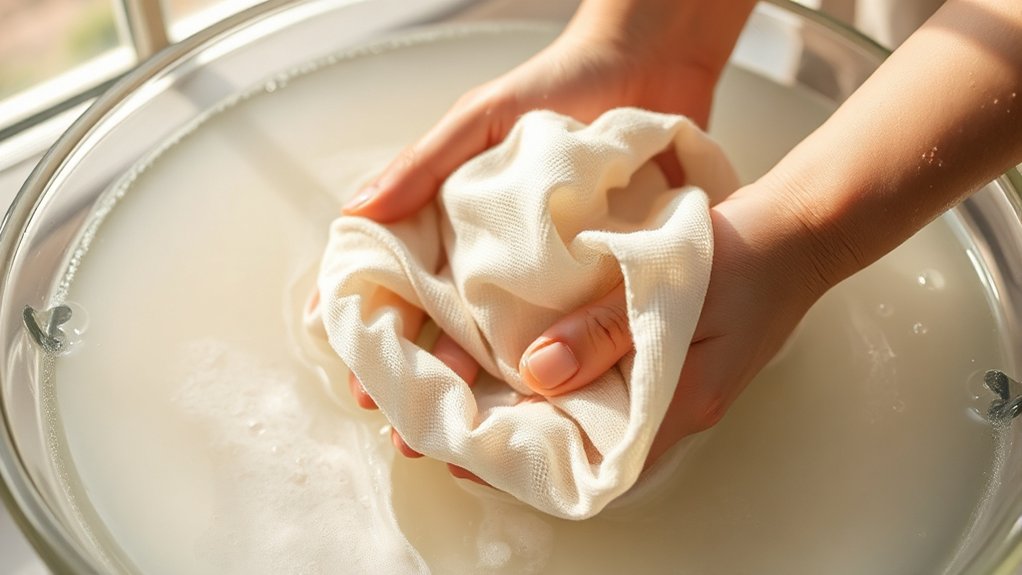
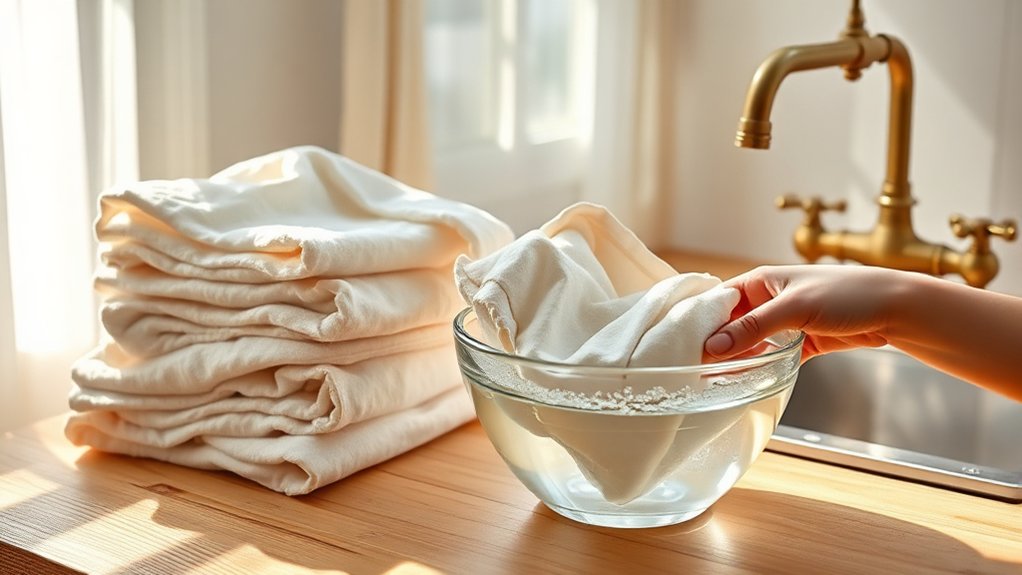
For delicate linen or small items, hand washing gives you the gentlest clean. Fill a clean basin with water and a mild detergent, then submerge the fabric and let it relax for a few minutes. Gently swish it with your hands, focusing on soiled areas without twisting or scrubbing.
Rinse until the water runs clear, then press out excess moisture with your palms.
| Step | Action |
|---|---|
| 1 | Fill basin |
| 2 | Add detergent |
| 3 | Soak linen |
| 4 | Swish gently |
| 5 | Rinse well |
For linen care, treat each piece kindly and avoid rough handling. When you finish, lay the item flat on a clean towel and roll it up to remove more water. Shape it back to its original form before you let it dry.
Hand washing takes a little more time, but it helps preserve the texture, drape, and strength of your linen over time.
Wash Linen in Cold or Lukewarm Water
Use cold or lukewarm water when washing linen to help protect the fibers and reduce shrinkage. Cold water benefits include less stress on the fabric, brighter color retention, and a lower chance of setting wrinkles or fading.
If your linen feels very soiled or oily, choose lukewarm water instead. The lukewarm water advantages are better soil removal and a more comfortable wash for everyday items.
Keep the temperature steady rather than switching between hot and cold, since sudden changes can make linen tighten unevenly. You’ll also help preserve the natural texture and drape that make linen feel so breathable.
For best results, check the care label first and match the water temperature to the garment’s needs. When in doubt, start cooler, because linen usually responds well to a gentle wash cycle and moderate temperatures that clean without damaging the fibers.
Choose a Gentle Detergent
Choose a mild liquid detergent to clean your linen without roughing up the fibers. You’ll also want to pick a fragrance-free formula because harsh scents and additives can irritate the fabric. This simple choice helps keep your linen soft, fresh, and in great shape.
Mild Liquid Detergents
When you wash linen, a mild liquid detergent helps protect the fibers and keep the fabric soft. You should check detergent ingredients and choose formulas with simple, plant-based cleaners that lift dirt without stripping the weave.
Liquid detergents dissolve quickly in cool or warm water, so you won’t leave residue on your linens. If you want eco friendly options, look for concentrated products that use less packaging and fewer harsh additives.
Measure carefully, because too much detergent can dull the fabric and make rinsing harder. Add it to the wash before loading your linen, or dilute it first if your machine calls for that. With a gentle liquid detergent, you’ll clean linen effectively while preserving its natural drape, strength, and smooth feel.
Fragrance-Free Formulas
Fragrance-free detergents are often the gentlest option for linen, especially if your skin is sensitive or your fabrics hold scents easily. You’ll avoid perfume buildup, and your sheets, tablecloths, and towels can stay crisp instead of carrying heavy notes.
Look for formulas labeled dye-free and hypoallergenic, then use the smallest amount the brand recommends.
| Option | Benefit | Best For |
|---|---|---|
| Fragrance-free liquid | Rinses clean | Everyday linen |
| Enzyme-free formula | Fewer residues | Delicate weaves |
| Plant-based detergent | Mild wash | Sensitive skin |
If you want scent alternatives, add natural fragrances later with a sachet, not the wash. That way, you control the aroma without stressing the fibers or masking freshness.
Use a Delicate Machine Cycle
Set your washer to a delicate cycle so the linen gets a gentler wash with less agitation and fewer wrinkles. You’ll protect the fibers by choosing delicate settings that limit twisting and rubbing. This helps your fabric keep its shape and soft feel. If your machine offers an extra-low spin, use it for better machine care and less stress on seams.
Use a delicate cycle with low spin to protect fibers, reduce wrinkles, and keep linen soft.
Keep the load small so the linen can move freely without bunching. Avoid mixing it with heavy items that can snag or crush it.
Choose cold or lukewarm water. Select the shortest gentle cycle available. Close zippers before washing. Turn embroidered pieces inside out. Stop the machine if it sounds unbalanced.
A careful cycle also helps colors stay even, so your linen looks cleaner and lasts longer.
Rinse Linen Until the Water Runs Clear
After the gentle wash finishes, rinse the linen until the water runs clear and no suds remain. You can do this in a sink, basin, or machine cycle, but keep the flow steady so detergent doesn’t cling to the fibers. Use cool or lukewarm water temperature, since hot water can leave fabric feeling rough.
Try different rinse techniques if the cloth still feels slippery after the first pass.
| Method | Best for | Tip |
|---|---|---|
| Basin rinse | Small items | Swish gently |
| Machine rinse | Larger pieces | Select extra rinse |
| Running water | Stubborn soap | Check for bubbles |
After each rinse, squeeze the linen lightly and inspect the water. If it looks cloudy, rinse again. Clear water tells you the fabric is clean, balanced, and ready for the next step.
Dry Linen Without Shrinking
To keep linen from shrinking, dry it gently and avoid high heat. You can protect the fibers by choosing linen drying techniques that limit stress and moisture loss. Shake each piece out first, then hang it in a shaded, breezy spot or lay it flat on a clean rack.
If you use a dryer, select the lowest setting and remove the fabric while it’s still slightly damp. These shrinking prevention tips help linen keep its shape and softness without overexposure to heat.
Keep loads small so air circulates well. Separate heavy items from lightweight linen. Turn garments inside out before drying. Check progress often to avoid overdrying. Finish with air drying when possible.
Don’t leave linen sitting bunched in the drum, because that can set uneven tension and make the fabric feel stiff. Gentle drying also helps preserve the natural drape you want for shirts, sheets, and table linens.
Remove Wrinkles Safely
You can steam linen to relax wrinkles without stressing the fibers. If you decide to use a dryer, just make sure to choose a low-heat tumble setting. Then, take the fabric out while it’s still a bit damp. This way, you help smooth the cloth and keep it safe from too much heat.
Steam To Loosen Wrinkles
If your linen still looks a little creased after drying, use steam to relax the fibers gently. Hold a garment steamer a few inches away, or hang the item in a steamy bathroom, and let the moisture do the work. Steam benefits linen by easing stiff fibers without harsh pressure, so you get smoother fabric and better wrinkle removal.
Keep the fabric moving lightly with your hands, but don’t soak it.
- Test a small area first.
- Work in short passes.
- Keep the nozzle from touching the cloth.
- Focus on collars, hems, and seams.
- Let the linen air-dry fully after steaming.
This method protects the weave and helps your linen look crisp, fresh, and naturally refined.
Low Heat Tumble Dry
Toss linen into the dryer on the lowest heat setting to smooth out lingering wrinkles without stressing the fibers. Keep the load small so air can circulate, and pull the pieces out while they’re still slightly damp. That helps you finish smoothing by hand and prevents crisp creases. Use these tumble drying tips to protect texture and shape.
| Step | Benefit |
|---|---|
| Select low heat settings | Reduces shrinkage |
| Add dryer balls | Improves airflow |
| Stop early | Limits over-drying |
| Shake out immediately | Releases wrinkles |
If your dryer runs hot, shorten the cycle and check often. You’ll keep linen soft, neat, and ready to wear or use, without the harsh damage that high heat can cause.
Store Clean Linen Properly
Once your linen is fully clean and dry, fold it neatly and store it in a cool, dry place away from direct sunlight. You’ll protect the fibers, preserve color, and keep that crisp feel longer when you choose smart storage solutions and follow simple organization tips. Use breathable cotton bags, drawer dividers, or lidded bins to keep items sorted and easy to reach.
Keep linen away from moisture, heat, and pests. Rotate stored pieces so none sit unused for too long. Slip in acid-free tissue to reduce creasing. Label shelves or bins by item type for faster access. Refold linens every few months to prevent hard lines.
Don’t cram pieces into tight spaces because overcrowding traps humidity and can weaken fibers. If you store sheets, tablecloths, or towels separately, you’ll make laundry day easier and help each item stay fresh, smooth, and ready to use.
Frequently Asked Questions
Can Linen Be Washed With Other Fabrics?
Yes, you can wash linen with other fabrics, but you’ve got to check fabric compatibility first. In linen washing, you should pair it with similar lightweight, colorfast items like cotton or bamboo.
Don’t mix it with heavy fabrics, linty towels, or anything delicate that needs gentler care. You’ll reduce abrasion, fading, and stretching by sorting smartly.
Always wash on cool or warm water and choose a gentle cycle for best results.
How Often Should Linen Bedding Be Washed?
You should wash linen bedding every one to two weeks, or sooner if you sweat a lot or have allergies. Your linen washing frequency can shift with season, use, and skin sensitivity.
For better results, follow linen care tips like shaking out sheets often, washing in cool water, and avoiding overloads. You’ll keep the fabric fresh, soft, and durable when you clean it regularly and handle it gently.
Is Fabric Softener Safe for Linen?
No, fabric softener isn’t ideal for linen. You can use it, but it may coat the fibers, reduce breathability, and weaken linen’s natural texture over time.
For better fabric care, skip softener and choose washing tips like a gentle detergent, cool water, and air drying. If you want softer linen, you can add white vinegar in the rinse cycle occasionally to help freshen fibers without buildup.
Can You Wash Heavily Stained Linen?
Yes, you can wash heavily stained linen, and you should act fast. You’ll get better results if you pretreat the spots with gentle stain removal methods before washing.
Use cool or lukewarm water and mild detergent, then choose cleaning techniques that won’t rough up the fibers. Don’t scrub too hard, and avoid bleach unless the care label allows it. Air-dry the linen so you can check if the stain’s gone.
Does Linen Get Softer After Repeated Washing?
Yes, linen usually gets softer after repeated washing. Like a well-loved novel that mellows with time, each cycle helps the fibers relax and boosts the softening process.
You’ll notice the feel improve gradually, especially if you keep a steady washing frequency and avoid harsh detergents or high heat. Don’t expect it to turn silky overnight, but with patience, you’ll enjoy linen that feels smoother, cozier, and more comfortable with every wash.
Conclusion
In the end, washing linen isn’t complicated unless you’d rather keep pretending wrinkled, shrunken fabric is a “look.” Follow the right care steps, and your linen stays soft, fresh, and beautifully lived-in instead of turning into an expensive dust rag.
Check the label, treat it gently, and you’ll save yourself time, money, and regret. Funny how a little extra care makes laundry feel less like a chore and more like a small victory.
With the right approach, washing linen becomes easy and rewarding every time.