How to Wash Silk in 7 Steps
If you’ve ever tried washing silk at home, you know it can feel like walking a tightrope. Many people struggle with keeping their delicate silk garments looking fresh without damaging the fabric. You’re not alone—finding the right method that’s gentle yet effective is a common challenge for anyone who loves their silk pieces.
To wash silk in 7 steps, first check the care label and gather a clean basin, cool water, mild silk-safe detergent, and a soft towel.
Test a hidden spot for colorfastness, then add detergent to the water. Gently swish the silk for one to two minutes, avoiding rubbing or wringing.
Rinse in cool water, press out moisture with a towel, and lay it flat or hang it to air-dry. Keep going, and you’ll pick up a few extra silk-saving tricks.
Key Takeaways
- Check the care label and test a hidden area for colorfastness before washing silk.
- Gather a basin, cool water, mild silk-safe detergent, and a clean towel for gentle washing.
- Hand wash silk by swishing it gently in cool water for one to two minutes.
- Rinse thoroughly in cool water, then press out moisture with towels without wringing or twisting.
- Lay silk flat or hang it on a padded hanger to air-dry away from heat and sunlight.
Gather Your Silk Washing Supplies
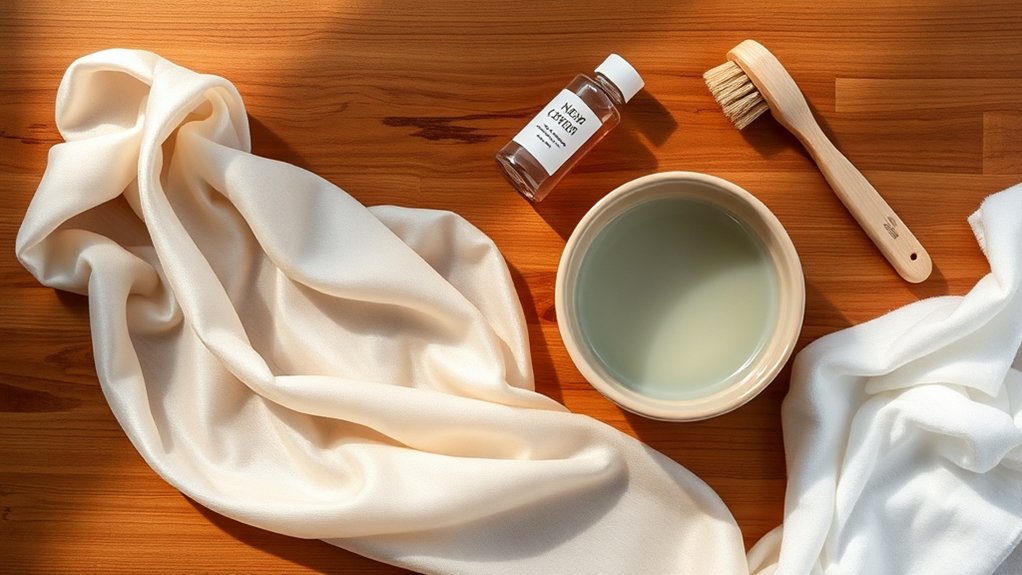
Before you wash silk, gather a few gentle supplies so you can protect the fabric from damage. You’ll need a clean basin, cool water, a mild silk-safe detergent, a soft white towel, and a mesh drying rack or flat surface.
Keep a separate bowl handy for mixing detergent so you don’t pour too much directly onto the fabric. If you plan to hand wash delicate scarves or blouses, choose tools that won’t snag the weave.
Keep a separate bowl for detergent, and use gentle tools that won’t snag delicate silk.
Avoid bleach, stain removers, and rough brushes, since they can weaken fibers fast. Check your silk storage area for dust, perfume residue, or jewelry that might transfer onto the garment while you work.
Think about washing frequency too; if you wear silk often, prep these supplies in one spot so cleaning stays simple and consistent. With the right setup, you’ll handle silk gently, save time, and reduce the risk of stretching, fading, or dulling the sheen.
Check the Silk Care Label First

Check the care label before you wash silk, since it tells you whether the item is hand-washable, dry-clean only, or needs extra caution. You’ll save time and protect silk fabric by following care labels exactly, because different silk types respond differently to water, soap, and agitation.
If the label allows washing, choose gentle washing methods that support fabric longevity and help with color preservation. If it says dry clean only, don’t improvise; that instruction matters more than a guess.
The label can also guide stain removal and drying techniques, since some finishes tolerate moisture better than others. When you read the label first, you avoid damage that can dull sheen, weaken fibers, or shrink the garment.
Make this quick check every time, even for familiar pieces, because labels can vary by weave, dye, and construction.
Test a Hidden Spot for Colorfastness

Once you’ve confirmed the label allows washing, test a hidden spot for colorfastness so you don’t risk fading or bleeding the whole garment. Choose an inside seam, hem, or other discreet area, then dampen a cotton swab with water and touch it gently to the fabric.
Press a white cloth over the spot and check for any dye transfer. This simple fabric testing step tells you whether the color is stable before you clean the silk.
| What to Test | What to Look For |
|---|---|
| Hidden seam | No dye on the cloth |
| Hem edge | No fading around the spot |
| Inner panel | No bleeding or streaks |
If the color lifts, avoid washing or use a professional cleaner. If it stays clear, you can move ahead with more confidence.
Different colorfastness methods may give slightly different results, but this quick check helps you spot trouble early and protect delicate silk from accidental damage.
Hand Wash Silk in Cool Water
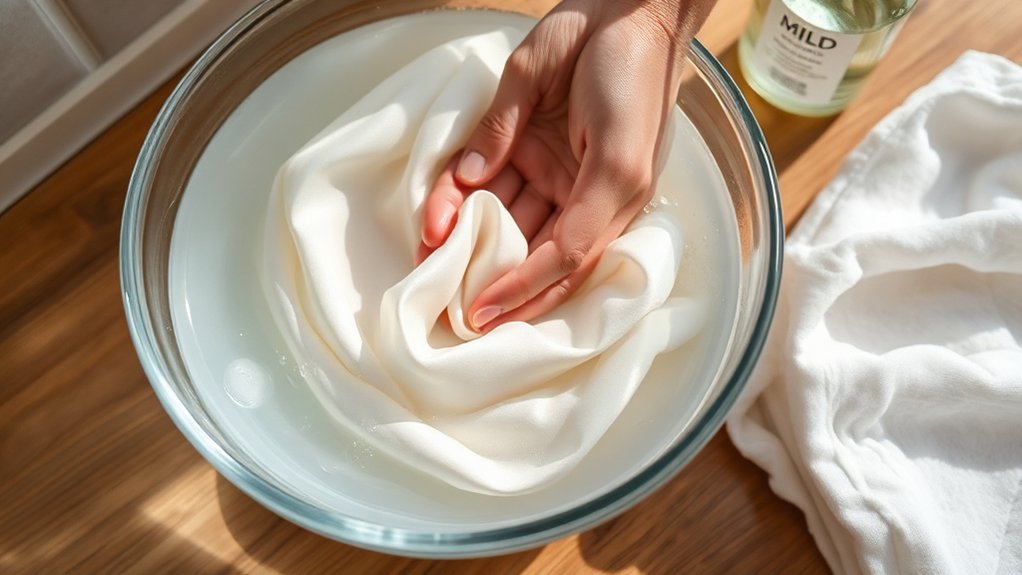
Fill a clean basin or sink with cool water and add a small amount of mild detergent made for delicate fabrics. Submerge the silk and swish it gently with your hands for a minute or two. Use light pressure, and let the water do most of the work.
This is one of the safest silk washing techniques because it protects the fibers while lifting dirt and oils.
Don’t scrub, twist, or wring the fabric, since those are common mistakes that can stretch silk or leave it dull. If needed, move the garment through the water again, then lift it out carefully.
Keep the water cool throughout the wash, and refresh it if it becomes cloudy. Handle the fabric as little as possible, and treat it like the delicate material it is.
When you finish, the silk should feel clean, soft, and ready for the next step in caring for it.
Choose Gentle Soap for Silk
You should pick a mild detergent made for delicate fabrics, or a soap labeled safe for silk. Avoid harsh ingredients like bleach, enzymes, and strong perfumes, since they can damage the fibers.
Before you wash the whole item, test the soap on a hidden spot to make sure it won’t stain or weaken the fabric. That way, you can be sure your silk stays beautiful and intact.
Mild Detergent Choices
For silk, choose a mild detergent made for delicate fabrics, or use a gentle soap with no bleach, brighteners, or enzymes. You’ll protect the fibers and keep the sheen longer when you pick the right formula. Look for silk-specific products or eco-friendly detergents that list a simple ingredient profile and rinse cleanly.
- Read the label carefully.
- Choose a small amount.
- Dissolve it fully in cool water.
- Test it on a hidden seam first.
You don’t need a strong cleaner to get results; a soft wash does the job without stressing the fabric. If you’re unsure, start with the most basic option and use less rather than more. That way, you keep silk smooth, bright, and wearable after every wash.
Avoid Harsh Ingredients
Skip any detergent or soap with bleach, enzymes, optical brighteners, or heavy fragrances, since those ingredients can weaken silk and dull its finish. You need a cleanser that respects silk fabric properties: smooth fibers, natural sheen, and a delicate structure that harsh additives can strip.
Choose a gentle soap made for delicates or a very mild liquid cleanser with no extras. Don’t trust silk washing myths that claim stronger soap cleans better; on silk, stronger usually means harsher.
Use only a small amount, then rinse well so residue won’t stiffen the cloth or leave spots. If the label lists complicated additives, put it back. Your goal is simple: protect the weave, preserve softness, and keep silk looking rich, fluid, and refined after washing.
Test Before Washing
Before you wash silk, test your soap on a hidden seam or inner hem to make sure it won’t dull the color or leave residue. This simple step protects delicate fibers and keeps your silk looking smooth.
For silk fabric care, choose a gentle, pH-neutral cleanser and avoid strong detergents, bleach, or enzyme formulas. Silk washing myths often suggest that any mild soap works, but some products still strip sheen or leave buildup.
- Mix a small amount with cool water.
- Dab it on the hidden area.
- Wait a few minutes.
- Rinse and check for fading, stiffness, or residue.
If the fabric looks unchanged, you can wash with more confidence and less risk.
Rinse Silk Without Twisting It
Rinse your silk in cool water, giving it a gentle swish to lift out the soap. Try not to twist or wring it, because that can stretch and distort the fabric. As you rinse, keep the garment supported so it holds its shape.
Gentle Rinsing Technique
Even if your silk still feels soapy, handle the rinse with care so you don’t distort the fibers. Fill a basin with cool water and lift the silk fabric through it gently, letting the suds drift out instead of squeezing them away. Use these rinse techniques to protect the weave and keep the finish smooth. Repeat only as needed.
- Support the garment with both hands.
- Swish lightly, not aggressively.
- Replace cloudy water with fresh cool water.
- Stop when the water runs clear.
Never twist, wring, or fold the silk sharply while rinsing. Instead, guide it through the water in slow motions and let gravity do the work. When the soap is gone, move on carefully and keep the fabric relaxed.
Preserve Fabric Shape
Keep the silk’s shape intact by lifting and handling it with minimal pressure. After rinsing, support the garment with both hands and let the water run off naturally. Don’t twist, wring, or stretch the fabric, since those motions can distort delicate fibers and reduce shape retention.
Instead, press the silk lightly between clean towels to remove excess moisture. You can also lay it flat on a dry towel and roll it gently, then unroll it and reshape the piece by hand. Smooth hems, seams, and edges back into place before drying.
This careful approach protects fabric longevity and helps the silk keep its original drape, finish, and fit. When you handle it patiently, you preserve both appearance and structure.
Air-Dry Silk and Smooth Out Wrinkles
After washing, gently reshape your silk item and lay it flat on a clean towel or hang it on a padded hanger to air-dry away from direct heat and sunlight. This careful silk drying helps protect the fibers and keeps the fabric’s sheen intact. Don’t twist, wring, or clip silk with harsh pins, since those habits can leave marks.
If the surface looks damp and slightly creased, smooth it with your hands while it’s still moist. For wrinkle removal, handle it gently and let gravity do most of the work.
- Choose a shaded, well-ventilated spot.
- Keep silk away from radiators, dryers, and windows.
- Pat excess moisture out with a towel, not a rub.
- Press light wrinkles with your palms, then let the fabric rest.
If needed, use a cool iron on the reverse side with a cloth barrier. This protects the weave and leaves your silk looking fresh, crisp, and ready to wear.
Frequently Asked Questions
Can Silk Be Washed With Vinegar?
Yes, you can wash silk with vinegar, but you should use it sparingly. You’ll want to dilute white vinegar in cool water since it can help with silk care by removing odors and residue.
The vinegar benefits are mild, so don’t soak silk for long or use it often. Always test a hidden spot first, then rinse gently and air-dry away from heat to protect the fabric’s shine and softness.
How Often Should Silk Items Be Cleaned?
You should clean silk items only when they’re visibly dirty, lightly soiled, or picking up odors. You’ll protect silk care and silk preservation by airing pieces after wear, spot-cleaning small marks, and washing sparingly.
You don’t need to wash silk after every use; instead, you should clean it gently, infrequently, and thoughtfully. That rhythm helps fibers stay smooth, colors stay bright, and your silk last longer with less damage.
Does Silk Shrink After Washing?
Yes, silk can shrink after washing if you use hot water, harsh detergent, or high heat drying. You should follow gentle silk care and smart washing tips to keep it safe.
Wash it in cool water by hand or on a delicate cycle, then air-dry it flat or hang it away from sunlight. You’ll help preserve its shape, softness, and sheen when you handle it carefully.
Can Silk Be Safely Steamed Instead of Washed?
Yes, you can often steam silk safely instead of washing it if you use gentle silk steaming techniques. You should keep the steamer moving, hold it a few inches away, and test a hidden spot first.
Steaming helps relax wrinkles and refresh the fabric, but it won’t remove stains or heavy odors. For best results, follow simple silk care tips and avoid soaking, high heat, or direct contact with the nozzle.
How Do I Remove Oil Stains From Silk?
Treat that oil stain like a guest overstaying its welcome: act fast. You should blot, not rub, with a clean cloth. Then sprinkle cornstarch or talc on the spot and let it sit for 15–30 minutes.
Brush it off gently, then dab with a tiny amount of mild soap and cool water. Rinse lightly, air-dry, and repeat if needed. Good silk care keeps the fabric smooth and safe.
Conclusion
By following these seven steps, you can wash silk safely and keep it looking beautiful. Always check the care label, test for colorfastness, and use cool water with a gentle soap.
Handle the fabric softly, rinse it carefully, and let it air-dry without twisting. With a little patience, you’ll protect silk’s sheen and texture so it stays elegant, soft, and smooth, like a ribbon catching light.
Washing silk properly ensures you maintain its delicate charm and quality over time.