What Is a Quilt Sizes Chart?
Trying to find the perfect quilt size can be surprisingly tricky. You’re not alone if you’ve ever struggled to figure out what will fit your bed just right without looking too small or hanging too low. Many people face this challenge when shopping for quilts or planning a custom project.
A quilt sizes chart shows you the standard dimensions for quilts, so you can pick the right fit for a bed, crib, or throw without guessing. You can compare twin, full, queen, king, and crib sizes, then match them to your mattress measurements and desired overhang.
It helps you avoid sizing mistakes, choose the right drape, and plan custom quilts more confidently. If you keep going, you’ll see how to measure and choose the best size.
Key Takeaways
- A quilt sizes chart lists standard quilt dimensions for beds, cribs, couches, walls, and gifts. It helps match quilt width and length to mattress size for proper coverage and drape.
- Common bed sizes include twin, full, queen, and king. Each needs different quilt measurements.
- Crib quilts are usually smaller, around 36 by 52 inches, for a safe and snug baby bed fit.
- Use the chart with mattress depth, overhang, and shrinkage in mind before cutting fabric.
Quilt Sizes Chart for Standard Beds
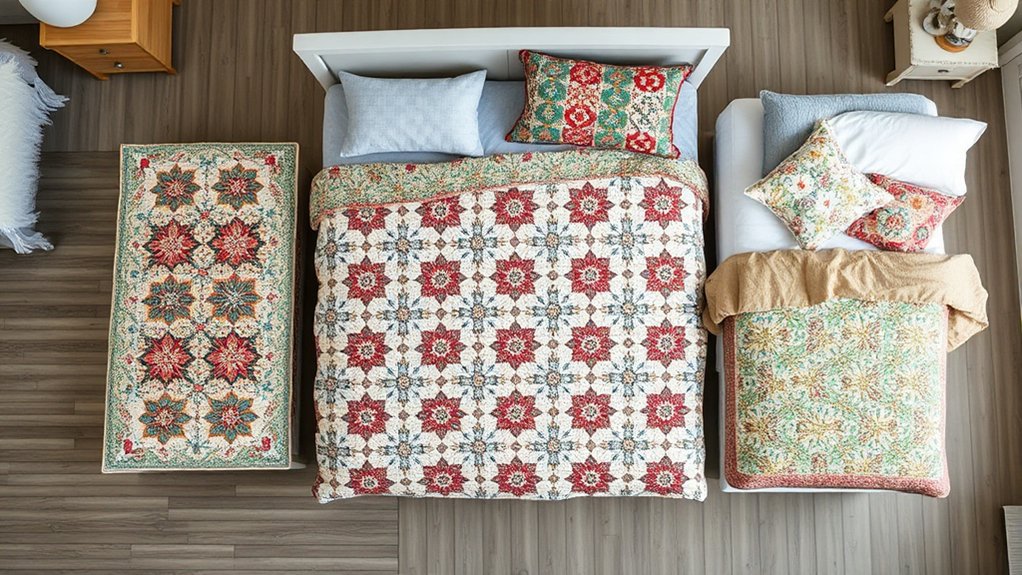
When you’re choosing a quilt for a standard bed, the right size depends on both the mattress dimensions and how much overhang you want on the sides and foot. You should match the quilt to your bed size first: twin, full, queen, or king.
A twin quilt usually gives enough coverage for a narrow bed, while a full quilt adds a bit more drape for shared sleeping. Queen quilts work well if you want generous side drop, and king quilts fit larger mattresses with fuller coverage.
If you like a tailored look, measure your mattress height before buying, since deep mattresses need extra length. You can also use a quilt as a lighter layer over sheets, especially in warmer months.
Keep a crib quilt and baby blankets separate from standard-bed sizes, since they’re designed for smaller sleeping spaces and lighter use. That way, you’ll pick a quilt that fits well and looks balanced.
Standard Quilt Sizes for Crib and Baby Beds
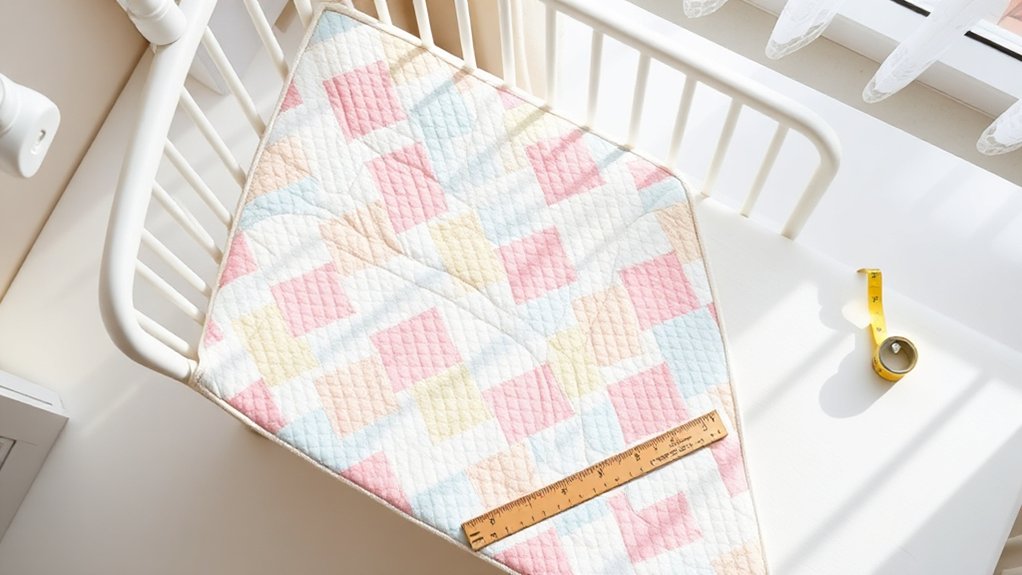
When you’re picking out a quilt for a crib or baby bed, it’s important to get the right size for a snug and comfy fit. You’ll want to check the baby blanket measurements carefully to make sure the quilt covers the mattress just right—not hanging too far over the sides.
That safe overhang really matters because a smaller, well-fitted quilt helps keep the sleeping space secure. So, finding that perfect size means your little one stays cozy and safe all night long.
Crib Quilt Dimensions
A crib quilt usually measures about 36 by 52 inches, though you’ll also see sizes ranging from 30 by 40 inches to 45 by 60 inches for larger baby beds or custom designs. You can use this range to choose a quilt that suits your nursery and sewing goals.
Crib quilt styles often include simple patchwork, appliqué, and modern geometric looks. Crib quilt fabrics should feel soft, breathable, and easy to wash.
Pick smaller dimensions for traditional cribs. Choose larger sizes for roomy baby beds. Match the quilt to your style and fabric choice.
When you plan ahead, you’ll create a crib quilt that looks balanced and feels practical.
Baby Bed Blanket Fit
Baby bed blankets need the right quilt size so they fit neatly without hanging too far over the mattress. You’ll usually want a crib quilt that matches standard baby bed dimensions, giving you enough coverage for a tidy look without excess bulk.
When you compare baby blanket styles, think about whether you want a simple coverlet, a patchwork quilt, or a plush design that feels softer in your hands. Quilt fabric choices also matter because lightweight cotton works well for everyday use, while flannel adds warmth and texture.
If you measure the mattress first, you can pick a quilt that suits both the bed and your decorating style. A well-sized quilt helps you create a polished nursery look and keeps the blanket easy to arrange.
Safe Overhang Guidelines
To keep a crib quilt safe, let it cover the mattress neatly without a long overhang that could bunch up or dangle near the sides. You want enough quilt drape for comfort, but not so much quilt overhang that little hands or feet can tangle in it. Aim for a quilt that sits flat across the top and tucks lightly at the edges.
Check that the quilt reaches the mattress surface, not the floor. Choose a size that leaves minimal overhang on all sides. Test the drape by pulling the quilt into position and watching for loose folds.
If you follow these guidelines, you’ll balance warmth, fit, and safety in a baby bed.
Throw Quilt Sizes and Common Uses

Throw quilts usually measure around 50 by 60 inches, though you’ll find slight variations depending on the pattern or maker. You can use a throw quilt for lounging, adding warmth, or bringing color into cozy settings. It’s big enough to drape over your shoulders, tuck around your legs, or fold across a sofa.
| Use | Best For | Notes |
|---|---|---|
| Sofa | Living rooms | Adds comfort and style |
| Chair | Reading nooks | Keeps you warm while seated |
| Travel | Road trips | Easy to pack and carry |
You’ll also like a throw quilt on guest beds, dorm chairs, or picnic grass. Because it’s lightweight and versatile, you can move it from room to room without hassle. Choose one that matches your decor and feels soft enough for everyday use. A throw quilt gives you practical comfort without taking over your space, so it works well wherever you want a quick layer.
How to Match Quilt Size to Mattress
Matching a quilt to your mattress starts with measuring the bed size and deciding how much overhang you want on each side. Then compare those numbers with a quilt sizes chart to see which option covers the top surface without looking skimpy or overwhelming your room. Your quilt style preferences matter too: a tailored look needs less coverage, while a relaxed drape can benefit from a larger size.
- Measure mattress length, width, and depth first.
- Check how the quilt sits with your pillows and headboard.
- Choose fabric choices that help the quilt hang smoothly.
For deeper mattresses, pick a size that lets the edges reach past the sides and foot of the bed. If you use thick bedding layers, size up so the quilt still lies evenly. Matching the right quilt to your mattress helps you create a polished bed that feels comfortable and looks intentional.
How Much Quilt Overhang Do You Need?
You’ll usually want enough quilt overhang to cover the sides of the mattress without letting it drag on the floor. Standard drops often range from about 10 to 15 inches.
If you like to tuck the quilt in, it’s a good idea to measure a little extra. That way, you’ll have enough fabric at the foot and sides for a neat, secure fit.
And if your mattress is on the deeper side, be sure to add more overhang to account for the extra height. This helps keep the quilt looking balanced and just right.
Standard Overhang Amounts
A few inches of quilt overhang usually make the bed look neat and feel comfortable. You can use standard measurements to choose the right quilt overhang for your bed size without guesswork. Most beds look balanced when the quilt drops 8 to 12 inches on each side, though you may prefer a little more for a fuller look.
Twin beds often need a smaller drop. Queen and king beds usually benefit from longer overhang. Your mattress depth can change the finished look.
If you want a tidy, hotel-style appearance, aim for even coverage on both sides and across the foot of the bed. That simple rule helps you pick a quilt that looks intentional, hangs well, and suits your room.
Measuring For Tuck-In
To figure out how much quilt overhang you need for tuck-in, measure the mattress top, then add the amount you want to hang past the sides and foot. Use a tape measure across the width and length, then decide how much drape feels comfortable for your bed.
If you like a neat look, choose less overhang; if you want extra coverage, add more. Your tuck-in techniques matter, too, because a fitted fold needs less fabric than a loose, relaxed tuck.
Also consider your quilt style: a heavy, structured quilt may hang differently than a light, airy one. Write down your numbers before shopping or cutting. That way, you can match the quilt to your bed and avoid guessing later.
Adjusting For Mattress Depth
Mattress depth changes how much quilt overhang you need, since a deeper mattress uses up more of the quilt’s drop before it reaches the sides and foot. When you check your quilt sizes chart, measure your mattress thickness from top to bottom, then add the extra drop you want for a neat look or full coverage. If you like a bedspread feel, choose more length on the sides and foot.
Tall mattresses need larger quilts. Allow for fabric shrinkage after washing. Test the overhang with your pillow tuck.
This helps you avoid a quilt that looks short or drags on the floor. For the best fit, compare your bed height with the finished quilt dimensions before you buy or sew.
Choosing Quilt Size for Borders and Blocks
When you’re choosing a quilt size for borders and blocks, start by measuring the finished center. Then decide how much visual space you want each element to take up. You can balance border styles with block dimensions so the quilt feels intentional, not crowded.
| Element | Guide |
|---|---|
| Center | Measure first |
| Border width | Add evenly |
| Block size | Match pattern |
| Corner treatment | Keep proportions |
| Final size | Recheck total |
If your blocks are large, use slimmer borders to avoid overpowering the design. Smaller blocks often need wider framing to create presence and keep the quilt from looking busy. You should also test your layout on paper before cutting because a small change in border width can shift the whole finished size.
When you plan both pieces together, you’ll get cleaner edges, better symmetry, and a quilt that fits your vision exactly.
Quilt Sizes for Custom and Oversized Beds
If your bed doesn’t match standard dimensions, you’ll need to size the quilt around the mattress first and then add enough drape for the look you want. On a custom bed, measure length, width, and height, then compare those numbers with the quilt top and batting size you’re planning.
For deeper mattresses, you’ll usually want extra drop on all sides so the quilt hangs evenly and looks polished. Oversized quilts work well when you want generous coverage, especially for statement beds or rooms where the quilt doubles as a focal point.
- Measure the mattress, including any topper.
- Add drape based on how much of the bed you want covered.
- Choose oversized quilts when you want a fuller, more tailored finish.
When you’re unsure, sketch the bed and mark the finished dimensions before you cut. That simple step helps you create a quilt that fits cleanly and looks intentional.
Common Quilt Sizing Mistakes to Avoid
When you’re picking a quilt size, don’t overlook the mattress dimensions. Otherwise, your quilt might end up feeling too short or too wide.
You’ll also want to think about the drop length because that’s what determines how the quilt hangs over the sides. And don’t forget about the seam allowance—skipping it can make your finished quilt smaller than you expected.
Ignoring Mattress Dimensions
Ignoring mattress dimensions is one of the easiest ways to end up with a quilt that looks too small or hangs awkwardly. You should measure the mattress before you choose quilt dimensions because bed sizes can vary more than you expect. A queen in one room may feel different from another, and fabric types can change how the quilt drapes and stretches.
- Measure length, width, and thickness first.
- Compare those numbers with your quilt dimensions chart.
- Choose a size that matches the bed, not just the label.
When you skip this step, you risk uneven coverage and a finish that feels off. Take a minute to check the mattress, then pick a quilt that fits cleanly and looks intentional.
Forgetting Drop Length
Another common quilt sizing mistake is forgetting drop length, the amount of quilt that hangs over the sides of the bed. You need to measure this overhang before you cut because a quilt that fits the mattress but stops short looks unfinished.
A standard quilt drop can vary depending on bed height, mattress depth, and whether you want a tailored or relaxed look. When you plan your quilt sizes chart, add the desired drop on all visible sides and check your overhang considerations against your bedroom style.
If you skip this step, your quilt may leave too much mattress exposed or puddle lower than you want. Choosing the right drop helps you achieve balance, coverage, and a polished finish on the bed.
Skipping Seam Allowance
Skipping seam allowance is a mistake that can shrink your quilt faster than you expect. When you cut pieces to size but ignore seam allowance, your quilt construction loses accuracy, and every block can come out too small. You need to account for the extra fabric your seams consume, or your finished measurements won’t match the quilt sizes chart.
Measure before you sew, not after. Keep a consistent seam allowance for every block. Test a sample block to confirm your final size.
If you skip this step, borders may not fit, rows may drift, and the quilt can end up uneven. By planning for seam allowance from the start, you protect your design, save time, and keep your quilt construction on target.
How to Measure Your Finished Quilt
Once your quilt is assembled, lay it flat on a smooth surface and measure across the center from edge to edge to get the most accurate width and length. Use reliable measuring tools, such as a tape measure or yardstick, and keep them straight so your quilt dimensions stay true.
Check both sides and the diagonal if you want to confirm the quilt hasn’t shifted or stretched during finishing.
Record each measurement in inches, then compare them with your quilt sizes chart. If you’ve added borders, include them in the total. Don’t pull the fabric tight; let the quilt rest naturally so you capture its real size.
If your quilt has uneven edges, measure at the widest points and note any differences. These numbers help you document the finished project clearly and make future planning easier for matching patterns, backing, and binding.
Quick Tips for Choosing the Right Size
When you’re choosing a quilt size, start with how the quilt will actually be used: bed, couch, wall, or gift. Then compare those needs to your chart before cutting fabric. Next, think about who’ll use it and how much drape you want.
A bed quilt should cover the mattress and pillows. A throw can be smaller and cozier. Check your quilt patterns for seam allowances and border growth since both can change the final size.
If you’re piecing with bold quilt fabric, scale matters even more because large prints can look crowded in a tiny layout.
- Measure the mattress or surface twice.
- Add extra inches for overhang or shrinkage.
- Match the size to your skill level and time.
If you’re making a gift, choose a versatile size that fits most spaces. When in doubt, cut a test block first and verify proportions.
Frequently Asked Questions
What Is a Quilt Sizes Chart Used For?
You use a quilt sizes chart to pick the right quilt size for your bed, project, or gift. It helps you plan dimensions, choose fabric selection wisely, and avoid wasting material.
You can compare crib, twin, queen, and king measurements before cutting or sewing. With it, you’ll make sure your quilt fits well, looks balanced, and meets your needs without guesswork or costly mistakes.
Are Quilt Dimensions Different by Country?
Yes, quilt dimensions can differ by country. You’ll find that size isn’t a universal ruler; it’s more like a local dialect. Different regions use their own bedding conventions, so measurements can shift between markets.
You should check international standards when comparing charts, but expect regional variations, especially for twin, queen, and king sizes. If you’re buying fabric or a finished quilt, always confirm the exact dimensions before you decide.
Does Quilt Batting Affect Finished Size?
Yes, quilt batting affects finished size because batting thickness can add loft and slightly change your finished dimensions. You’ll usually see a quilt measure a bit larger before washing, then shrink or settle after quilting and laundering.
If you want exact finished dimensions, you should cut your top and backing with extra allowance, then test your batting first. Thicker batting can make your quilt feel fuller, but it may also reduce precision.
Can I Use a Quilt Chart for Bedspreads?
Yes, you can use a quilt chart for bedspreads, but treat it like a compass, not a contract. You’ll want to compare the chart’s bedspread dimensions with your mattress depth and how much drape you like.
Different quilt style choices can change the look and coverage, so adjust for tuck, overhang, and shrinkage. If you measure first, you’ll pick a size that fits your bed and your style better.
How Often Should Quilt Size Charts Be Updated?
You should update quilt size charts whenever quilt size standards change, fabric trends shift, or you notice mismatches in real projects. For most makers, reviewing them annually works well.
But your updating frequency can be faster if you sell quilts, teach classes, or follow multiple markets. You’ll keep measurements accurate, prevent sizing errors, and help buyers or students trust your chart.
Review it after any major industry guideline update.
Conclusion
A quilt sizes chart is your roadmap for getting the fit just right. When you match your quilt to the mattress, you avoid a look that’s too skimpy or too bulky. Think of it like tailoring a jacket: the best fit feels comfortable, looks polished, and works for the bed you’re covering.
Use the chart, measure carefully, and choose with confidence. That way, your quilt will drape beautifully and do its job well. Always keep a quilt sizes chart handy to ensure the perfect fit every time.