Fleece Vs Minky: 10 Key Differences
Choosing the right fabric for your next project can be surprisingly tricky. If you’ve ever felt overwhelmed by all the options, you’re not alone. Many people struggle to decide between materials that look similar but perform very differently.
When it comes to cozy textiles, knowing the difference between fleece and minky can save you time and frustration.
Fleece and minky are both polyester fabrics, but you’ll notice key differences right away. Fleece feels lighter, warmer, and easier to sew, making it great for blankets, jackets, and activewear.
Minky is softer, plusher, and more luxurious, so it’s often used for baby items and decorative projects.
Fleece usually breathes and lasts better, while minky can shift, pill, and need gentler care. If you keep going, you’ll uncover the rest of the differences.
Key Takeaways
- Fleece is lighter, warmer, and more breathable, making it better for insulation and activewear.
- Minky is denser, softer, and silkier, giving it a plush feel for comfort-focused projects.
- Fleece is easier to sew and stays stable, while minky shifts more and needs clips or pins.
- Fleece withstands frequent washing and abrasion better. Minky can flatten and pill more easily.
- Fleece is usually cheaper and more available, while minky costs more and is often used for baby items.
What Are Fleece and Minky?
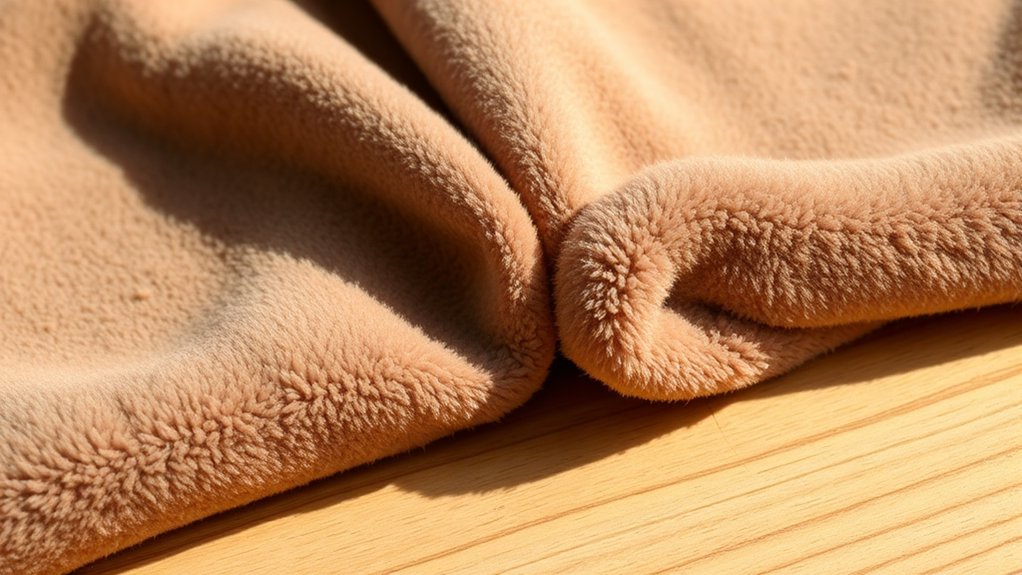
Fleece and minky are both soft, synthetic fabrics, but they serve slightly different purposes. You’ll usually see fleece made from polyester fibers that manufacturers knit, brush, and finish to create a lightweight, insulating material. Its fleece characteristics include durability, easy care, and good moisture handling, which makes it a practical choice for blankets, jackets, and activewear.
Minky is also polyester-based, but makers design it as a plush, velvety fabric with a smoother surface and a luxe look. You’ll find minky applications in baby products, throw blankets, robes, and decorative items where comfort and appearance matter.
When you choose between them, think about how you’ll use the fabric, how much warmth you need, and whether you want something more utility-focused or more decorative. Both fabrics work well in home sewing, but they solve different needs and suit different projects.
Fleece vs Minky: Texture and Feel
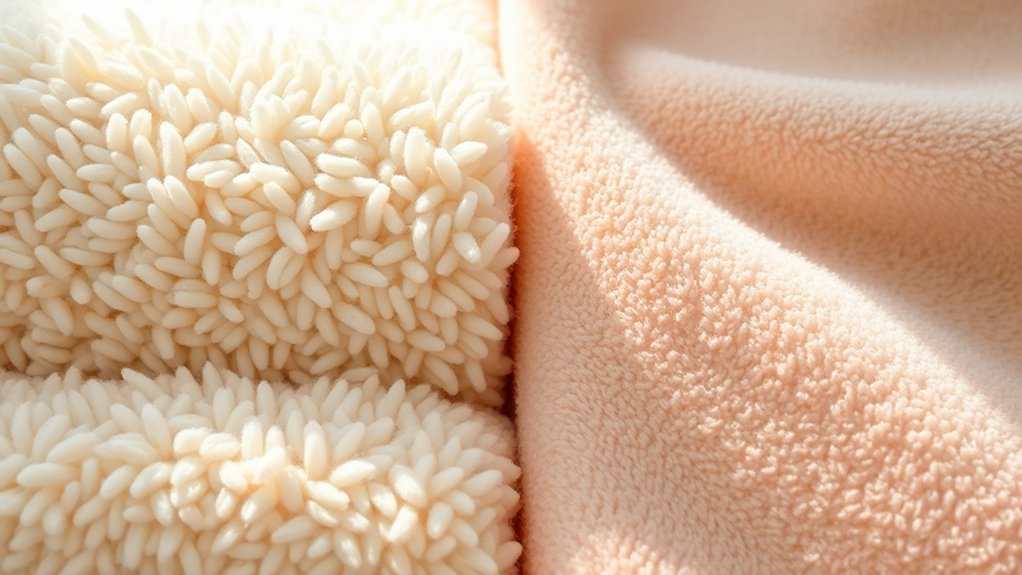
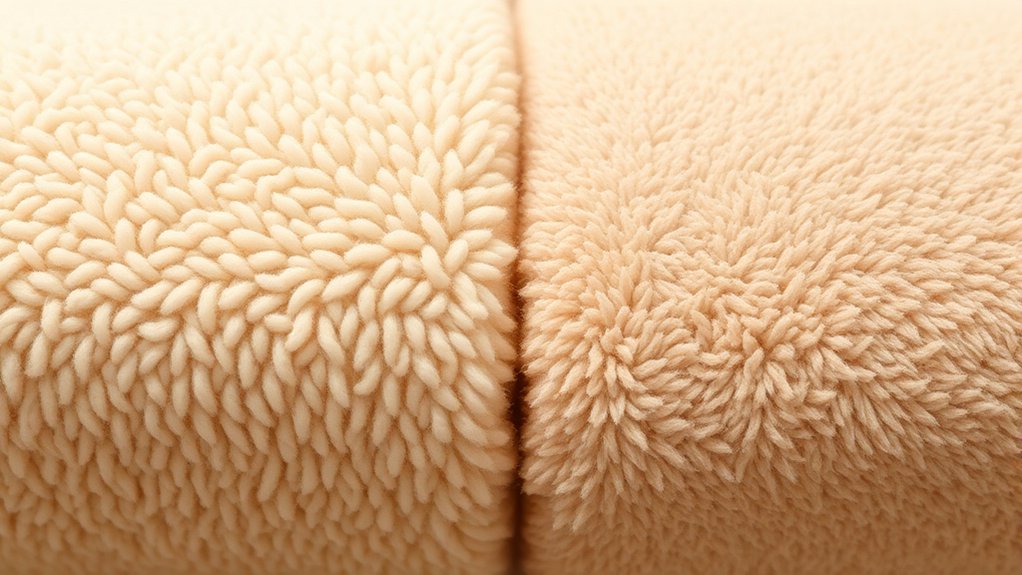
When you compare fleece and minky, you’ll notice that surface softness plays a big role in how each fabric feels. Fleece usually has a lighter, loftier pile. On the other hand, minky feels denser and smoother to the touch. So, if you care about skin comfort, you’ll want to think about which texture feels gentler against you.
Surface Softness
Minky usually feels softer and plusher to the touch, with a velvety surface that can seem almost silky against your skin. When you compare surface softness, you’ll notice that minky properties give it a luxurious handfeel that many people love for blankets, plush items, and baby projects.
Fleece characteristics, on the other hand, often create a softer-than-plain-fabric feel, but it usually reads as smoother and less velvety than minky. You may prefer fleece if you want comfort without the extra plush sensation, while minky gives you a more indulgent, tactile experience.
If softness matters most, minky stands out immediately, though fleece still offers a cozy feel that works well for everyday use.
Pile Density
Beyond softness, pile density also shapes how each fabric feels in your hands and on your skin. When you compare fleece and minky, you’ll notice different pile characteristics that affect loft, drape, and how full the surface looks.
Fleece usually has a more open, airy pile, while minky packs its fibers tighter for a denser feel. That density comparison matters because it changes how the fabric bunches, stretches, and springs back.
- Fleece can feel lighter and less compact.
- Minky often feels smoother because its pile is closely packed.
- Higher density can make details look sharper and more uniform.
You’ll also see that pile density influences how each fabric holds its shape over time, giving you a clearer sense of texture and finish.
Skin Comfort
Skin comfort is where fleece and minky start to feel very different against your skin. Fleece usually feels warm and cozy, but its brushed surface can feel a little fuzzy or clingy if you have skin sensitivity.
Minky, by contrast, feels smoother and silkier, so it often slides gently over your skin without friction. If you like a plush touch, fleece may suit you, but if you want a softer, more velvety feel, minky usually wins.
You should also think about fabric allergies, because some people react more to synthetic finishes than to the fabric itself. Test each fabric on your arm or neck first, and choose the one that feels calming, breathable, and easy to wear all day.
Fleece vs Minky: Warmth and Breathability
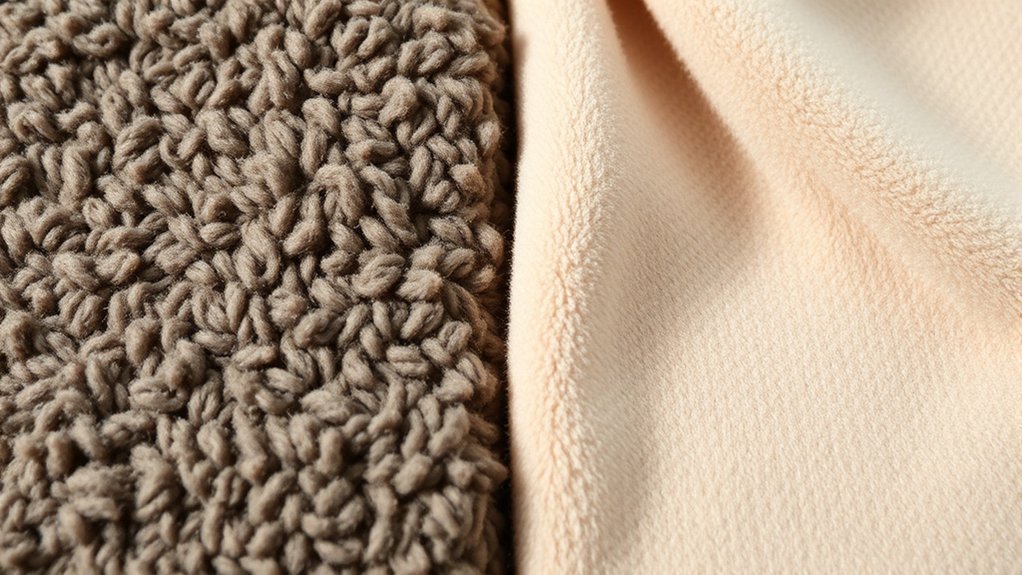
When you compare fleece and minky for warmth and breathability, fleece usually gives you more insulation, while minky feels softer and lighter against the skin. If you want steady warmth, fleece traps more air, so you stay cozy in cooler rooms or outdoors.
Its insulation properties make it a strong choice for blankets, jackets, and pet beds. Minky still offers comfort, but it lets heat escape a bit easier, which can help you avoid overheating. You’ll also notice differences in moisture management: fleece tends to wick sweat away well, while minky can feel slightly less airy when you’re active.
- Choose fleece for colder conditions.
- Choose minky for lighter warmth.
- Match the fabric to your temperature needs.
In short, you’ll get more warmth from fleece, and you’ll get a breezier feel from minky.
Which Fabric Has Better Stretch and Drape?
Stretch and drape matter just as much as warmth when you’re choosing between fleece and minky. You’ll usually find that fleece offers more noticeable stretch properties, especially if you pick a knit style with a bit of give. That flexibility can make fleece easier to work with when you want a fabric that moves with you or fits around curves.
Minky, by contrast, feels softer and more supple, but it usually has less built-in stretch unless the backing includes spandex. When you look at drape characteristics, minky often hangs more fluidly and falls in smooth, plush folds. That gives it a more luxurious, flowing look for blankets, throws, and garments that benefit from a softer silhouette.
Fleece tends to hold its shape a little more, so it can look bulkier and less elegant in draped projects. If you want movement, minky usually wins; if you want controlled stretch, fleece often does better.
Fleece vs Minky: Durability and Pilling
Durability is where the differences between fleece and minky start to matter in everyday use. You’ll usually find fleece holds up better when you wash it often, because its knit structure resists abrasion and hides minor wear. Minky feels softer, but its plush surface can show flattening and pills sooner if you rub it against rough textures.
Fleece often holds up better with frequent washing, while minky may flatten and pill more easily.
In a durability comparison, fleece often wins for blankets, jackets, and gear that face frequent use.
- Choose fleece if you want longer-lasting surface texture.
- Choose minky if softness matters more than rough handling.
- Use pilling prevention steps, like gentle washing and low heat.
If you care about appearance over time, you should treat minky more carefully than fleece. Turn both fabrics inside out before laundering, avoid high-friction cycles, and skip harsh detergents.
That way, you’ll keep the fabric looking cleaner, smoother, and newer longer.
Which Fabric Is Easier to Sew?
When you sew fleece, you’ll usually find it easier to handle because it grips less and feeds smoothly through your machine. On the other hand, minky can be trickier since its soft pile tends to shift more. So, you’ll want to pin or clip it well to keep your seams steady.
If you’re looking for simpler sewing and more stable seams, fleece often gives you an easier start.
Sewing Ease
If you’re choosing between fleece and minky for a sewing project, fleece is usually easier to work with. You can cut it cleanly, and it feeds through your machine with less fuss. Minky feels softer, but its slippery pile asks for more careful fabric handling and steadier hands.
When you use basic sewing techniques, fleece forgives small mistakes and keeps your workflow simple.
- Fleece stays in place better while you pin or clip.
- Minky can shift, so you’ll slow down more often.
- Fleece works well for beginner-friendly seams and quick projects.
If you want a smoother sewing experience, choose fleece. If you’re ready for extra attention, minky can still be rewarding, but it demands more patience from you.
Seam Stability
Seam stability is generally better with fleece because it grips more reliably under the presser foot and holds stitches in place with less slipping. You’ll notice that fleece keeps its shape as you sew, so your seam allowances stay even and your edges don’t wander.
Minky, by contrast, can stretch and shift, which makes matching layers harder and can cause waviness along the seam. If you’re working with minky, use more pins or clips, a walking foot, and shorter stitches to improve fabric stability. You should also avoid pulling the fabric as you sew since that can distort the pile.
With fleece, you’ll usually get cleaner seams faster, making it the easier choice when you want predictable results.
Fleece vs Minky: Care and Washing
Fleece and minky both need gentle care, but minky usually demands a bit more attention to keep its plush texture intact. You should turn both fabrics inside out before washing, use cold water, and choose a mild detergent for better fabric care. These laundry tips help reduce pilling and preserve softness.
- Wash on a delicate cycle.
- Skip bleach and fabric softener.
- Air-dry when possible, or tumble dry low.
Fleece dries faster and tolerates washing a little better, while minky can lose its silky feel if you expose it to high heat or rough agitation. If you spot-clean a stain early, you’ll protect the fibers and avoid repeated washing. After cleaning, shake the item out gently to restore loft.
With consistent fabric care and smart laundry tips, you’ll keep both materials looking fresh, feeling comfortable, and lasting longer through regular use.
Best Uses for Fleece and Minky
Once you know how to care for each fabric, it’s easier to choose where it works best. Fleece suits rugged, everyday projects because it’s warm, stretchy, and easy to handle. You can use it for outdoor layers, linings, hats, mittens, and sportswear.
It also works well in blanket types meant for camping, travel, or quick warmth since it traps heat without feeling heavy. Minky feels softer and plusher, so you’ll usually prefer it for comfort-focused items.
It’s a strong choice for baby blankets, plush toys, decorative throws, and cozy loungewear when you want a smooth, luxurious touch. For clothing applications, fleece gives you more structure and function, while minky adds softness and visual appeal.
If you want durability and warmth, choose fleece. If you want a velvety feel and gentle drape, choose minky. You can also combine them in one project for balance and comfort.
Fleece vs Minky: Cost and Availability
When you compare cost and availability, fleece usually comes out ahead because it’s widely sold in many weights, prints, and price ranges, from budget-friendly options to premium anti-pill versions. You’ll usually find it at big-box stores, fabric chains, and online shops, so it’s easy to source in bulk or small cuts.
In a cost comparison, fleece often beats minky because manufacturers produce it at scale and ship it more widely.
- Lower price point: You can often buy fleece for less per yard.
- Broader selection: You’ll see more availability differences in color, pattern, and thickness.
- Fewer sourcing hurdles: You can usually replace or reorder fleece quickly.
Minky tends to cost more and shows up in fewer stores, especially in specialty fabrics. If you need something easy to find and easier on your budget, fleece gives you more options without much searching.
How to Choose the Right Fabric
When you’re picking the right fabric, it’s all about matching it to what your project needs. Are you looking for something warm, soft, or easy to sew? Those are good things to keep in mind.
Also, think about how often you’ll use the item and how much care it’ll need once it’s been washed. When you size up fleece and minky with those points in mind, it’s easier to decide which one fits your project best.
Project Needs
Your project’s purpose should guide your fabric choice, because fleece and minky each shine in different ways. If you want a casual blanket, choose fleece for straightforward warmth and easy cutting. For a plush toy, minky can give you a softer, more luxurious feel. Match your fabric selection to your project goals, not just the look you want.
- Choose fleece when you need stretch, structure, or simpler handling.
- Choose minky when texture and softness matter most.
- Compare your pattern so seams, edges, and shaping fit the fabric’s behavior.
You’ll save time and frustration when you start with the end use in mind. Pick the option that supports your design, because the right material makes your finished piece feel intentional.
Care and Use
If you want a fabric that’s easy to wash and handle, fleece is usually the simpler choice, while minky works best when you’re willing to give it a little extra care. You can machine wash fleece in cold water, then tumble dry low without much worry, so fleece maintenance stays straightforward.
With minky washing, you should use a gentle cycle, mild detergent, and low heat or air dry to protect the plush nap. If you need bedding, blankets, or pet items that get frequent use, fleece saves you time and effort. Choose minky when softness matters most and you don’t mind a more delicate routine.
For best results, avoid bleach, fabric softener, and high heat, since they can damage both fabrics over time.
Frequently Asked Questions
Which Fabric Is Better for Sensitive Skin?
Minky is usually better for sensitive skin because you’ll feel its smoother, plusher surface against your body. In a softness comparison, it often beats fleece by feeling less scratchy and more soothing.
Your texture analysis should focus on pile length and finish. Minky’s dense, velvety nap tends to irritate less, while fleece can sometimes pill or trap warmth.
If you’re extra sensitive, choose the softest, lowest-shed option you can find.
Can Fleece and Minky Be Used Together?
Yes, you can use fleece and minky together in one fabric combination. You’ll get texture differences that add warmth, softness, and visual contrast. Fleece gives you structure and insulation, while minky adds a plush, smooth touch.
You should prewash both fabrics, pin carefully, and use a walking foot if possible. That’ll help you match layers neatly and keep the seams from stretching during sewing.
Do Fleece and Minky Shed Fibers?
Yes, you’ll usually notice some fiber shedding at first: fleece can release loose fibers, and minky may shed less but still lint a bit. You can reduce it with good fiber durability choices, gentle washing instructions, and careful care.
Wash cold, skip harsh agitation, and dry low. Brush soft, shake loose, and trim stray fuzz. With proper handling, you’ll keep both fabrics smoother, cleaner, and easier to enjoy.
Are Fleece and Minky Eco-Friendly?
They’re not especially eco-friendly, but you can make better choices. You’ll find both usually rely on synthetic fabric production, so they come from petroleum and can shed microplastics.
Your best bet is to look for sustainability practices like recycled fibers, low-impact dyes, and durable construction. If you wash them less often and choose long-lasting products, you’ll reduce waste and stretch their useful life.
Which Fabric Is Safer for Baby Items?
Minky’s usually the safer pick for baby items, even though “cozy” fleece likes to steal the spotlight. You’ll want to check breathability factors because babies can overheat fast.
Minky feels softer, smoother, and often handles temperature regulation better than thicker fleece. Still, you should choose certified, untreated fabric and avoid loose fibers.
When you prioritize safety and comfort, you’ll likely find minky gives your baby gentler everyday contact.
Conclusion
So, when you’re choosing between fleece and minky, think beyond price or softness alone. Fleece gives you warmth, stretch, and easy care, while minky offers a plush, luxurious feel that’s hard to beat.
If you worry one fabric won’t fit your project, remember this: the best choice is the one that matches how you’ll use it and how you want it to feel. Pick the fabric that makes your finished piece truly work for you.
In the end, understanding the differences between fleece and minky helps you make the best decision for your needs. Choose the fabric that suits your project and lifestyle perfectly.