Do Bears Hug?
Struggling to understand animal behavior can be frustrating, especially when it comes to bears. You’re not alone—many people wonder if bears show affection the way humans do.
If you’ve ever asked yourself, “Do bears hug?” you’re in the right place to uncover the truth behind their interactions.
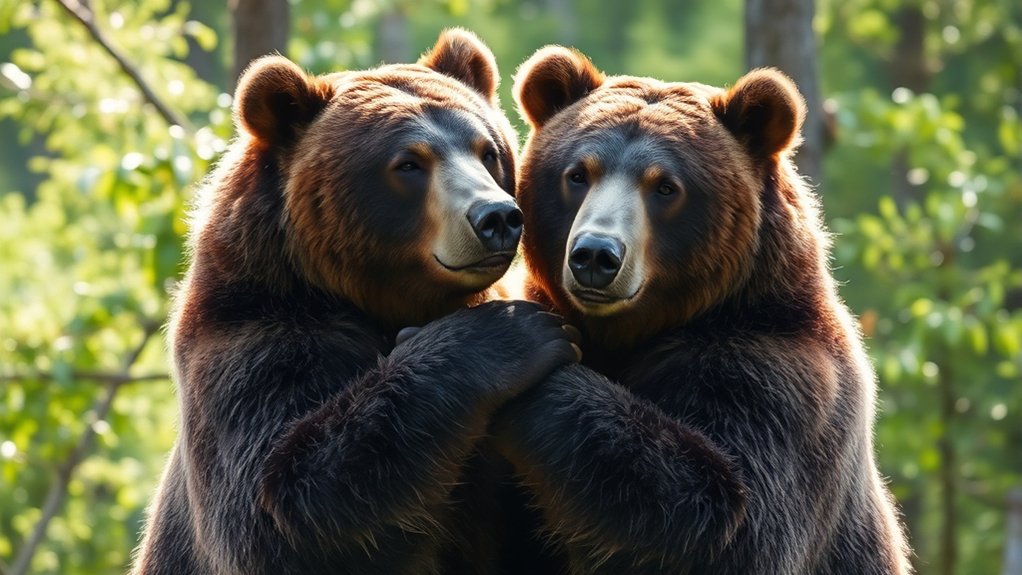
Bears don’t hug the way you do. When you see two bears standing up, leaning in, or pressing close, they’re usually checking each other’s intentions, playing, or sorting out space and dominance.
Mothers may nuzzle cubs gently, but that’s care, not a human-style hug.
Body language matters: ears, eyes, posture, and movement tell the real story. If you want to spot the difference, there’s more to notice just ahead.
Key Takeaways
- Bears do not usually “hug” like humans. Close contact is often wrestling, sparring, or a way to show dominance.
- Standing or leaning in often means curiosity or scent-checking, not affection.
- Cubs and mothers may touch gently, nudge, or groom each other for bonding and guidance.
- Playful bears can rise on their hind legs and tumble, but the contact is usually functional, not emotional hugging.
- If bears get close, read their body language carefully and back away slowly because proximity does not guarantee safety.
Do Bears Hug?
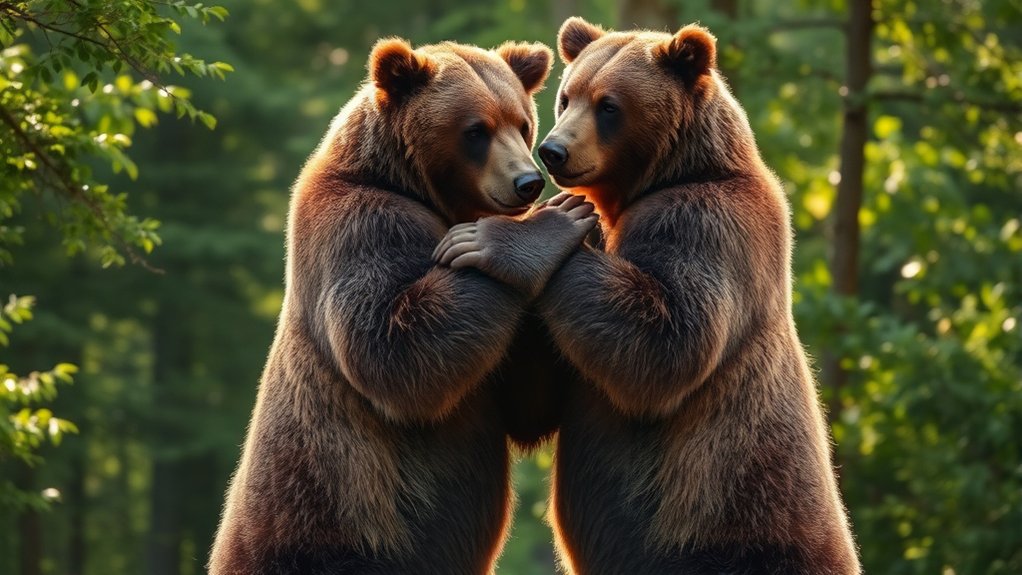
Bears do not hug the way humans do, but they may stand, lean, or hold one another in ways that can look like a clasp. If you see this, you’re usually watching bear communication rather than affection in a human sense.
Bears use body posture, touch, scent, and sound to express caution, curiosity, dominance, or comfort. In some social interactions, brief contact helps them gauge another bear’s intentions and space. You shouldn’t assume every close encounter means they’re “hugging.”
Bears use posture, scent, and touch to communicate caution, curiosity, or comfort, not human-style hugging.
Often, the behavior is part of normal bear communication, not a friendly embrace. Cubs may press against a mother, and familiar bears may tolerate close contact without tension. Still, each movement serves a purpose, and you can read it best by noticing the surrounding context.
When you observe bears from a safe distance, focus on behavior patterns, not human labels.
Why Bears Stand Up and Lean In
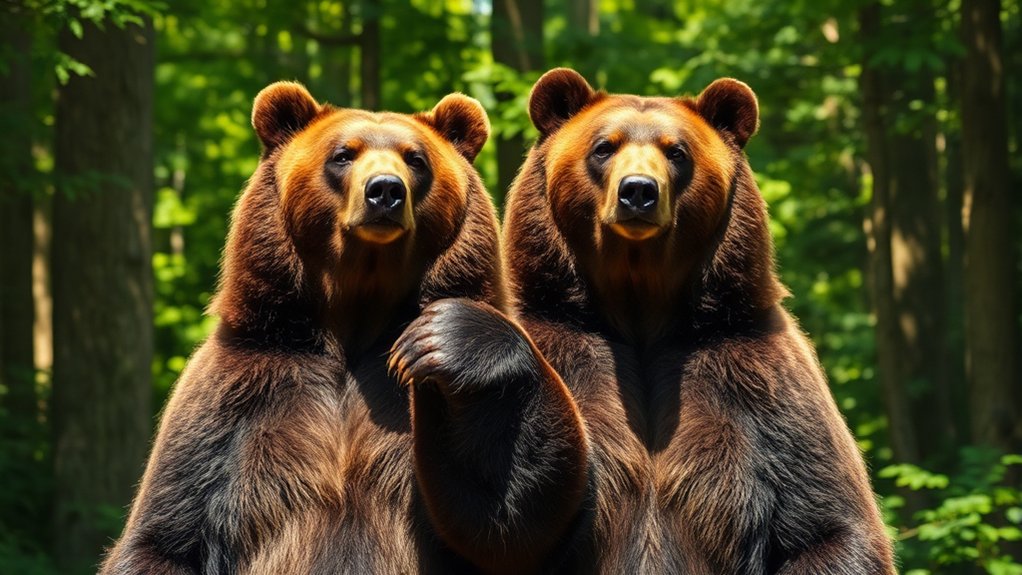
When you see a bear stand up, it’s usually trying to get a better look or smell to figure out what’s nearby. Sometimes, it might lean in to make contact, but that doesn’t always mean it’s looking for a hug. So, you should read these signals carefully because the bear’s posture can tell you a lot about what it’s thinking.
Standing To Assess
Standing up is often a bear’s way of getting a better read on a situation, not a sign of friendliness. When you see this standing behavior, the bear is likely using height to spot movement, catch scents, and judge distance.
In bear communication, posture matters: rising on hind legs can signal curiosity, caution, or uncertainty. You shouldn’t assume the animal is preparing to charge, but you also shouldn’t treat it as calm.
Stay still, avoid sudden gestures, and give it space to evaluate you. If you back away slowly and speak in a steady voice, you help the bear decide you’re not a threat.
Read the body language, and keep in mind that assessment comes before any closer interaction.
Leaning For Contact
If a bear stands and then leans in, it’s usually trying to gather more information, not hug you. You should read this as close-range investigation, not affection. Bears use body position for physical communication, especially during social interactions with other bears and with you.
It may want to smell your scent better. It may be checking your size, movement, or mood. It may be deciding whether you’re a threat. It may be curious about food, noise, or territory.
Don’t assume the bear wants contact. Stay calm, keep your voice steady, and back away slowly if you can. Avoid running, which can trigger pursuit. If the bear keeps closing distance, prepare to defend yourself and follow local wildlife guidance.
Do Bears Hug During Play?

Yes, during play, bears can look like they’re hugging, but they’re usually wrestling, sparring, or nudging each other in a rough, social way. When you watch playful interactions, you’ll see bears rise on their hind legs, wrap forelimbs around a partner, and tumble without trying to injure one another.
That “hug” is part of their social behavior, helping them practice balance, strength, and body control. You may also notice light mouthing, shoulder bumps, and quick retreats, all of which signal play rather than a serious fight.
Bears often pause, switch roles, and reengage, which keeps the exchange balanced and cooperative. If the contact stays loose and both animals keep returning for more, you’re likely seeing friendly play, not aggression.
In short, bear “hugs” during play are really dynamic wrestling matches that strengthen skills and relationships.
How Mother Bears Interact With Cubs
Mother bears are highly attentive and protective with their cubs, often using gentle nudges, nuzzles, and close body contact to guide and reassure them. If you watch carefully, you’ll see their maternal instincts at work in every movement. They keep their cubs close, teach them where to walk, and calm them with soft contact. That touch supports cubs bonding and helps young bears feel secure.
You’d notice a mother leading her cubs to food. You’d see her stop them from straying too far. You’d watch her groom them to strengthen trust. You’d hear quiet calls that keep the family together.
These interactions aren’t hugs in a human sense, but they do show affection, guidance, and protection. When you understand this behavior, you can see how bear families build strong connections through touch, patience, and constant care in the wild.
When Bear “Hugs” Show Dominance
When you see two bears pressing against each other, it’s not always about affection—it can actually be a way they show dominance. You can pick up on a lot just by watching their body language. For example, if their posture is stiff, or if they’re pushing each other, or have their heads lowered, those are clues. These signals help you figure out whether it’s a challenge or just a friendly touch.
Dominance Displays
What people sometimes call a bear “hug” can actually be a dominance display, especially if the bear is standing over another bear, pushing, or wrestling to control space. You shouldn’t read it as affection; you’re seeing dominance behavior during social interactions.
In these moments, the stronger animal tests rank and claims access without needing a long fight. Watch for repetition and pressure, not comfort.
- A bear may pin or lean to gain control.
- It may shove to make another bear move away.
- It may wrestle briefly to settle rank.
- It may stop once the other bear yields.
If you’re observing bears, treat these exchanges as serious, strategic, and about status, not friendship.
Bear Body Language
A bear’s body tells you a lot before a situation escalates, so pay attention to posture, pressure, and movement rather than the idea of a “hug.” If a bear stands tall, leans in, pins, shoves, or circles with stiff intent, it’s usually signaling control or dominance, not affection.
You can read this bear communication through subtle body language: ears back, jaw tight, head low, and weight shifted forward all mean stay alert. A relaxed bear moves loosely, not forcefully.
Don’t mistake close contact for friendliness; a bear may press, bump, or grapple to assert space, not to greet you. Give it room, avoid sudden moves, and back away slowly while watching its posture.
Are Bear Hugs a Sign of Affection?
Bear hugs can feel like a sign of affection, but in the animal world they usually mean something else entirely. When you watch bears, you’re seeing behavior shaped by survival, not cuddling. They may stand, press, or grapple for reasons tied to comfort, dominance, or access to food.
That doesn’t mean you should read human-style love into it. Bears don’t show bear emotions the way you do, and their social behavior often stays practical rather than tender.
- You might see body contact during play.
- You might notice pressure used to test strength.
- You might observe one bear seeking space or control.
- You shouldn’t assume a “hug” means affection.
How Bear Body Language Really Works
Body language is how bears communicate without words, using posture, movement, distance, and contact to signal warning, curiosity, stress, or confidence. When you watch a bear, you’re reading a living message. Ears forward can mean interest; head lowered may show caution; a stiff stance often says stay back.
You might see slow steps, a sideways turn, or a pause that gives the other bear room to decide. In bear communication, each motion matters because bears avoid wasted conflict when they can. Even quick touches or brief grapples can be part of playful interactions, especially between young bears or siblings.
But don’t mistake rough play for friendliness in every case. You need to look at the whole scene: spacing, speed, tension, and whether either bear keeps escalating. Bear body language works best as a pattern, not a single gesture, and that pattern helps bears prevent fights, test boundaries, and signal intent clearly.
Which Bear Species Stand Up Most?
When you read a bear’s posture closely, one question comes up fast: which species actually stand up most often? In general, you’ll notice that black bears do it more than other bears because their behavior is often curious and reactive.
Brown bears and grizzlies may rise too, but they usually do it less frequently and often for a quick look or scent check. Polar bears can stand as well, yet you’re less likely to see it in casual encounters.
Species differences matter here since body size, habitat, and temperament shape how each bear uses this posture.
Species differences matter: body size, habitat, and temperament shape how each bear stands and why.
- Black bears: most common standers
- Brown bears: less frequent, often brief
- Grizzlies: similar to brown bears
- Polar bears: capable, but less often observed
If you watch carefully, standing doesn’t usually mean aggression. It often just means the bear is gathering information.
What to Do if a Bear Stands Up
If a bear stands up, stay calm and don’t assume it’s charging. You’re seeing a normal reaction in bear behavior, not always a threat. Stop moving, face the bear, and give it a clear view of you.
Speak in a low, steady voice so it can identify you as human. Back away slowly when you can, but don’t turn your back or run. Keep your arms close and make yourself look calm, not aggressive.
If you carry bear spray, prepare it and keep watching the animal. Give the bear space, especially if it has cubs, food, or a carcass nearby.
In many bear encounters, standing up means the bear wants a better look, a better smell, or a better sense of distance. If it approaches, stand your ground and use bear spray only if it keeps closing in.
Once it leaves, continue away carefully and report the encounter if needed.
Mistaking Bear Behavior for a Hug
When you see a bear stand up, sway, or move closer, you might think it’s being friendly. But actually, its body language usually means something else. You can’t read a bear’s actions like a hug or a sign of affection because curiosity, stress, or a warning often look softer than they really are. So if you mistake those cues, you might end up staying too close and putting yourself at risk.
Bear Body Language
A bear’s body language can easily fool you into thinking it’s being affectionate, but what looks like a hug is usually something else entirely. You should watch posture, pace, and distance because bear communication tells you more than any guess.
In bear socialization, cubs and adults learn signals that shape how they move around each other.
- Raised fur can show stress.
- Slow steps can signal caution.
- Head turning may mean assessment.
- Pawing the ground can mean unease.
If you see a bear leaning in, don’t assume warmth; it’s likely checking space, scent, or status. You’ll stay safer when you read these cues and give the animal room instead of searching for human-like meaning.
Misread Affection Signals
What looks like a bear “hug” is usually a misread signal, not an affectionate gesture. When you see a bear stand on its hind legs and wrap its forelimbs around another bear, you’re often watching a defensive, dominant, or balancing move, not cuddling.
In bear communication, posture, distance, and scent matter far more than human-style touch. You can fall for affection myths if you judge the moment by looks alone.
A mother may brace cubs, mates may jostle, and rivals may grapple, but these actions serve survival, not tenderness. If you’re near bears, don’t assume closeness means safety or friendliness.
Read the whole scene: ears, eyes, movement, and context. That’s how you avoid mistaking tension, restraint, or play for a hug.
Frequently Asked Questions
What Does It Mean When a Bear Stands on Its Hind Legs?
A bear standing on its hind legs usually means you’re making it curious, nervous, or alert. You’re seeing a normal bear behavior called a standing posture, which helps the bear smell, look around, or judge you better.
It doesn’t always mean aggression, but you should stay calm, back away slowly, and give it space. If the bear keeps moving toward you, you should prepare to defend yourself and call for help.
Do All Bear Species Hug the Same Way?
No, you shouldn’t assume all bear species hug the same way. In fact, bear behavior varies a lot, and species differences shape how they stand, touch, or grapple.
For example, polar bears and brown bears use body contact differently in social situations, while pandas rarely interact that way. You can think of it like this: each species has its own signals, and you’ll need context to read them correctly.
Can Bears Hug Each Other as a Greeting?
Yes, you’ll sometimes see bears clasp-like each other as a greeting, but it’s not a true hug. In bear behavior, you’re usually watching social interactions like sniffing, rubbing, or brief standing contact.
Mothers and cubs may clasp more often, and unrelated adults usually avoid close contact. You shouldn’t assume affection the way humans mean it; bears use touch mainly to identify, reassure, or assert status.
Why Do Mother Bears Nuzzle Their Cubs?
You’d see mother bears nuzzle cubs to keep cub bonding warm and steady, like a soft drumbeat in the wild. She uses her nose and muzzle to soothe them, guide them, and reassure them when danger whispers nearby.
Her maternal instincts drive this gentle contact, helping cubs feel safe, learn her scent, and stay close while she teaches survival. It’s love with claws hidden, tender and practical.
Should You Run if a Bear Seems to Hug?
No, you shouldn’t run if a bear seems to hug you. You’ll likely misread bear behavior, and running can trigger a chase.
Stay calm, make yourself look bigger, speak firmly, and slowly back away while facing the bear. Prioritize wildlife safety by giving it space and avoiding sudden moves.
If the bear makes contact, use bear spray if you have it and play dead if it’s a grizzly attack.
Conclusion
So, do bears hug? Not really. You might see a bear rise on its hind legs and lean in, and it can look almost friendly, even almost human. But that pose usually means curiosity, caution, or control, not affection.
You should read the whole body, not just the brief moment. A bear’s “hug” can feel soft from a distance, yet it often carries power close up.
Respect the space, and let the wild stay wild. When it comes to bears, hugs are not what they seem.