Types of Quilting Fabric: A Guide
Choosing the perfect quilting fabric can feel overwhelming—you’re not alone if you’ve spent hours debating which type will work best for your project. Many people struggle with finding fabric that balances durability, texture, and style just right.
But once you understand the basics, picking the right fabric becomes much easier.
Quilting fabric is usually woven cotton because it’s durable, smooth, and easy to cut and stitch. You’ll often choose quilting cotton, broadcloth, flannel, batik, or printed fabric, depending on the look and feel you want.
Weave also matters: plain weave stays stable, while twill and satin drape more softly.
For the best results, match fabric to your project, and you’ll soon see how the right choice changes everything.
Key Takeaways
- Quilting fabric is usually woven cotton, prized for durability, smooth handling, and strong stitch-holding.
- Common cotton types include quilting cotton, broadcloth, and flannel. Each has different weight and softness.
- Batik and printed fabrics add color, texture, and pattern variety. But keep in mind, the scale of the pattern affects the quilt’s appearance.
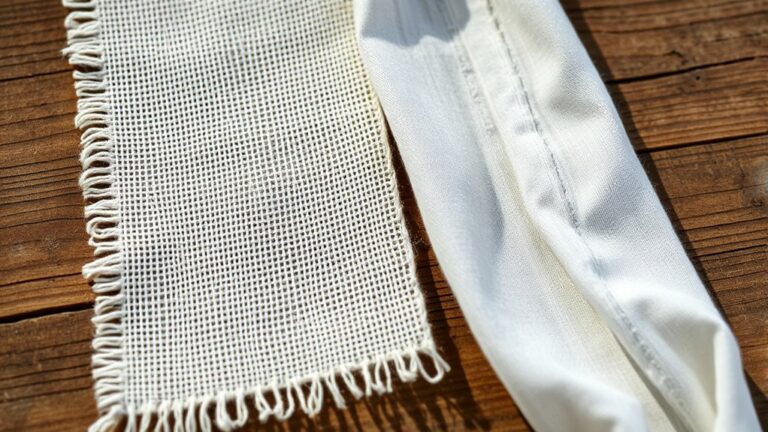
- Weave matters too. Plain weave is stable, twill drapes more, satin is smooth but shifts easily, and loose weaves need extra care.
- Choose fabric based on your project. Use sturdy cotton for bed quilts, softer cotton for baby quilts, and denser fabric for bags.
What Is Quilting Fabric?
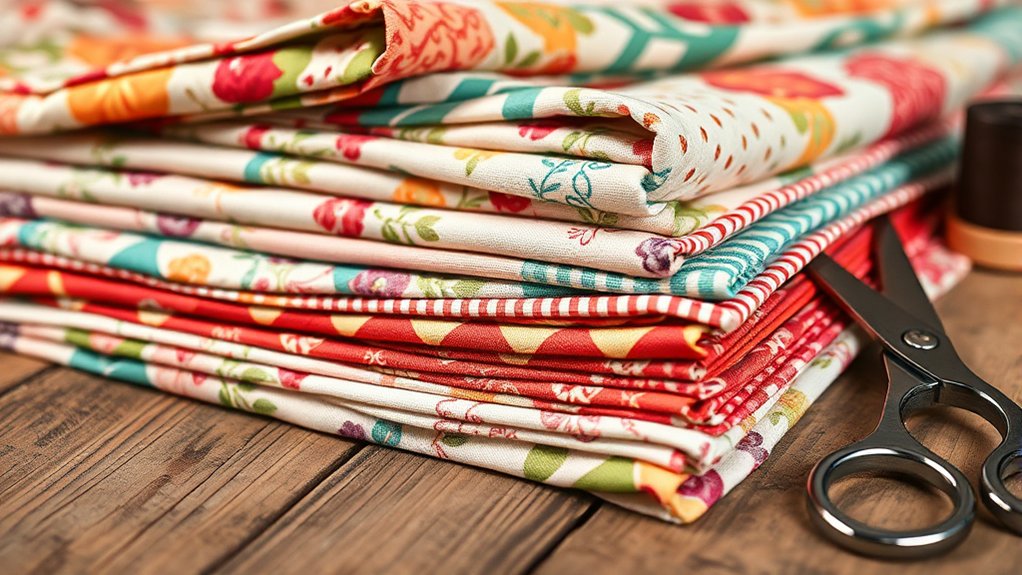
Quilting fabric is the material you use to piece together a quilt, and it’s usually a woven cotton fabric chosen for its durability, smooth texture, and easy handling. You rely on it for blocks, borders, and backing because it cuts cleanly and holds stitches well.
When you look at quilting fabric origins, you’ll find that quilters have long valued sturdy cloth that can stand up to repeated use and washing. Today, you can choose from many prints, but the core purpose stays the same: give you a stable, workable surface for piecing.
Fabric weight considerations matter too, because lighter fabrics may fray or shift, while heavier ones can feel bulky and harder to sew. You want a balanced weight that lies flat, feeds smoothly, and helps your quilt finish neatly.
Cotton Quilting Fabric Types
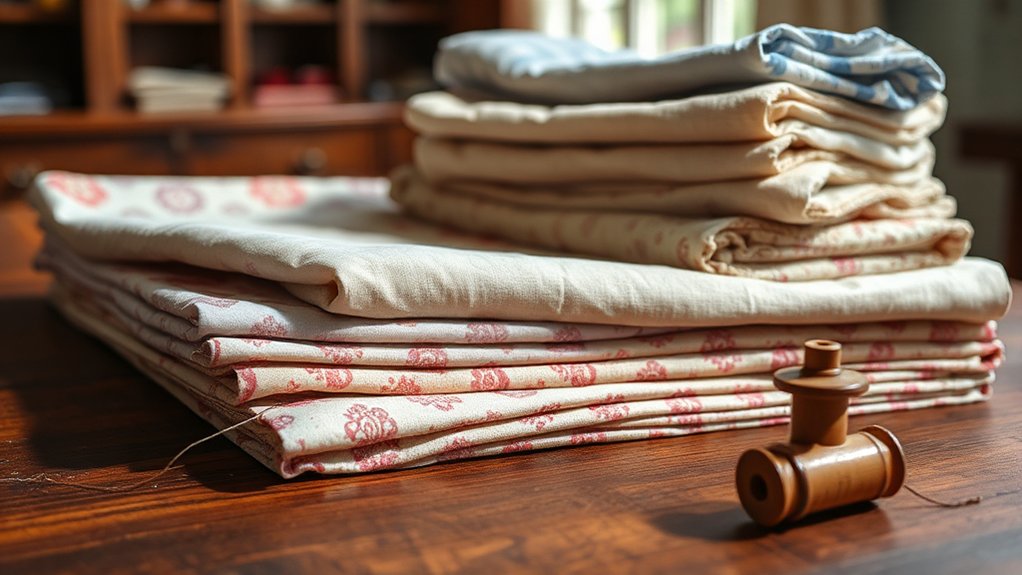
Cotton comes in a few main quilting fabric types, and each one affects how your quilt looks, feels, and wears over time. You’ll usually choose between broadcloth, quilting cotton, and flannel, depending on the finish you want.
Quilting cotton is the most common pick because it’s smooth, sturdy, and easy to cut and sew. Broadcloth feels slightly lighter and tighter woven, so it works well when you want crisp seams.
Quilting cotton is smooth and sturdy, while broadcloth offers a lighter weave for crisp, clean seams.
Flannel gives you warmth and softness, but it can shift more while you stitch. When you compare cotton types, pay attention to fabric weight, thread count, and drape.
A medium-weight cotton often gives you the best balance for blocks, borders, and everyday use. If you want sharp piecing and clean edges, choose stable cotton with minimal stretch. You’ll get better results when you match the fabric to your pattern and project goals.
Batik and Printed Quilting Fabric
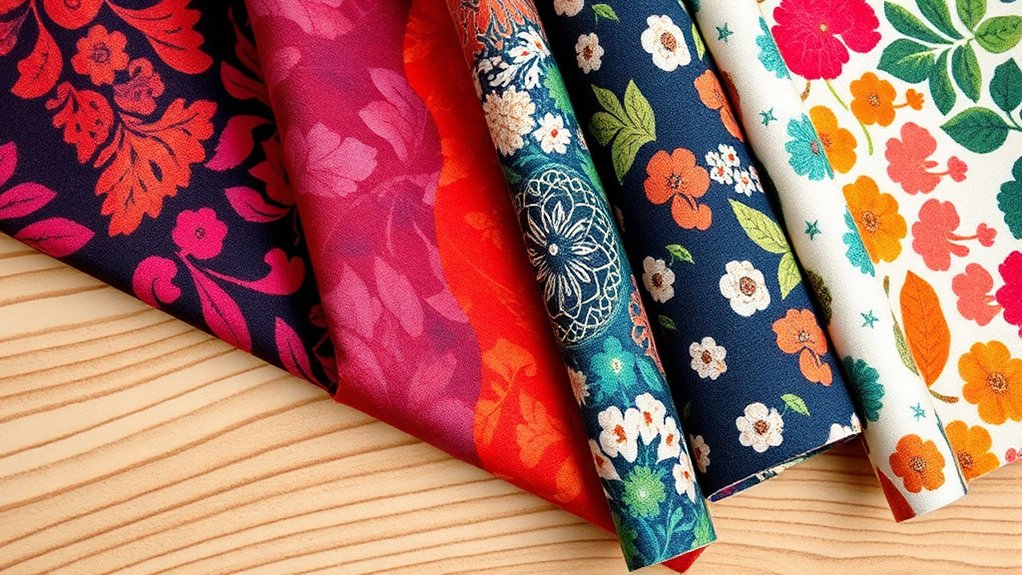
Batik quilting fabric gives you those rich, hand-dyed color variations and crisp details that make every piece feel truly unique. On the other hand, printed quilting fabric offers a huge range of patterns—everything from classic florals to bold geometrics—so you can easily find something that matches your project’s style.
When you’re choosing between the two, think about the look you want to achieve. Consider how the fabric will blend in your quilt and how much visual texture you’d like to see. It’s all about what fits your vision best!
Batik Fabric Characteristics
A splash of color and texture sets batik fabric apart, giving quilts a handmade look that’s rich with character. You’ll notice its mottled surface comes from batik dyeing techniques, where wax resists dye and creates layered, organic effects.
This style draws from batik fabric history, blending craft tradition with modern quilting appeal. When you choose batik, you get fabric that feels slightly denser than many cottons, yet still cuts, sews, and presses well.
Its rich dye penetration helps reduce obvious wrong sides, so you can place pieces with confidence. You’ll also appreciate how batik’s subtle variation adds depth without extra effort, making it a smart choice when you want visual interest and a polished finish.
Printed Fabric Patterns
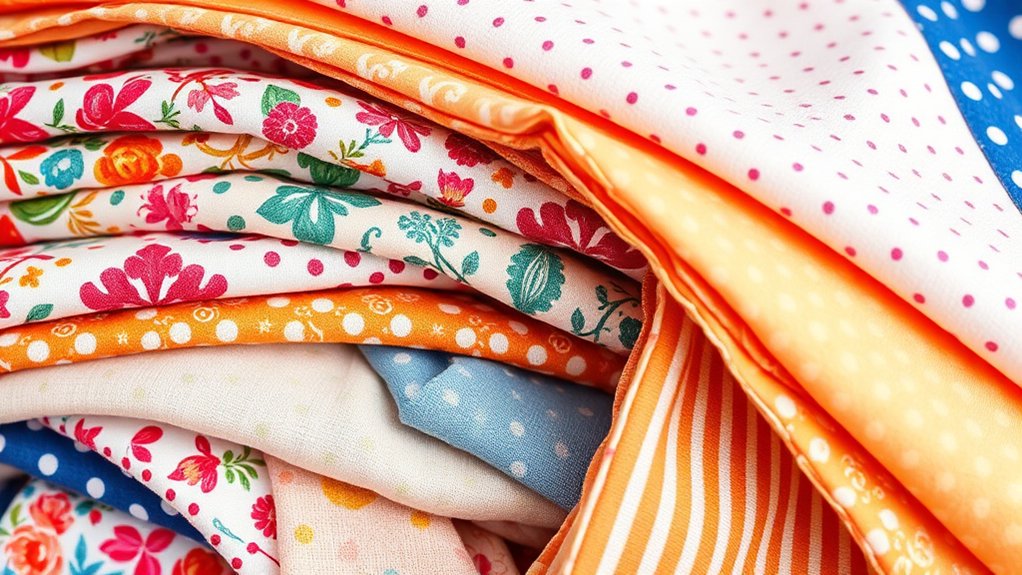
Beyond batik’s mottled texture, printed quilting fabrics open up even more pattern choices, from tiny ditsy florals to bold geometrics and novelty designs. You can use them to add personality, rhythm, or a focal point to your quilt blocks without creating extra visual texture.
Modern printed fabric techniques let manufacturers place crisp repeats, painterly motifs, or hand-drawn effects on cotton with reliable consistency. You’ll also find many fabric colorways, so the same print can feel soft and airy in one palette or dramatic in another.
When you choose printed fabrics, pay attention to scale, contrast, and how the pattern reads once cut into smaller pieces. A large print may lose detail, while a small print can blend smoothly into the overall design.
Choosing Between Both
When you’re choosing between batik and printed quilting fabric, start with the look you want and how the fabric will behave in the block. Batiks give you rich, layered color and a softer, less directional feel, so you can hide seams and add depth.
Prints offer sharper motifs, clear repeats, and a more predictable scale, which helps when you need order in a design. Use fabric selection tips to match texture, contrast, and cut accuracy to your pattern.
For color coordination strategies, group fabrics by value first, then by hue, so both batik and print pieces work in conjunction without competing. If you want motion, choose batik; if you want structure, choose print.
Often, combining both gives your quilt the best balance and visual interest.
Flannel Quilting Fabric for Cozy Projects
Flannel quilting fabric is perfect when you want extra warmth, softness, and that cozy feel. It works beautifully for cold-weather projects. You might use it for baby quilts, throw blankets, or any snug quilt that needs a gentle touch.
Just a heads-up—make sure to wash it before you start cutting. And try to avoid using too much heat when you wash or dry it. Handling it gently helps keep fraying to a minimum, so your fabric stays looking great.
Flannel Fabric Benefits
If you want quilts that feel warm and inviting, flannel is a standout choice for cozy projects. You’ll notice its flannel advantages right away: it feels soft against your skin, holds heat well, and gives your quilt a relaxed, homespun look.
Because it has natural flannel warmth, you can create layers that feel comforting without adding much bulk. You’ll also find it easy to work with, since it cuts cleanly and sews smoothly with standard tools.
Flannel’s brushed surface helps fabrics grip each other, so your piecing stays manageable. When you choose quality flannel, you get a material that balances comfort, durability, and a welcoming finish.
It’s a smart option when you want your quilt to feel lived-in from the start and last.
Best Uses for Quilts
Cozy quilts shine in bedrooms, reading nooks, and guest spaces where warmth matters most. You can use flannel to make throws that invite relaxation, bed quilts that add softness, and lap quilts that keep you comfortable during quiet evenings.
Its brushed surface works well with simple patchwork or bold quilt styles because the fabric textures feel plush without looking bulky. You’ll also appreciate flannel for baby quilts, cabin décor, and seasonal gifts that need a welcoming, lived-in look.
If you want a project that feels soothing to sew and even better to use, choose flannel for everyday coziness. It’s especially effective when you want warmth, comfort, and a relaxed style in one finished quilt.
Care Tips for Flannel
A few simple habits will help your flannel quilts stay soft, snug, and looking their best. Wash them in cold water on a gentle cycle to protect the flannel texture and reduce pilling. Use mild detergent, and skip bleach because it can weaken fibers.
Tumble dry on low or line dry to preserve flannel warmth and prevent shrinkage. If you press your quilt, use a low setting and a pressing cloth.
- Sort dark and light fabrics separately.
- Turn quilts inside out before washing.
- Remove promptly from the dryer.
- Store them in a cool, dry place.
Handle your flannel gently, and you’ll keep its cozy feel for years.
Linen and Cotton-Linen Blends
Linen brings a crisp, textured feel to quilting fabric, and cotton-linen blends soften that structure while keeping the fabric breathable and durable. You’ll notice linen textures add a relaxed, elegant look that works well in modern or rustic quilts.
Pure linen can feel stiff at first, but it loosens with washing and handling, giving your quilt a graceful drape. If you want easier sewing, cotton-linen blends offer cotton durability, plus less wrinkling and a smoother stitch path.
You can pair these fabrics with cotton prints, solids, or hand-dyed pieces for contrast. Because linen holds shape well, it’s great for blocks, borders, and accent patches where you want definition.
Keep your cutting accurate, press carefully, and use a sharp needle to reduce fraying. When you choose linen or a blend, you get a breathable fabric that brings texture, structure, and lasting appeal to your quilt.
Prewashed, Organic, and Specialty Fabrics
Prewashed fabrics save you from most of the shrinkage and color bleeding that can happen after the first wash, so they’re a smart choice when you want your quilt to stay true to size and appearance. You’ll also appreciate the prewashed benefits when you’re sewing matching pieces or mixing colors.
Prewashed fabrics help quilts keep their shape, color, and fit through the first wash.
- Organic sourcing helps you choose fibers grown with fewer synthetic inputs.
- Fabric durability often improves because repeated handling softens the cloth before cutting.
- Specialty uses include batting-friendly projects, heirloom quilts, and show pieces.
- Prewashed benefits make care easier when you want predictable results.
Organic options can feel a little different in your hands, but they reward you with a cleaner material choice. Specialty fabrics, such as coated or metallic prints, add interest when you need texture or shine. Pick these when your project needs character, reliability, or a more intentional finish.
How Weave Affects Quilting Fabric
You’ll notice that different weave types actually change how quilting fabric feels, stretches, and holds up. For example, a tight plain weave usually gives you more stability. On the other hand, a looser weave can shift more easily as you sew.
These differences really affect how smoothly your quilt pieces match up. Plus, they play a big role in how well the finished quilt wears over time.
Weave Types Explained
Weave is the hidden structure that shapes how quilting fabric feels, behaves, and holds up over time. When you choose cloth, notice how weave patterns create different fabric textures and guide your cutting and stitching.
- Plain weave gives you a balanced, stable surface that’s easy to handle.
- Twill weave adds a diagonal look and a softer drape for relaxed piecing.
- Satin weave offers a smooth, lustrous face, but it can shift more while you sew.
- Loose weave feels airy and rustic, yet it may need extra care.
You’ll get the best results when you match the weave to your project’s style and your preferred level of structure. Stronger weaves usually help you keep edges crisp and blocks aligned.
Quilting Performance Differences
When weave changes, so does how quilting fabric performs under your needle, scissors, and iron. Tightly woven cotton gives you clean cuts, steady seams, and reliable performance durability, so it’s easier to piece and press.
Looser weaves can shift, fray, and stretch, which means you may need more pins, starch, or careful handling. Your fabric weight also matters: lighter cloth drapes softly but can pucker if you don’t support it, while heavier fabric resists distortion and holds shape better.
If you choose a diagonal weave like twill, you’ll notice more give, which can help in curved quilting but may distort edges. Match weave to your project, and you’ll improve accuracy, finish, and long-term wear.
Best Quilting Fabric by Project Type
The best quilting fabric depends on the project you’re making, since different quilts call for different levels of softness, structure, drape, and durability. For bed quilts, you’ll usually want high-quality cotton because it holds seams well and stays comfortable through repeated washing.
For wall hangings, you can use lighter cotton or blends that showcase quilting stitches and sharp piecing. For baby quilts, choose soft, breathable cotton with durable fibers that can handle frequent laundering.
For bags or home decor, reach for denser quilting cotton or canvas for extra body.
- Bed quilts: smooth cotton
- Wall hangings: crisp cotton
- Baby quilts: soft, washable cotton
- Bags and decor: sturdy cotton blends
You’ll also notice quilting fabric trends shaping popular fabric colorways, from muted earth tones to bold modern palettes. Matching fabric to the project keeps your quilt practical, polished, and visually balanced.
How to Choose Quilting Fabric?
Choosing quilting fabric starts with your project, but it also comes down to feel, fiber content, and how the fabric will behave once it’s cut and sewn. You should match the fabric to your pattern, then check whether it offers the structure or drape you need.
Cotton quilting fabric works well for most quilts because it cuts cleanly and sews predictably. Pay attention to color selection so your blocks read clearly and your design has balance.
Consider fabric texture, too: smooth prints can showcase detail, while subtle weaves add depth without overwhelming the quilt. You’ll also want to test how fabrics look together under natural light, since colors can shift from store lighting.
When possible, buy a little extra from the same dye lot, so your quilt stays consistent across the top. Trust your hands, your eye, and the finished look you want.
Caring for Quilting Fabric So It Lasts
To keep quilting fabric looking fresh and strong, you’ll want to wash, dry, and store it with care from the start. Use gentle cleaning methods, then press on low heat to protect fibers. For fabric storage, fold pieces neatly in acid-free bins, and keep moisture control in mind so mildew won’t form.
Aim for steady temperature regulation, because heat and dampness can weaken cotton over time. Limit sunlight exposure by storing fabric away from windows to prevent fading.
- Wash before cutting.
- Dry completely.
- Rotate fabric stock.
- Check for pests.
Good fabric handling also reduces stretching and fraying, especially with prewashed yardage. Practice fabric rotation so older cuts get used first, supporting long-term preservation and product longevity.
If you notice odors, stains, or insects, act quickly with safe pest prevention steps. With consistent care, your quilting stash stays ready for every project.
Frequently Asked Questions
How Much Quilting Fabric Should I Buy for a Queen-Size Quilt?
You should buy about 8 to 10 yards of quilting fabric for a queen-size quilt, depending on your quilt pattern considerations. Use fabric yardage calculations to account for the top, border, backing, and extra for mistakes.
If you’re using large blocks or lots of seams, grab a bit more. Always check your pattern’s cutting requirements before you shop, because different designs can change how much fabric you’ll need.
What Tools Help Cut Quilting Fabric Accurately?
You can cut quilting fabric accurately with a sharp rotary cutter, a clear acrylic ruler, and self-healing fabric cutting mats. Why guess when tools can guide every edge?
You’ll improve rotary cutter techniques by pressing firmly, keeping blades fresh, and aligning grain lines before you slice. A quilter’s ruler and a scoring wheel can help too.
But your best results come from steady hands, measured marks, and a clean cutting surface.
Can I Mix Quilting Fabric Brands in One Project?
Yes, you can mix quilting fabric brands in one project. You’ll get the best results when you check fabric compatibility and notice brand differences in weave, weight, and shrinkage.
Wash or prewash your fabrics first, then compare how they feel and behave together. If one brand runs thinner or stretches more, use it in smaller areas or pair it with sturdier fabric so your quilt stays even and durable.
How Do I Store Quilting Fabric to Prevent Fading?
You should store quilting fabric in dark, breathable bins or drawers to prevent fading. A quilt shop owner once told me sun can bleach prints in weeks, like coffee left on a porch table.
Use fabric storage away from light exposure, and keep humidity control steady with silica packs or a dehumidifier. Aim for temperature regulation around 60–75°F, and avoid plastic bags that trap moisture and yellow your fabric over time.
What Thread Works Best With Quilting Fabric?
Cotton thread works best with quilting fabric because it’s strong, smooth, and blends well with most quilts. You can also use polyester or cotton-wrapped polyester, depending on your project.
Choose the right thread types for your machine and hand sewing, and pay attention to thread weight; 40wt suits piecing, while 50wt gives a finer finish. Test your thread first, and you’ll get cleaner seams, fewer breakage issues, and better results.
Conclusion
Now you’ve got a clear guide to quilting fabric types, from crisp cottons to cozy flannels and sturdy linen blends. You can match each material to your next make with more confidence, choosing the weave, weight, and print that fit your vision.
When you handle your fabric with care and wash it wisely, you’ll help every quilt stay vibrant, soft, and strong. So pick, piece, and press with purpose, and let your creativity keep quilting fabric at the heart of your craft.